
MATE 232 - Materials, Ethics and Society
MATE 232 - Materials, Ethics and Society
Purpose: to help other instructors teaching the same course
Common Course ID:MATE 232
CSU Instructor Open Textbook Adoption Portrait
Abstract: This open textbook is being utilized in a Materials course for undergraduate students by Jean Lee at Cal Poly, SLO.
Course Title and Number: MATE 232: Materials, Ethics, and Society, MATE 510: Materials Analysis
Brief Description of course highlights: MATE 232 - Materials Engineering principles through the context of historical and current events. Ethics and systems thinking are integrated in the study of the impacts of materials and technology on society during the Stone Age, Bronze Age, and Iron Ages, as well as today's world. Topics include crystallography, phase diagrams, microstructures, processing techniques, and nanotechnology. 4 lectures. .
The traditional textbook used for this course was:
Understanding Materials Science – History/ Properties/ Applications (2nd ed.), R. Hummel, Springer-Verlag, 2004 (hard copy), MATE 510: Surface Analysis – The Principal Techniques (2nd ed.), eds. J. C Vickerman and I. S. Gilmore, Wiley & Sons, 2009.
Student enrollment: MAT 232, 52 students. MATE 510: 7 students
Key challenges faced and how resolved:
"The MATE 232 e-textbook was part of pilot rollout of AL$. A few students initially encountered difficulties downloading the e-textbook. Working with Dana Ospina, we found the following to be helpful in improving the students’ experience in downloading the e-textbook:
-Authenticating (i.e., logged onto my.calpoly.edu) before downloading
-Downloading on campus (rather than off campus)
-Downloading using a computer (desktop or laptop) versus a device such as a tablet
-Trying a different web browser."
Textbook or OER/Low cost Title:
Brief Description: I was surprised to find an OER textbook that covered quantum mechanics! Book: University Physics Volume 3 https://open.umn.edu/opentextbooks/textbooks/university-physics-volume-3
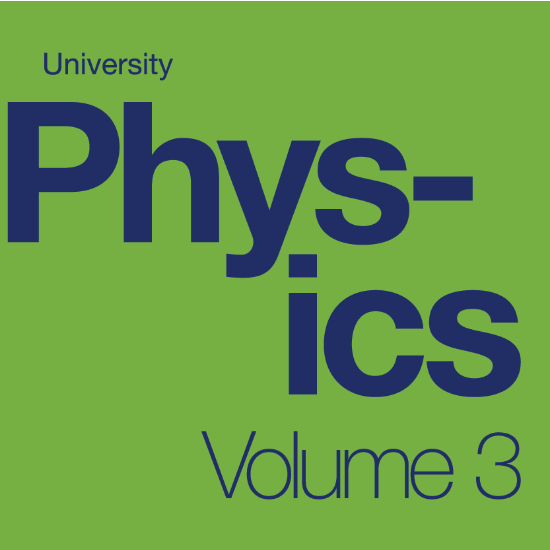 Authors: Jeff Sanny, Loyola Marymount University and Samuel Ling, Truman State University
Student access: Using a projector, e-textbooks allow me to magnify and point to specific text/images/data/etc. that students can easily see during class; this is generally not feasible with a hard copy textbook. Likewise, e-textbooks make it easy for me to magnify and point to specific text/images/data/etc. on my computer monitor that students can easily see when they visit me with a question during my office hours.
Cost Savings: Previous textbook used: D.C. Agrawal, “Introduction to Nanoscience and Nanomaterials”, World Scientific, 2013 https://worldscientific.com/worldscibooks/10.1142/8433
Cost of previous textbook: $89.00
Previous enrollment in course (last offered Fall 2015): 29
Total cost savings: 29 x $89.00 = $2581.00
OER/Low Cost Adoption Process
Provide an explanation or what motivated you to use this textbook or OER/Low Cost option. When I was a student on a very limited budget, I remember how expensive textbooks were and trying to save money by buying used textbooks. The quality of used textbooks, however, can vary significantly (some were fairly pristine while others were pretty beat up with a lot of writing and highlighter marks inside). As a professor, I enjoy helping students and watching their faces light up in gratitude at receiving free e-textbooks. In addition to helping students save money, I like that every student in my class can get the same quality of e-textbook (no highlighter marks!) and that the total weight of all of a student’s e-textbooks is equal to the weight of the student’s mobile device.
Sharing Best Practices:
-Helps students save money
-E-textbooks are often easier for the student to carry around – the total weight of all of a student’s e-textbooks is equal to the weight of the student’s mobile device
-Each student gets the same quality of e-textbook (no highlighter marks!)
-E-textbooks are easier for the professor to display during class than hard copy textbooks.
Jean Lee, Assoc Professor
California State University, San Luis Obispo
Department of Materials Engineering
Please describe the courses you teach. MATE 232: Materials, Ethics and Society, MATE 510: Materials Analysis