
Appropriate Technology
Appropriate Technology
Purpose: to help other instructors teaching the same course
Common Course ID: Engineering 305
CSU Instructor Open Textbook Adoption Portrait
Abstract: This open textbook is being utilized in an engineering course for undergraduate or graduate students by Lonny Grafman at Humboldt State University. The open textbook provides an in-depth look into rainwater catchment and everything that goes into it, including all of the detailed math required to make them work. The main motivation to adopt/create an open textbook was to provide free information to not only his students but to the public as well. Most student access the open textbook in Canvas as a .pdf.
Course Title and Number
Brief Description of course highlights: ENGR 305. Appropriate Technology has the following prerequisites: PHYX 106 or PHYX 109 or ENST 123 (2 units, each unit must be a different topic). Rec: lower division science GE. It also fills the Upper Division Area B GE requirements. Not allowed for credit toward engineering major. Course catalog
Student population: Since it’s not allowed for credit towards engineering majors, it’s likely predominantly full of upper division students from different majors trying to fulfill their general education requirements. Students coming into this class, however, at least need a basic understanding of physics, considering the prerequisites.
Learning or student outcomes: Upon completing this requirement students will:
1. apply scientific concepts and theories to develop scientific explanations of natural phenomena.
2. critically evaluate conclusions drawn from a particular set of observations or experiments.
3. discuss value systems and ethics associated with scientific endeavors.
Key challenges faced and how resolved: One big issue with OER is that not all of it is peer reviewed by other scholars, but Grafman’s solution is to think about OER in the long term: As time goes on, and as more professors start to adopt OER, Grafman is confident that there will reach a point where there will be a few open textbooks that teachers know they can rely on because of the ubiquity of their use in other classes. In Grafman’s own words “that is the peer review.”
Textbook or OER/Low cost Title:
Brief Description: Provide a brief description of the textbook, OER or Low Cost option, including anything relevant to your choice. To Catch the Rain.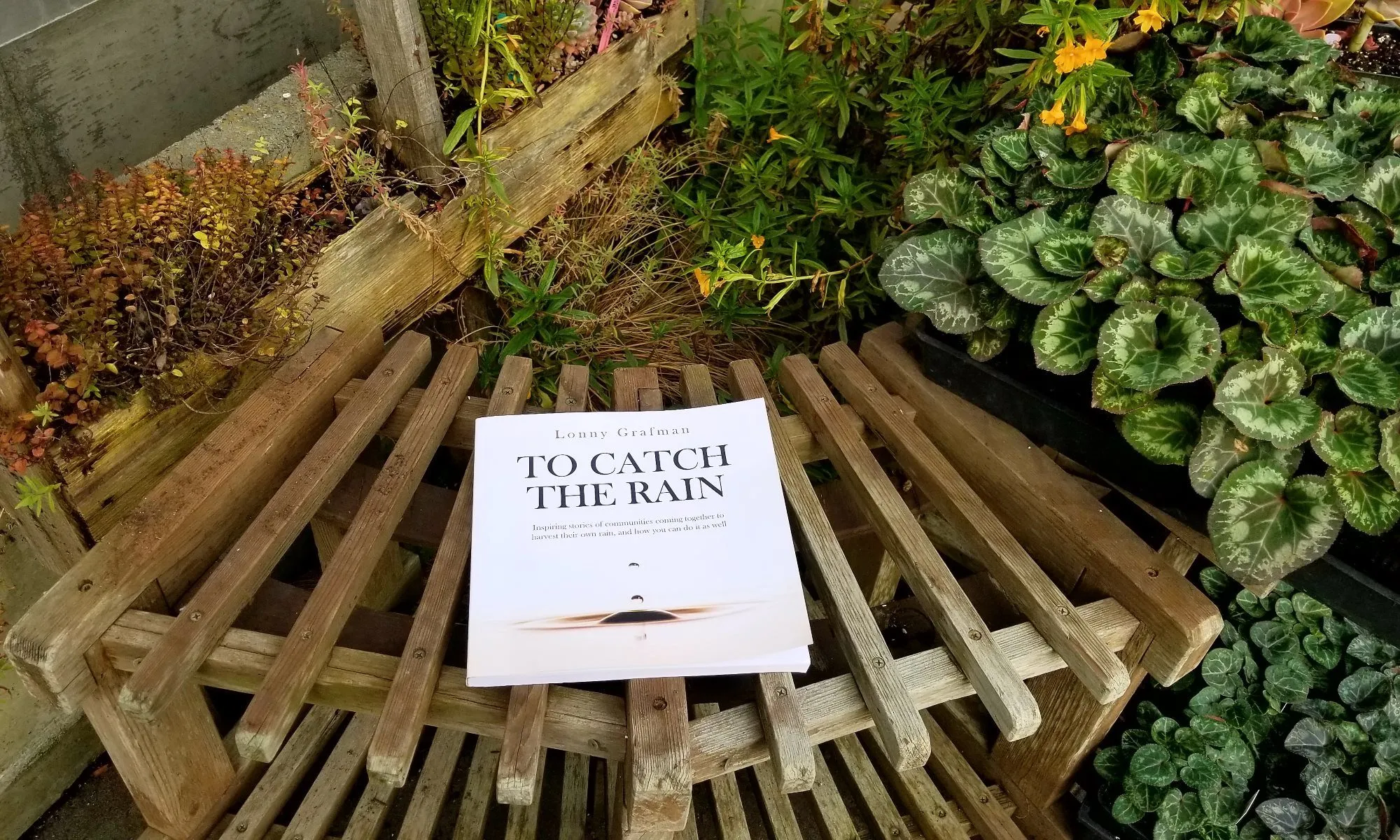
Taken from the abstract: The purpose of this book is to show how various communities have caught that fountain of life using rainwater catchment systems. This book looks at real, practical, global experiences of rainwater harvesting on individual, financially constrained, and community based levels through academic, mathematical and practical perspectives. This book can be used to learn practical skills, see inspiring examples, and to make math have more meaning. This book is for practitioners, DIYers, community members looking for water solutions, as well as for students and teachers in environmental science, environmental studies, sustainable design, international development, engineering, and mathematics.
Authors: Lonny Grafman
Student access: There is a free digital version uploaded to Canvas, but physical versions are also available for purchase.
Supplemental resources: The bulk of what Grafman assigns that’s not OER comes from Appropedia.
Cost Savings: The average engineering textbook is around $120, but because he’s grabbing material from all over--using one chapter from one textbook and one chapter from another--it is like he’s assigning multiple textbooks. If he had students buy each textbook (just to use one or two chapters out of each one), it could theoretically cost them roughly $1000.
License: Creative Commons Attribution-Share Alike 4.0 License
OER/Low Cost Adoption Process
Provide an explanation or what motivated you to use this textbook or OER/Low Cost option. He first became interested in OER before even entering academia when he struggled to find public, free resources necessary for his survival. For as long as he’s been a teacher, Grafman has been using OER in his classes, and his use of OER has only increased as time has gone by.
How did you find and select the open textbook for this course? For this specific textbook, Grafman wrote it himself, but he does incorporate bits and pieces from other OER sources.
Sharing Best Practices: By its very nature, OER is remixable. Pull together the best chapters from different OER resources. Take student feedback into account and edit/revise the textbooks you’re using to better suit the needs of your classroom.
Lonny Grafman
Humboldt University

Share any curricular or pedagogical changes that you made: He’s only ever taught using OER, but one of the benefits he’s noticed is his ability to pull his favorite chapters or sections from several different textbooks instead of relying on just one.