banner

September 11 -- 20 years later

Resources about this act of terrorism that happened on American soil on September 11, 2001.

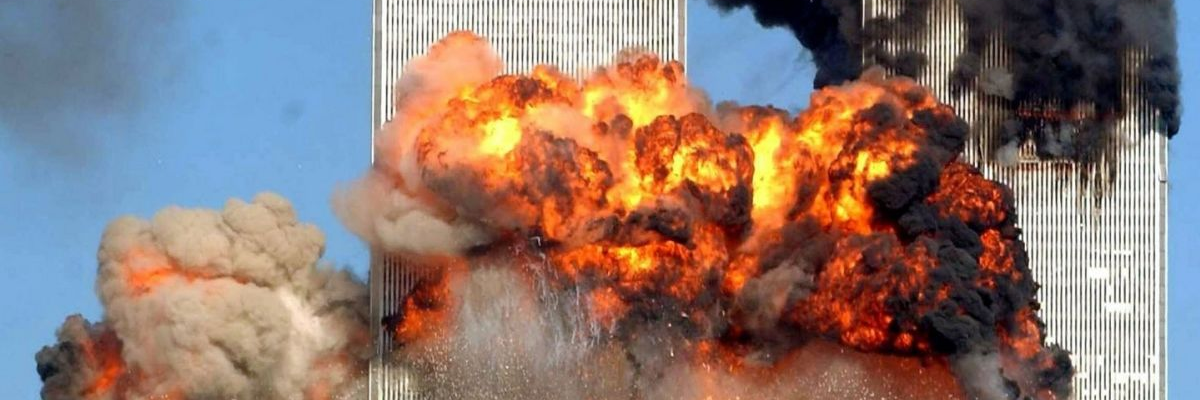
"On September 11, 2001, the United States was the target of multiple terrorist attacks, when members of the terrorist organization al-Qaeda hijacked four airplanes, flying one into the Pentagon in Washington, DC, and two into the World Trade Center in New York City. A fourth plane crashed into a field near Shanksville, Pennsylvania, after people on board attempted to thwart its hijackers. Nearly three thousand people were killed in what was the worst terrorist attack in US history. The events of 9/11 helped precipitate the wars in Afghanistan and Iraq, the loss of many more lives, and huge economic repercussions that would continue to affect the United States in the decades that followed." --Overview from the Gale in Context; College database.  This database is available free to not just NSCC students, but all Tennesseans through the Tennessee Electronic Library (TEL).

Library databases

Explore the topic of 9/11 and remember and learn what happened. 

Websites

9/11 Memorial & Museum

20 years later film

September 11, 2001, Documentary Project

September11, 2001, Web Archive preserves the web expressions of individuals, groups, the press and institutions in the United States and from around the world in the aftermath of the attacks in the United States on September 11, 2001.



The listing of resources, sample lesson plans, syllabi and modules should be especially helpful. Ideally, the site will grow exponentially as a result of feedback from visitors to our site. In the end, as always, it will be up to each teacher to work with this raw material in ways that serve his or her students. "
A complete resource for remembering the attacks on September 11. Users can read others' stories of that day, use the interactive map to explore the attacks, view photos and video related to the event, listen to audio, and contribute their own memories. Also includes links to related sites and documents, as well as an FAQ about September 11.
This is a simulation of the building damages to the World Trade Center buildings on September 11th. Structural damages are shown as well as the damages to the plane.
This video was recorded at MIT World Host: Technology and Culture Forum. In this talk, Robert Fisk takes on the American press for over reporting on the "what and where" of the events of September 11th, and its inability to broach the question "why"? He is scathing in his criticism of the Bush administration's change of focus from pursuing Osama Bin Laden to Saddam Hussein.
This video was recorded at MIT World Series: The Resilient City: Trauma, Recovery and Remembrance. September 11th and the City Ralph Waldo Emerson once wrote "The test of civilization is the power of drawing the most benefit out of cities." The test of terrorism, then, may well be the power to inflict the greatest harm to those same centers of culture, commerce, and exchange. This is something that the September 11 terrorists well understood. Mohamed Atta was a man well acquainted with the power and majesty of cities--and presumably their durability and resilience. He was trained as an engineer, architect and urban planner. Yet, warped by fundamentalism, Atta became the "perverted dreamer" that E. B. White imagined decades ago in Here is New York, a man who would "loose the lightning" on...