
Principles of Human Movement
Principles of Human Movement
Purpose: to help other instructors teaching the same course
Common Course ID: KINE 3200: Principles of Human Movement
CSU Instructor Open Textbook Adoption Portrait
KINE 3200: Principles of Human Movement
 Brief Description of course highlights:
California State University, San Bernardino, Palm Desert Campus
- New course in Kinesiology with the transfer from quarter to semester
- Basic mechanical principles and their application in the study of human movement and an introduction to basic principles of biomechanics.
- KINE 3200: Principles of Human Movement
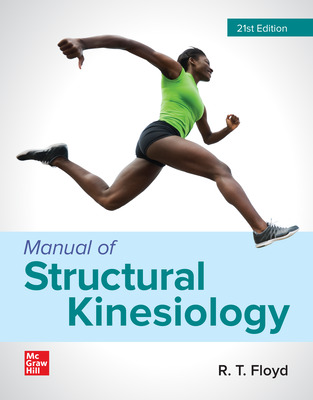
- Textbook: Manual of Structural Kinesiology
- Author: Floyd, R.T.
- Edition, 2021
- Digital: CONNECT platform
- Typical price $100 x 22 = $2,200
- Negotiated price $64 x 22 = $1,408
- 34% reduction
- Author: Floyd, R.T.
Student population:
The majority of students are second year or transfer students, although there are occasionally third and fourth year students as well. The vast majority of students are Kinesiology. The students come from a wide range of socio-economic demographics. The course does not have a prerequisites associated with it.
Learning or student outcomes:
Upon successful completion of this course, students will be able to:
- Learning Outcome (LO) 1: understand anatomical terminology
- LO 2: understand joint structure and function
- LO 3: musculoskeletal structure and function
- LO 4: applied anatomy relative to human movement
- LO 5: applied anatomy relative to orthopedic injury and rehabilitation
- LO 6: introduce basic kinetic concepts related to Newton’s Laws of motion
Student Learning Outcomes
- LO1: Understand foundational scientific knowledge in kinesiology.
- LO2: Evaluate peer reviewed research in kinesiology.
- LO3: Evaluate personal opinions through the utilization of kinesiology research
Key challenges faced and how resolved:
This textbook had a newer edition coming out in the fall (right before the course started) so we needed to coordinate the timing of the new edition and what resources would be available for the newer edition compared to previous editions. Once it was organized between the McGraw-Hill rep and the bookstore (that was a smooth process) I was given a link for immediate access for all students and the rep gave me the opt out information to share with my students.
Textbook: Manual of Structural Kinesiology
- Author: Floyd, R.T.
- Edition, 2021
- Digital: CONNECT platform
Student Access:
In this course, students could access the assignments, reading, etc. through our learning management system (LMS) or through the McGraw-Hill CONNECT website itself. I posted links to each assignment within Modules in the LMS or students could use the various features in the LMS (gradebook, assignments coming up) to keep track of what was due soon!
Cost Savings:
- Typical price $100 x 22 = $2,200
- Negotiated price $64 x 22 = $1,408
- 34% reduction
OER/Low Cost Adoption Process
Provide an explanation or what motivated you to use this textbook or OER/Low Cost option.
The McGraw-Hill CONNECT platform has proven over the years to be a great teaching tool, creating innovative ways to engage students in reading the textbook chapters and providing feedback and resources to support their learning. I wanted to provide that opportunity for the students in my course but didn’t want them to pay a higher fee for access to innovative technology.
How did you find and select the open textbook for this course?
After speaking to other faculty in my department about the textbook options for this new course (one I had not taught previously), I settled on a course textbook that I thought would be a good fit and one that was available for CONNECT access through McGraw-Hill. Then I spoke with the rep to negotiate the price.
What did you change as part of the OER adoption?
I incorporated reading assignments that students needed to complete prior to coming to class. The McGraw-Hill CONNECT technology is learner intuitive so for those students that were not understanding the content as they were reading, the technology identified that and asked them additional questions to confirm their understanding. The reading assignments were graded through the software and grades were uploaded into Bb. I also had access to a bank of assignment questions and created assignments in CONNECT to be completed after as a class we were able to get through a few chapters and prior to an exam. This helped to reinforce student understanding and some of those same assignment questions were incorporated into the exam. All other instructor resources were available which made simplified the process for me and provided seamless integration with Bb.
Teaching and Learning Impact
Do you collaborate more with other faculty now or use a broader range of teaching materials and methodologies, etc.?
- Yes, I know students will have a similar experience in the other sections of the same course when we use the same textbook.
Have student grades improved or stayed the same?
- I am unsure as this was the first academic term this course was offered.
Did student retention improve?
- I am unsure as this was the first academic term this course was offered.
Did you experience any unintended results? What were they?
- No, I didn’t experience any unintended results
Student Feedback or Participation
Student feedback for KINE 3200:
- “I love learning with McGraw Hill-Connect. It really helped me understand the course better.”
- “I used the McGraw Hill-Connect platform to study for exams.”
Sharing Best Practices:
I wish I had access to the same McGraw-Hill CONNECT platform for other courses (they don’t always have the textbook I want for other courses).
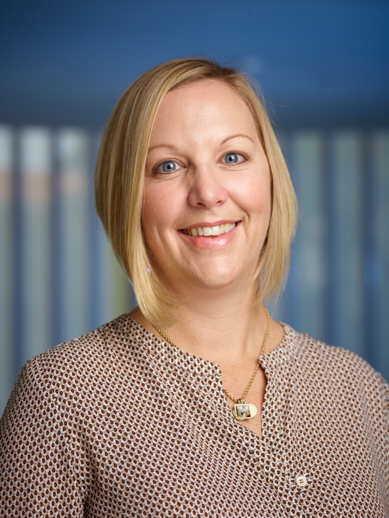
Sarah L. Dunn, Ph.D.
Associate Professor, CSUSB Palm Desert Campus
Dr. Sarah L. Dunn, is joining the CSUSB Kinesiology Department as an Associate Professor for the Palm Desert Campus. Her areas of scholarly expertise are in the early mechanisms for disease risk in young adults which include: inflammation, metabolic dysfunction, adiposity, and vagal insensitivity. More specifically, she is interested in how lifestyle interventions, incorporating healthy nutritional choices and physical activity (high intensity interval exercise) prevent disease and the comorbidities associated. Dr. Dunn obtained her bachelor’s degree from Pepperdine University in Malibu, California, her master’s and doctorate degrees from the University of New South Wales and University of Sydney, both in Australia, and joins the CSUSB community after a tenured professorship at the University of La Verne. She hopes to connect with her students, colleagues and the CSUSB community as a whole and looks forward to contributing to the development of the Kinesiology program on the Palm Desert Campus in the coming years.