Diversity of life: Domain Eukarya, Kingdom Fungi
Diversity of life: Domain Eukarya, Kingdom Fungi
Fungi have a defined set of characteristics. Their growth form is a microscopic, thread-like structure called a hypha. It is one cell thick and growths by adding to the end of the filament. When you see a fungus, you are seeing a mass of theses hyphae (plural form) referred to as a mycelium. They have chitin in their cell walls. Normally, fungi feed on dead and decaying material--they are referred to as saprophytes. They can infect living organisms as well. They cannot move. So they "move" by growing through their environment. They get nutrients by secreting digestive enzymes into that environment and absorbing the nutrients--sort of like predigesting food before eating it. The results of this process are what refer to as "rotting" (bacteria help in this process as well). Fungal cells are more like animal cells than any other organisms. Fungi are classified primarily by the structures they form when reproducing--production of spores. If more interested in fungi, see Tom Volk's Fungus page.
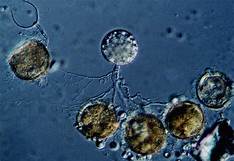
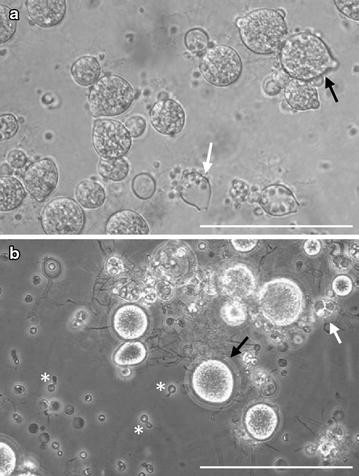
The representatives of the ancestral groups are the Chytrids and the Microsporidians. They are all intracellular parasites and produce flagellated spores. Spores in other groups are not flagellated.
The chytrids cause a disease in amphibians that is implicated in the world-wide decline in amphibians.
The Zygomycetes form a zygospore. When two hyphae of opposite mating types get close, they will form short tube-like structure that join and the nuclei fuse—forming a zygote. This structure forms a stalk with a spore sac at the top. All fungi that form this type of sexual reproductive structure are placed in this group. Example: Rhizopus spp. The hyphae grow through the nutrient source and you normally would not see them until the start forming spores.
One zygomycete (Pilobulus) lives on cow dung. However, they can only complete their life cycle inside the cow. Cows will not graze close to cow patties. So, how do get away from the dung and into fresh grass when you can't walk, swim or fly. You use the shotgun approach. Pilobuus spores form on the hypha and the hypha swells with water, Light sensitive, they point away from the the dung literally explode to propel the spore away.
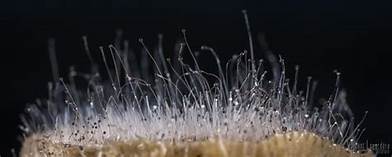
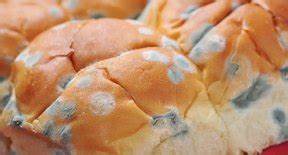
Image below is Rhizopus reproductive structures on bread - bread mold.
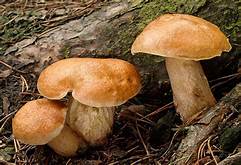
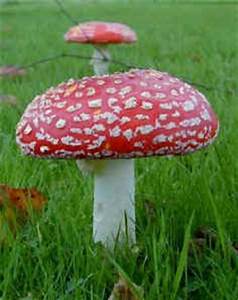
Basidiomyctes are also called club fungi. These are the familiar mushroom shape that we are used to seeing. The mushroom is only the reproductive structure and can be picked without harming the growing part of the fungus in soil or wood - much like you can pick peaches off of the tree without harming the growing plant. When forming spores, a club shaped structure forms inside the mushroom and produces the spores. This club shaped structure is unique to this group and is called a basidium. This group contains the familiar mushroom as well as a number of other morphologies. Example: Agaricus brunnescens, Coprinus spp.
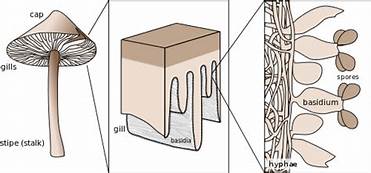
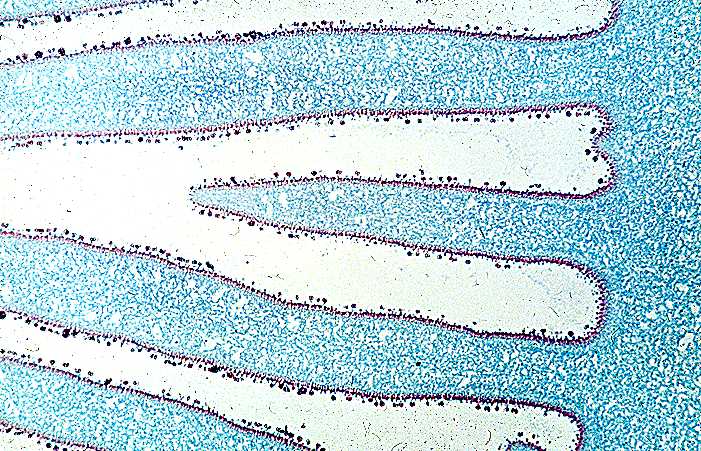 Coprinus gills - dark spots are basidia with spores
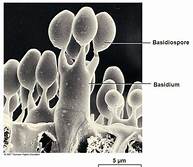
The coprinoid mushrooms are also called "inky cap" mushrooms. Once they are mature they appear to literally dissolve into a dark, inky liquid that carries the spores away.
This group also includes the puff balls and shelf fungi.
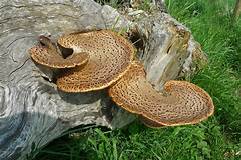 Shelf Fungi
Number of species are poisonous. You should never eat wild mushrooms unless absolutely certain they are safe. Every year, some wild mushroom "experts" die from eating a poisonous variety.
Ascomycetes form spores in a sac like structure which will have eight spores in a line. The diploid cell undergoes meiosis to produce four haploid cells. Then each cell divides once to form eight spores inside the sac. This sac is called an ascus. These asci may be arranged in any number of configurations. In many cases, they form a cup-like structure—these fungi are also referred to as cup fungi. This group is the largest of the fungal groups. Examples: Peziza spp, yeasts.
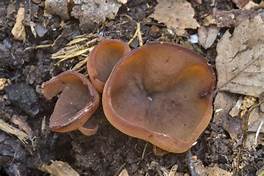 Peziza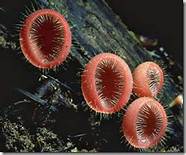
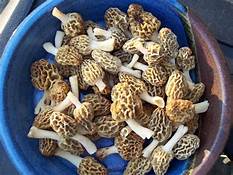 Edible Morels
Yeasts are common unicellular fungi. Saccharomyces cerevisiae is used to make bread; without it, we would all be eating crackers--unleavened bread. It ferments sugars to produce alcohol and carbon dioxide gas. The carbon dioxide makes dough rise and the alcohol evaporates during baking. In other applications the alcohol is the desired product and we produce beer, wine, or other spirits depending on what we ferment and how the process is carried out.
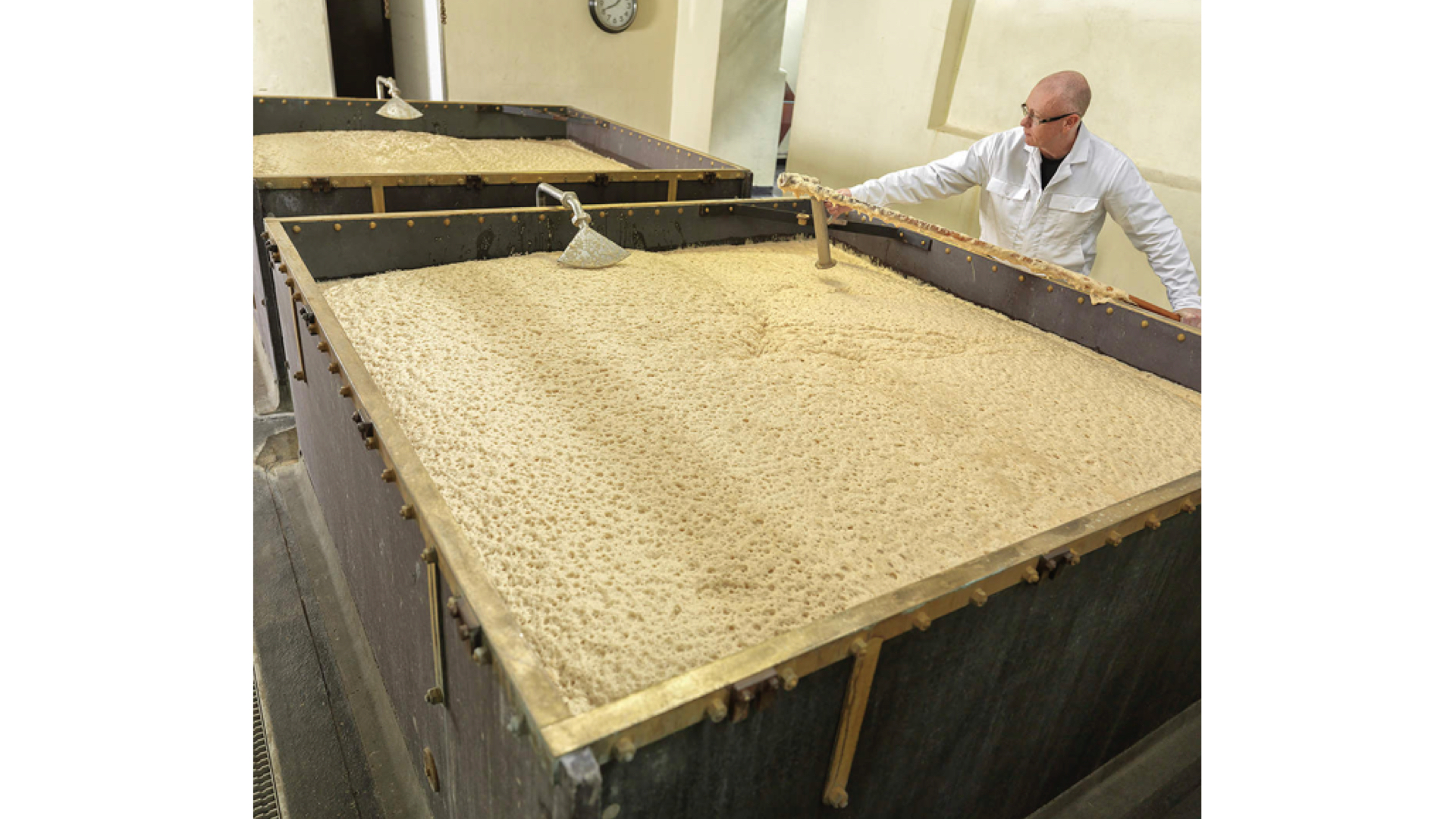 Old Style Brewing
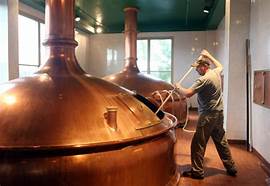 How its Done Today

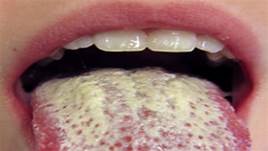
Yeasts can also use diseases in humans. It is a different species (Candida albicans) than used for baking but it can be an opportunistic pathogen when normal homeostasis is disrupted. The oral form is called "thrush" and is most common in infants or people with impaired immune systems. It also causes vaginal infections when the pH becomes less acid.
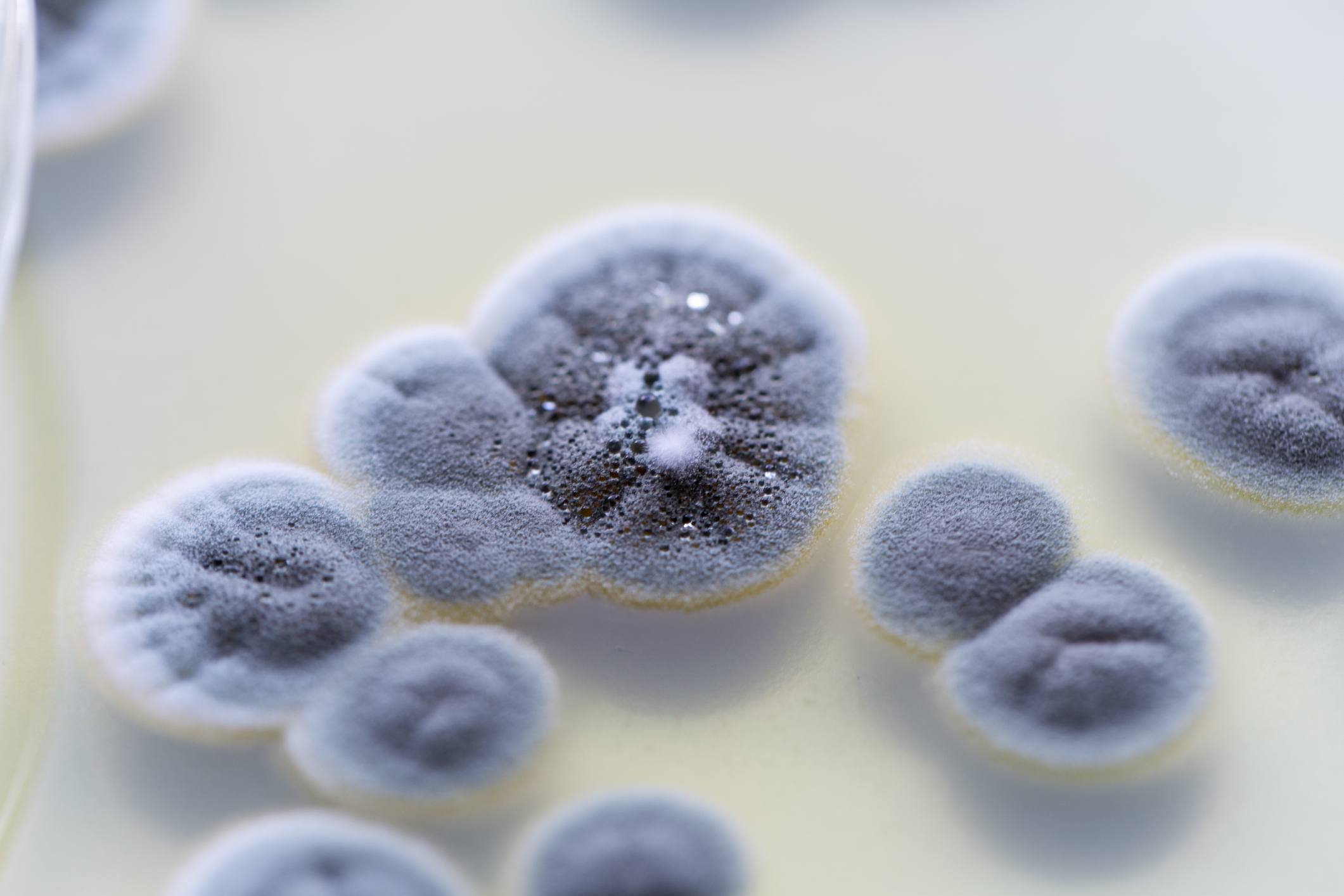 Penicillium
Imperfect Fungi are fungal organisms that either do not have a sexual reproductive phase or it has not been observed. These fungi form conidiospores asexually. Examples: Penicillium spp.
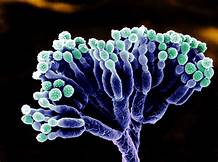 Conidia with Conidiospores
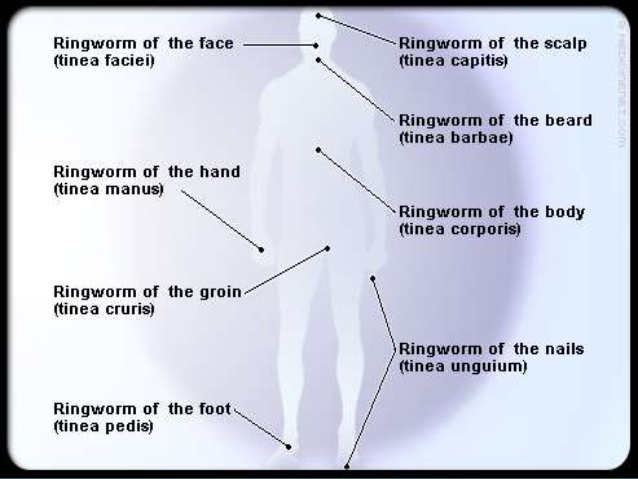
When these conidia are formed in large numbers it gives a fuzzy appearance. Most of these fungi are benign but one group called the dermatophytes causes infections of the skin. These fungi use the protein keratin as a nutrient source and can be found on many parts of the body. Commonly referred to as ring worm, they are fungal infections.
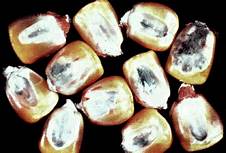
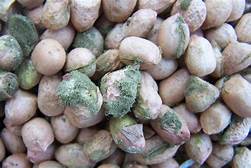
- Fungi also have a tremendous impact on humans medically, economically, and as food. Many of our antibiotics are produced by fungi as well as causing diseases and damaging crops. Yeast is a fungus that is almost universally used by cultures to ferment any sugary substance. It is also what makes bread rise. Perhaps their greatest contribution is in the decomposition of dead materials.
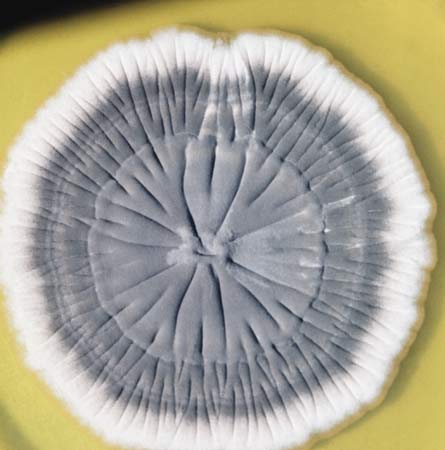 Penicillium
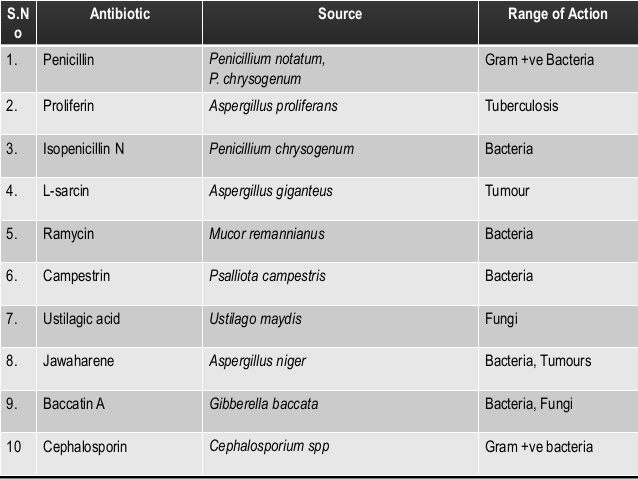 Antibiotics Sourced from Fungi
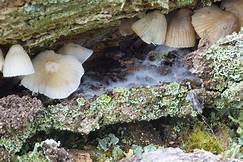 Decomposition
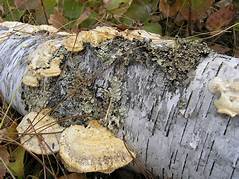
Nature's Recyclers - Select Video Report 8.
If interested in more, select Video Report 5
Some fungi also destroy insects.
2. Fungi also form symbiotic relationships that have both been extensively studied and are of importance to humans. Lichens are organisms that are actually two organisms from two different kingdoms--a fungus and an algae (either prokaryotic or eukaryotic). This combination allows the organism to exist in environments where neither would be able to survive alone. They are often pioneer species that begin the process of breaking down rock into soil.
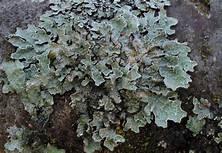
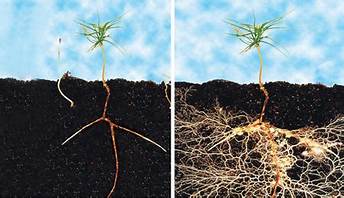
Certain species of fungi form relationships with plant roots and greatly increase the amount of nutrients that can be absorbed. In return the plants provide sugars to the fungi. These fungi are called mycorrhizae.