Diversity of Life: Domain Eukarya, Kingdom Plantae
Diversity of Life: Domain Eukarya, Kingdom Plantae
 Image caption
1. All plants have several basic characteristics. They are terrestrial. They get their nutrients by photosynthesis (are autotrophic). They are multicellular with true tissues and division of labor among cells. They all exhibit an alternation of generations life cycle. They have cell walls with cellulose in them. They store food primarily as starch.
2. Like other terrestrial organisms, it is believed that plants evolved from aquatic or marine varieties, probably the green algae. There are numerous changes in structure, physiology, and life style required to live out of the water. Your text discusses all of them although they may not be in a nice list for you depending on the specific text.
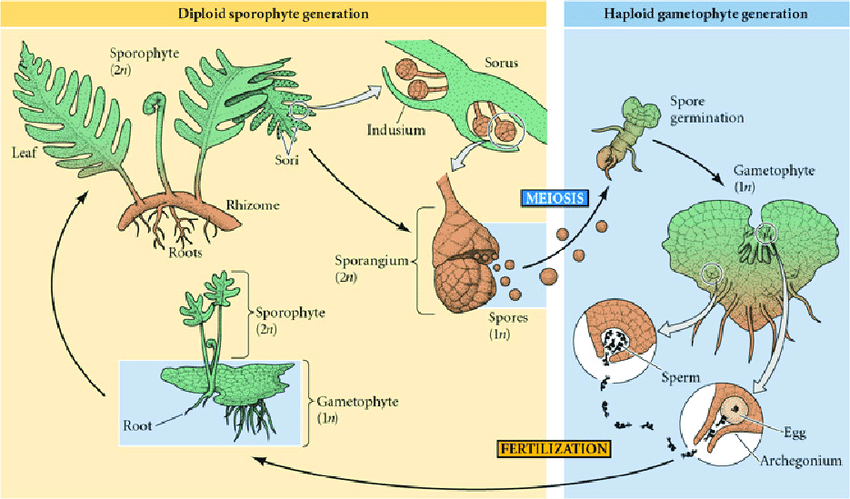
3. All plants exhibit an alternation of generations life cycle. Each of the life cycle diagrams in the text also illustrate this life cycle. As you go through the different types of plants, make sure you identify how the plant illustrates alternation of generations. Always remember that sporophytes are plants that produce spores. Since sporophytes are diploid, spores are produced by meiosis and, therefore, are haploid. Haploid spores grow up to be gametophytes, plants that produce gametes. The gametes are haploid and fuse to form a zygote which grows up to be a new sporophyte.

4. Plants can be broken into categories as follows. The first division is between non-vascular (bryophytes) and vascular plants. Vascular plants can be divided between seedless (ferns) and seed-producing plants. Seed plants can be divided into cone-bearing plants (gymnosperms) and flowering plants (angiosperms).

The following two links will give you much more detail on:
NONVASCULAR PLANTS AND SEEDLESS VASCULAR PLANTS
Plant Adaptions to Land
Organisms in water do not face many of the challenges that terrestrial creatures do. Water supports the organism, the moist surface of the creature is a superb surface for gas exchange, etc. For organisms to exist on land, a variety of challenges must be met.
- Drying out. Once removed from water and exposed to air, organisms must deal with the need to conserve water. A number of approaches have developed, such as the development of waterproof skin (in animals), living in very moist environments (amphibians, bryophytes), and production of a waterproof surface (the cuticle in plants, corklayers and bark in woody trees).
- Gas exchange. Organisms that live in water are often able to exchange carbon dioxide and oxygen gases through their surfaces. These exchange surfaces are moist, thin layers across which diffusion can occur. Organismal response to the challenge of drying out tends to make these surfaces thicker, waterproof, and to retard gas exchange. Consequently, another method of gas exchange must be modified or developed. Many fish already had gills and swim bladders, so when some of them began moving between ponds, the swim bladder (a gas retention structure helping buoyancy in the fish) began to act as a gas exchange surface, ultimately evolving into the terrestrial lung. Many arthropods had gills or other internal respiratory surfaces that were modified to facilitate gas exchange on land. Plants are thought to share common ancestry with algae. The plant solution to gas exchange is a new structure, the guard cells that flank openings (stomata) in the above ground parts of the plant. By opening these guard cells the plant is able to allow gas exchange by diffusion through the open stomata.
- Support. Organisms living in water are supported by the dense liquid they live in. Once on land, the organisms had to deal with the less dense air, which could not support their weight. Adaptations to this include animal skeletons and specialized plant cells/tissues that support the plant.
- Conduction. Single celled organisms only have tyo move materials in, out, and within their cells. A multicellular creature must do this at each cell in the body, plus move material in, out, and within the organism. Adaptations to this include the circulatory systems of animals, and the specialized conducting tissues xylem and phloem in plants. Some multicellular algae and bryophytes also have specialized conducting cells.
- Reproduction. Organisms in water can release their gametes into the water, where the gametes will swim by flagella until they ecounter each other and fertilization happens. On land, such a scenario is not possible. Land animals have had to develop specialized reproductive systems involving fertilization when they return to water (amphibians), or internal fertilization and an amniotic egg (reptiles, birds, and mammals). Insects developed similar mechanisms. Plants have also had to deal with this, either by living in moist environments like the ferns and bryophytes do, or by developing specialized delivery systems like pollen tubes to get the sperm cells to the egg.
From The Online Biology Book
You have all seen bryophytes--non-vascular plants. Mosses are the most common example that you will see in the "wild". The green moss plant you see is the gametophyte (haploid) generation. As a result, they are considered to be gametophyte dominant plants. Where is the sporophyte? The sporophyte grows out of the gametophyte and dies after spores are released.


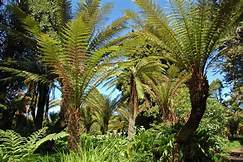
Ferns and their allies are vascular plants but they do not produce seeds. Being vascular, they can transport water upwards and get much taller than the bryophytes. Ferns are very common in Virginia. Most ferns in our local area do not grow over a meter in height. In the tropics, however, they can be tree sized. In ferns, the sporophyte and gametophyte are frequently completely independent plants that do not resemble each other at all.
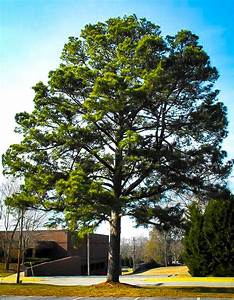 Ponderosa Pine
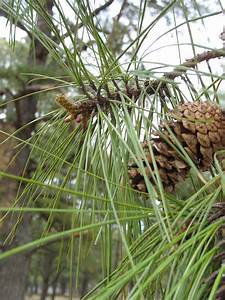 Loblolly Pine
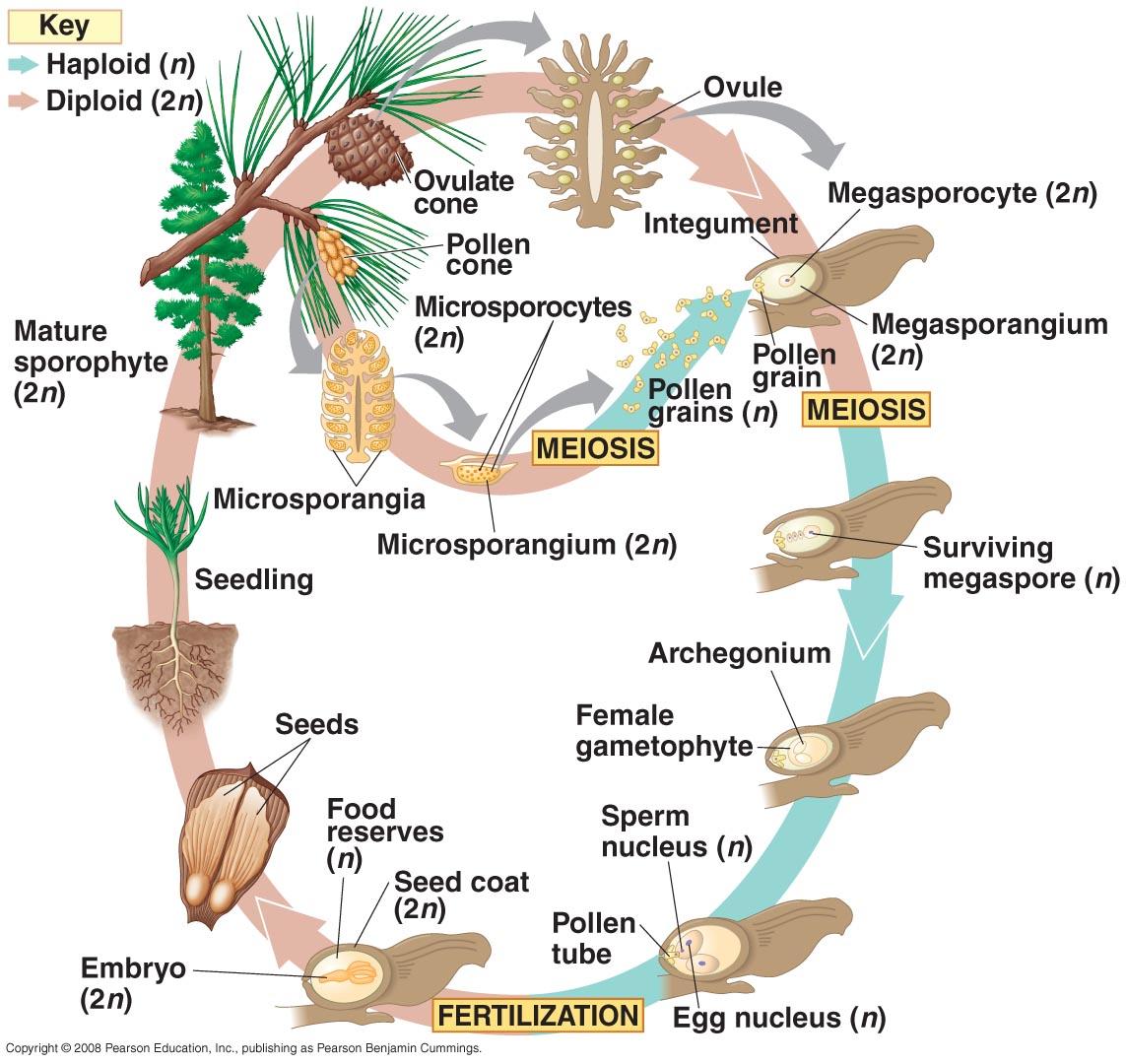
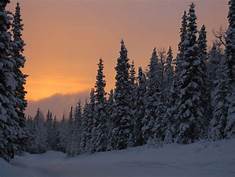
The development of seeds provides a significant reproductive advantage to those plants that form them. In the seedless plants, the spore was the primary method of dispersal. However, spores are immediately on their own to grow and survive--regardless of environmental conditions. So, imagine taking a sporophyte embryo, surrounding it with nutrients to give it a head start on growth, and then wrapping it in a protective covering so that you can wait for some amount of time for suitable environmental conditions--that is a seed. There are two groups of seed plants. The first are the gymnosperms--the naked seed plants. These seeds develop on the scales of the cones produced by these plants. They have no covering such as a fruit - naked seed plants.
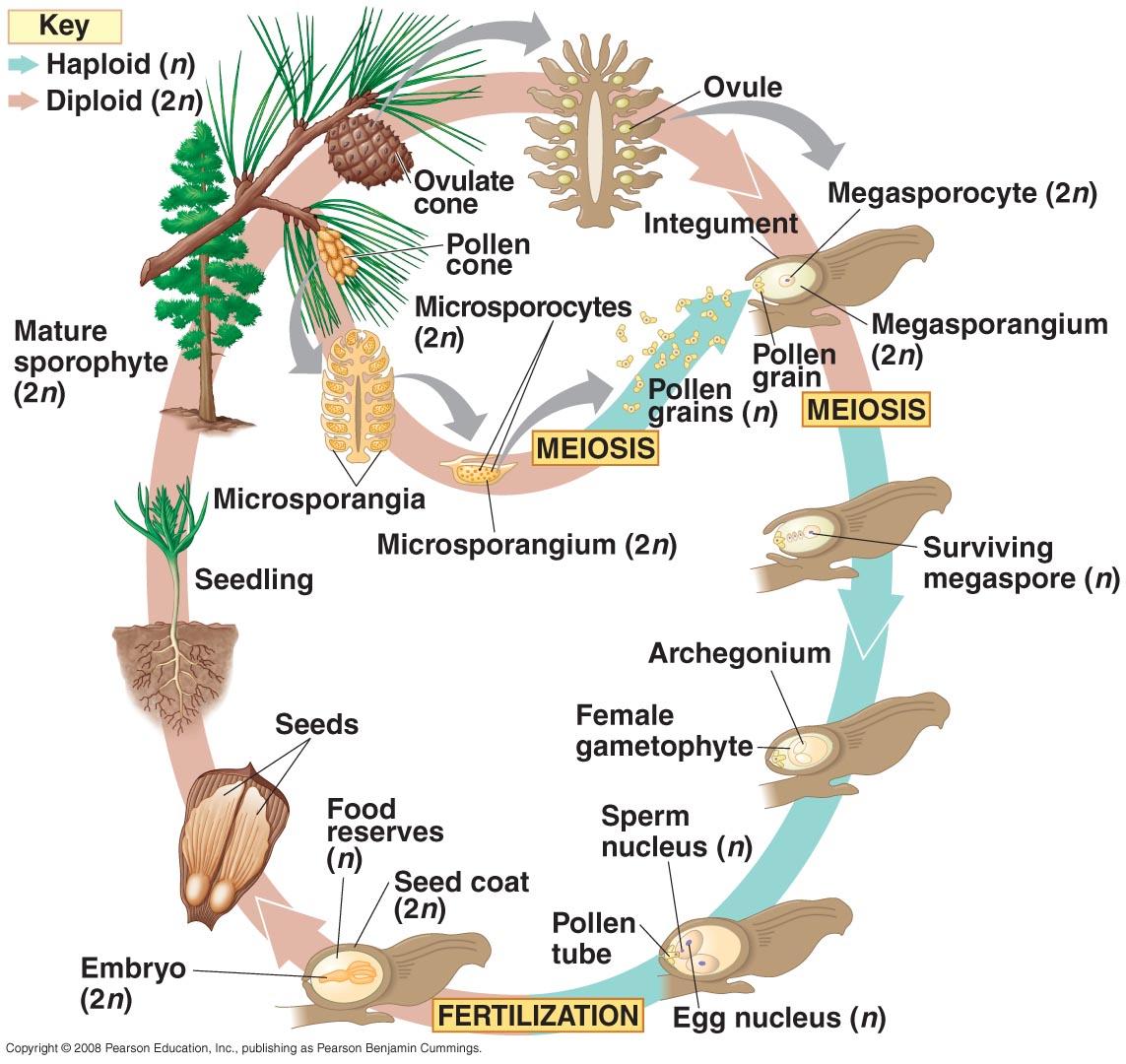
The second group of seed plants has further refinements. Conifers rely on wind for pollination. It would be much more efficient to get someone to carry the pollen from plant to plant. But, no animal will do that for the plants--they can, however, be tricked or bribed. Flowers are there to attract pollinators to the plant (showy, colorful petals) and then reward them with food (nectar and extra pollen). Then, the animal will go to other plants and spread the pollen inadvertently. Conifers also rely on gravity and wind to distribute seeds. Once again, if you could get some animal to carry seeds for you, the dissemination of seeds would be greatly improved. Once again, animals don't do this out of some altruistic desire to help plants. Instead, they must be induced to do it--fruit is the attraction for the animal (food) and it again carries and distributes seeds inadvertently. The flowering plants are the most widespread on the planet. 1.Plants are of great importance to animals in general and humans in particular. They are the source of ALL of our nutrients. The staple foods of most cultures are grains - angiosperms.