Community Ecology
Community Ecology
To start, we need to define what we mean by an ecosystem. There are many different descriptions that we could use. I have chosen what I consider to be a good operational description; it can organize how we investigate what happens in the system.
An ecosystem is a defined area including all the living organisms interacting with their environment (biotic and abiotic) to produce a flow of energy that results in:
1. a defined trophic structure;
2. biotic diversity;
3. material cycles.
One of the basic characteristics of all life that you covered in the Introduction to Biology unit is that living things use energy. They use energy to maintain their organization (arrangement of molecules and cells) that allows them to stay alive. Since the second law of thermodynamics states that energy transformations are never 100%, some of the energy always gets "lost" as heat. "Lost" is used only in the sense that it is no longer useable by living organisms to sustain life; it is not destroyed. Instead that heat radiates back into space and is gone as far as the earth is concerned. So what does any of this have to do with ecosystems or is it just the usual ravings of some biology instructor. We get our energy by eating food--other living organisms or their products. That conversion of chemical energy in the food molecules to ATP by our mitochondria is a series of enrage transformations. Some energy is lost at every step; consequently we don't have the option to not eat. This section examines that flow of energy through the ecosystem and how it works. To start, then, we need to trace the energy from source (the sun) through living organisms--in other words, the trophic structure. Trophic structure is the delineation of who eats who in an ecosystem; feeding is how the energy moves between the levels described below.
You will find that the energy flow process and penalties extracted by the second law of thermodynamics result in 90% energy loss between trophic levels--from level to level in a food chain/web. The result is that a graphic representation of energy available at each trophic level results in a pyramid shape. Thus, each trophic level has fewer organisms because there is 90% less energy to sustain life at that level. Therefore, there are always more primary producers (autotrophs) than herbivores (primary consumers) than higher level consumers. Primary producers are the entry point for energy. In our case, these are mostly organisms that do photosynthesis (plants, algae, cyanobacteria) that convert light energy from the sun into chemical energy that can be used to build new cell materials or just keep the cell organized and functional. Failure of the bottom level of the pyramid results in collapse of the entire system. If the graphic represents numbers of animals or mass of organisms at each level, you normally get a similar pyramid. However, the energy pyramid is considered to be the truest representation of what is happening.
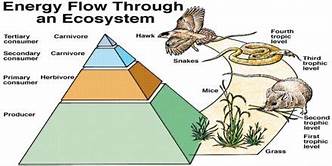
So, trophic structure is how the energy flows through the living or biotic part of every ecosystem. Primary producers are autotrophs that can capture sunlight energy and incorporate it into organic compounds.
Consumers are heterotrophs that feed on tissues of other organisms.
a. Herbivores eat plants.
b. Carnivores eat animals.
c. Parasites reside in or on living hosts and extract energy from them.
d. Omnivores eat a variety of organisms.
Detritivores include small invertebrates that feed on partly decomposed particles of organic matter (detritus).
Decomposers are also heterotrophs and include fungi and bacteria that extract energy from the remains or products of organisms.
Predation = energy flow. This flow can be represented simply by food chain diagram.
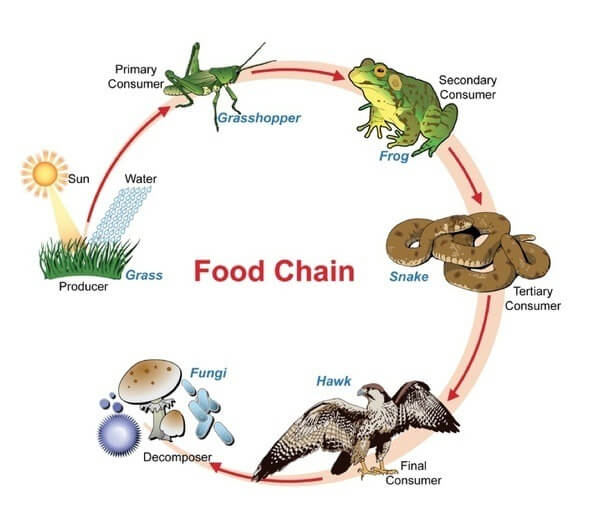
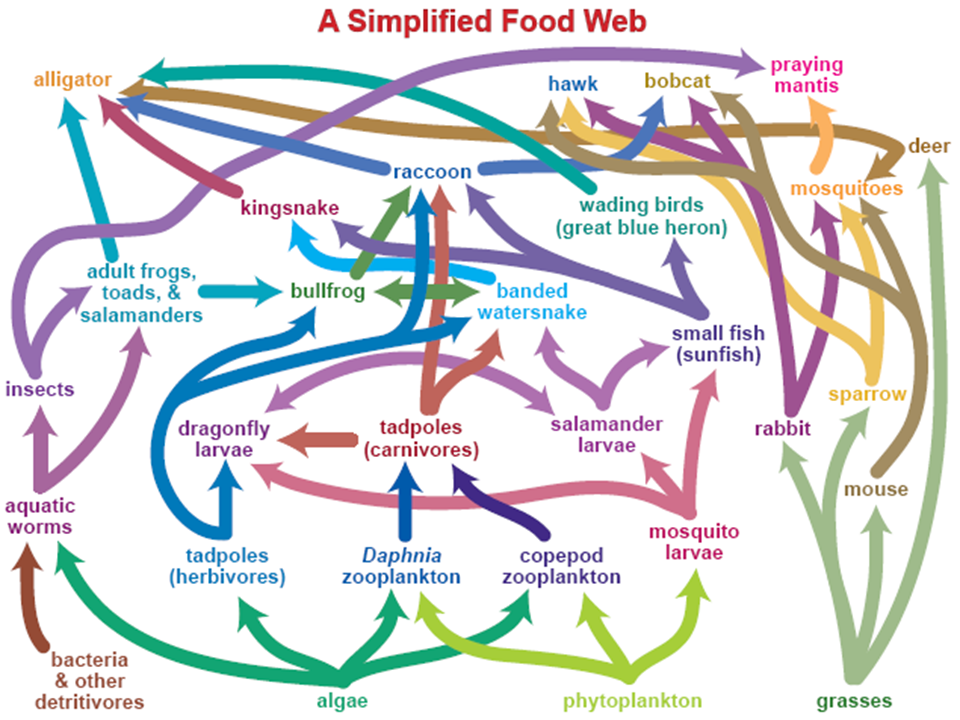
Reality, of course, is always more complex than a straight line food chain. Insects may feed on many different plants. Birds eat a variety of insects or seeds. A much better depiction is a food web. A food web shows "all" of the feeding relationships within an ecosystem. Rarely do we know every organism in an ecosystem let alone every feeding connection. But, even a partial representation is better than a food chain.
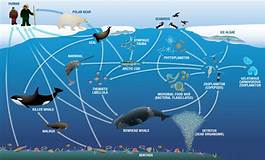 Marine Food Web
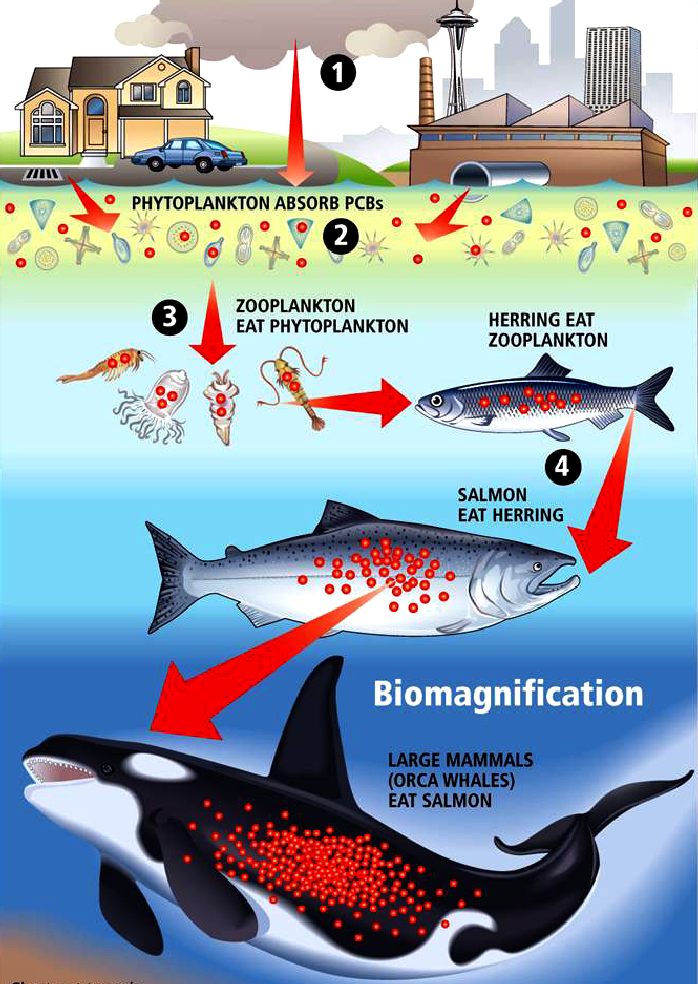
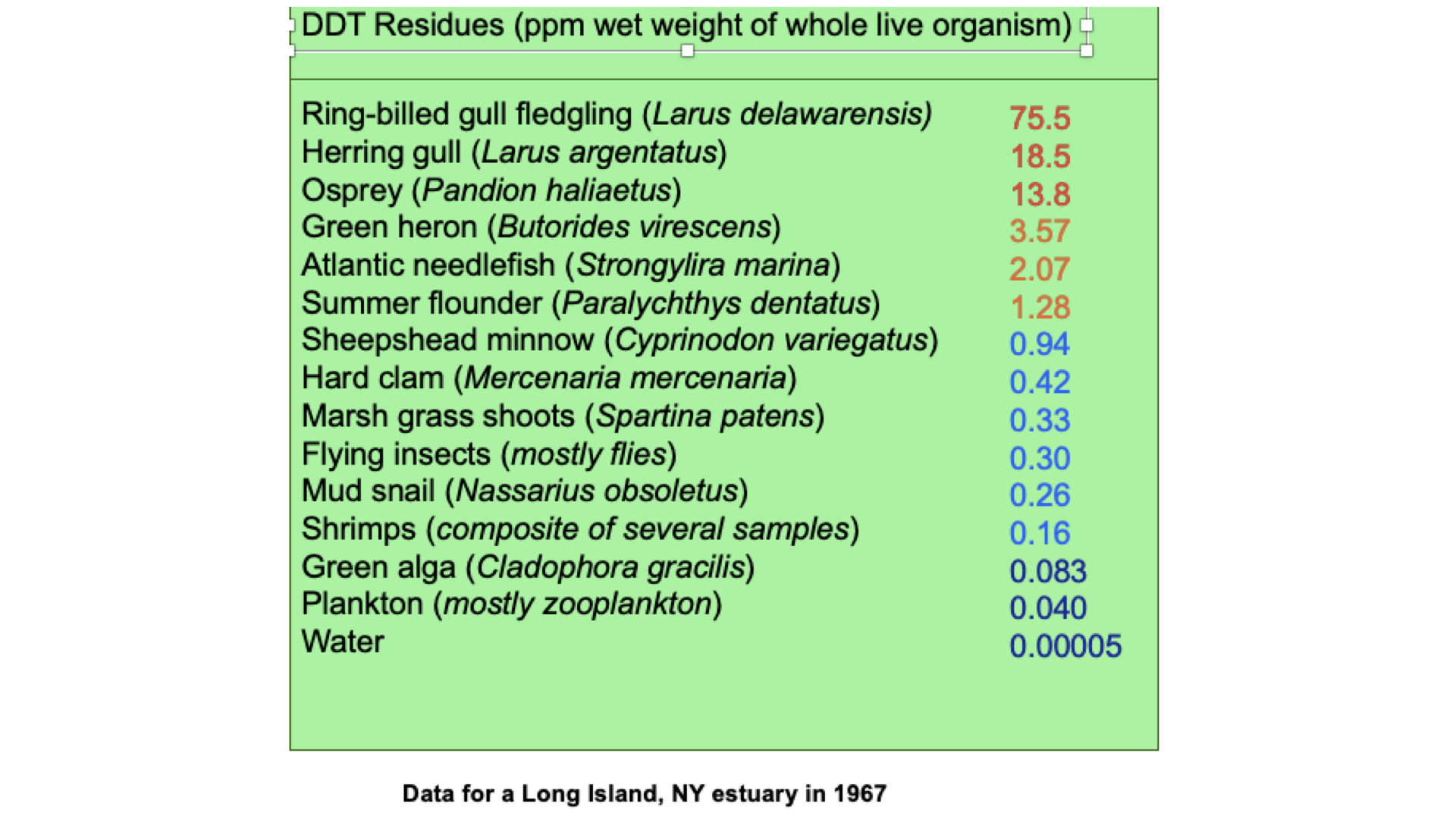
One of the consequences of trophic structures is that materials composing organisms are passed to the organism of the next trophic level. If the chemical, like DDT, can't be metabolized, it accumulates in that organism. When it is preyed upon, the accumulated chemical passes to the next level. Even though the amount in any organism may be small, when you keep adding more and more small amounts, it becomes (magnified) more concentrated and can become toxic.
Ecosystem Analysis
1. Models are used to monitor and predict the outcome of disturbances to ecosystems.
2. Information for the models can be gathered by observations, satellite imaging, remote sensing devices, and tests.
Some Chemical Background
1. Highly toxic compounds have been used in the past for various pesticides without understanding or considering the consequences to the environment.
2. Examples include herbicides, insecticides, and fungicides; by 1995 over 1.25 billion pounds of toxins were sprayed.
DDT in Food Webs
1. DDT, which was an effective chemical to kill mosquitoes, accumulates in the fatty tissues of organism and results in biological magnification and unexpected nontarget effects (like bird eggs) occurring much later in time.
2. Even though DDT has been banned since the 1970s, the chemical is very persistent in certain sections of the environment, namely sediments.
3. Ecologists are monitoring heavy metals, radioisotopes in addition to pesticides for biological magnification in organisms.
Every ecosystem contains some number of species. Those with more energy flow through the food web have more niches and more species. There are two terms used to describe the diversity. One is called species richness. This is a measure of simply how many different species exist in the ecosystem. But, it is a poor measure of the quality and stability of the ecosystem. Imagine a corn field. There is a lot of biomass, but farmers put in a lot of energy to ensure one species dominates and there are few organisms of other species. Alawn is the same type of system. Without humans continually using energy to maintain these ecosystems they quickly change and accumulate many more species and numbers of individuals of each species. The more complex the food web becomes, the more stable the system becomes. To measure this aspect we use a species diversity index that takes into account both the number of species and the number of individuals of each species in the ecosystem. There are several indexes available. The most common are the Simpson and the Shannon indices.
The more different species there are in an ecosystem the more interactions will occur. These interactions can be grouped into specific types.
Symbiotic Relationships: These are characterized by interactions between different species. They are long-term interactions in an many cases are essential for one or more of the organisms to complete their life cycle.
Commensalism: One species benefits while the other is not affected (for example, a bird’s nest in a tree), and you and your eyelash mites.
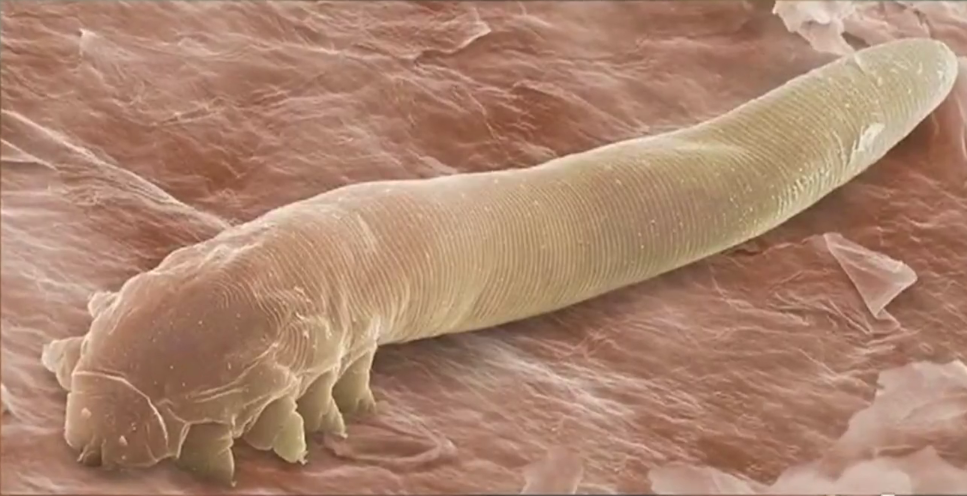 Eyelash Mite
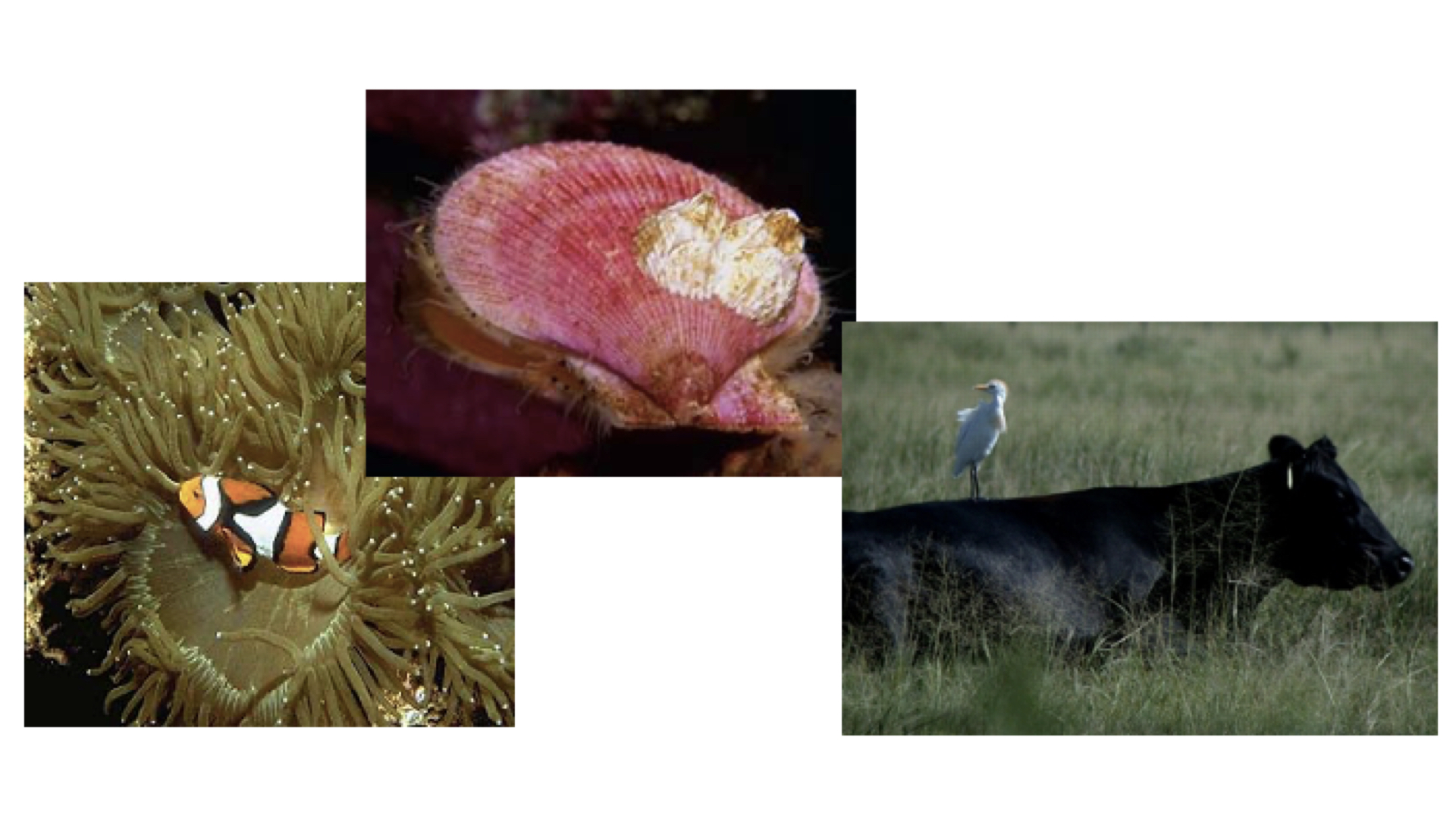 Commencalism
Mutualism: Facultative mutualism involves helpful, but nonessential interactions like ants and aphids. Obligatory mutualism is where each species must have access to the other in order to complete its life cycle and reproduce. One example is the yucca moth, which feeds only on the yucca plant, which is completely dependent upon the moth for pollination; another is the symbiotic relationship between lichen and algae in lichens.
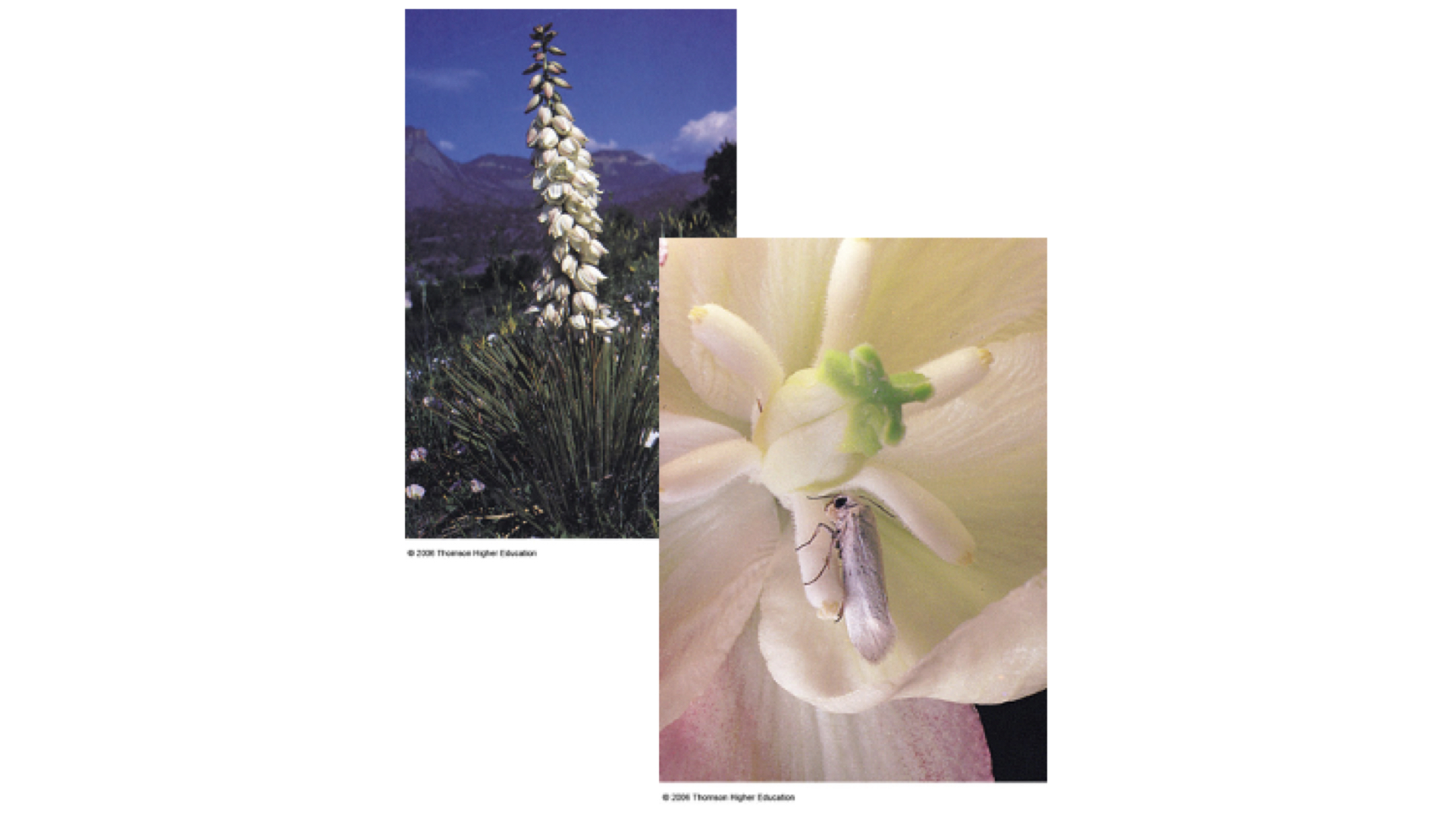 Yucca and Moth
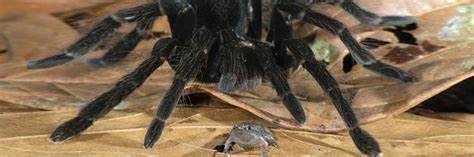
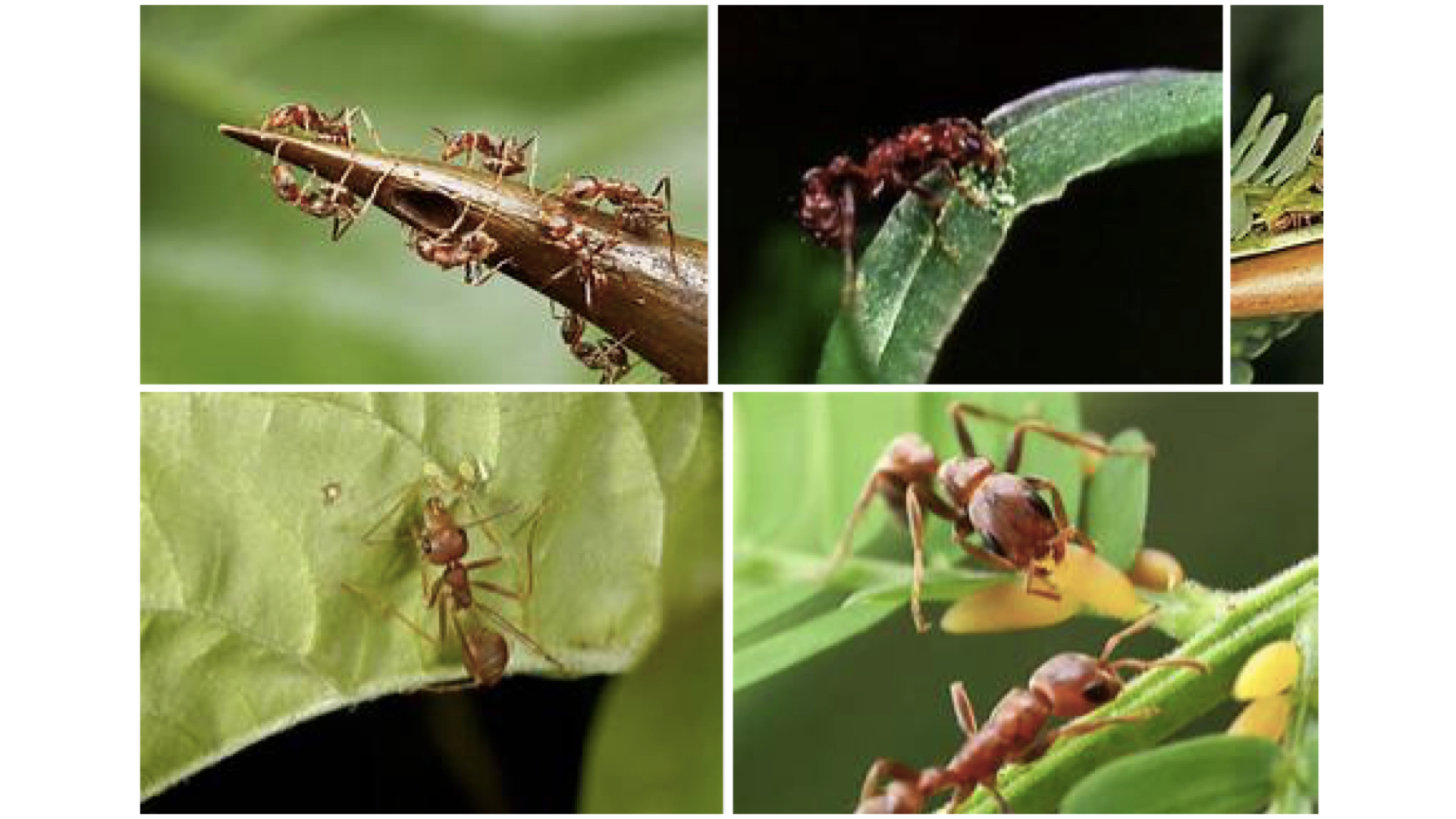
Other examples are acacia trees and a specific species of ants, frog and a type of tarantula (frog eats small insects that damage the spiders eggs and the spider protects the frog)
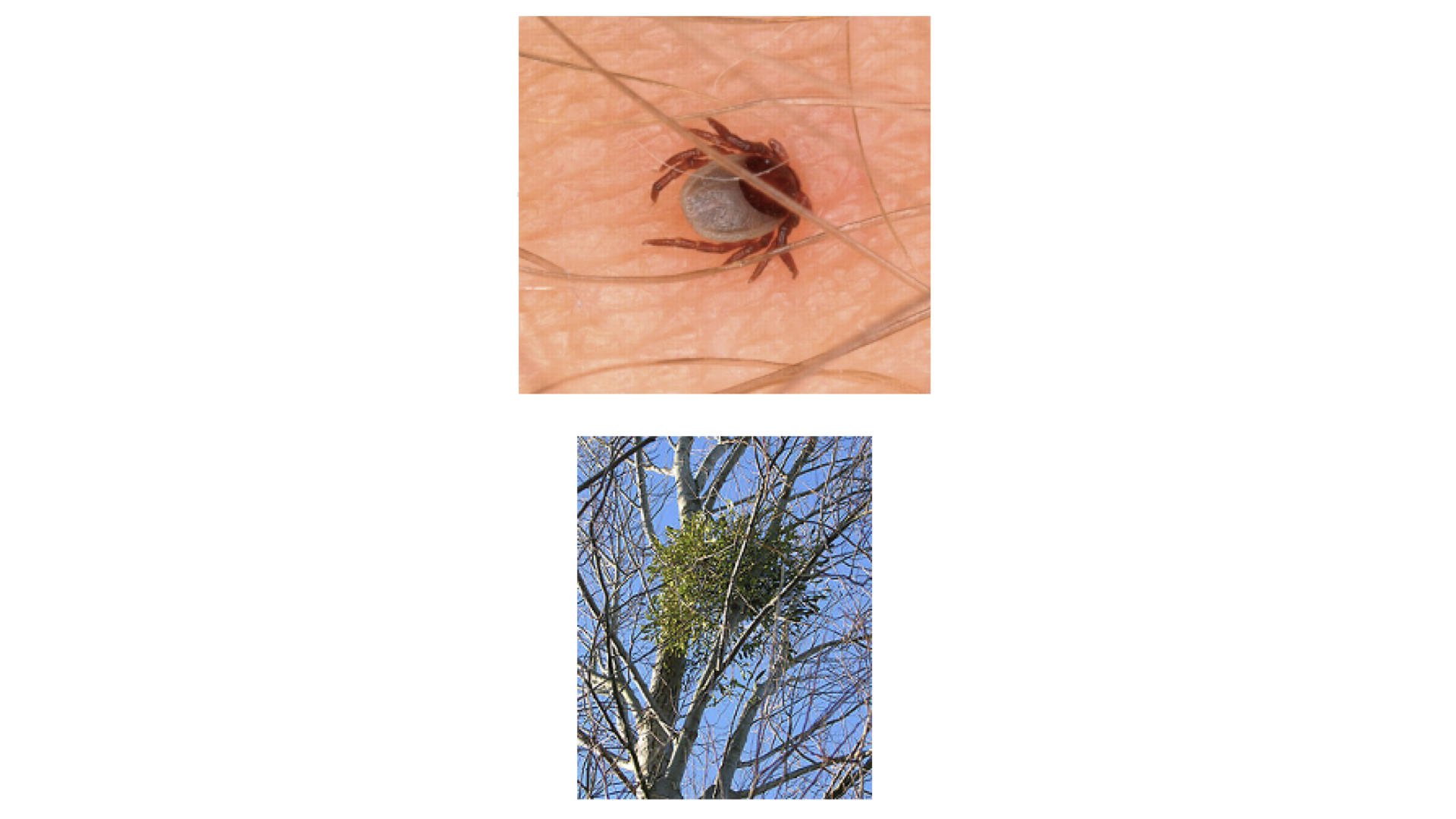
Parasitism: One species (parasite) benefits while the other (host) is harmed.
Parasites drain nutrients from their hosts, weakening them and making them more vulnerable to predators and less attractive to potential mates. Parasite infections cause sterility and shift the ratio of males to females in their hosts, resulting in lower birth rates, higher death rates, and having an effect on competitive interactions among the hosts. Killing a host is not usually good evolutionary strategy for the parasite; usually death results only when a parasite attacks a novel host or when the number of parasites overwhelms the host’s defenses.
There are a number of types of parasites depending on size (macro- or microparasites), are inside or on the surface of the host (endocrine- and ectoparasites), and there are also species which take advantage of the behavior of another species (social parasites). Social parasites depend on the social behavior of another to complete the lifecycle; for example, cowbirds lay their eggs in the nest of other birds, which unknowingly incubate and hatch the cowbirds’ eggs. Brown-headed cowbirds evolved in the North American Great Plains. The birds followed the buffalo herds, which stirred up insects for the birds’ meals as they roamed the land. The vagabond lifestyle did not lend itself to nesting in one place, so the cowbirds laid their eggs in the nests of other species. The “host” species incubated the cowbird eggs as if they were their own. But the cowbird hatchlings shoved the owner’s eggs out of the nest and demanded to be fed as rightful occupants. As cattle replaced buffalo, the cowbirds adapted to the new herds. Today, brown-headed cowbirds parasitize at least 15 species of native North American birds. One female bird can lay as many as 30 eggs in 30 nests in one breeding season.
There are also some parasites where the larval form develops inside another organism; these are called parasitoids. Parasites are not confined to animals. There are also plant parasites such as mistletoe, indian pipe, and dodder.
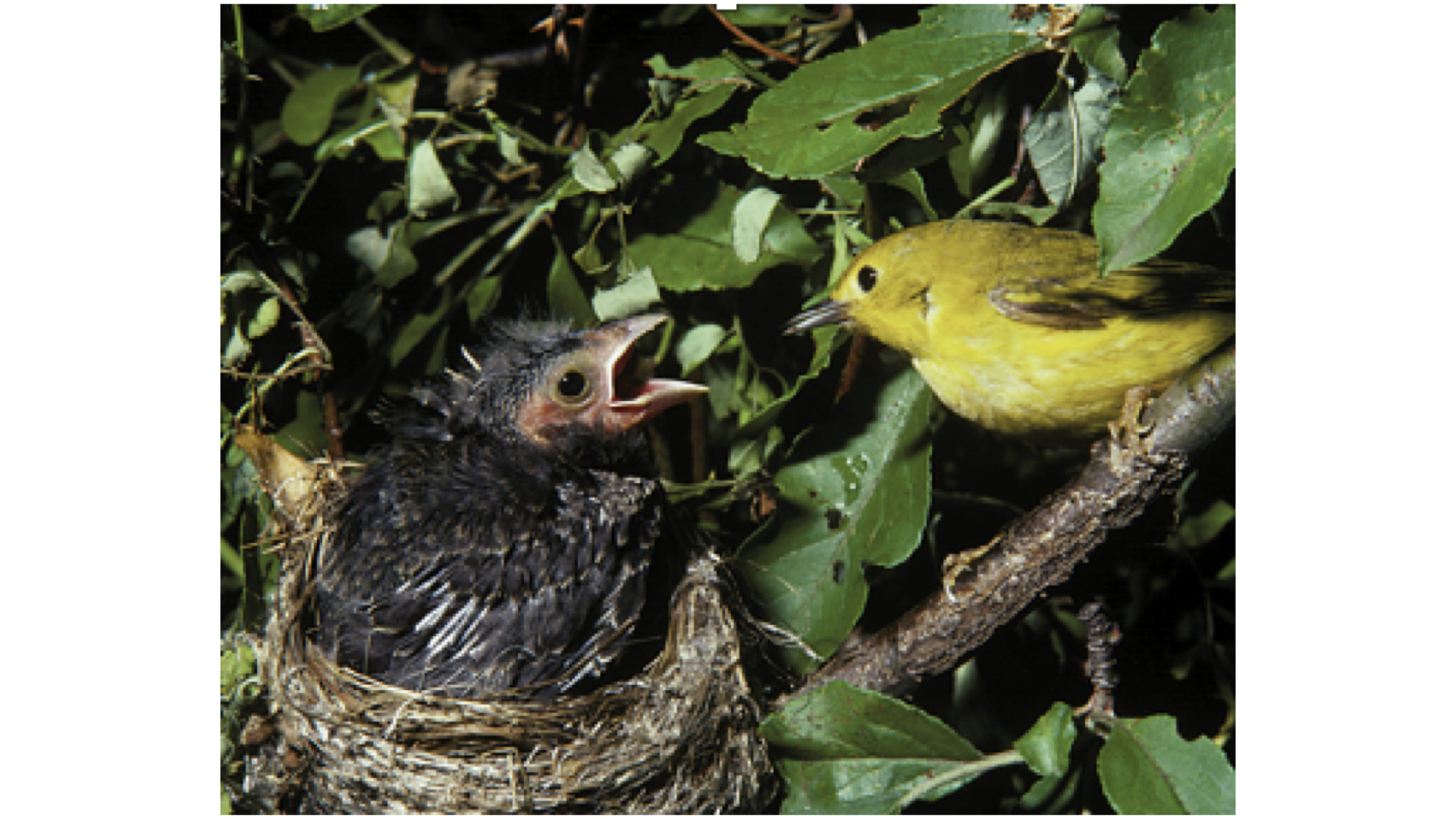 Cow bird nestling has pushed host bird nestlings out of nest. They continue to feed the gaping mouth--it is an innate behavior.
Parasitoids
There are two major categories of competition. Competition within a population of the same species (intraspecific) is usually fierce and may result in depletion of a resource. Interspecific competition (between different species) is less intense because requirements are less similar than between the competitors. There are two types of interspecific competitive interactions. In interference competition, some individuals limit others’ access to the resource. In exploitation competition, all individuals have equal access to a resource but differ in their ability (speed or efficiency) to exploit that resource.
Theory of Competitive Exclusion
Competitive exclusion suggests that complete competitors cannot coexist indefinitely. When competitors’ niches do not overlap quite as much, the coexistence is more probable. Differences in adaptive traits will give certain species the competitive edge. Classic example is Gause’s experiment with two species of Paramecium.
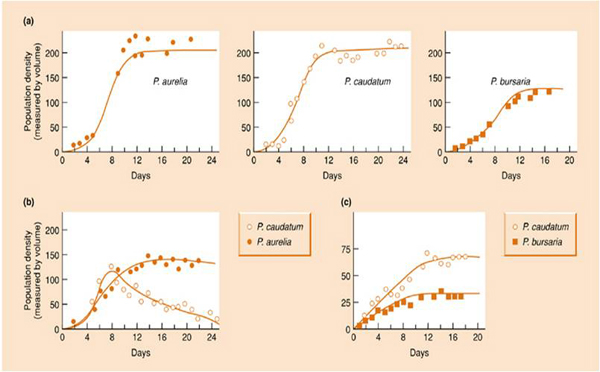
Field experiments yield effects of competition, such as the experiments with Plethodon salamanders by N. Hairston, showing where populations of the two species coexist in nature; competitive interactions suppress their growth rates.
Resource Partitioning
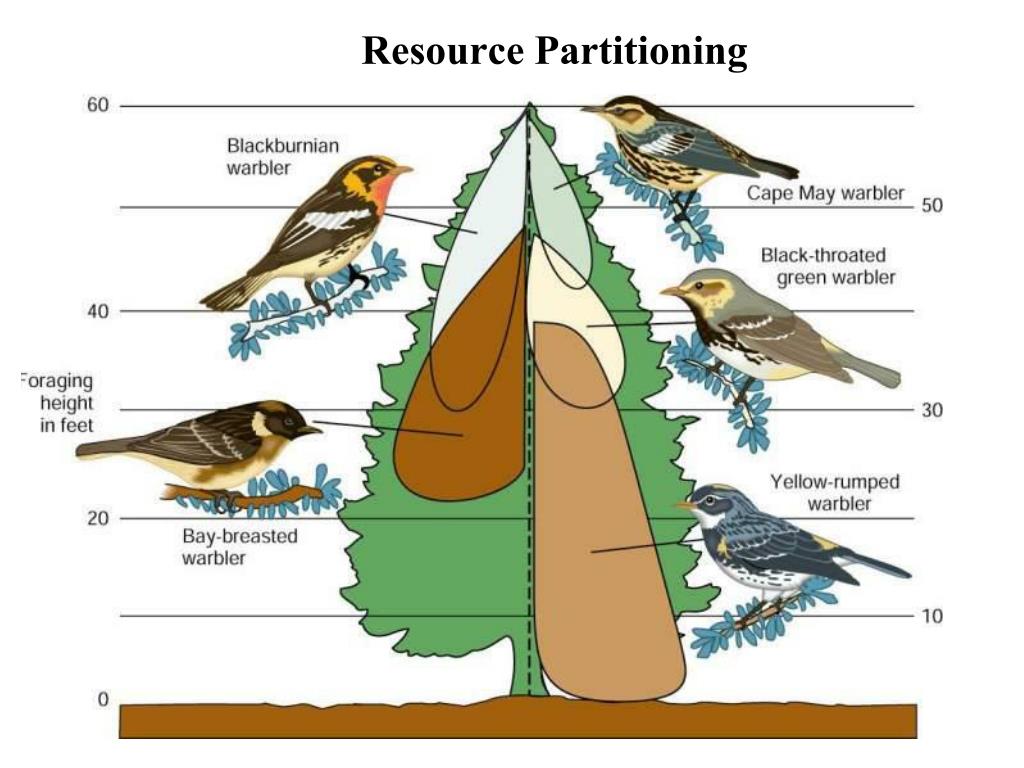
Similar resources may be subdivided in a way that allows competing species to coexist. In resource partitioning organisms can share required resources in different way or at different times, which allows them to coexist with competitive exclusion principles kicking in.
Predator–Prey Interactions
Predators get their food from prey, but they do not take up residence on or in the prey. Many of the adaptations of predators and their prey arose through coevolution, where the species evolved jointly as their close ecological interactions exerted selection pressure on each other over many generations.
Predators are selective agents that favor improved prey defenses in their prey; prey with the better defenses are selective agents that favor more effective predators.
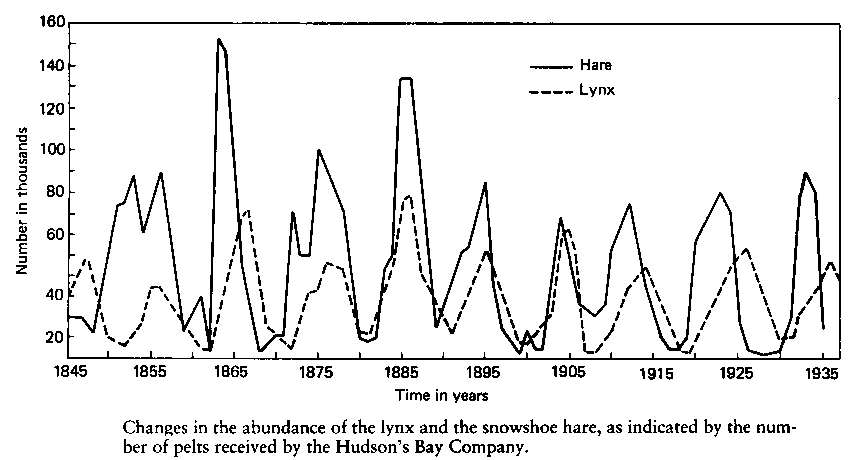
The Canadian Lynx and Snowshoe Hare
Stable coexistence results when predators prevent prey from overshooting the carrying capacity. Fluctuations in population density tend to occur when predators do not reproduce as fast as their prey, when they can eat only so many prey, and when carrying capacity for prey is high. Using over 100 years of data from the Hudson Bay Company trapping records, the following pattern emerges:
Prey Defenses
Camouflaging is any adaptation in form, color, patterning, or behavior that allows a prey or predator to blend with its surroundings.
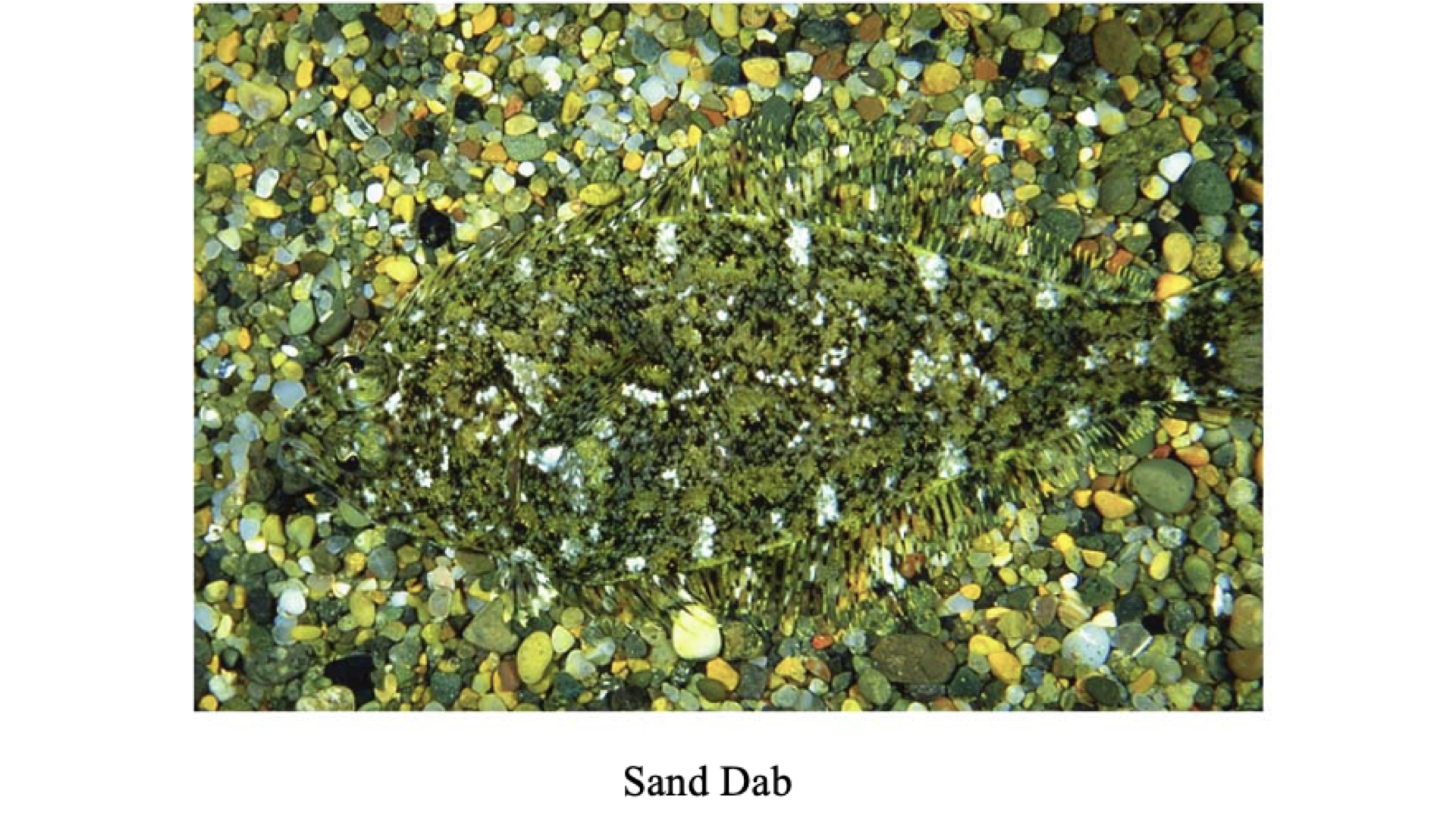
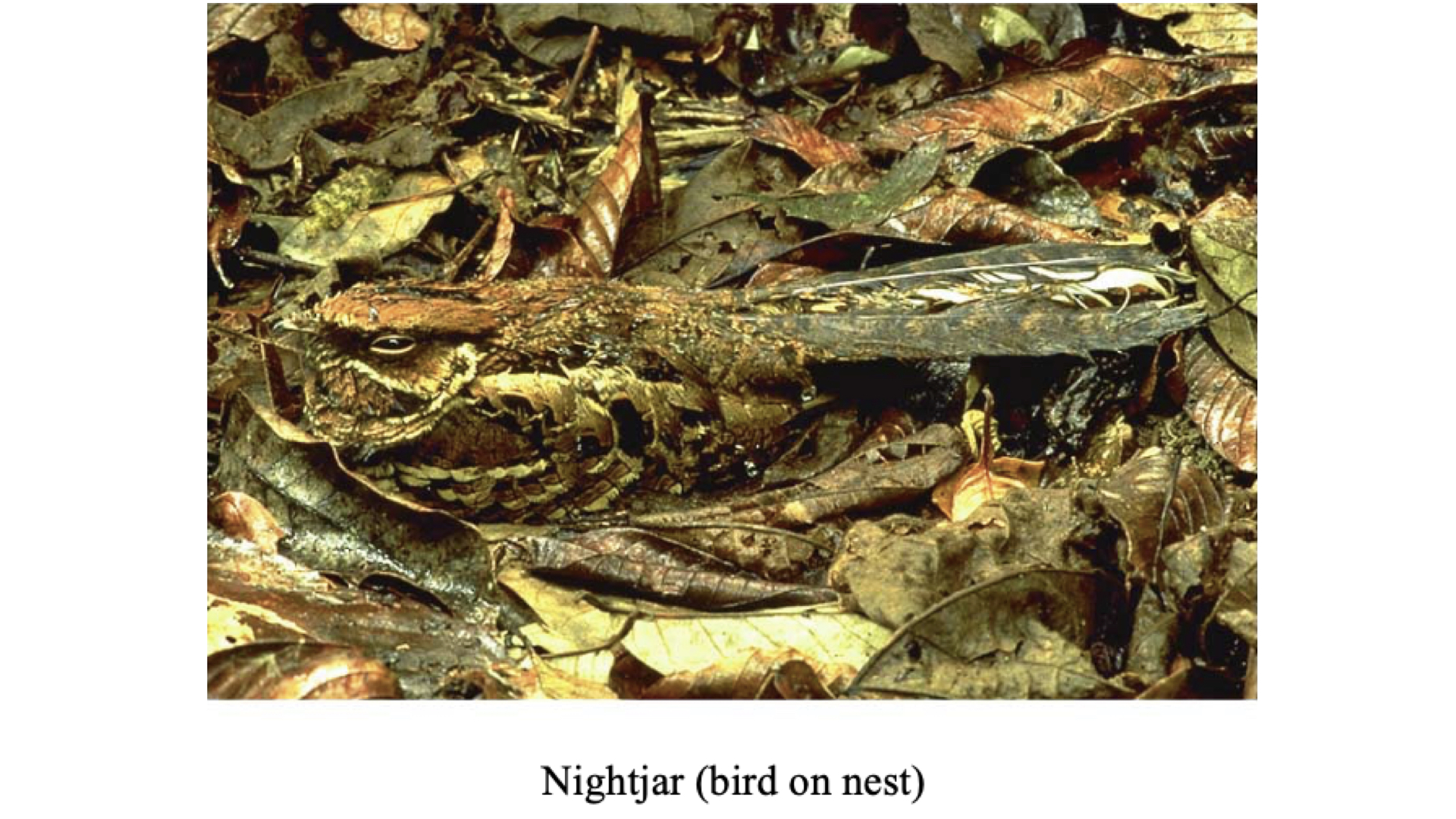
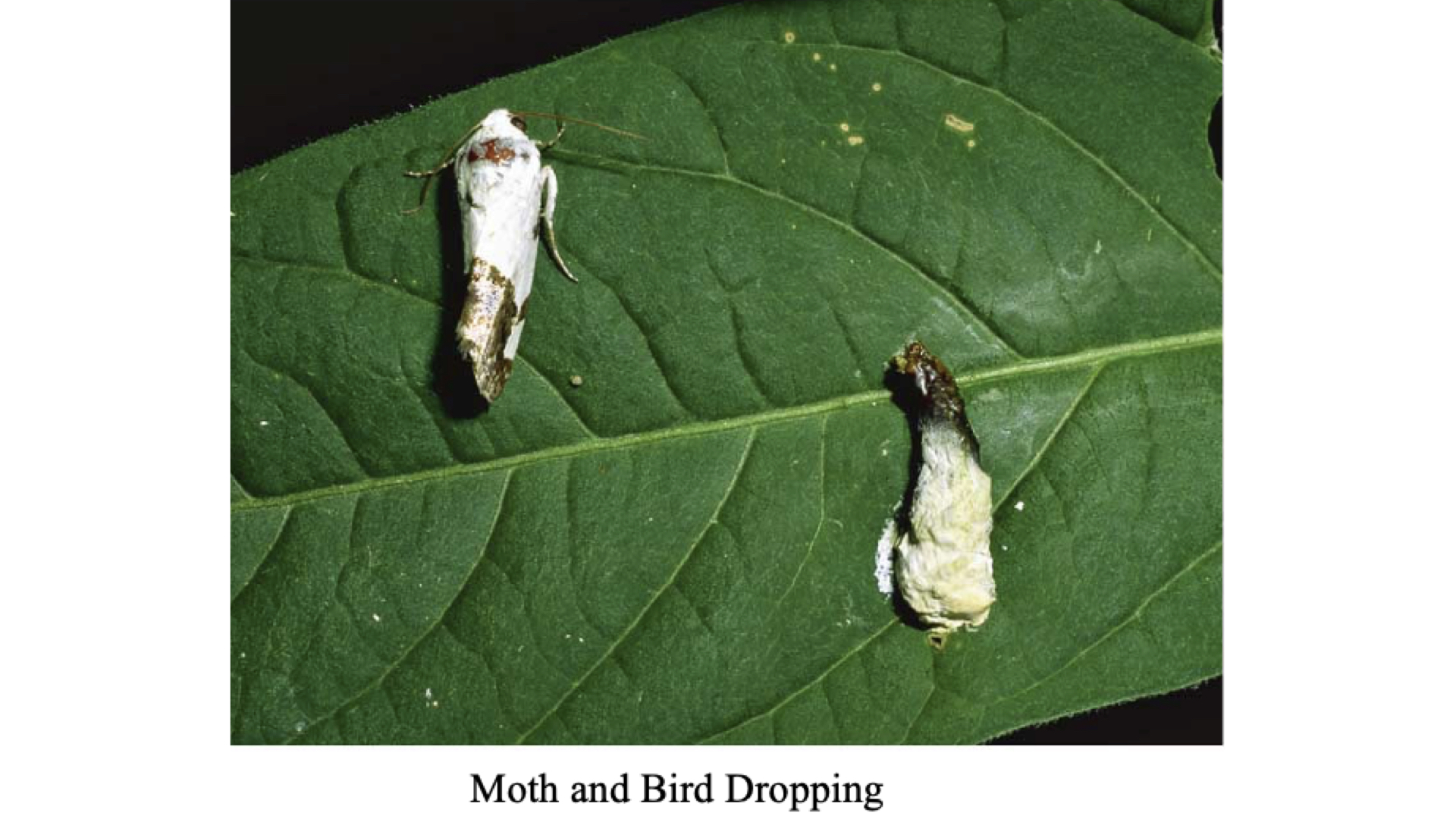
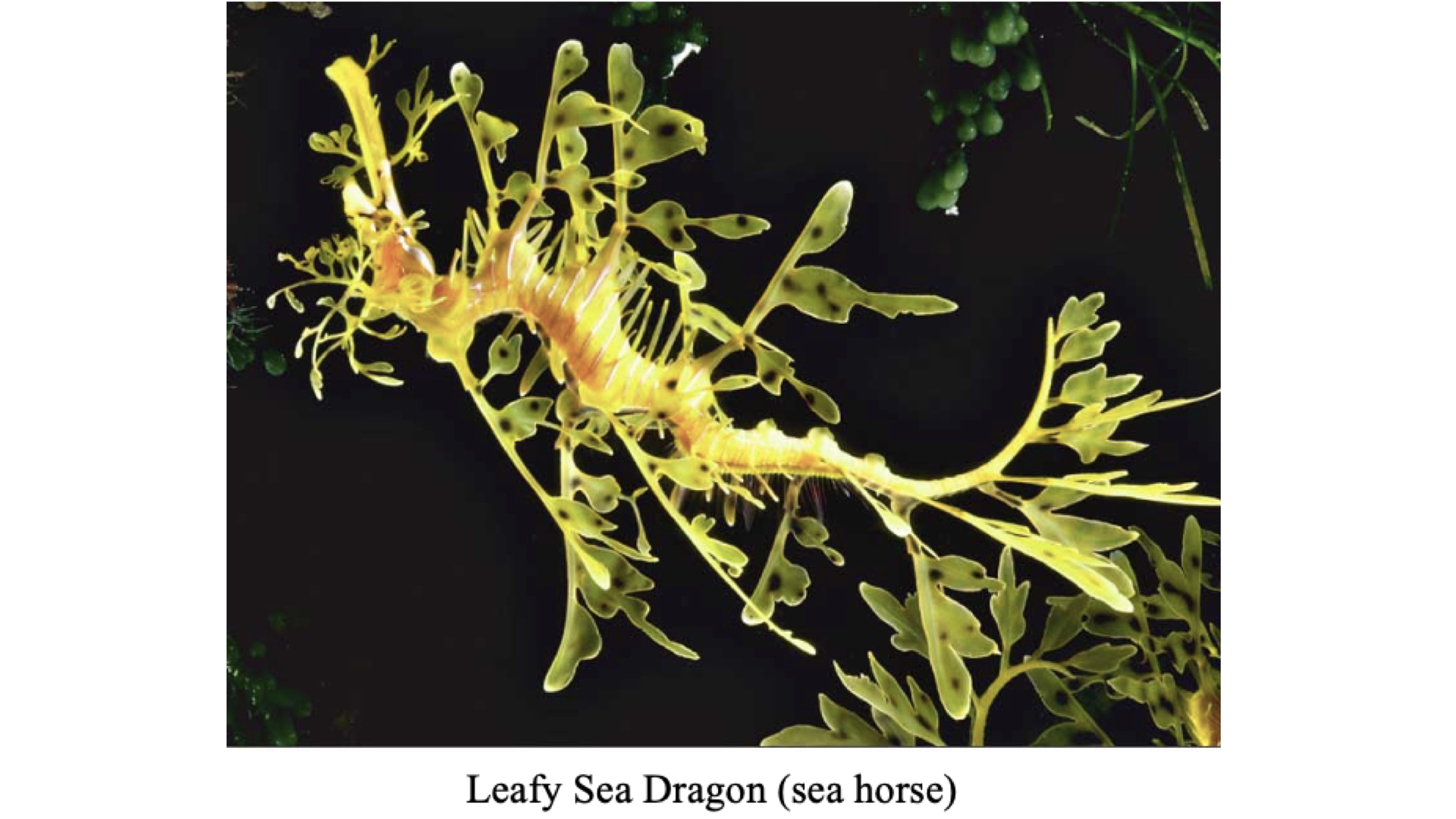
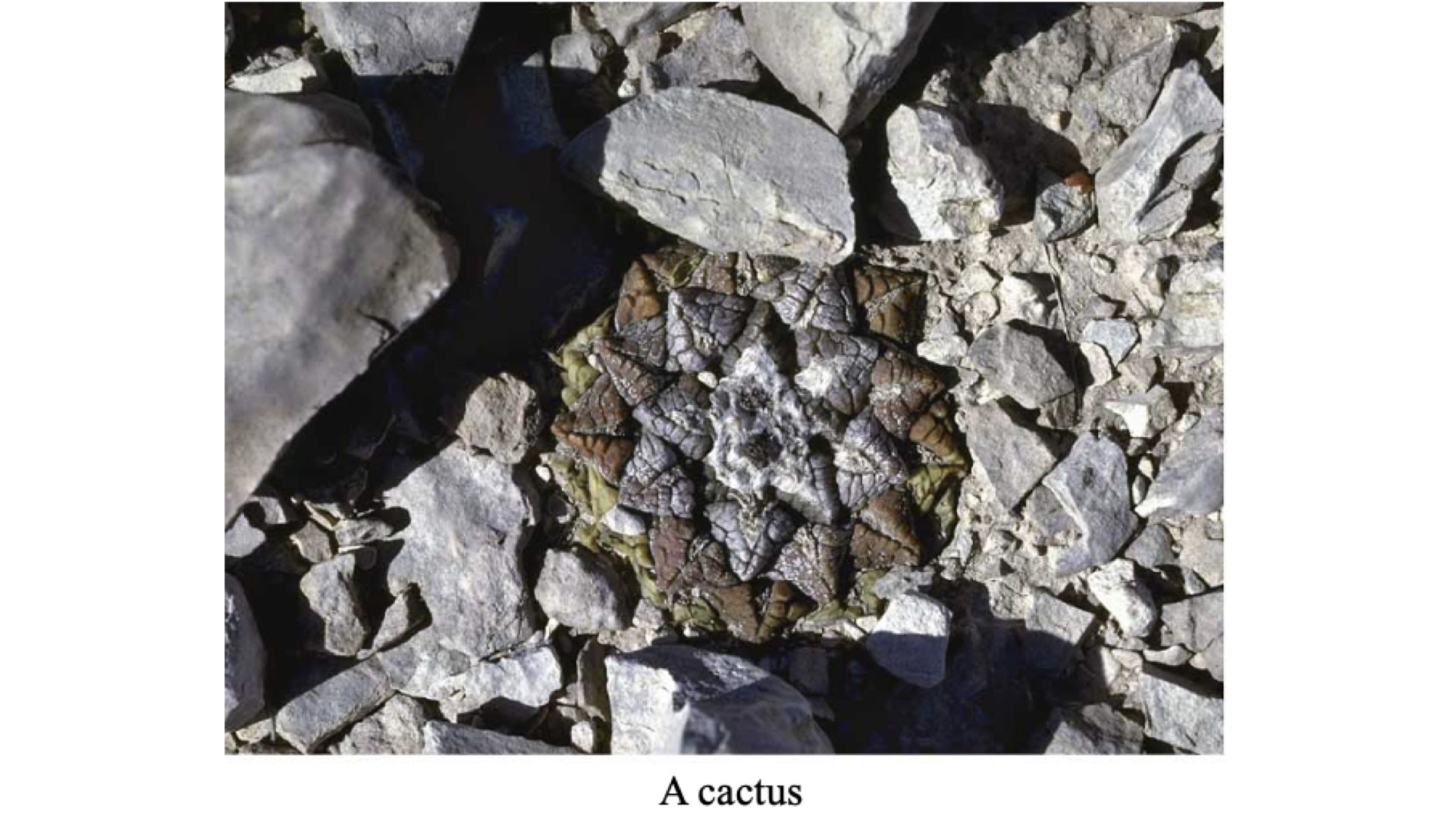
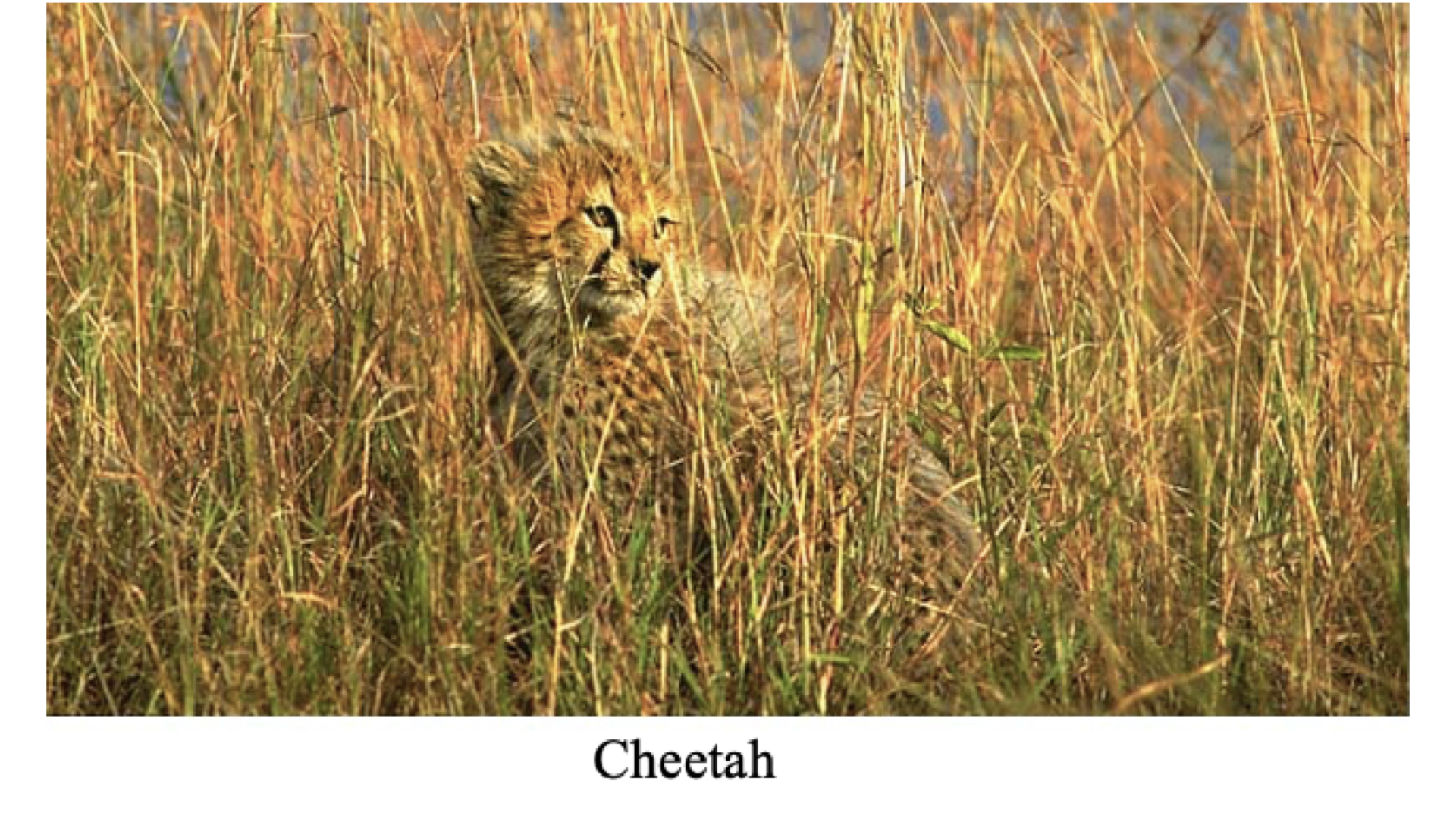
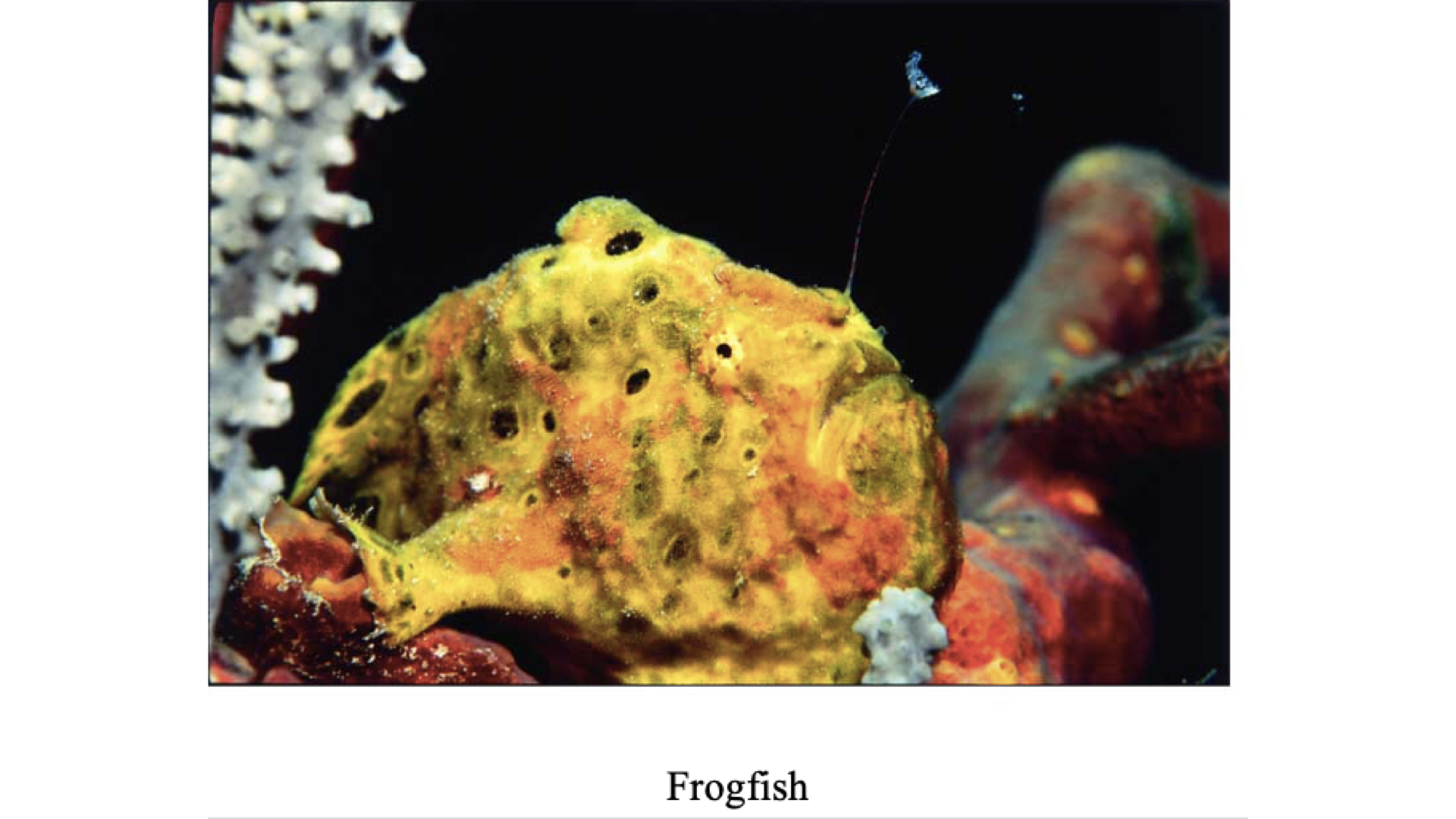
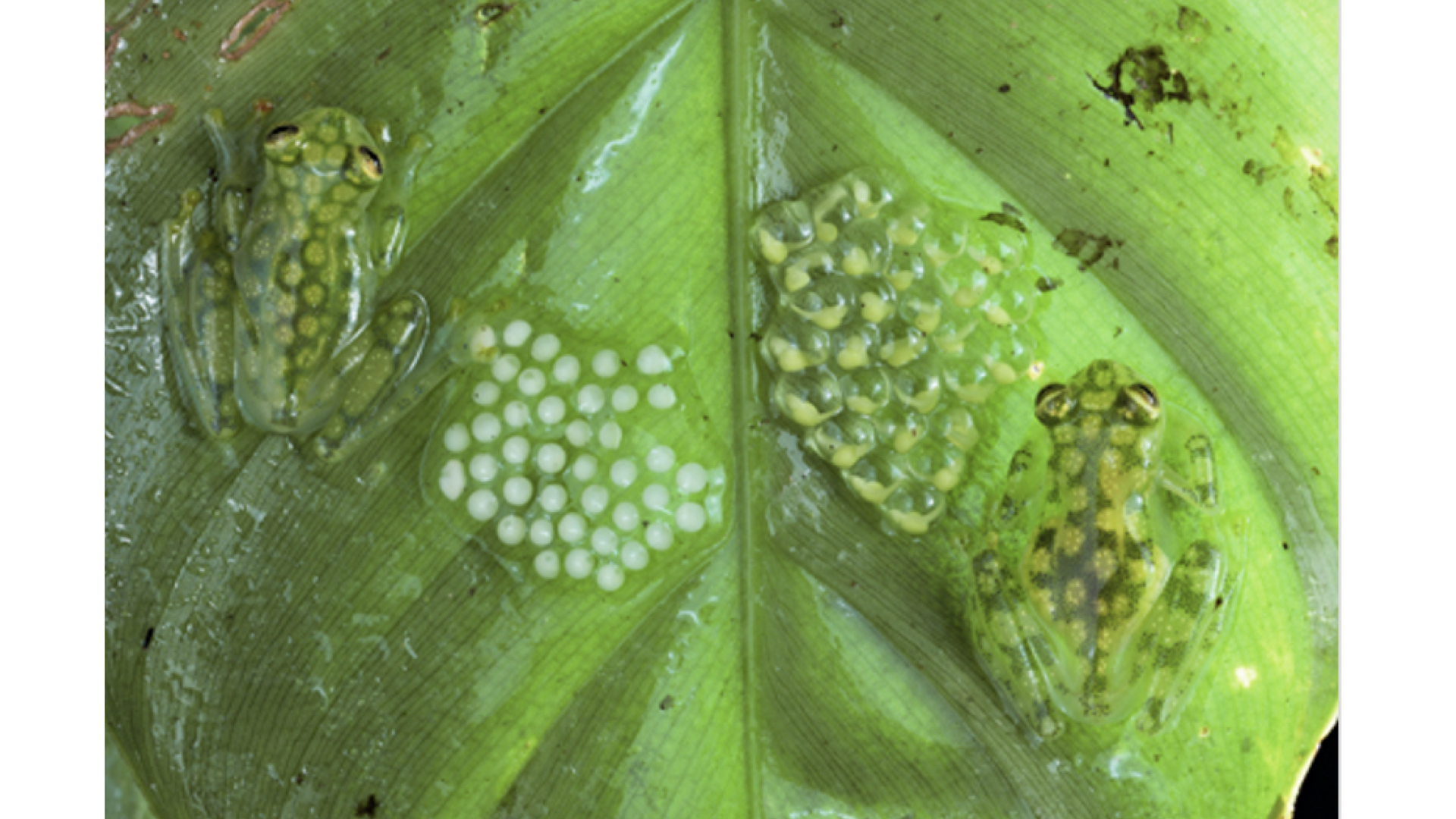
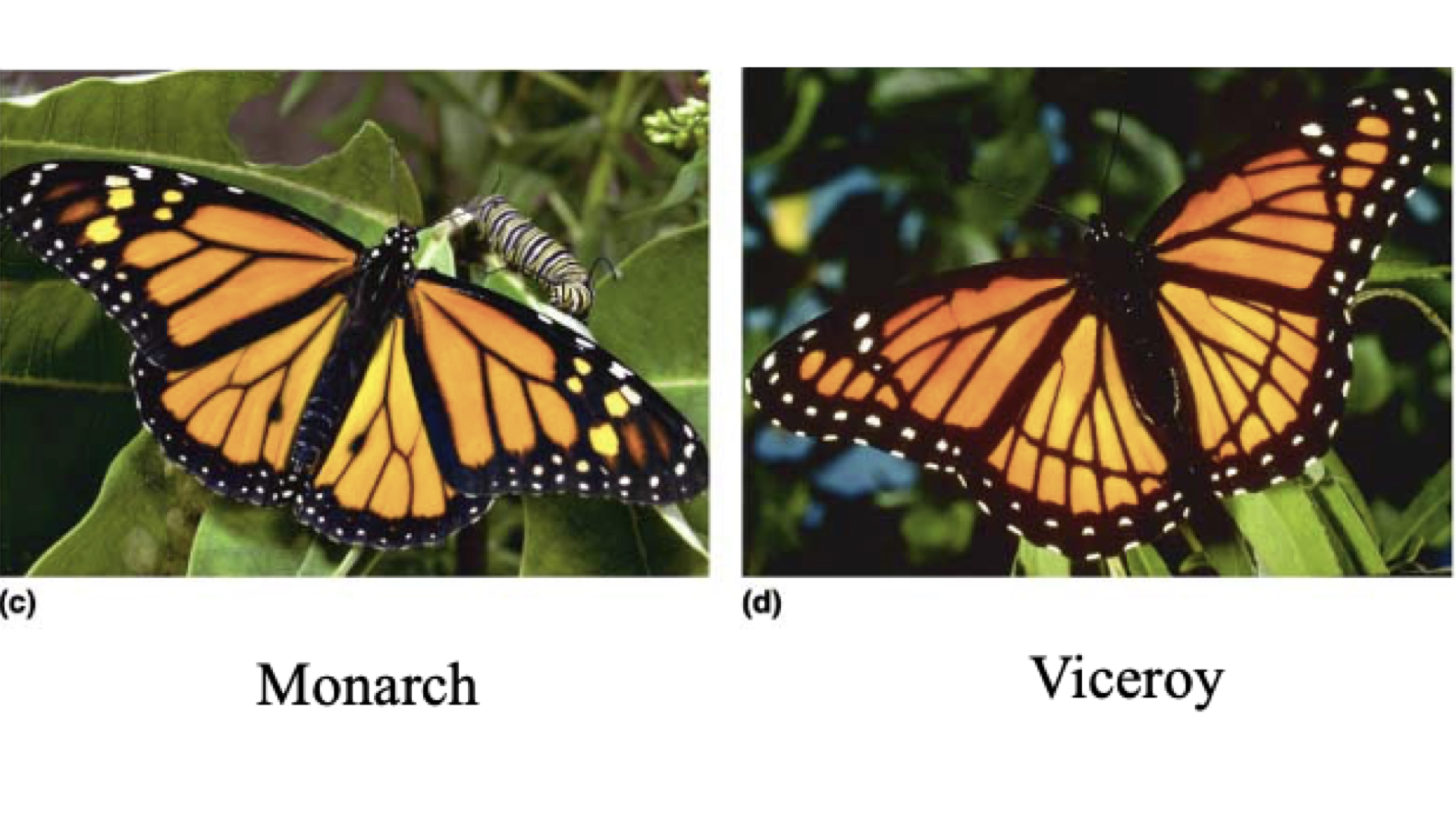
In mimicry, prey not equipped with defenses may escape predators by resembling toxic prey.
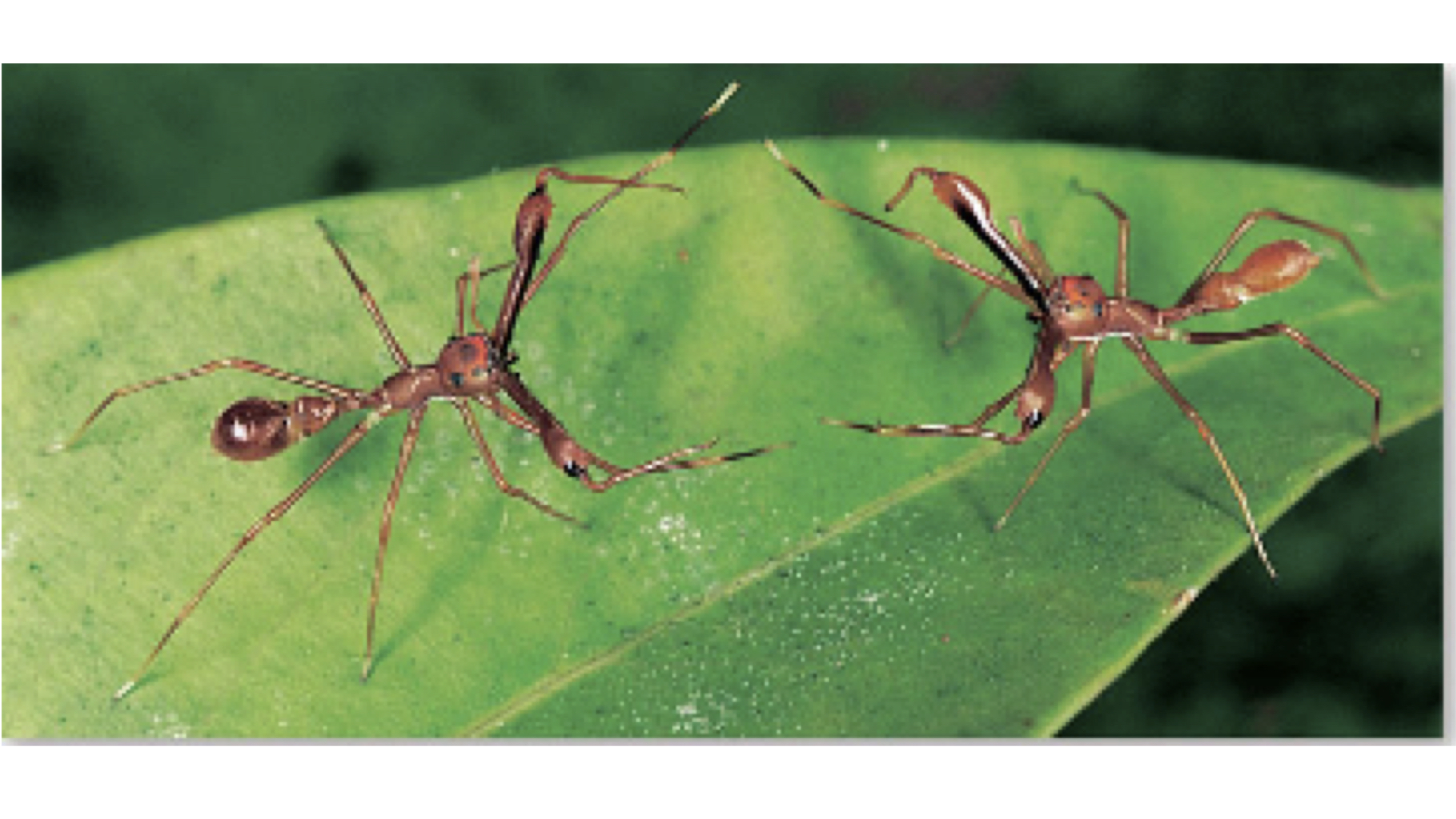 Spider Ant Mimics
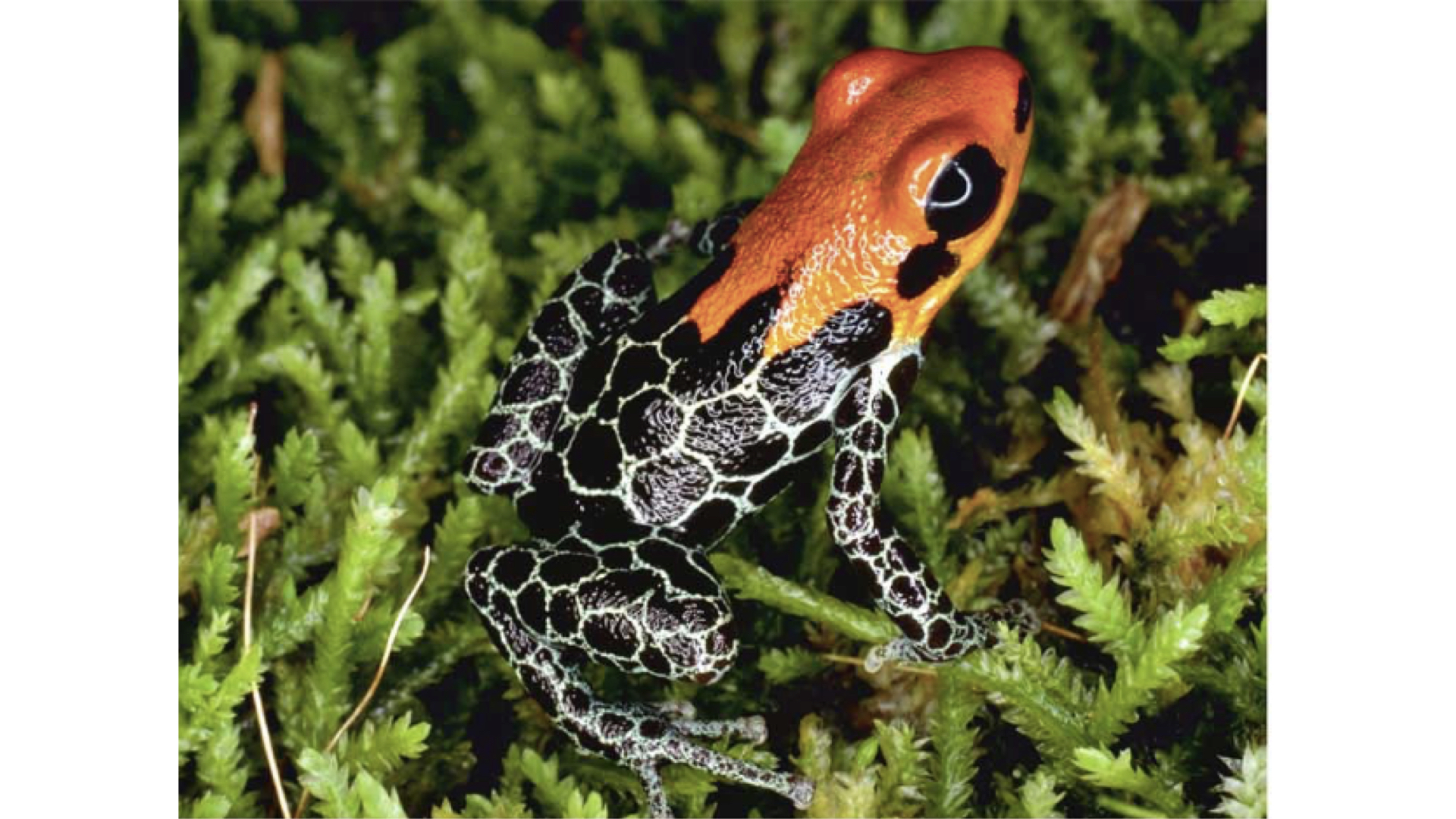
 Warning coloration in toxic or dangerous prey offer bright colors or bold patterns that serve as a warning to predators.
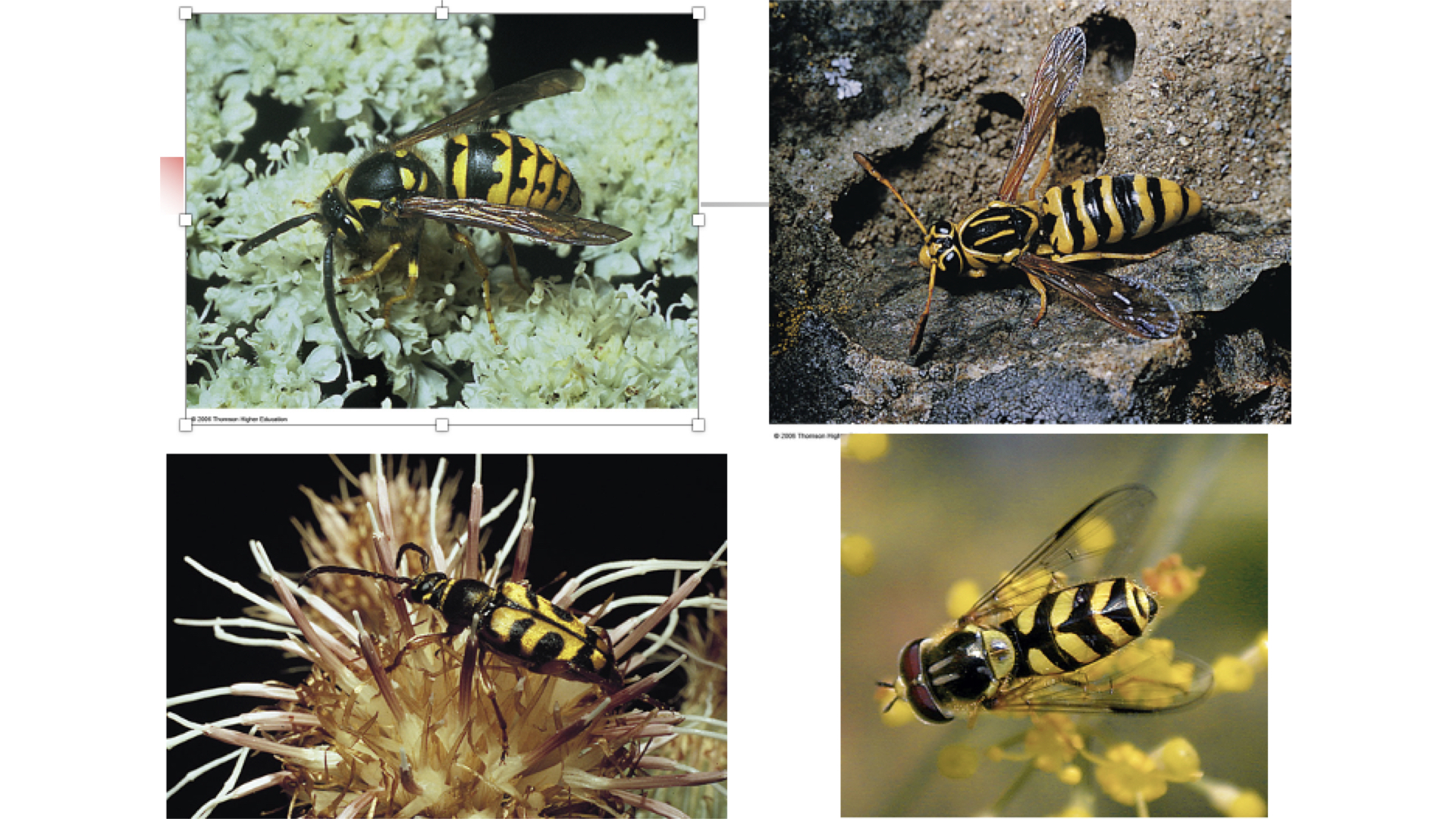
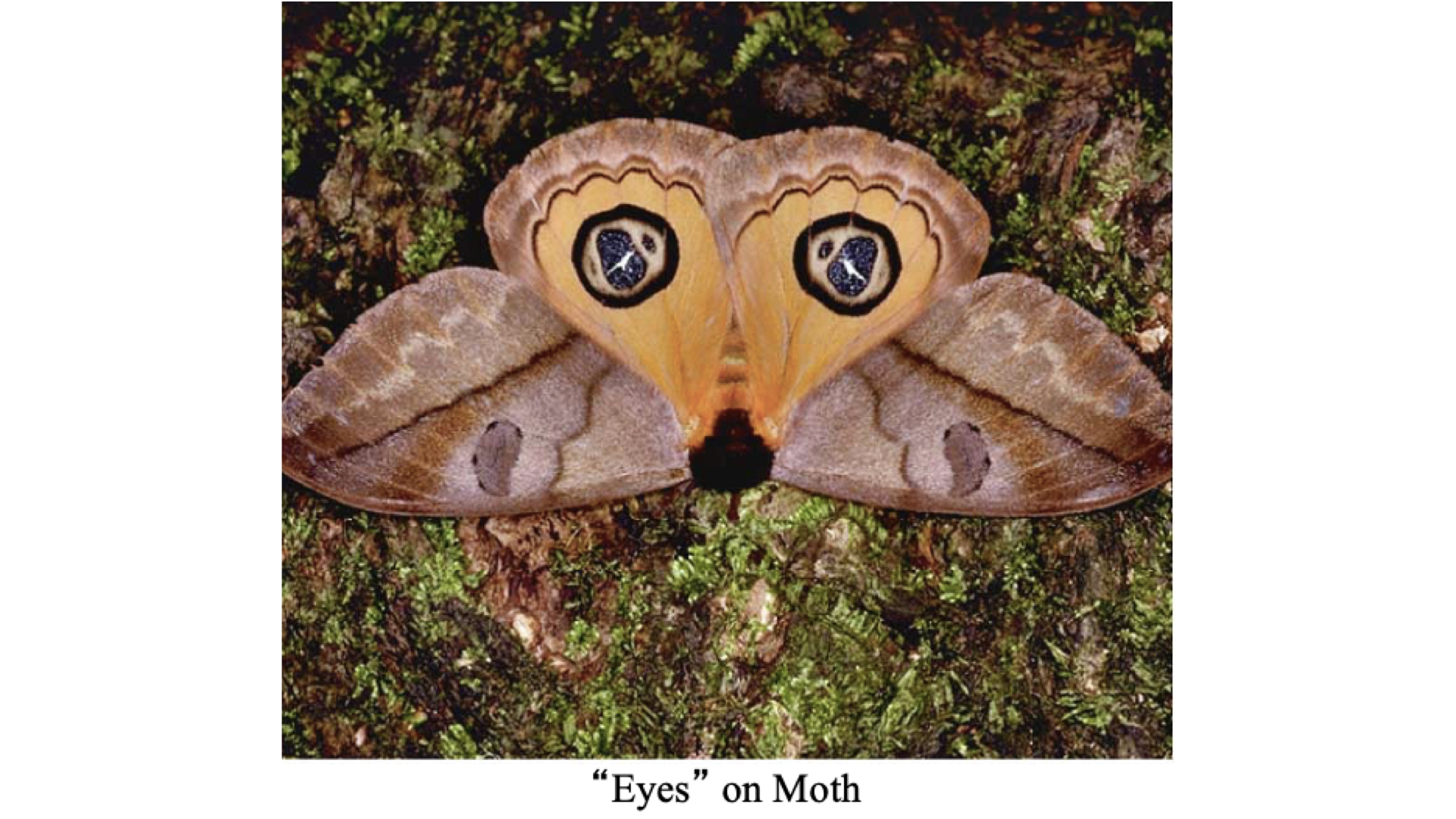
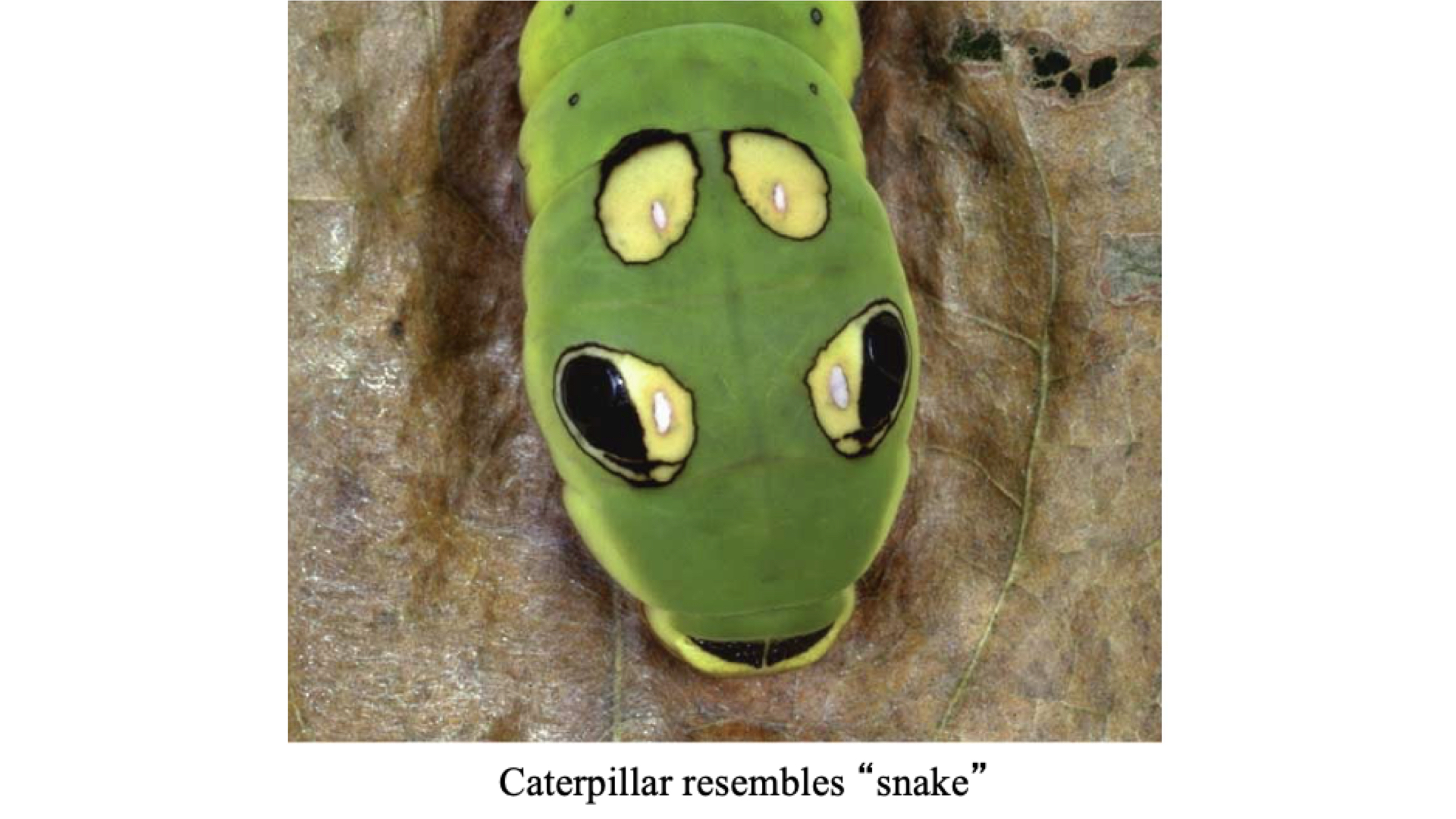
Moment-of-truth defenses allow prey animals to defend themselves by startling or intimidating the predator with display behavior or secretions of irritating chemical repellants or toxins.
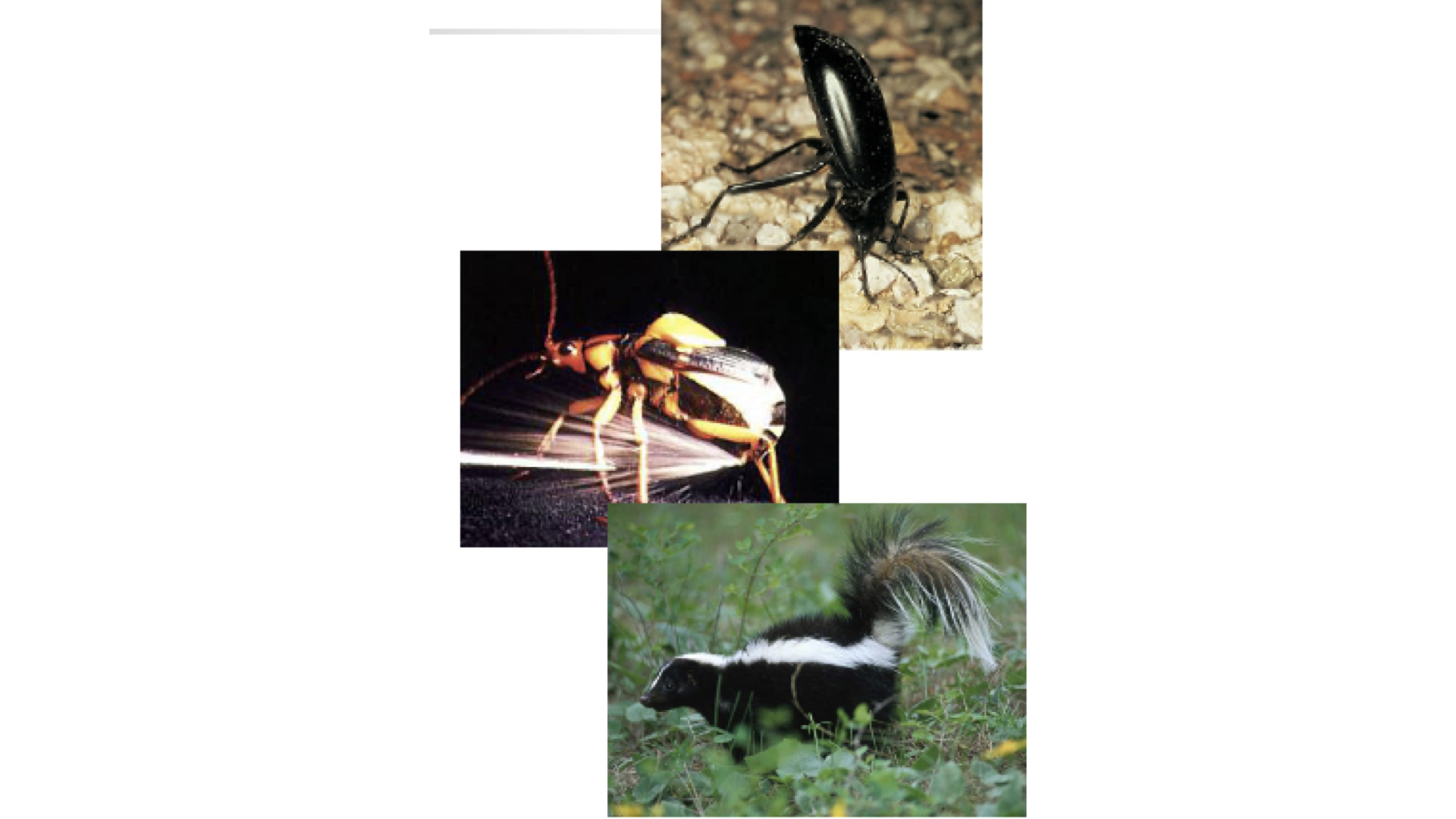
Chemical Defenses of Prey
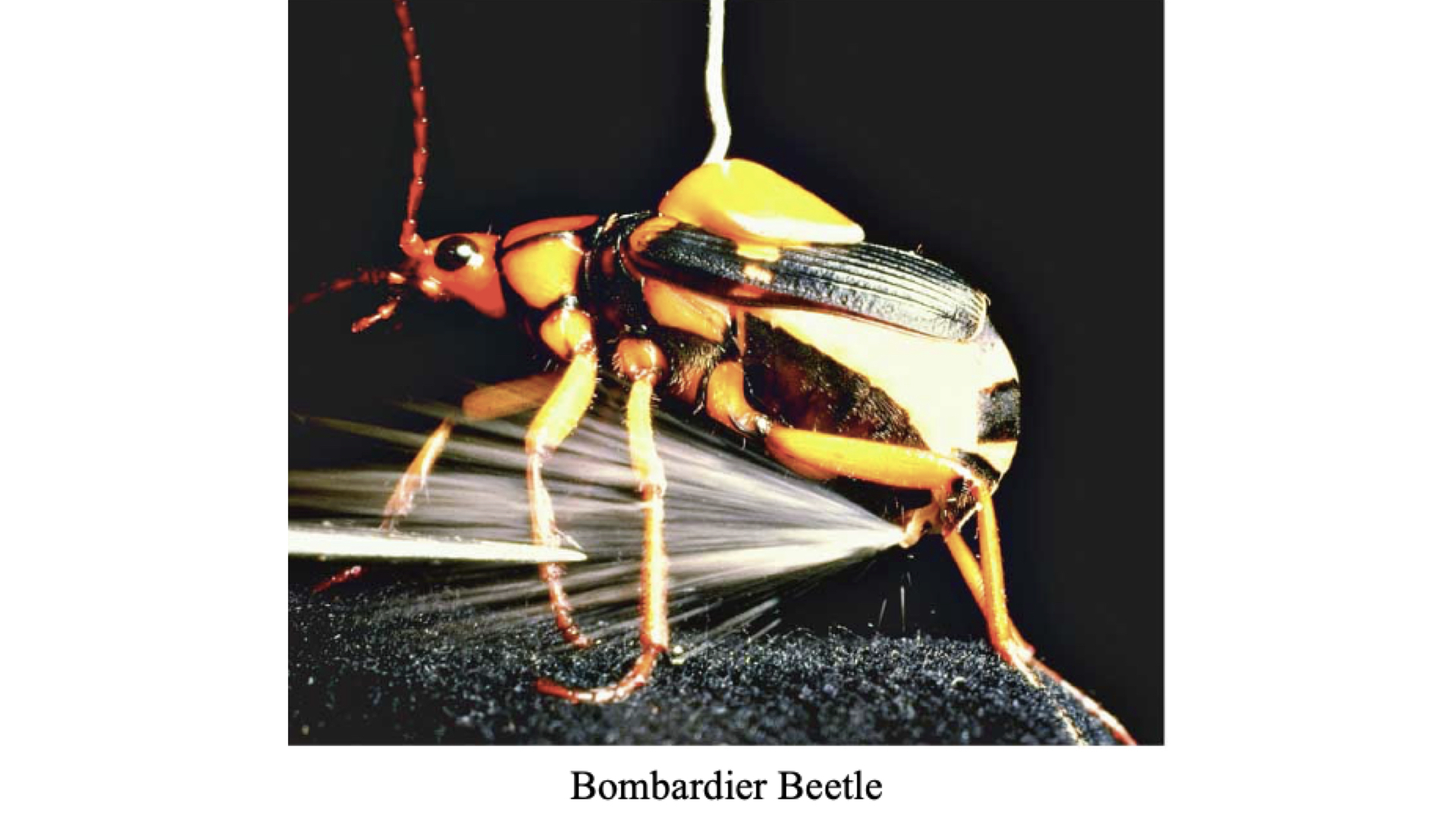
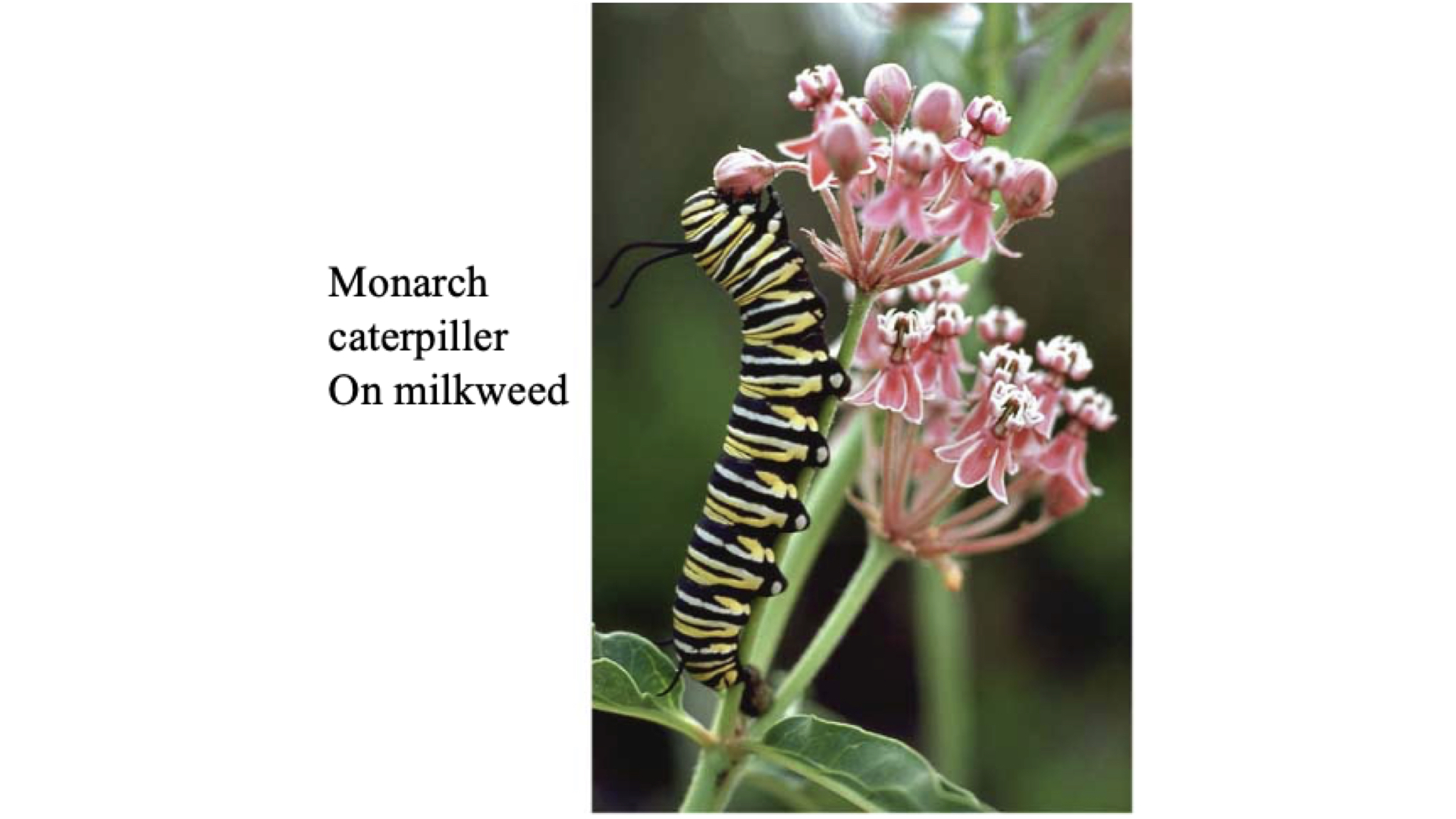
Adaptive Responses of Predators
Stealth and camouflage are also used by predators, along with ingenious ways of avoiding the toxins or repellants with countermeasures. Some predators can just plain outrun their prey.
An Evolutionary Arms Race between predator and prey.
Garter snakes and toxic salamanders:
Bats and moth arms race: Link to description.
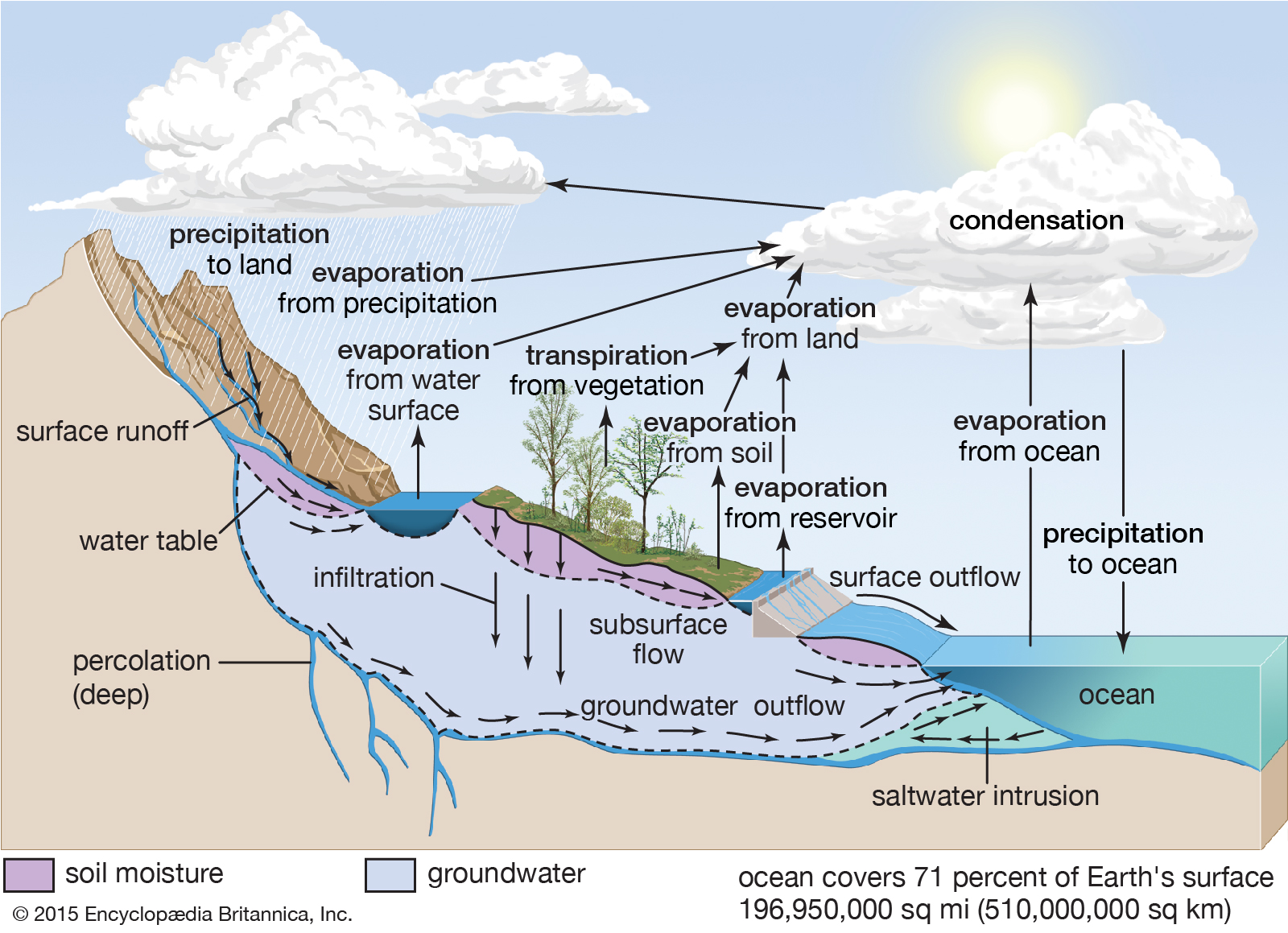
Atoms, on the other hand, are not "lost"; they are always conserved (short of nuclear reactions which, fortunately for us, living organisms don't do). Therefore, matter (nutrients) is always recycled--reused. Organisms die; their bodies are broken down and their nutrients (atoms and molecules) are available to be reused (gives you a warm feeling to contribute to the environment that way doesn't it). This impacts us on a regular basis. That trash that you put out for the garbage truck to take away isn't really gone; its just visiting somewhere else. It is also important for agriculture; here the problem is in replacing nutrients that have been used or washed away. For a brief outline go to this link at MIT, Project Amazonia. After reading this link, it should become clear that nutrients (materials or matter) don't cycle on their own. Any "movement" of materials requires energy--or nothing happens. Where does the energy comes from here--well, there is only one source--the energy flow from the sun. In the case of the hydrologic cycle, that is all that is needed.
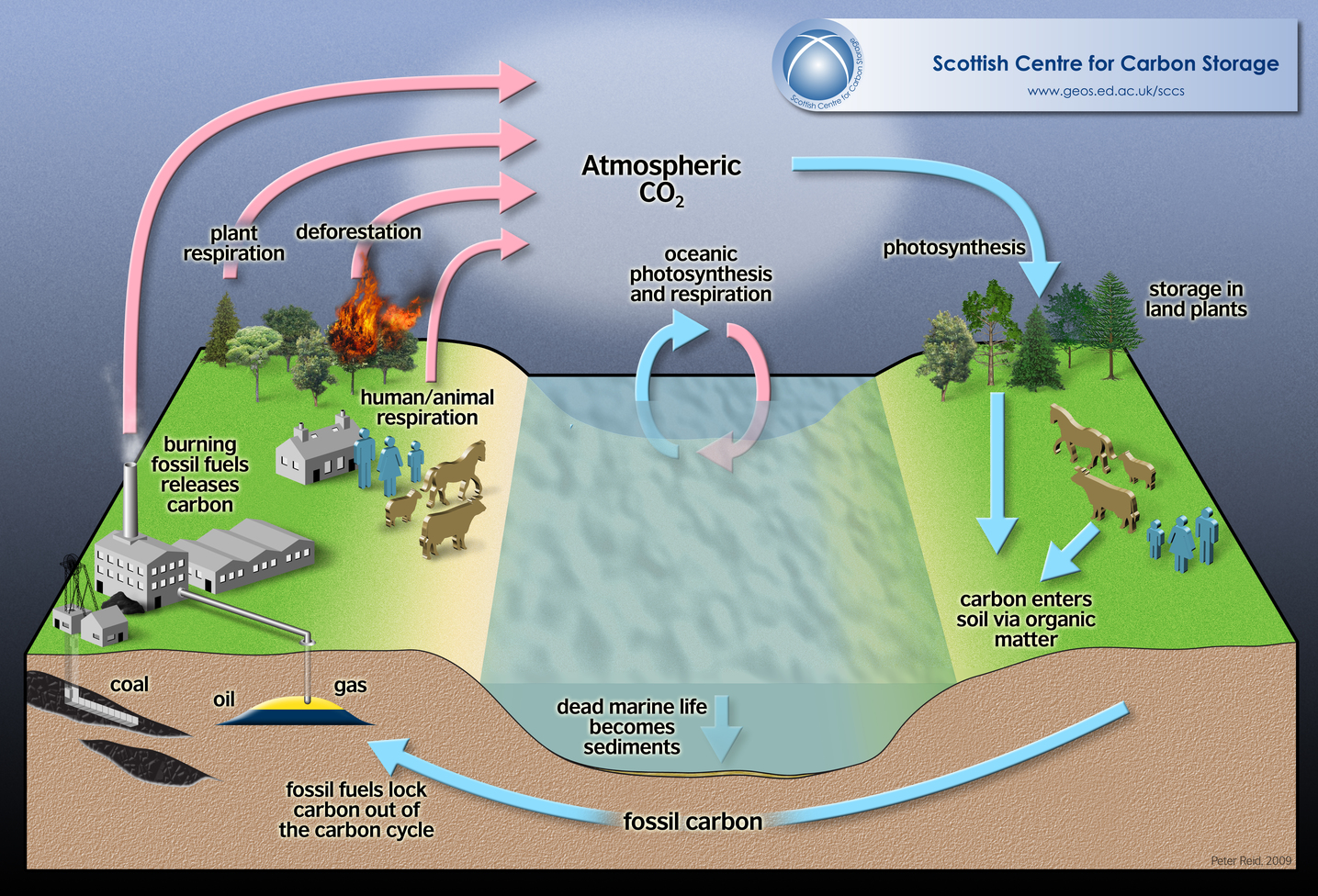
If you look through the various nutrient cycle diagrams in your text you will see that in many cases cycling is through the activity (energy use) of living organisms. Some good examples are these links to the Nitrogen Cycle and Carbon Cycle. For each cycle you should focus on where the reservoir is for that material, how it leaves the reservoir and enters the ecosystem, and how it cycles and eventually returns to the reservoir.
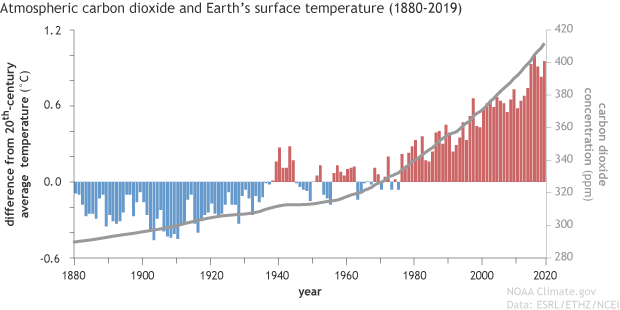
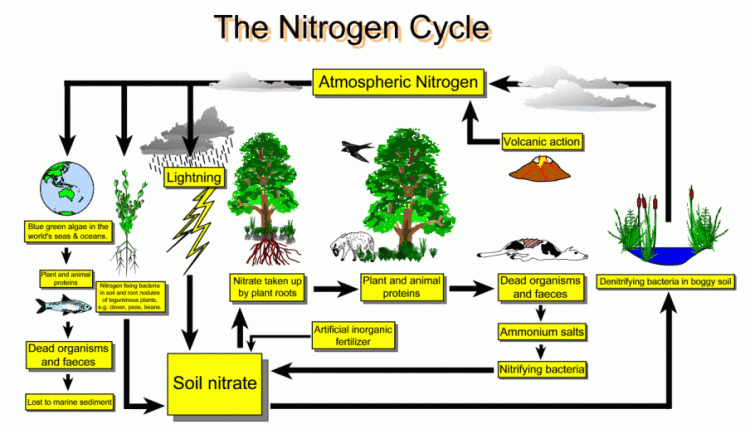
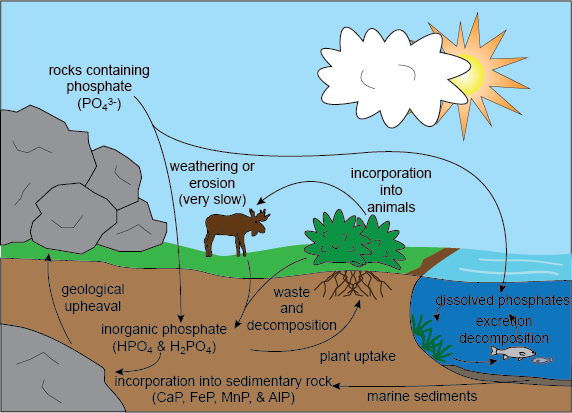 Phosphorus Cycle
You will notice that phosphorus is not found in the air like water, carbon, and nitrogen. Its reservoir is earth sediments - rocks.
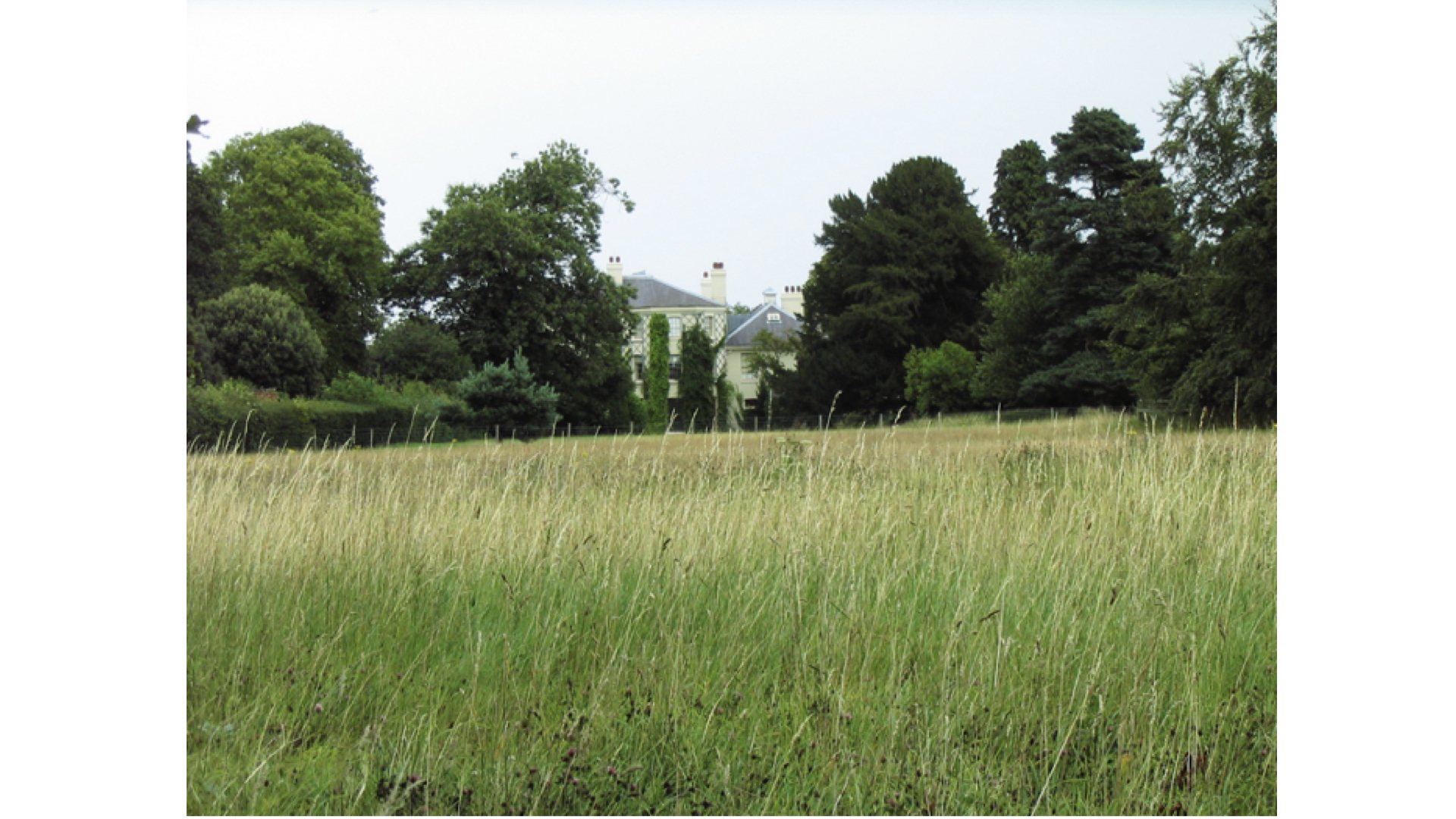
Ecological succession means that ecosystems change over time. This idea of change should not be surprising to you by this point in this course. Life changes with time; geologically, the earth's surface changes with time; climatologically, the weather patterns change with time. Since an ecosystem includes all of the living organisms interacting with their environment, then it makes sense that ecosystems will change. How they change has been debated for years. The original concept is that every particular environment would go through a series (hundreds of years) changes until it reached what was called a "climax ecosystem". At that point, change would slow down or stop as these organisms would be the most optimally adapted to this environment. Today, there is question about whether or not there is such a thing as climax vegetation, although most references still use the term. You will also notice that animals interact: and, in that sense, animals play a role in the pattern of succession. You will also notice that this simplification doesn't even mention the role of bacteria, protists and fungi, all of which are also involved in the interactions. A clearer statement may be that the physical environment determines what producers can live in an area and that in turn determines which consumers will thrive.
Well, enough of my comments. Let's turn to a more professional source for some details of this succession business. The first link simply provides details of succession in a particular ecosystem--the abandoned old field. The first site is from a video presentation.
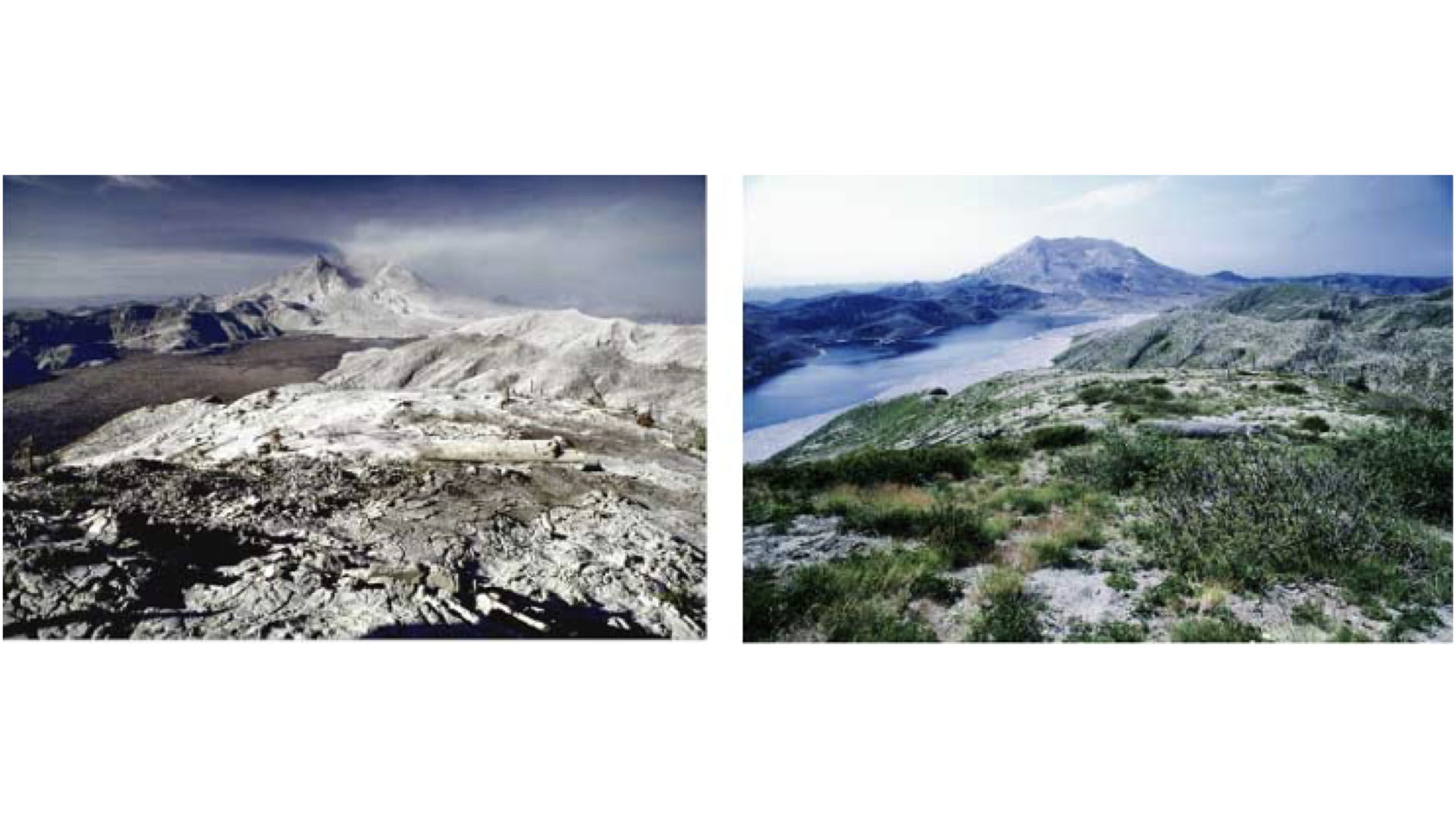
Penn State has a description of succession attached to a virtual trail walk to see what they are describing. A third presentation on succession is at this site. One more basic, visual presentation is at this link, Disturbance and Succession. An outstanding view of a well-studied ecosystem undergoing succession is at this link on the Mt. St. Helens area before and after the volcanic eruption that devastated the area. This second visual site tracks the recovery of the area in more detail. Human activity can alter the rate of succession--sometimes on purpose; see this site on wetlands restoration. discussions of succession usually deal mostly with vegetation. The rationale is that the physical environment (abiotic factors) determines what vegetation will grow and that in turn determines what animals will thrive in the area. That is probably a simplification.
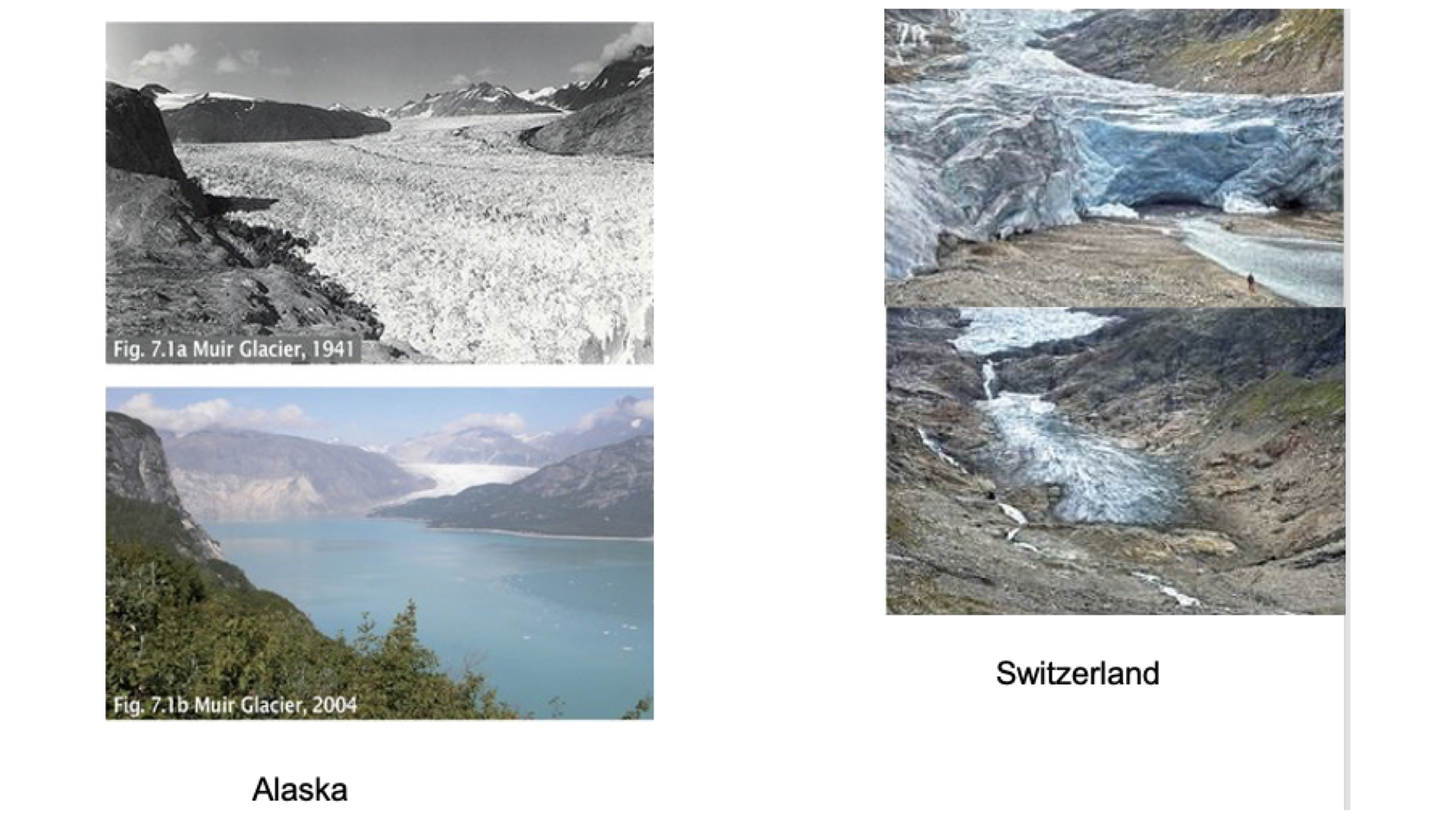
Primary succession happens in an area that was devoid of life (new volcanic island, barren habitat, exposed land from glacial retreat). Pioneer species help to improve soil fertility; they are usually small, low-growing plants with a short life cycle and an abundance of seeds. Gradually other, usually larger, species join or replace the pioneer species.
 Glacial Retreat
In secondary succession, a community will reestablish itself after a disturbance event, as long as soil is still present (abandoned fields, burned forests, volcanic eruptions).
This site from Marietta College can be used as an additional reference. Biomes of the World
A biome is a large geographical area of distinctive plant and animal groups which are adapted to that particular environment. Most terrestrial biomes are defined by the dominant plant life. The plant life is determined in part by the climate in a region, and climate is controlled by many factors, including latitude and geography. In this presentation, we will divide them into terrestrial and aquatic/marine groups.
Terrestrial Biomes
Read the pages in your text concerning terrestrial biomes. Know the definition and/or the relationships between populations, communities, biomes, ecosystems, and biosphere. Contrast between the biotic and abiotic environments.
Differences in climate over the globe for billions of years have resulted in the formation of many diverse terrestrial and aquatic biomes. These biomes have distinct characteristics as to assemblages of plants, animal, and microorganisms that separate them from one another. These differences are due to major circulation patterns of the atmosphere and the oceans, driven by unequal distribution of heat from the sun.
Tropical Rain Forest
Read any sections in your text that relate to the tropical rain forests and visit and study this link on with abundant rainfall are usually covered by tropical rain forests. Or more correctly, one should say that they were covered by tropical rain forests. These forests include some of the most complex communities there are on earth. The diversity of species is enormous.
A temperate forest is composed of two or three, or at most ten dominant tree species, but a tropical rain forest may be composed of 100 or more species of trees. One may actually have difficulty finding any two trees of the same species within an area of many acres. Identify where this biome is located.
The dominant trees in the tropical rain forest are usually very tall and the tops interlace to
form dense canopies. These canopies intercept much of the sunlight leaving the forest floor only dimly lit even at mid-day. The canopy, likewise, breaks the direct fall of rain. Hence, water drips from the canopy to the forest floor much of the time, even when no rain is actually falling. The canopy also shields the lower levels from wind, greatly reducing the rate of evaporation at ground level. The lower levels of the forest are consequently very humid. Temperatures near the forest floor are nearly constant. The pronounced differences in the conditions at the different levels within such a forest result in a striking degree of vertical stratification. Many species of animals and epiphytic plants (plants that grow on large trees), occur only in the canopy. Others occur only in the middle strata and still others occur only on the forest floor. Some vertical stratification is found in any community, particularly any forest community, but nowhere is it so extensively developed as in the tropical rain forest. The soils in the tropical rain forest are mineral poor because most of the nutrients remain in the fast growing above ground plants or leached from the soils by heavy rains. The soil is red in color due to the presence of iron and the lack of humus due to rapid decomposition. Also these soils are hard due to large amounts of clay. Tropical rainforest soils are called laterite soils.
MIT has a Project Amazonia site with information on many aspects of the tropical rainforests in the Amazon basin.
Temperate Grasslands (Prairies) & Savannas
Read in your text any information that refers to grasslands and savannas. Huge areas in both the temperate and tropic regions of the world are covered by grassland biomes. These are typically areas where relatively low annual rainfall or uneven seasonal occurrence of rainfall makes conditions inhospitable for forest, but suitable for luxurious growth of grasses. The temperate grasslands are located in the Midwestern parts of the of the United States and the tropical grasslands are located in Africa and South America along the edges of the tropical rainforest. Temperate and tropical grasslands are remarkably similar in appearance, although the particular species they contain may be very different. In both cases, there are usually vast numbers of large and conspicuous herbivores often including ungulates, as the bison and pronghorn antelope in the United States. Burrowing rodents or rodent-like animals are often common, such as prairie dogs in the western United States. Light is the limiting factor for plant growth in the tropical rainforest. However there are areas along the equator where water becomes a limiting factor (seasonal extremes of wet and dry) so this area develops into tropical grasslands or savannas. The amount of rainfall received in this area prevents trees from becoming established. This biome contains some of the worlds largest herbivores and carnivores because of the large amounts of grasses produced each year.
Locate these biomes on the map showing the biomes of the world.
Desert
Read in your text any information that refers to deserts. In places where rainfall is very low, often less than 10 inches per year, not even grasses can survive as the dominant vegetation. This is where desert biomes can be found. Deserts are subject to the most extreme temperature fluctuations of any biome type. During the day they are exposed to intense sunlight and the temperature of both air and soil may rise very high, to 105 degrees F or higher; for soil temperature and for surface temperature, to 160 degrees F or higher. But in the absence of the moderating influence of abundant vegetation, heat is rapidly lost at night and a short while after sunset searing heat has usually given way to bitter cold.
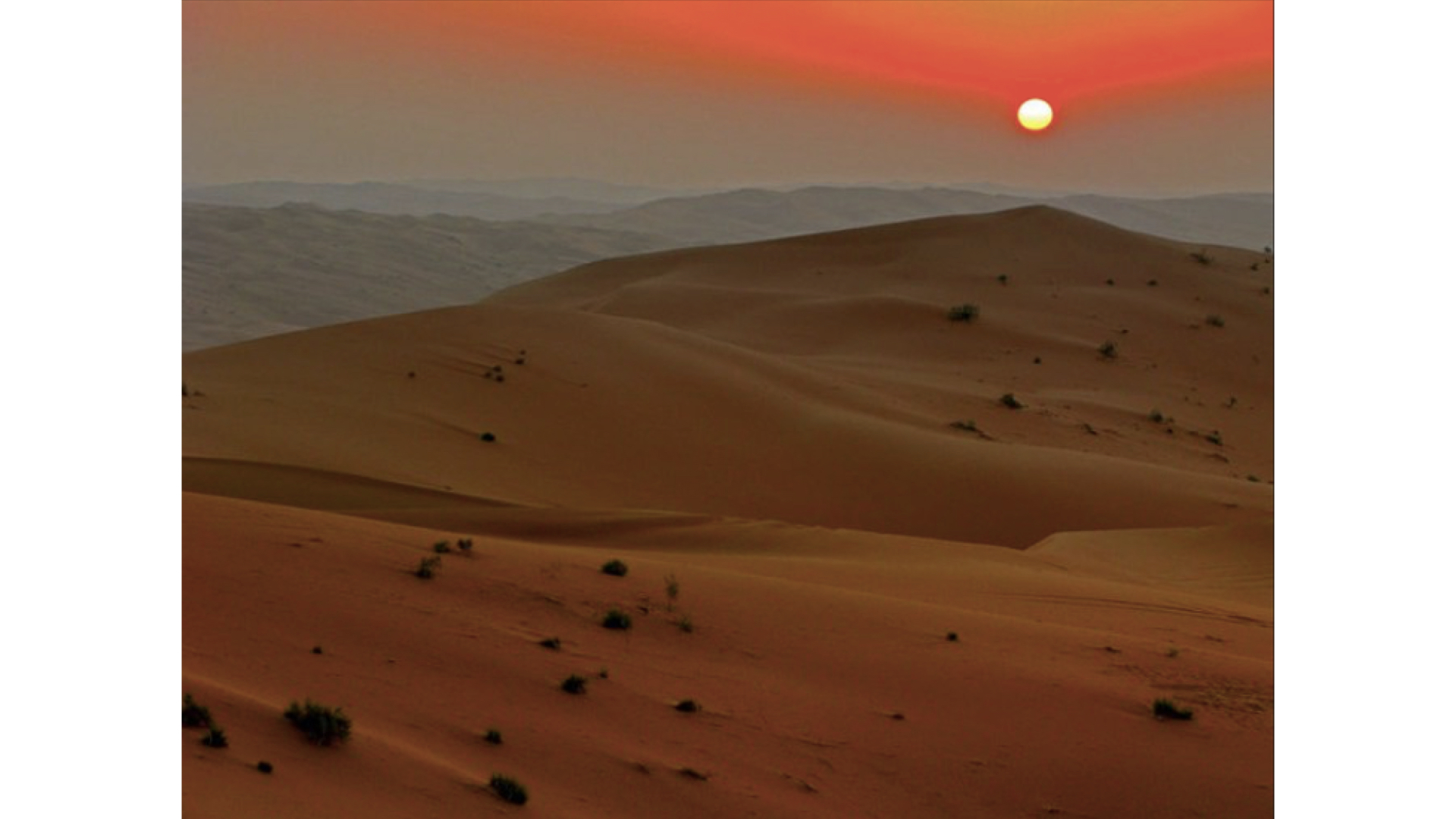
Please look at the map showing the biomes of the world and locate the desert biomes. Some deserts, such as parts of the Sahara, are nearly barren from vegetation. More commonly there are scattered drought resistant shrubs, such as sage brush, greasewood, creosote bush, and mesquite, as well as succulent plants that can store much of the water in their tissues, such plants as cactuses in the New World and euphorbias in the Old World deserts. In addition, there are often very many small rapid annual growing herbs with seeds that will germinate only when there is a hard rain. Once these seeds germinate the young plants shoot up, they flower, they set seed, and die all within a very few days. Most desert animals are primarily active at night or during the brief period in the morning or late afternoon when the heat is not so intense nor the cold so hard. During the day they remain in cool underground burrows or cavities of plants, or in the case of some spiders or insects, in the shade of a plant. Among the animals often found in deserts, are rodents, such as the kangaroo rat, snakes, lizards, a few birds, arachnid spiders and insects. Most show numerous remarkable physiological and behavioral adaptations for life in their hostile environment.
Deciduous Forest
Read in your text any information that refers to deciduous forests. The biomes south of the taiga do not form such a definite circumglobal belt as do the tundra and the taiga. There is more variation in the amount of rainfall at this latitude, and consequently, more variation in the types of climax communities that predominate in parts of the temperate zone. Where rainfall is abundant and summers are relatively long and warm, as they are in most of the eastern United States, most of central Europe, and part of eastern Asia, the climax communities are frequently dominated by broad-leaved trees. Such areas in which the foliage changes color in autumn and drops are called the deciduous forest biomes. They characteristically include many more species than the taiga to the north. Locate on the earth where this biome is located.
Taiga
Read in your text any information that refers to taigas. South of the tundra in both North America and Eurasia is found a zone dominated by coniferous forest. This is the taiga. Locate the position on earth where this biome is located by studying the map showing the biomes of the world. Like the tundra, the taiga is dotted by countless lakes, ponds, and bogs. And like the tundra, it has a very cold winter, but it has a longer and somewhat warmer summer. During the summer the subsoil can thaw and vegetation can grow more abundantly than in the tundra. The number of different species living on the taiga is larger than on the tundra, but it is considerably smaller than biomes farther south. The taiga is a forest of evergreen scaly or needle leaved trees. Their may be considerable precipitation in the form
of snow, but this water is not available to plants until spring thaw; coniferous forest are actually very dry environments. Pine needles are adapted for plants to survive in very dry areas (xerophytic). Though conifers are the most characteristic of the larger plants on the taiga, some deciduous trees (trees that drop their leaves each season), are also common. Among the animals that one might find in the taiga are moose, black bears, wolves, minks, wolverines, martens, squirrels, and many smaller rodents that are all important mammals in the taiga communities. Birds, during the summer, are very abundant as well. The soils are thin (little topsoil) and acidic. These soils form slowly due to low temperatures and waxy covering of the needles which decomposes slowly.
Tundra
Please read in your text any information that refers to the tundra. In the far northern parts of North America and Europe and Asia is a region known as the tundra. The tundra is the most continuous of the earth's biomes. It forms a circumpolar band that is around the poles, interrupted only narrowly by the North Atlantic and the Barents Sea. It corresponds to the region where the subsoil is permanently
frozen. The land has the appearance of gently rolling plains with many lakes, ponds, and bogs in the depressions between the rolling plains. Tundra actually is a Siberian word which means north of the timberline. There are, in fact, very few trees on the tundra, and when they are present they are small and widely scattered. They are definitely not the dominant vegetation except on the very local scale. Most of the ground is covered by mosses, lichens, and few species of grasses. The lichens are often called reindeer moss because of the typical growth pattern. There are quite a few perennial herbs which are able to withstand frequent freezing and which grow rapidly during the brief, cold summers. These plants often carpet the tundra with brightly colored flowers. Animals of the tundra withstand the cold by living in burrows or having large body size or good insulation to retain heat. Many animals species are migratory. Reindeer, caribou, arctic wolves, arctic foxes, arctic hares, and lemmings are among the principle mammals. Polar bears are common on parts of the tundra near the coast. Usually vast numbers of birds, particularly shore birds and water fowl, nest on the tundra during the summer, but they are not permanent residents. These migrate south for the winter. Insects, particularly flies and mosquitoes, are incredibly abundant. In short, far from being a barren-like land as many people think, the tundra actually teams with life. It is true, however, that though the number of individual organisms on the tundra is often very large, the number of species is quite limited. Study the map showing the biomes of the world to locate where this biome may be found on earth.
Mountain Zonation
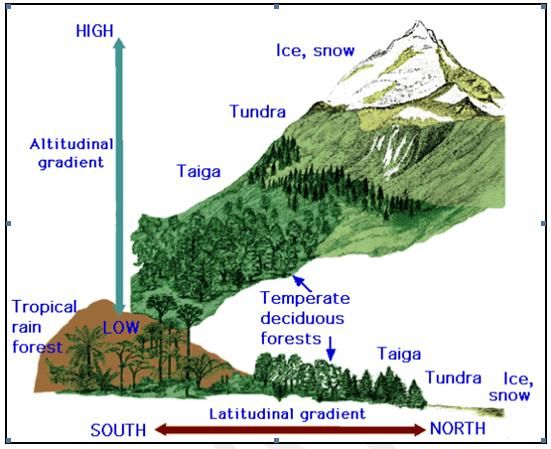
Please read in your text any information plant and animal zonation on mountains. We have seen that moving north or south on the earth's surface one may pass through a series of different biomes. The same thing is true if one moves vertically up the slopes of tall mountains. Climatic conditions change with altitude and the biotic communities change correspondingly. In very high mountains the following zones can be identified:
snow-capped peaks polar) |
alpine region (tundra with permafrost ) |
taiga (pines) |
temperate forest (deciduous) |
tropical forest |
Thus, arms or isolated pockets of the taiga extend far south in the United States on the slopes of the Appalachian Mountains in the east and of the Rockies and coast ranges in the west. There are even tundra-like spots on the highest peaks.
Aquatic/Marine Biomes
Fresh Water Biomes
Lakes
Read the pages in your text that are dedicated to aquatic biomes. Now let us consider some fresh water biomes, particularly lakes and ponds. Natural lakes tend to be of recent origin. Geologically speaking, they are most numerous in the glaciated parts of northern America and Eurasia. In Virginia there are two natural lakes. Mountain Lake, near Blacksburg, Virginia, and Lake Drummond in the Great Dismal Swamp, Suffolk, Virginia. Lakes also occur in regions of recent volcanism, either in craters of volcanoes or where water was dammed up by lava flows. In addition, they are formed by shifting of rivers, by beaver dams,and by man. Actually, sharp boundaries do not exist between these habitats because erosion and sedimentation are constantly changing them. Upstream, the communities are relatively simple, with fish such as trout that are intolerant of low oxygen and high temperatures and a few invertebrates, algae and mosses that can attach to rocks.Downstream as the water becomes more turbid and pools form, photosynthesis is limited to a narrow upper zone near the banks. Attached algae and cyanobacteria are predominant in shallow areas, and plants can grow near the banks. Bacteria and fungi become more abundant in the sediments, relying on organic material brought in from upstream. Within fresh waters organisms are not evenly distributed. Different zones support different communities. In standing water, such as a lake, there are three commonly recognized zones. The first is the littoral, an area of shallow regions usually near the shore where light penetrates to the bottom. The second is limnetic, areas of open water to the depth where there is still sufficient light for the rate of photosynthesis to equal the rate of respiration. The final is profundal, bottom and deep water below the level of effective rate of light penetration. In shallow ponds the profundal zone may be absent. In moving water the principle zones are rapids and pools. Aquatic life is probably most prolific in the littoral zone of the lake. Within this zone, the plant communities form concentric rings around the pond or lake as the depth increases. At the shore proper are cattails, bull rushes, arrowheads, and pickerel weeds, the emergent firmly rooted vegetation linking water and land environments. Out slightly deeper are the rooted plants with floating leaves such as water lilies. Still deeper are the fragile thin-stemmed weeds, rooted but totally submerged. Here are found diatoms, cyanobacteria (blue-green algae) and green algae. Common green pond scum is a type of green algae. The littoral zone is also the scene of the greatest concentration of animals. They, too, are distributed in recognizable communities. In or on the bottom are various dragonfly nymphs, crayfish, isopods, worms, snails, and clams. Other animals live in or on plants and other objects projecting up from the bottom. These include the climbing dragonfly or damselfly nymphs, rotifers, flatworms, bryozoans, hydra, snails, and others. The zooplankton consists of water fleas, such as daphnia, rotifers, and ostracods. The larger, free swimming fauna, called neckton, includes diving beetles and bugs, detritus larvae, such as larvae of mosquitoes and large numbers of many other insects. Among the vertebrae are frogs, salamanders, and turtles. Neuston or floating members of the community include whirligig beetles, water streamers, and numerous protozoa. Many pond fish, such as sunfish, top minnows, bass, and pike spend much of their time in the littoral zone procuring food.
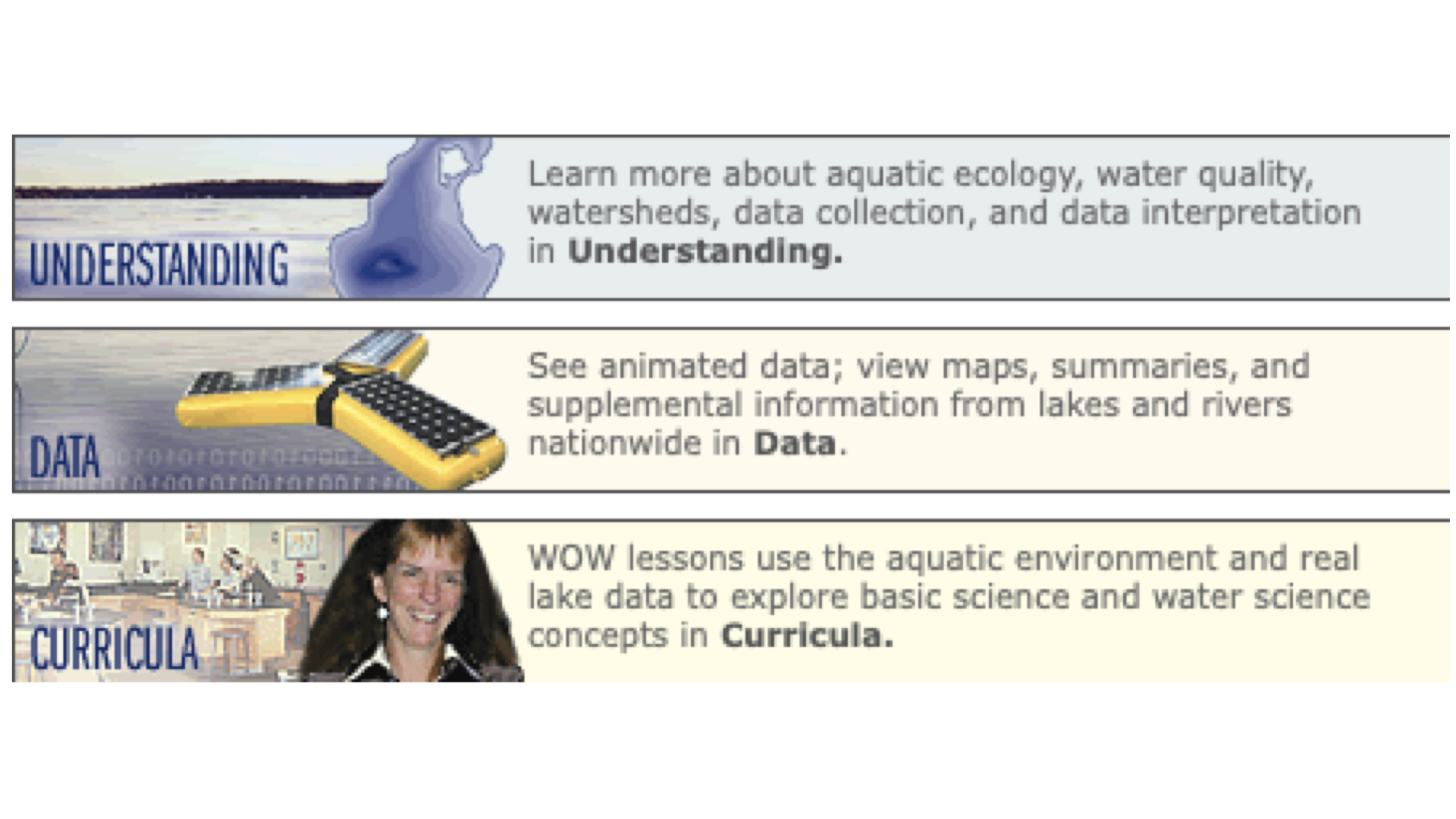
An excellent resource on Lake Ecology is Water on the Web, a set of basic information plus datasets that can be used for assignments. There is a description of an assignment available here.
Thermoclines
The limnetic, or open water zone, is occupied by many microscopic plants, many small crustaceans, and many fish. The deep, or profundal zone, consists of bacteria, fungi, clams, worms, annelids, and other small animals capable of surviving in a region of little light and low oxygen. As compared to ponds, where the littoral zone is large, the water usually shallow, and temperature stratification in the shallow water is absent, lakes have large limnetic and profundal zones as well as a marked thermal stratification and a seasonal cycle of heat and oxygen distribution. In the summertime the water surface of the lake, called the epilimnion, becomes heated, while the hipilimnion, which is below, remains cold. There is no circulatory exchange between upper and lower layers, with the result that the lower layers frequently become oxygen deprived.
Between the two is a region of steep temperature decline. This region is called the thermocline. The temperature in the epilimnion is between 25 and 24 degrees Celsius. The temperature in the thermocline varies from, let's say 20 degrees all the way down to 13 degrees Celsius which is a rather steep temperature decline. As the cooler weather of fall approaches, however, the surface water cools down. The temperature is equal at all levels. The water of the whole lake begins to circulate and the deep water is again oxygenated by coming up to the surface or turning over. Hence, the term, fall overturn.
Cycling of Water in a Lake
A decrease in water temperature causes an increase in water density up to the temperature of four (4) degrees Centigrade (C). From 4 degrees C to freezing, water and ice becomes less dense. In winter, as the surface temperature drops to 4 degrees C, the water becomes not heavier, but less dense. Remaining at the surface, this lighter water impedes circulation. The bottom is now warmer than the top. Because bacterial decomposition and respiration are less at low temperature and cold water holds more oxygen, there is usually no great winter stagnation. The formation of ice may, however, cause oxygen depletion and a heavy winter may kill fish. The spring overturn occurs when the ice melts, and the heavier surface water sinks to the bottom. It must be said here that the density of water increases as the temperature decreases up to 4 degrees Centigrade. In spring as the ice melts and the water on the surface warms to 4 degrees Centigrade it becomes more dense and sinks to the bottom producing the spring overturn. After which, the water again circulates freely. Thus, in the spring and fall when the
entire body of water approaches the same temperature, mixing occurs, and this results in a redistribution of oxygen and nutrients and often blooms of phytoplankton to appear. In your notes draw a cycle showing the water temperatures of a lake during each of the seasons. Explain in your notes fall turnover and spring turnover in relation to the movement of nutrients. Draw a figure using arrows to show the movement of water during spring and fall turnover. Indicate the effect this turnover has on oxygen and nutrient levels.
Marine Biomes
The atmosphere is not truly a habitat for any organism. Birds and insects fly in it, seeds, spores, and small organisms are born aloft for a time, but all of these are actually terrestrial organisms. The terrestrial habitat is a thin layer, or stratum, covering the planet only to a thickness of 60 meters at the most. The ocean, on the other hand, constitutes about 78% of the earth's surface. It is a layer of 4000 meters average thickness, and offers for living nearly 300 times the space that land does. This vast environment has profound effects on atmospheric conditions. Conversely, the atmospheric conditions that regulate climate on land greatly influence conditions in the ocean. The oceans are divided into the following categories:
photic/benthic |
intertidal/near-shore. |
Organisms living in the oceans may be classified as pelagic and abyssal life forms. Look at this web site for more information on marine biomes.
Estuaries
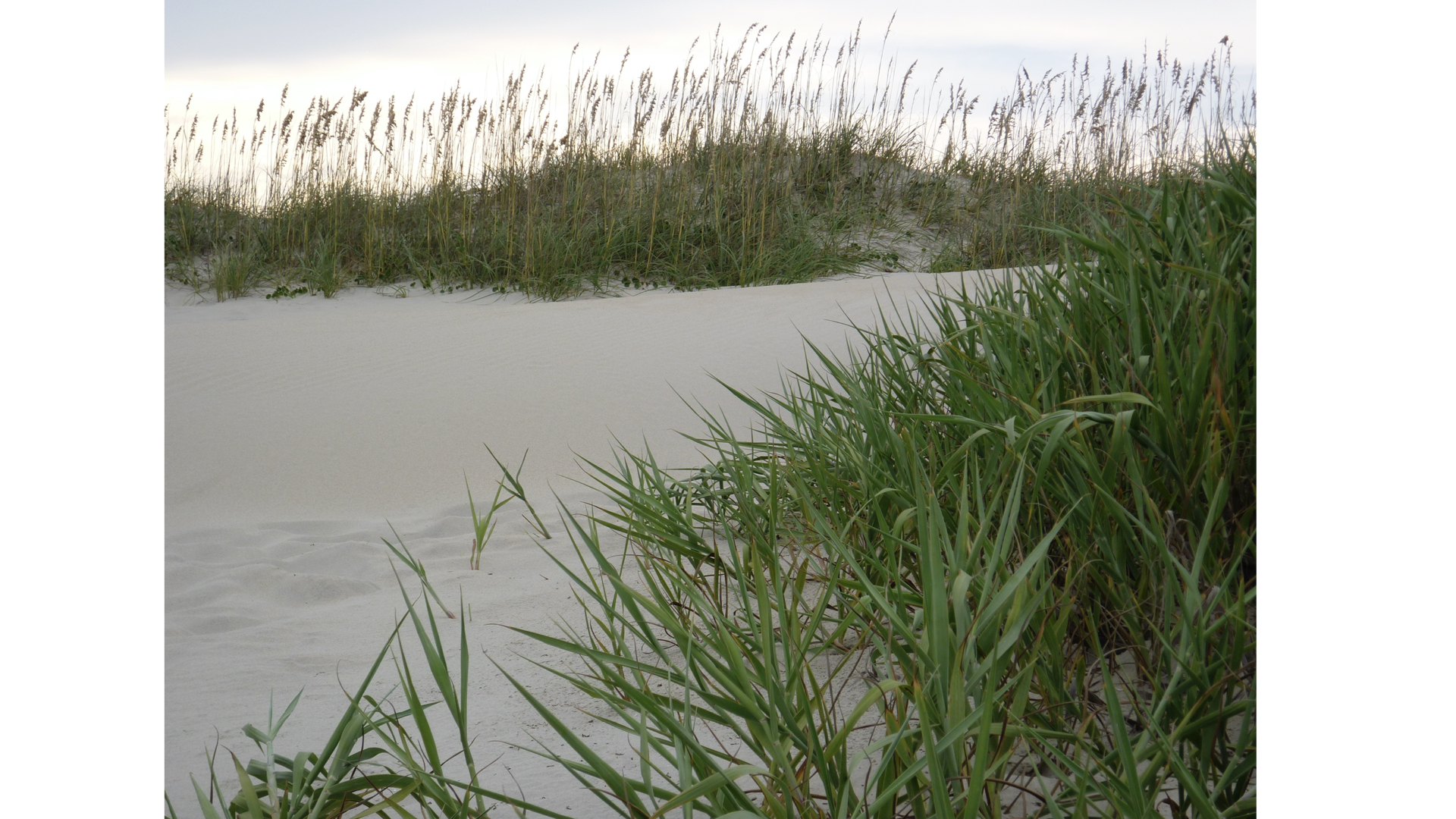
The most abundant life in the oceans is found in a narrow strip surrounding Earth's land masses, where the water is shallow and a steady flow of nutrients is washed off the land. Coastal waters include the intertidal zone, the area that is alternately covered and uncovered by water with the rising and falling of the tides, and the near-shore zone, relatively shallow but constantly submerged areas, including bays and coastal wetlands such as salt marches and estuaries. Coral reefs are a habitat for a gigantic and truly amazing collection of plants and animals. The great Barrier Reef of Australia is one of the richest marine areas in the world.
Between the seas and the continents lie a band of diverse mass of ecosystems that are not just transition zones but have ecological characteristics of their own. Along the shore live thousands of adapted species that are not to be found in the open sea, on land, or in fresh water. A rocky shore, a sandy beach, and intertidal mud flats, and a tidal estuary dominated by salt marshes, illustrate four kinds of marine inshore ecosystems.
Originally, we used the term human intervention. I think this is an inappropriate term because it implies that humans are somehow "outside" the realm of ecosystems and ecosystem change. Nothing could be further from the truth. We are an integral part of whatever ecosystem we are in. What may be unique to humans is that are influence transcends an individual ecosystem and may impact the global ecosystem often referred to as the biosphere. Everything we do has an impact on the ecosystem. What we want you to investigate in this part of the unit are some of the interactions that humans have with ecosystems that are perceived (by humans) as damaging to the ecosystem. Below will be a list of topics with links that will provide additional information about these topics. Most of these sites will provide you with additional links. You may want to do your own search for additional sites. Select three of these topics and, using the links, investigate how humans interact with ecosystems.
Baseline Information
Destruction of Habitat
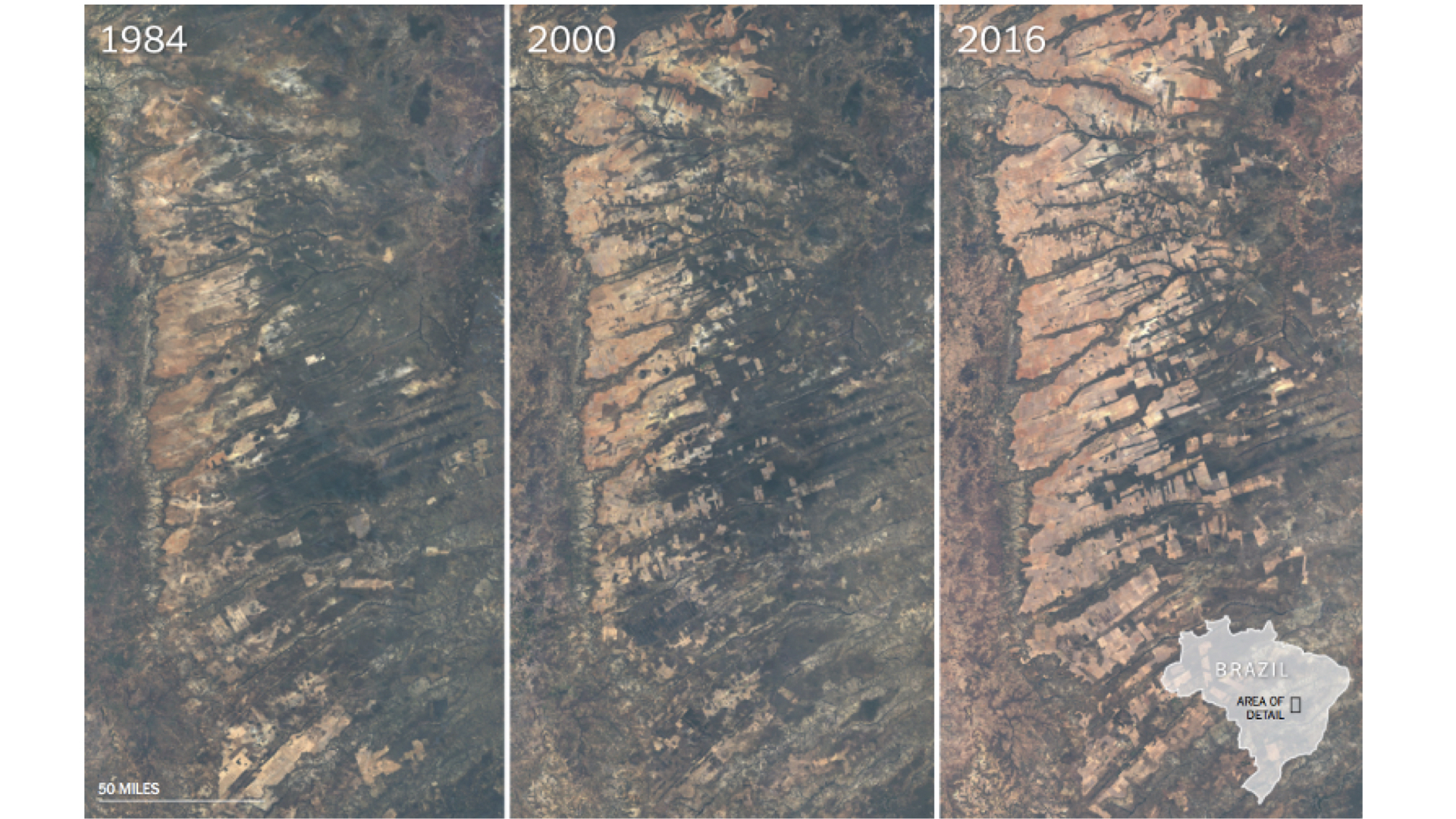
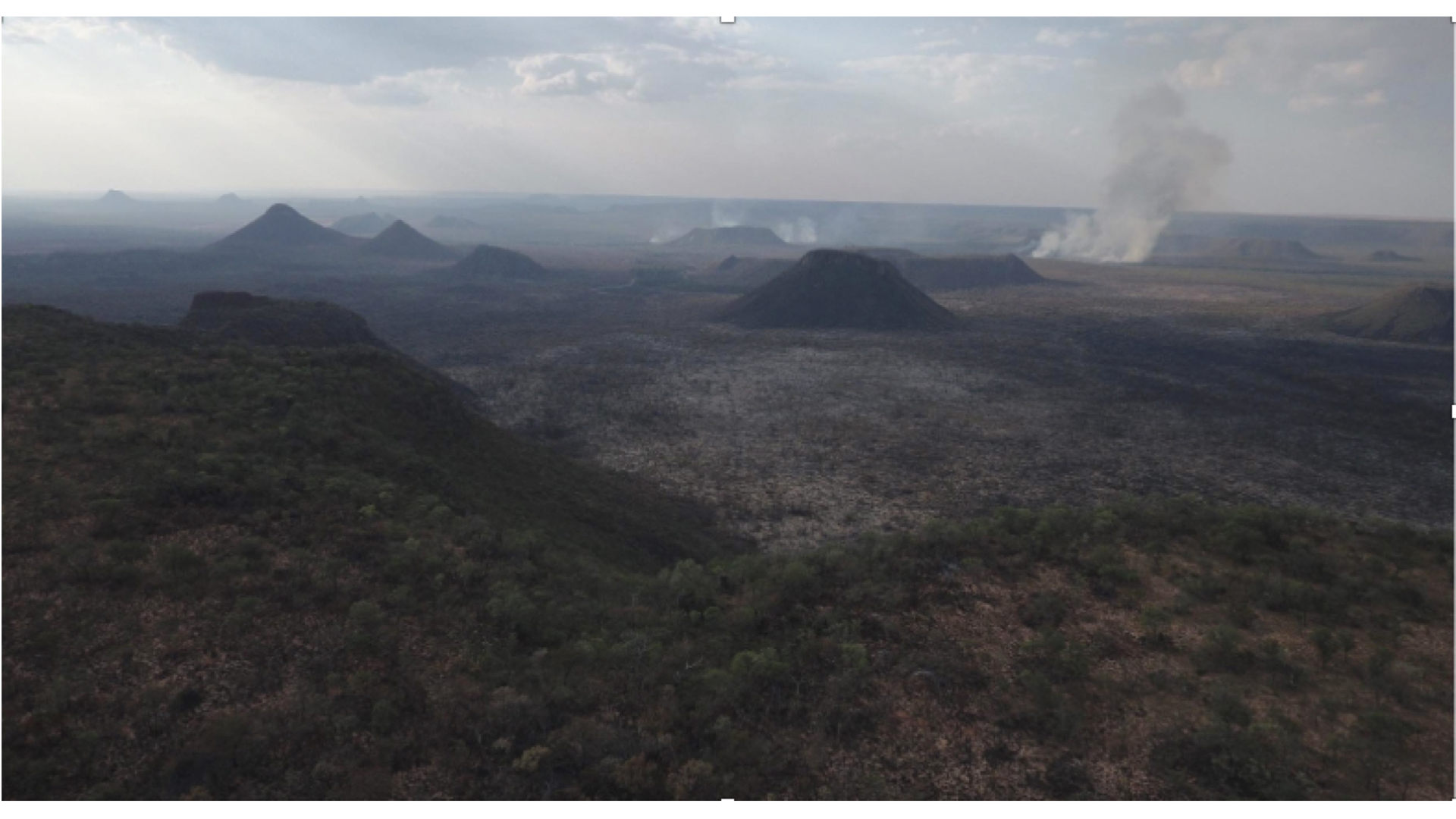
More information on rain forest loss |
Rainforest ecosystem and all aspects of loss. |
Endangered species
The Red List covers endangered species worldwide. |
World Wildlife Fund Site on endangered species. |
American Museum of Natural History site on endangered species |
Smithsonian Institution National Zoological Park--the NOAHS Conservation and Research Center |
Global Climate Change
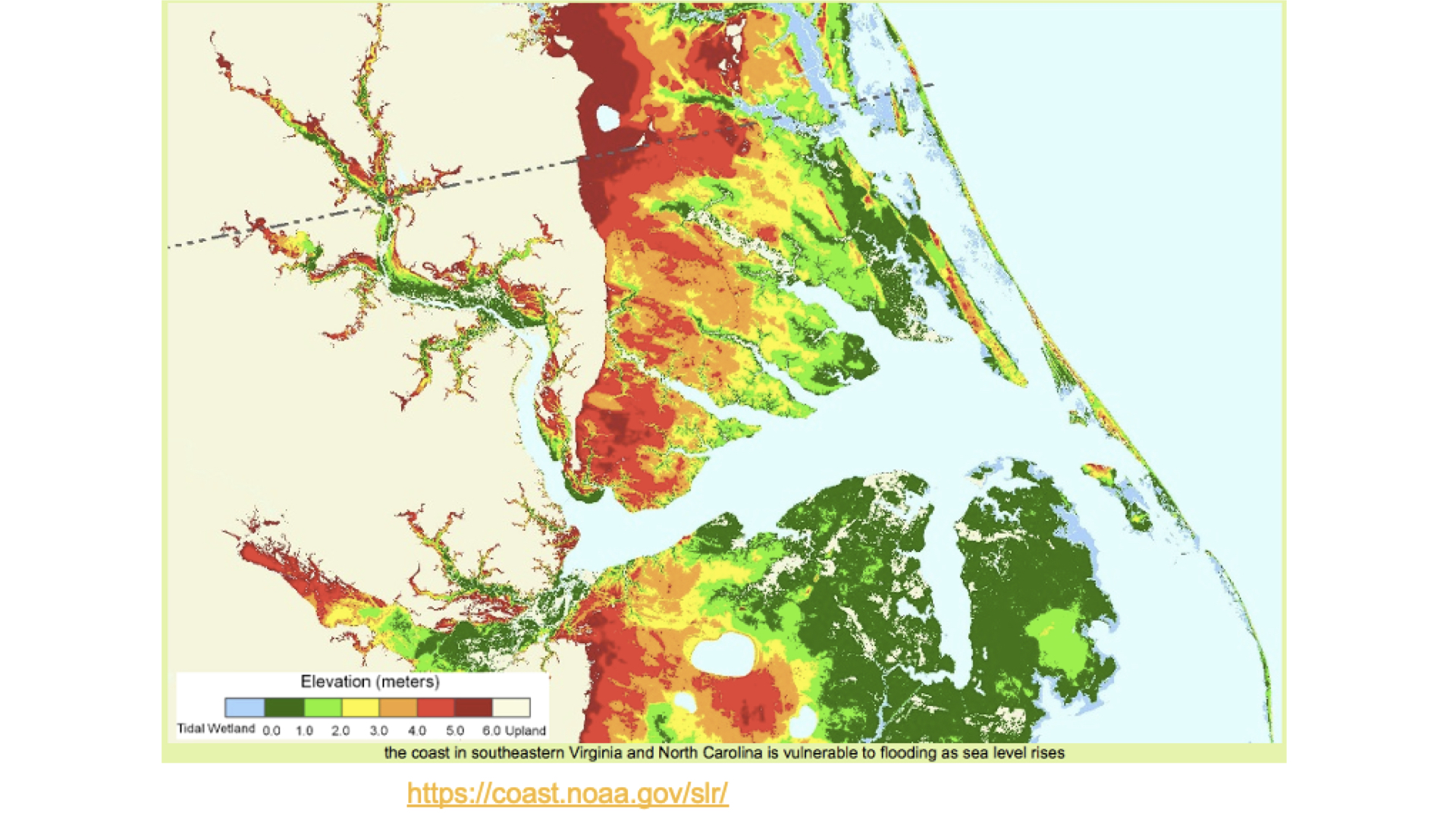 Local Sea Level Rise Vulnerability
National Resources Defense Council Global Warming site - Global Warming 101 |
Wood's Hole Research Center 30-Year Timeline |
High Tide in Dorchester, Maryland - Video
Ozone Depletion
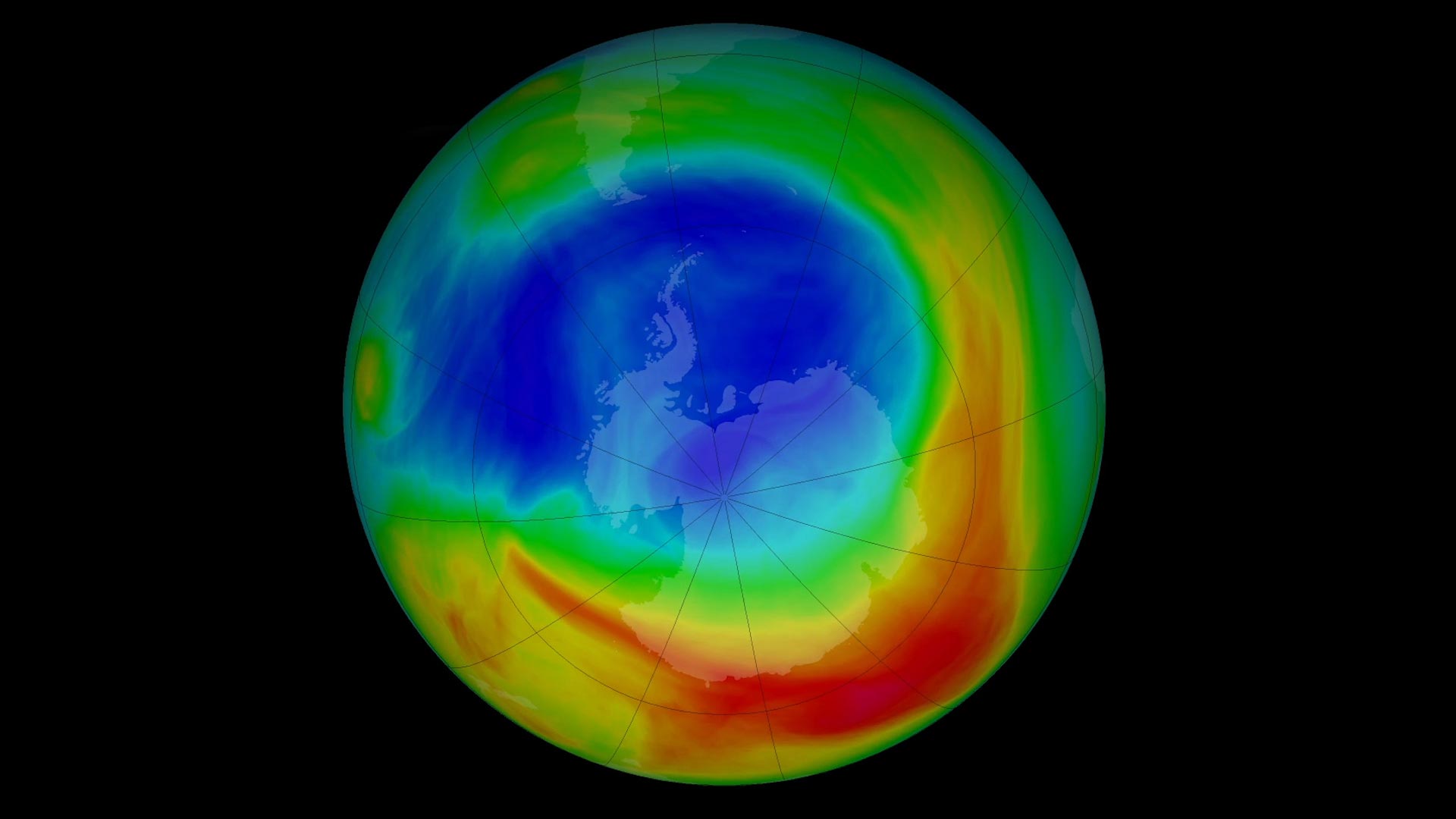
Scientific Assessment of Ozone Depletion - 2018
National Academy of Sciences site--Beyond Discovery |
Water Pollution--A good approach to this area is to look at particular bodies of water. Two in particular that have a great deal of information are the Great Lakes and Chesapeake Bay.
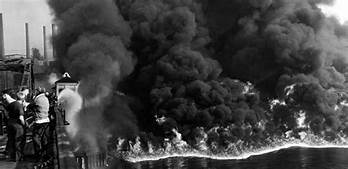 Cuyahoga River on Fire
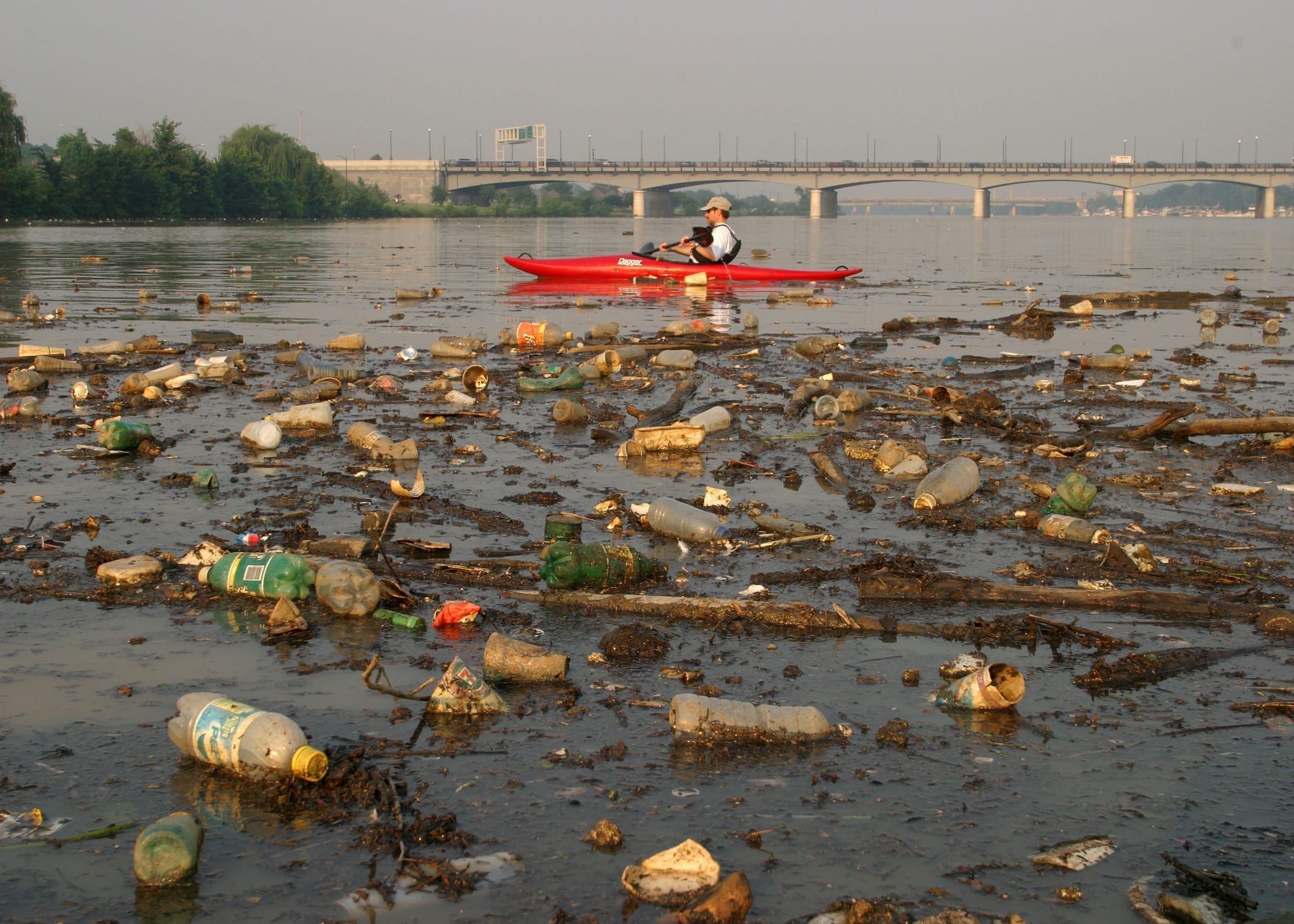 Chesapeake Bay
Great Lakes Information Network--look under "Our Work" |
National Wildlife Federation Great Lakes Resource Center |
EPA Water Quality site |
Chesapeake Bay River Monitoring System |
Ground and Drinking Water--EPA site |
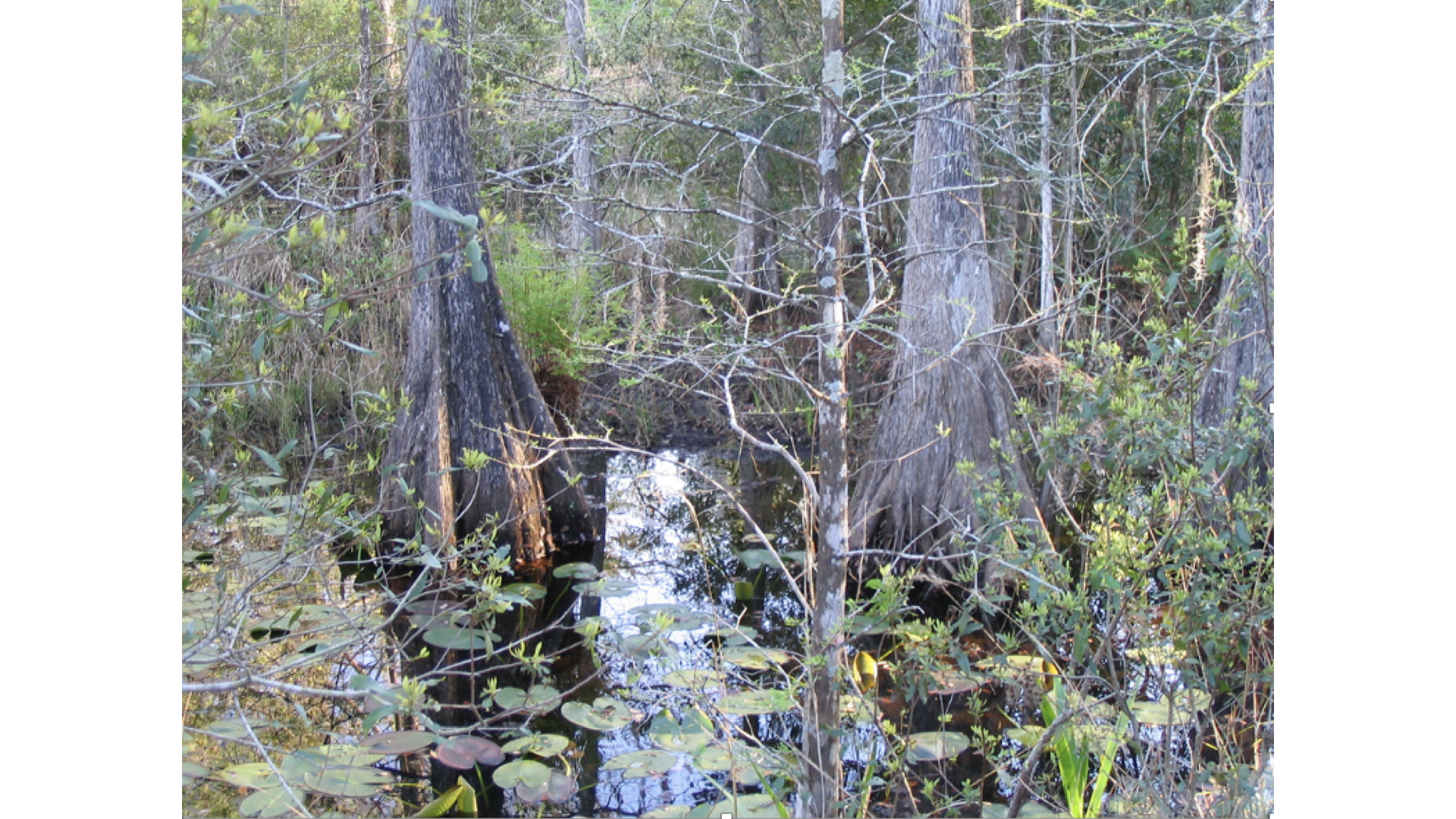
Loss of Wetlands
U. S. Fish and Wildlife Service |
Solid Waste Disposal
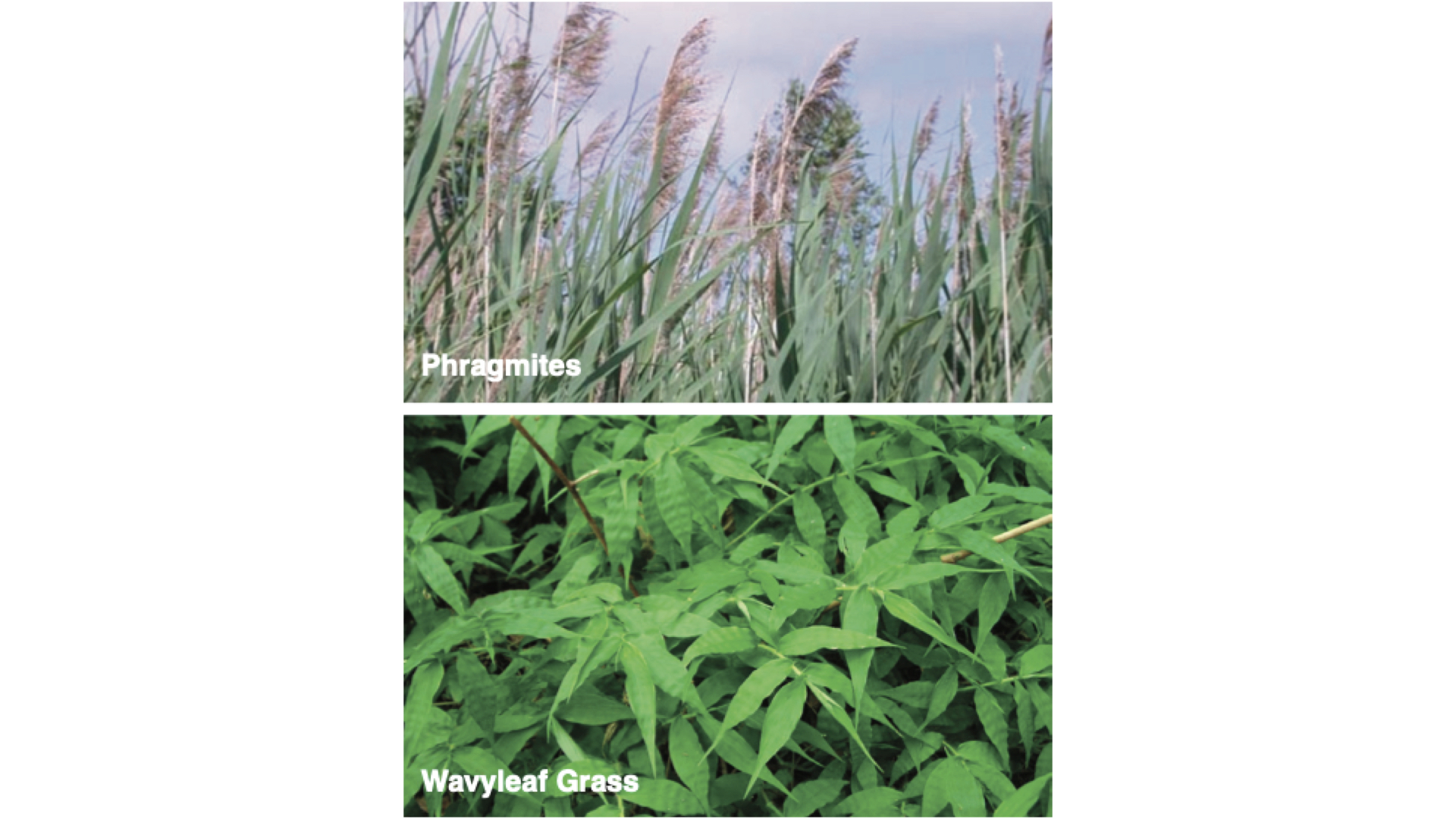
Exotic and Invasive Species
Asian Carp Video
Invasipedia - a wiki site listing invasive species |
EPA site on watershed invasive plants |
National Invasive Species Information Center
National Wildlife Federation - Invasive Species