
Active Learning theory
Active Learning theory
This learning theory emphasis that the learner is the one who assigns value and meaning to his / her own learning experiences. The learning happens as the learner is guided toward the information or transfer of knowledge in experiential form. Meaning and understanding are sought out actively through instructor guided strategies and activities turned into learning opportunities. Active learning theory redefines what is learning and what is a learner. Active learning theory makes the student an autonomous and independent thinker supported along his / her learning process. This is where designing an authentic experience becomes challenging because learning is not constrained to simply designing courses. The authentic experience is set up for learning and transfer of knowledge.
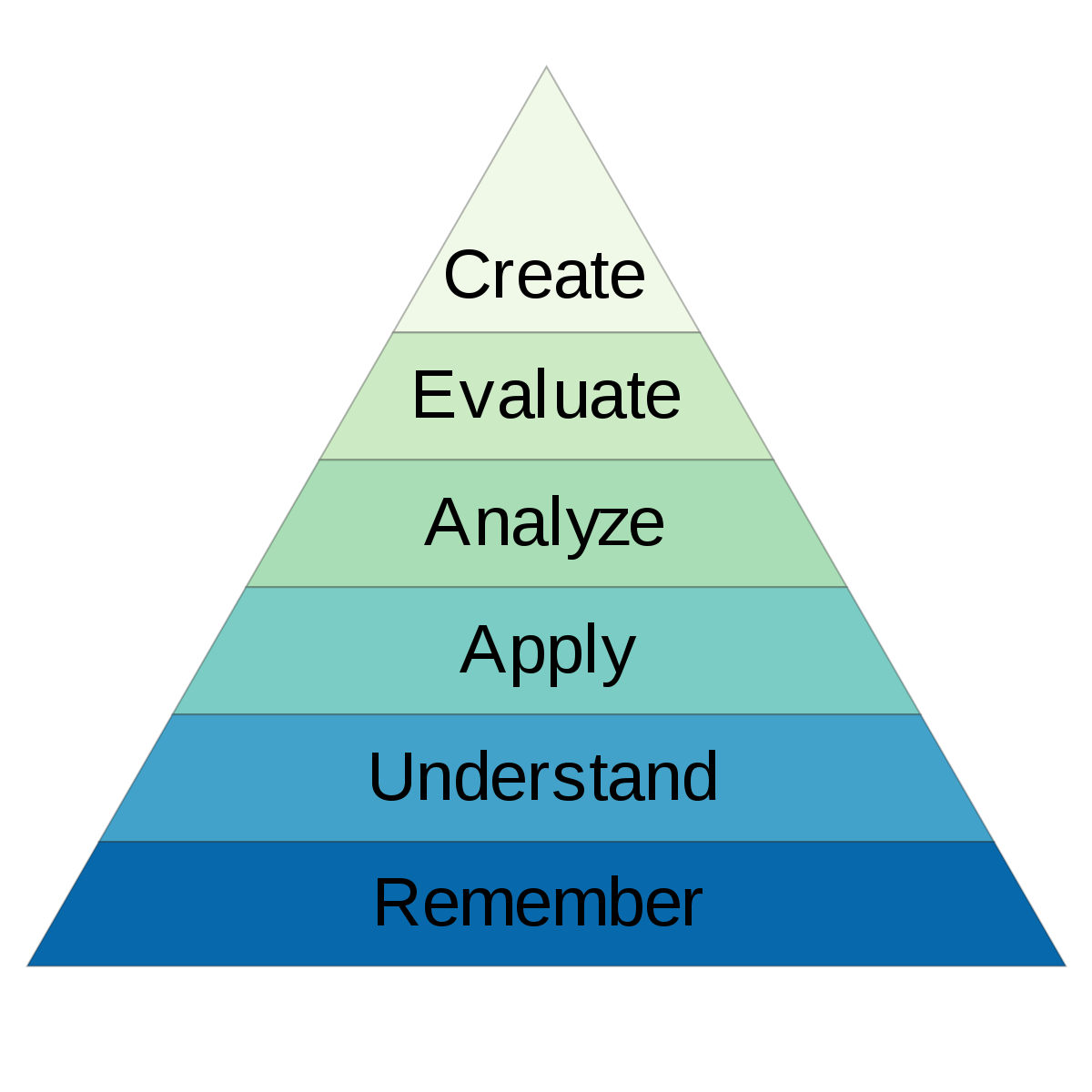
Blooms' Taxonomy : This hierarchical pyramid of cognitive levels of understanding is able to provide an instructor the ability to establish learning goals with clear purpose and level of rigor when designing for instruction.
Zone of Proximal Development : This concept points out that a learner may have ability up to a certain point independently yet may receive deeper understanding with support. The idea behind providing support is known as scaffolding and it is used in ESOL to label instructional and academic supports such as teaching explicit vocabulary.

Lev Vygotsky is a most notable figure in Active learning theory, which is a derivative of Constructivism. Vygotsky proposed a theoretical concept known as the Zone of Proximal development, which differentiates what a learner can do on their own, and what they can do with guided support. This theoretical concept emphasized the need for instructional supports or known as scaffolds, and how to plan for them, in order to help learners effectively engage in the learning process.
For an assessment employing Blooms' Taxonomy simply revert the learning objective into a question. Design a rubric criteria that enforces standards practices in coding and evaluates whether a learner is able to design his first webpage using HTML. The summative application of knowing HTML will be reflected in the final product in the form of a basic webpage.