FDR's Role in the Shoah Before America's Involvement in WW2: 1933-1941
FDR's Role in the Shoah Before America's Involvement in WW2: 1933-1941
When discussing America’s involvement in WW2 in Europe, America is viewed as the Allies that helped stop the Nazis and liberated the camps of the Shoah. Although, we don’t really hear how they were missing in action from 1933-1941. Where was America then, what were our leaders doing? President Roosevelt involvement in the Shoah remains controversial to this day. As he did get more involve as U.S. got involved in the war and liberation, although, I would like to examine the several whole years before that, when the rise of Nazi Germany started, and people started suffering.
My research will focus on the following question: What actions does Roosevelt take or not take that impacted the victims of the Shoah, before getting into war. My hypothesis is Roosevelt knew about what was going on with the Shoah but didn't do as much as he could, or much at all to help the victims, before going into the war.
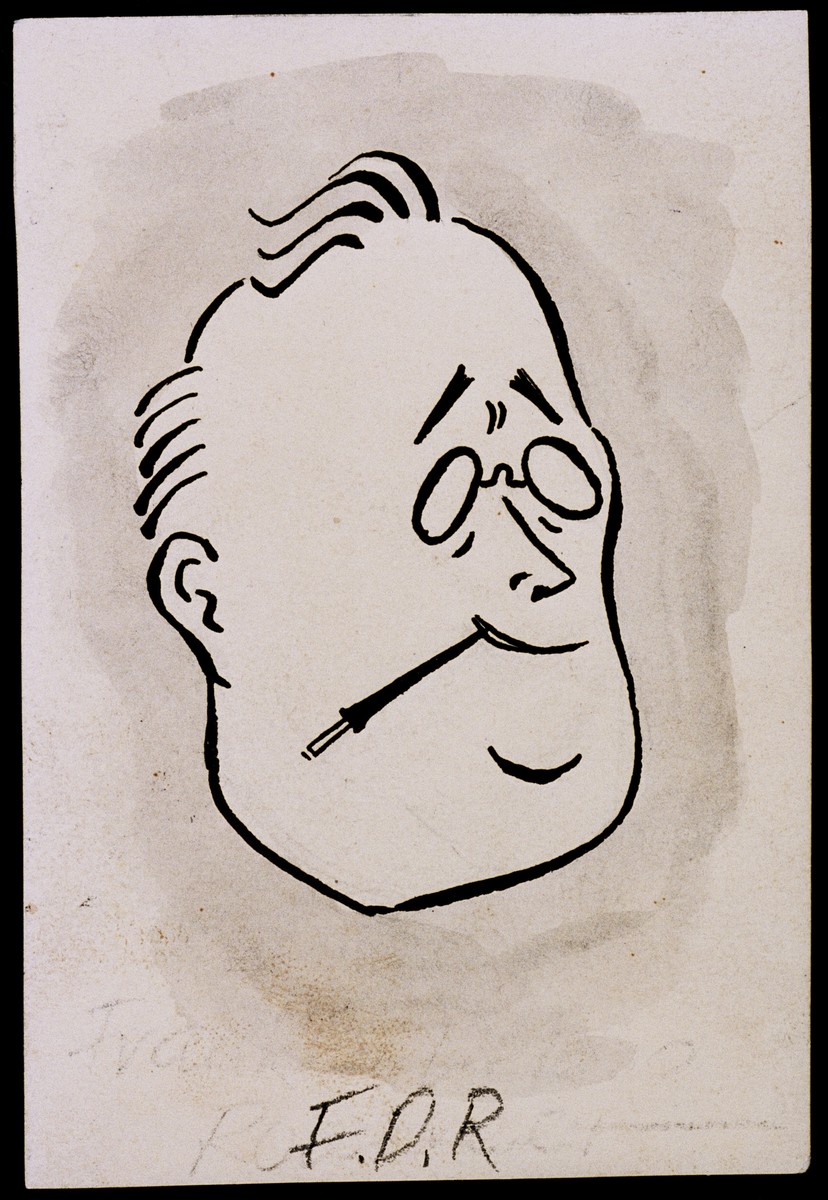
Shoah survivor, Klaus Martin Frank, who was arrested on Kristallnacht, drew this cartoon sometime during or right after the war (1939-1945). The photo is held at the United States Holocaust Memorial Museum, in the "Art of the Holocaust" section. I believe this shows how some of the victims held FDR in high regard.
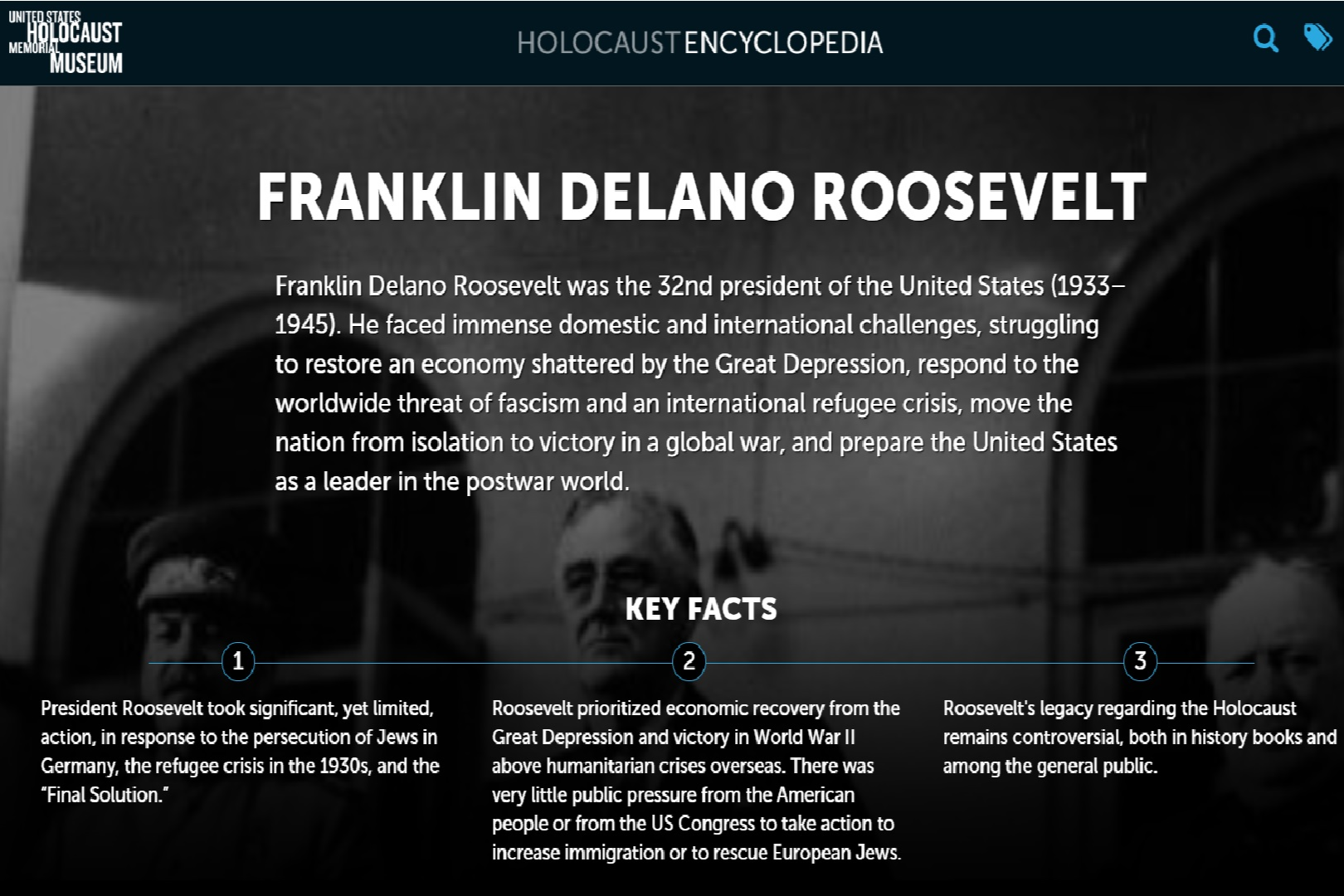 https://encyclopedia.ushmm.org/content/en/article/franklin-delano-roosevelt?series=18079.
The encyclopedia entitled "Franklin Delano Roosevelt" in the United States Holocaust Memorial Website provides background knowledge on Roosevelt's upbringing. It also shares his plans and challenges while in office vs what was happening in Germany, and his stances on the "refugee crisis" through the time. This information shows how FDR was more worried about the U.S. than the tragedies of the Shoah. It also shows how before entering the war, he was hesitant to get involved and usually did not publicly. Although the State Department, the country's economic state, the existing laws, and most of the U.S. population made it difficult for him to do anything, if he really wanted to.
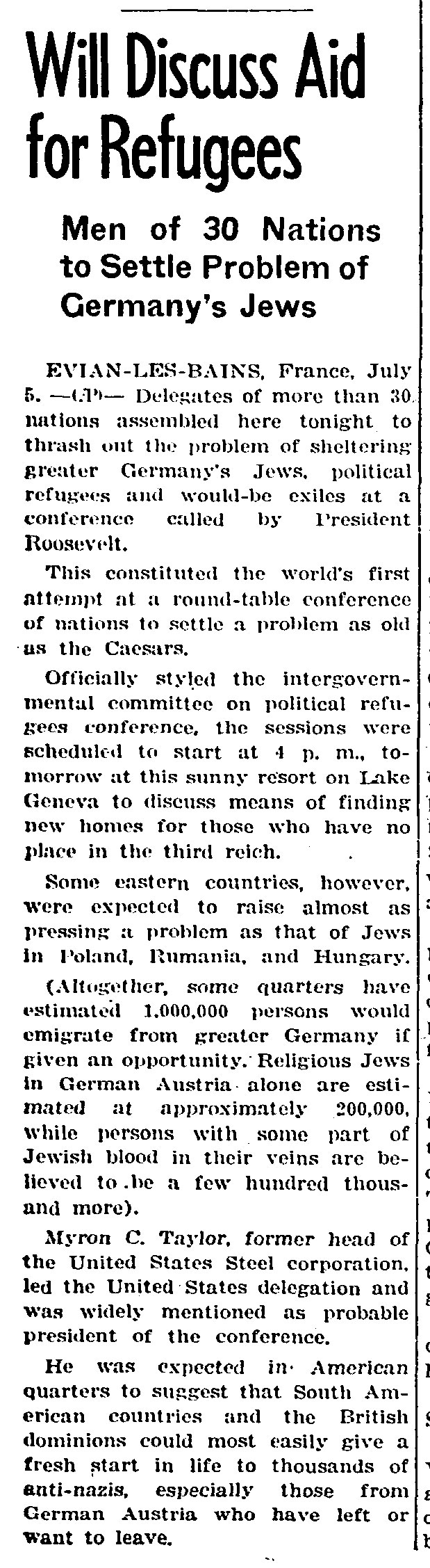
Screenshot of an article from The Daily Illini n Urban-Champaign, Illinois, provided by the United States Holocaust Memorial Museum. This article provides background information on the Evian Conference and FDR/America's role in it. Also some of the wording in the article is a sign of how some Americans portrayed the victims of the Shoah.
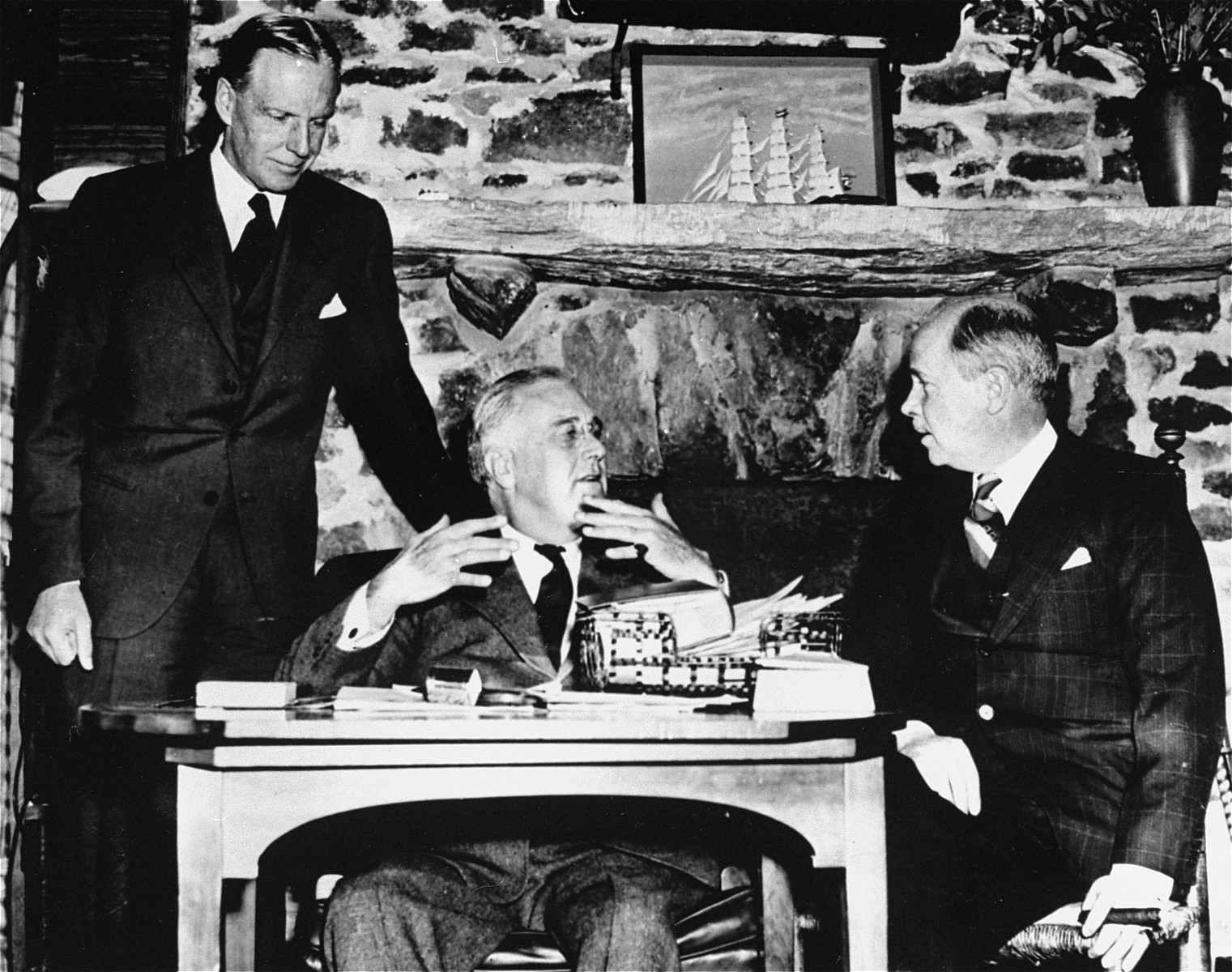
"Franklin Delano Roosevelt confers with American ambassadors William Phillips (left), ambassador to Italy, and Hugh Wilson (right), ambassador to Germany." Picture obtain from United States Holocaust Memorial Museum, and is credited to National Archives and Records Administration, College Park. Dated November 29,1938.
https://exhibitions.ushmm.org/americans-and-the-holocaust/personal-story/max-and-fanny-valfer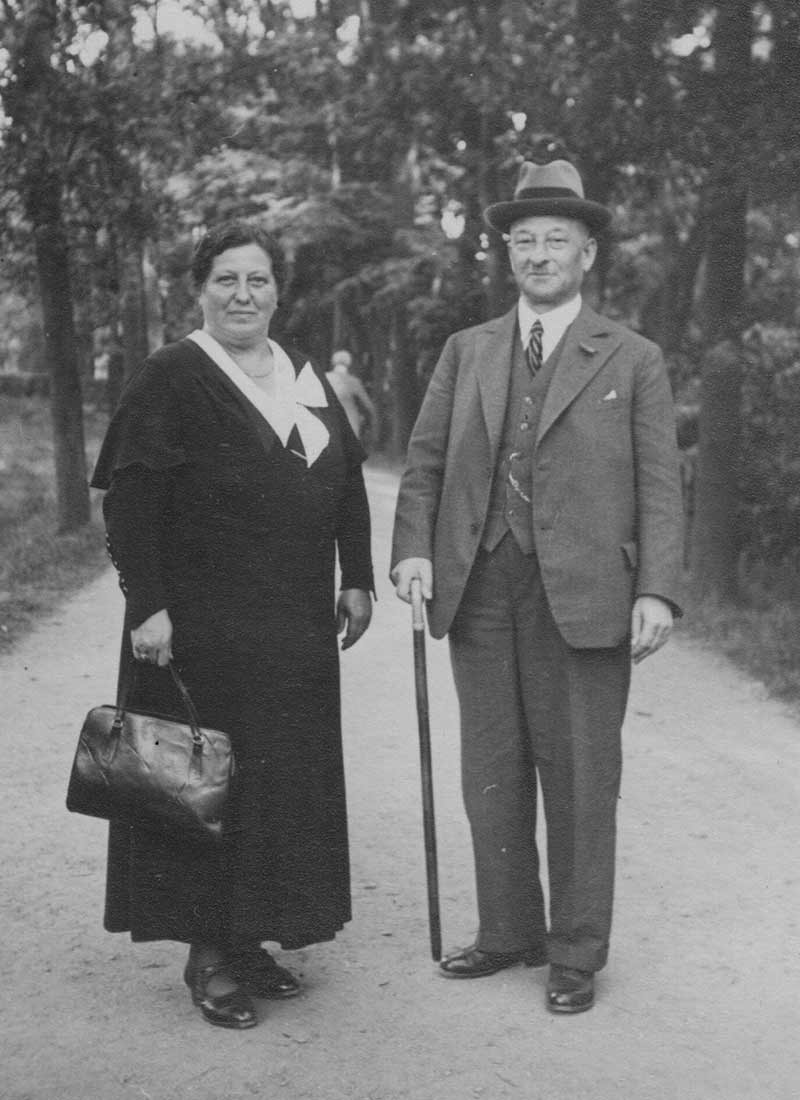
"Fanny and Max Valfer, 1934. Photograph courtesy of Ruth Valfer Bergman Archives/courtesy Bergman family. " Obtained from the United States Holocaust Memorial Museum.
"Max and Fanny Valfer were among the 6,504 Jews from Southwest Germany deported to France in October 1940, as part of a large ethnic cleansing drive by the Nazis. Interned in Gurs, in southwestern France, they spent much of the next 20 months trying to acquire visas for the United States." - USHMM.org
Because FDR didn't act and change the immigration laws, the couple was forced to wait while there were constant delays. By the time the couple was finally approved years later to join their children in the U.S., it was too late. Fanny and Max Valfer were sent to Auschwitz where they would be killed.
https://exhibitions.ushmm.org/americans-and-the-holocaust/main/wagner-rogers-bill-refugee-children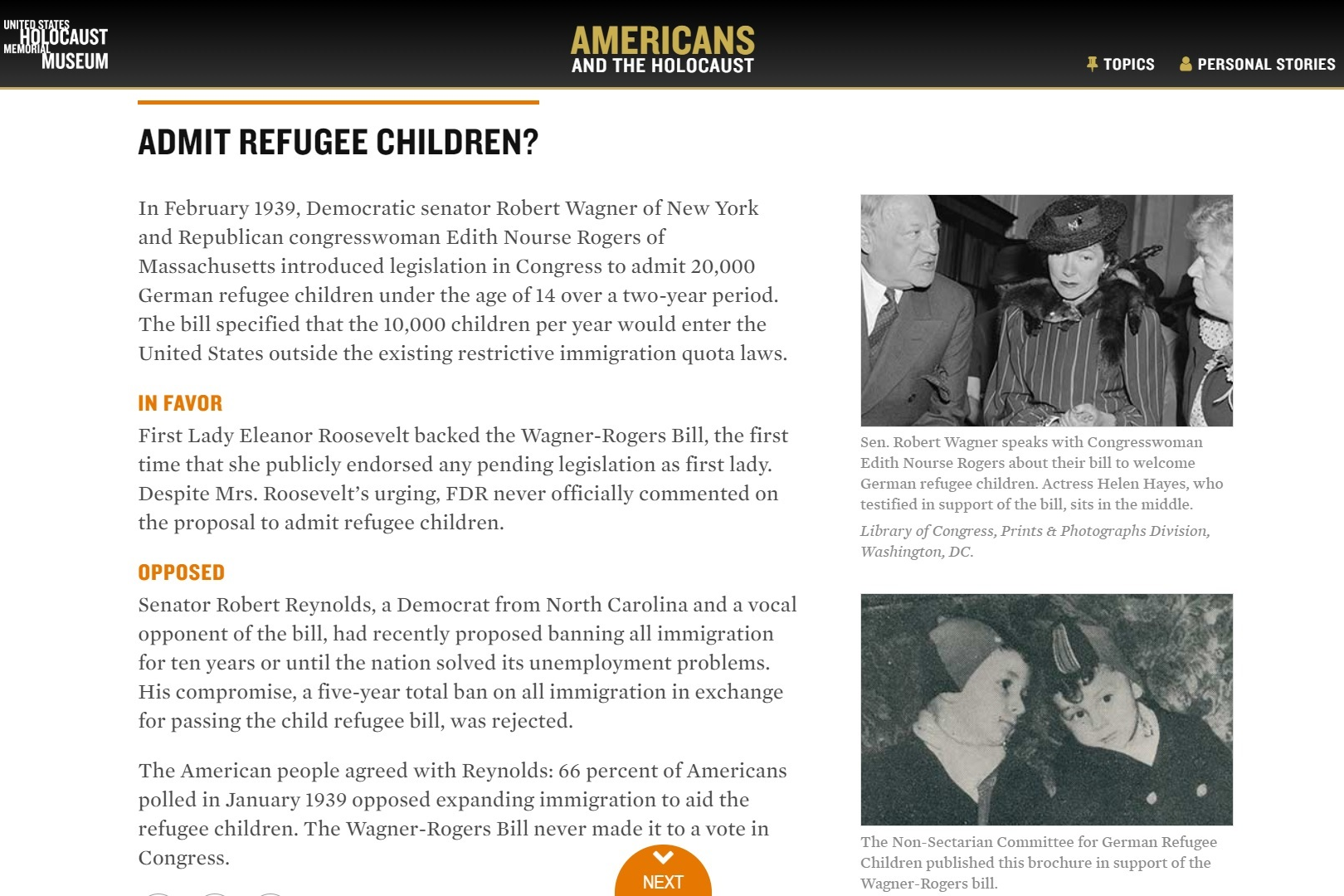 A legislation was introduced to admit 20,000 German refugee children under the age of 14 to the U.S. over a two-year period to help save 10,000 children per year, outside the existing restrictive immigration quota laws. FDR's wife, Eleanor Roosevelt publicly advocated the bill, while FDR stayed silent.
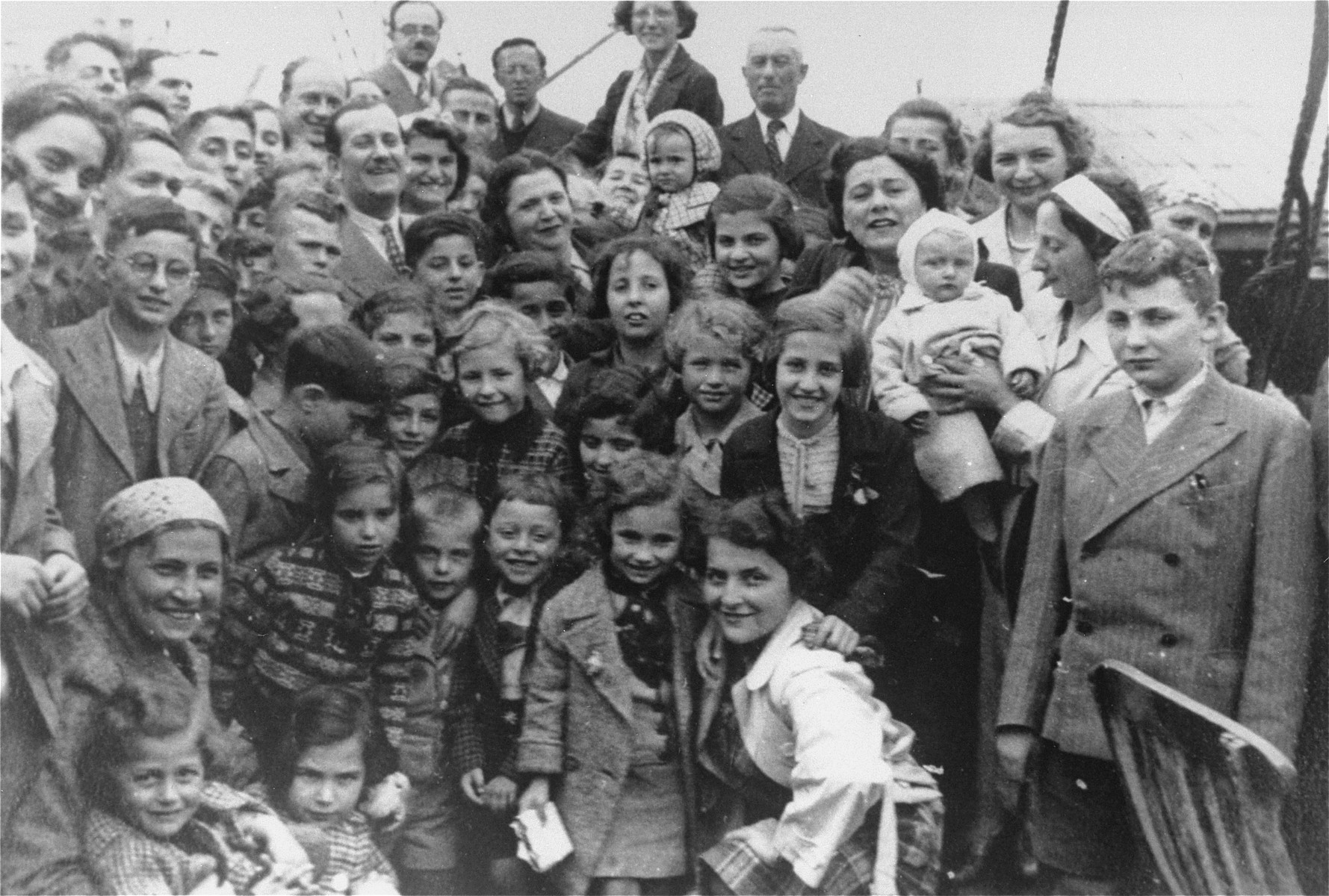
Passengers aboard the St. Louis. Photo Credit: United States Holocaust Memorial Museum, courtesy of Dr. Liane Reif-Lehrer
These passengers would seek refuge in America but would be denied and sent away, as many of them were still waiting for their American visas. FDR didn't make any acknowledgment publicly to help them to stay or find a new home. The Nazis would soon take over most of the countries the refugees ended up in Europe, and 250 of them would be murder.
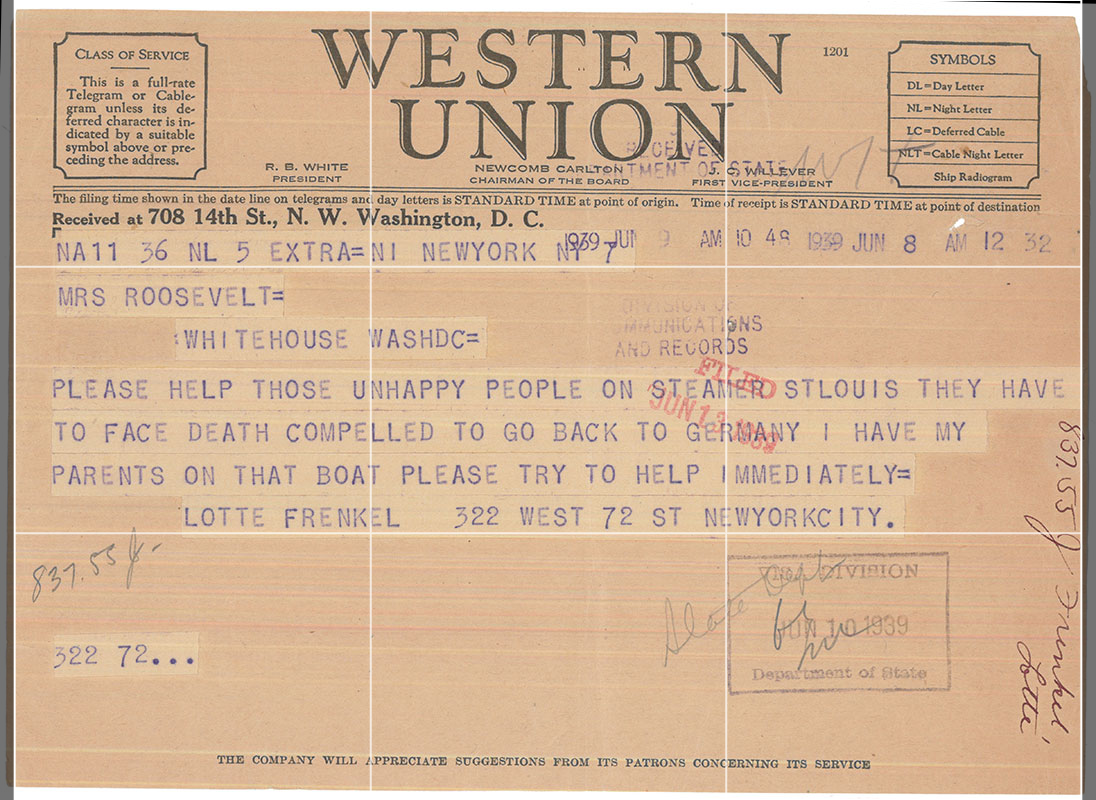 "Lotte Frenkel of New York City sent this telegram to Eleanor Roosevelt, pleading for her to do something on behalf of the St. Louis passengers." This shows FDR was well aware of the St. Louis and had an idea what would happen if they were sent back.
Photo credit: United States Holocaust Memorial Museum courtesy of National Archives and Records Administration, College Park, MD,
Video credit to cunytv75 YouTube channel.
An interview between Richard D. Heffner, a Jewish American who as a kid during the time FDR was in office, and Nobel Peace Prize laureate, Elie Weisel, who was a witness and victim of Nazi Germany during FDR’s time in office. This video gives the perspective of two different sides of the globe during that time on FDR's role in the Shoah.
One quote that sticks out is "In Berlin, what do you think the reaction was? In Berlin they said to themselves, they don’t care, we can do with our Jews whatever we want because even in America they don’t care," says Weisel.
Historians Richard Breitman and Allan Lichtman provide their thoughts on the controversial topic of FDR's action/non-action during the Shoah. Even though they state his actions were "flawed," they do mention his "political constraints and international constraints," how he did more than other leaders, and how he was supported/loved by most of the Jewish community.
Audio credit NPR. https://www.npr.org/2013/03/18/174125891/fdr-and-the-jews-puts-roosevelts-compromises-in-context
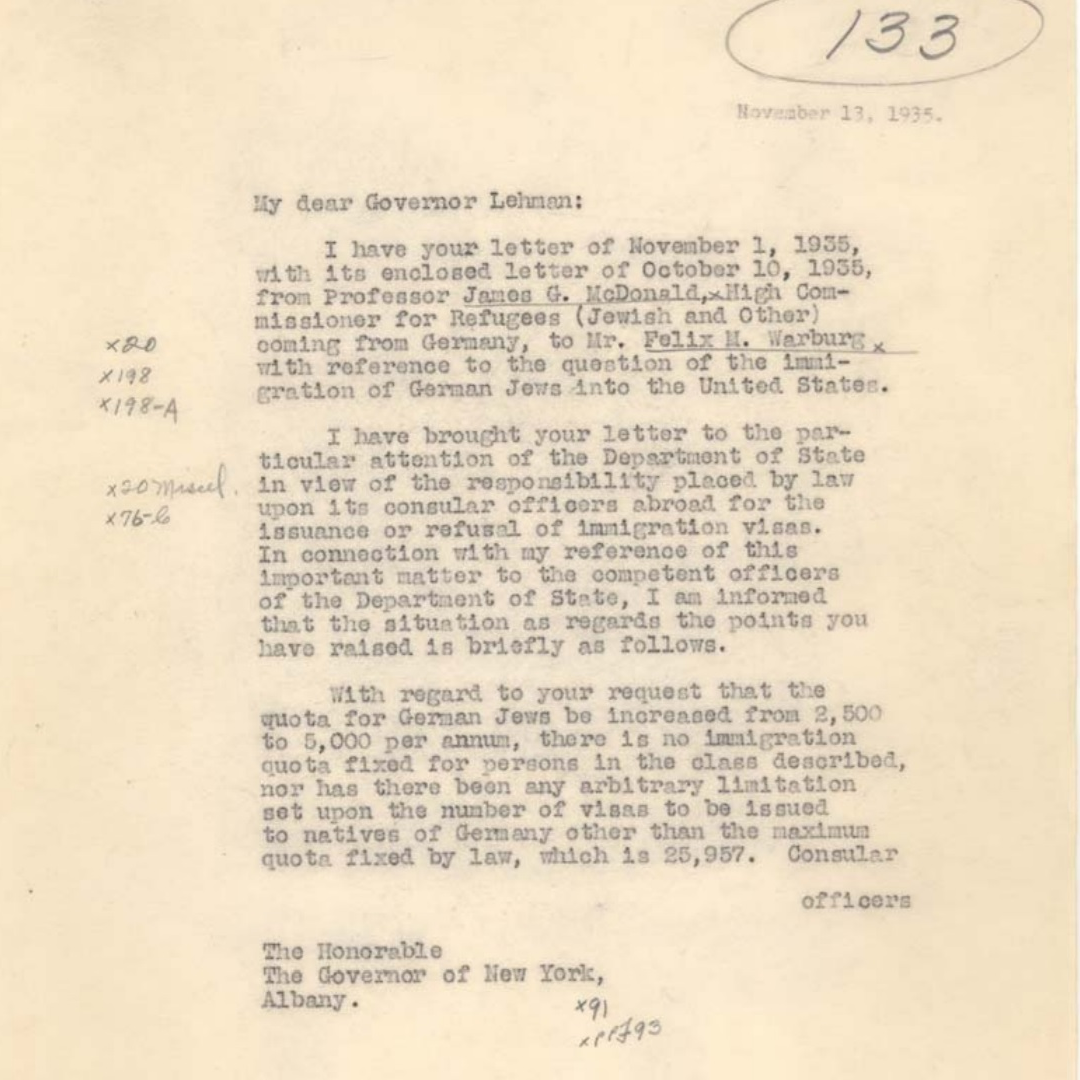
" Letter, FDR to New York Governor Herbert Lehman, November 13, 1935: Throughout the 1930s, President Roosevelt was kept informed of the growing refugee crisis in Europe by political leaders with ties to the American Jewish community, including New York Governor Herbert Lehman. Through these contacts, Roosevelt also learned that the strict immigration quotas in place at the time were not being fully or fairly administered by his own State Department. In this November 13, 1935 letter, the President advises Lehman of the results of his own examination of the visa issue, the legal limitations imposed by the Immigration Act of 1924, and his instruction to the State Department that German Jews applying for visas were to be given “the most generous and favorable treatment possible under the laws of this country. (President’s Official File 133: Immigration, 1933-35, Box 1)." Page 1/4 http://www.fdrlibrary.marist.edu/archives/pdfs/holocaust.pdf
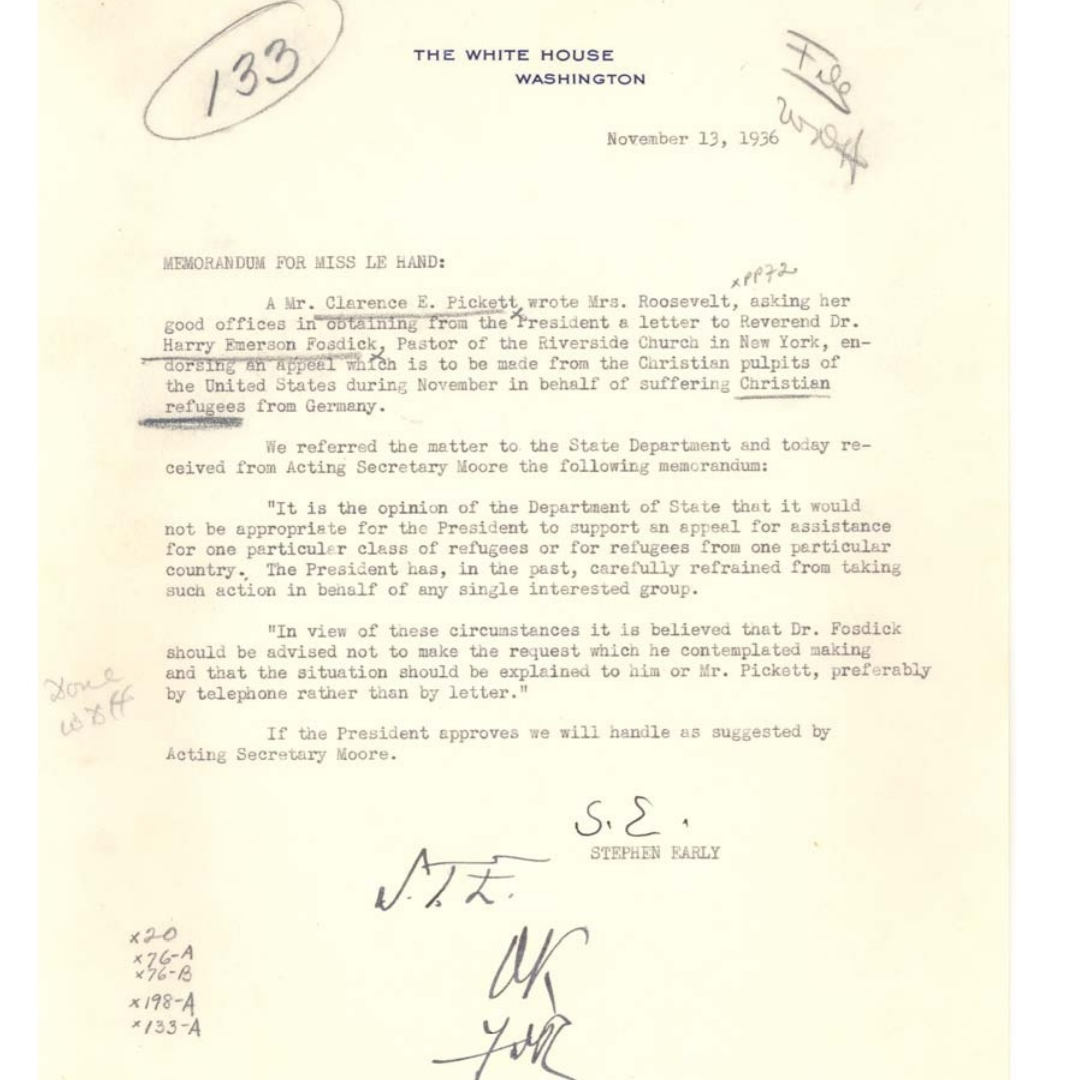
"Memorandum for Miss LeHand from Stephen Early, November 13, 1936: Because of the country’s isolationism and the immigration laws in place in the mid-1930s, President Roosevelt often felt constrained in taking a more proactive stance with regard to European refugees. In this November 13, 1936 memorandum for the President’s private secretary Missy LeHand, Press Secretary Stephen Early recommends that the President resist the temptation to issue a requested appeal on behalf of persecuted Christians in Germany. Such an appeal, in the opinion of Early and the State Department, would be an inappropriate expression of the President’s preference for one group of refugees over others. The President indicates his acceptance of Early’s recommendation at the bottom of the memo. (President’s Official File 133: Immigration, 1936-1941, Box 1)." http://www.fdrlibrary.marist.edu/archives/pdfs/holocaust.pdf
Footage covering the Evian Conference during that time in July 1938. Video from United States Holocaust Memorial Museum, trimmed down and posted for project by Megan Holden.
FDR takes action to call the Evian Conference, to help find a home for the victims of the Shoah, who are trying to escape Nazi Germany. FDR didn't attend or send a government official, but instead a friend in American businessman, Myron Taylor, to speak on America's behalf. Initially, FDR and America had hoped that other countries would step up and accept more refugees into their country. Although, besides the Dominican Republic, no country had agreed, including America. Now the Nazis had more ammunition to terrorize their victims with, as there was less hope to escape.
Background information on Immigration to the U.S. and it's laws from 1933-1941
https://encyclopedia.ushmm.org/content/en/article/immigration-to-the-united-states-1933-41
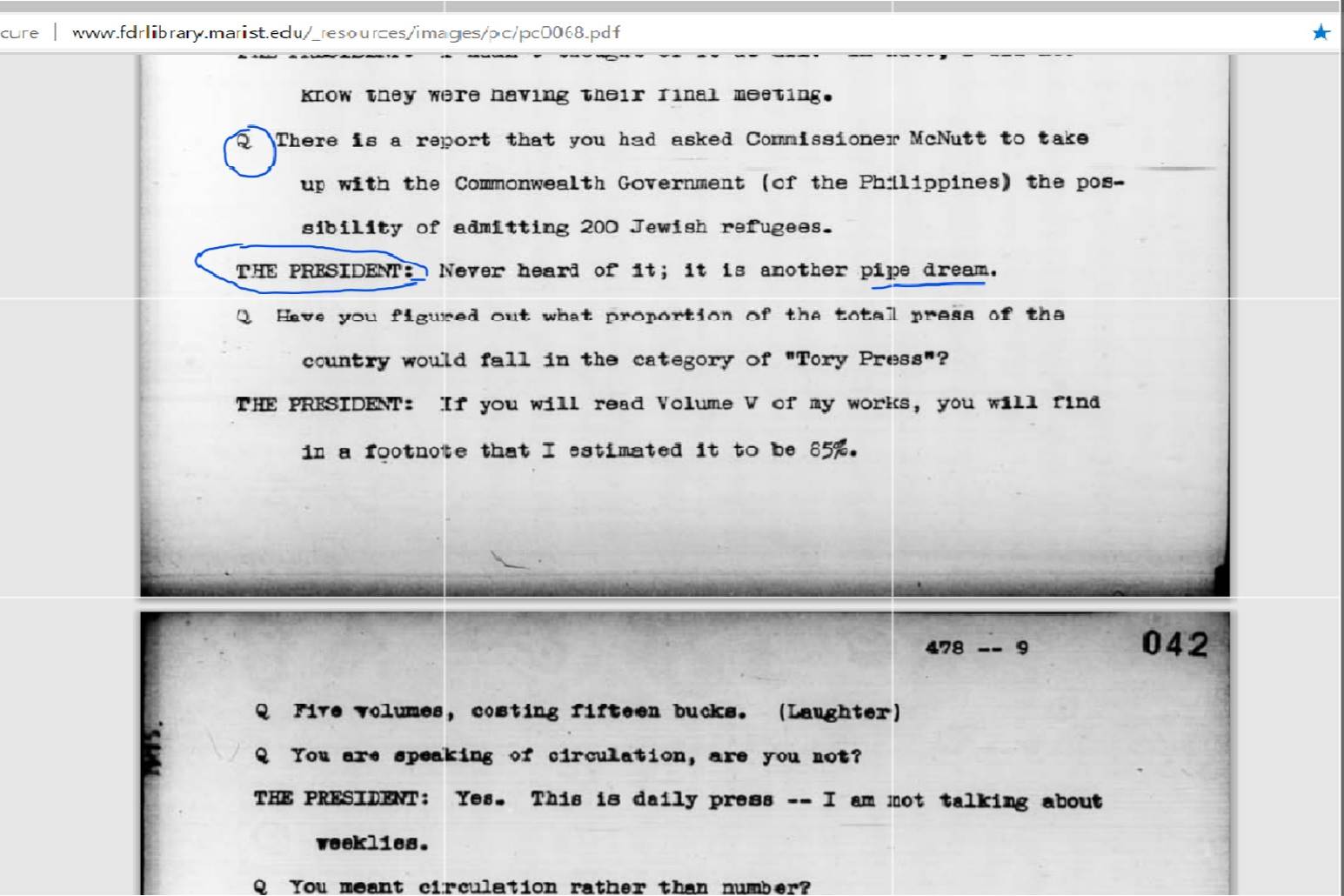
Press Conference 178, August 23, 1938, Page 41: President Franklin Delano Roosevelt responds the reporter's question about a report of him helping emitting 200 Jewish Refuges to the Philippines:
"Never heard of it; it is another pipe dream." *Image from archives of transcripts of FDR's press conferences from fdrlibrary.marist.edu
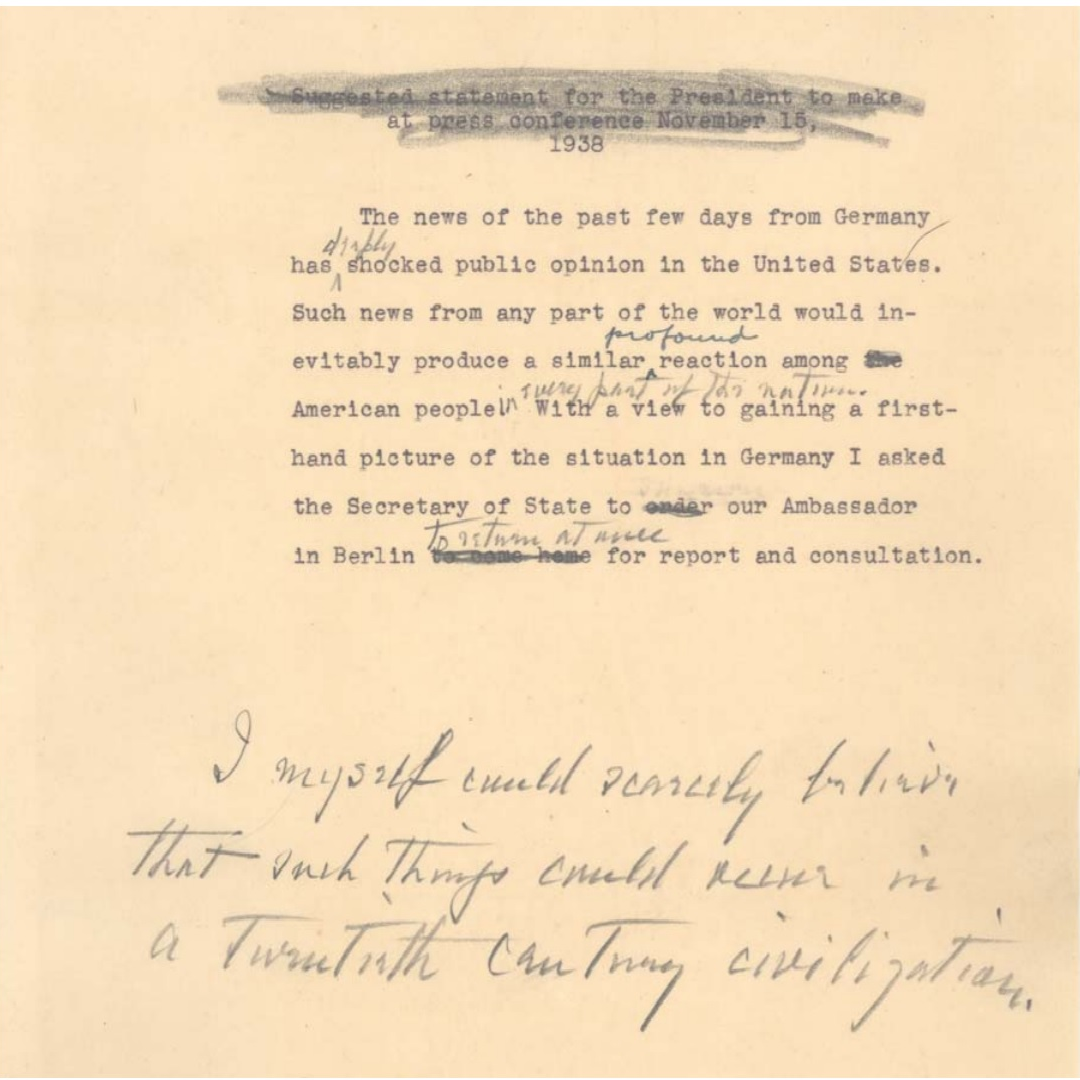
"Draft Statement by the President, November 15, 1938: When the reports of the Nazi violence were confirmed, the President drafted this statement expressing his outrage at Kristallnacht and recalling the American ambassador to Germany. The changes and additions are in the President’s own hand, and the final message was approved by Secretary of State Cordell Hull who placed his initials in the lower right hand corner. The President read the statement at his press conference held on November 15, 1938. (President’s Secretary’s Files; Diplomatic Correspondence; Germany, 1933-1938, Box 31)." http://www.fdrlibrary.marist.edu/archives/pdfs/holocaust.pdf
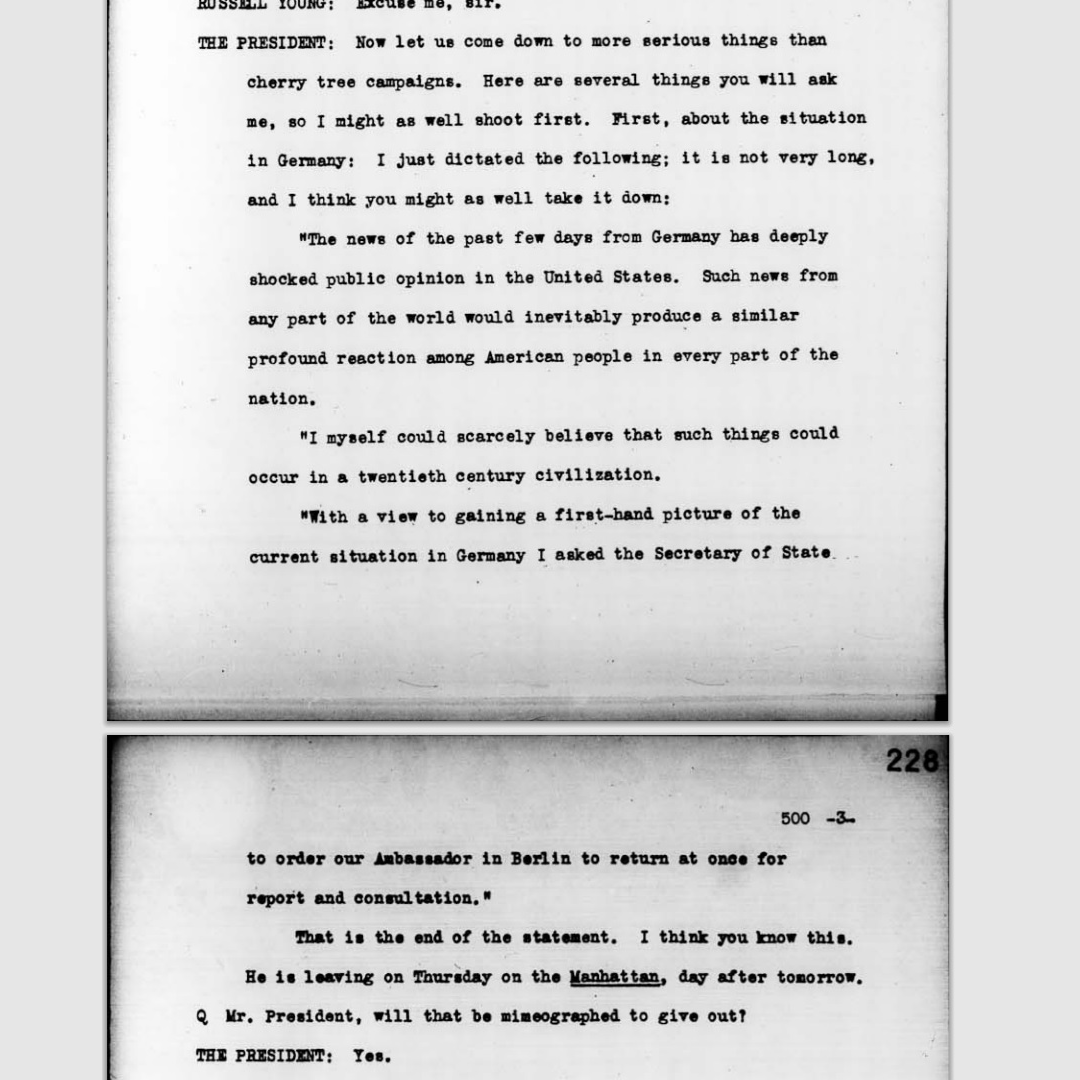 https://docs.google.com/document/d/1WojwHtD9ch8hjcdlLEpFgPyilslJWMwhoFeVuyKnY_A/edit?usp=sharing
Transcripts from: Press Conference 500, November 15, 1938, and Conference 501 November 18 1938, provided by FDR Presidential Library & Museum. The transcripts shows FDR recognizing the tragedies that happened during Kristallnacht, and he also stays firm in following the quota system when asked about increasing immigration for U.S. Then in a few days, he announced an extension on visitors passports for refugees that were in America.
This video provides background and cover the path for the passengers of the St. Louis and Kwanza. It shows how the scenarios were similar and differed and FDR's role (non-role) in both. Video from United States Holocaust Memorial Museum in the "Americans and the Holocaust" section, trimmed down and posted for project by Megan Holden.
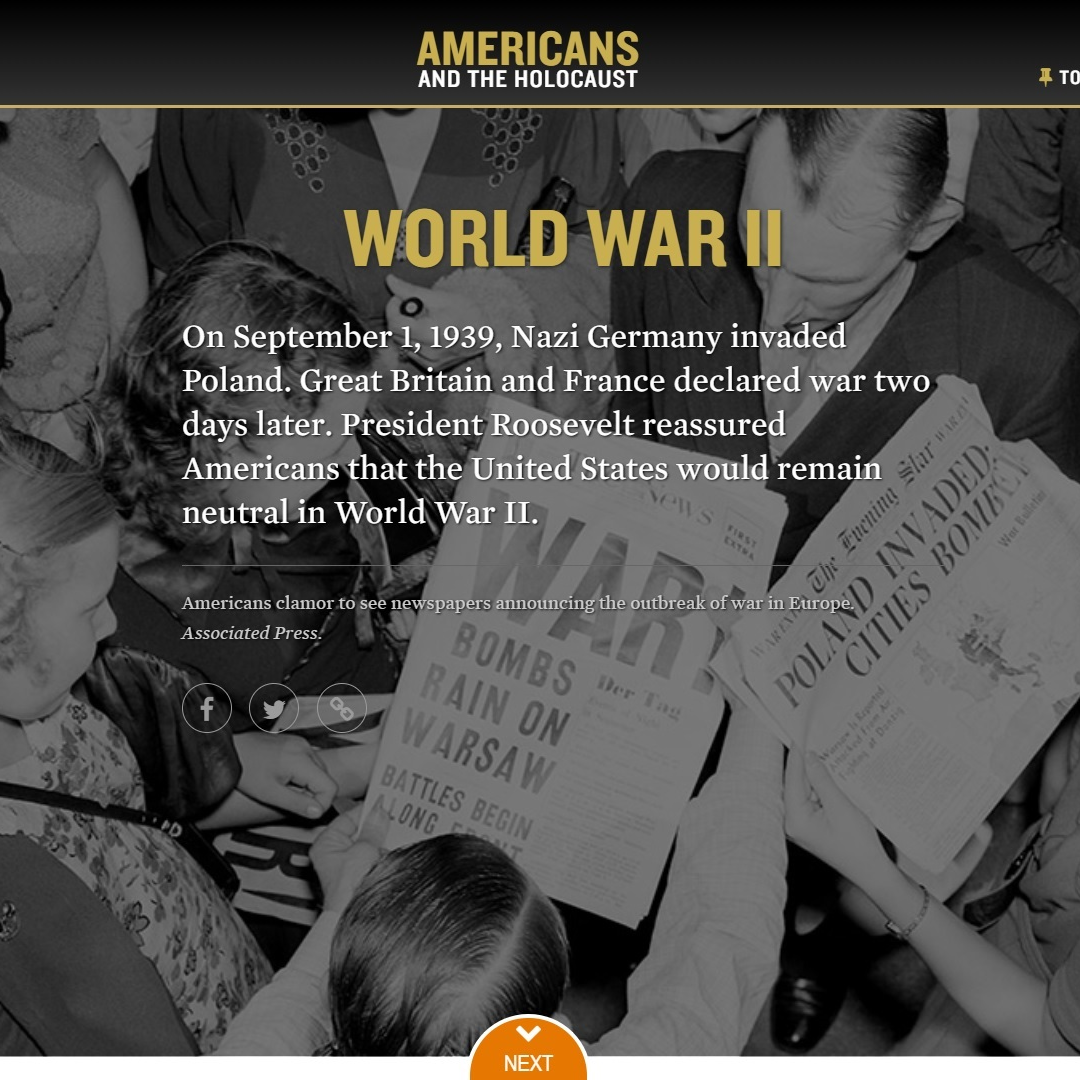 https://exhibitions.ushmm.org/americans-and-the-holocaust/main/world-war-ii-3
FDR refused to get part of the war when Nazis started invading countries, as he focuses on the problems at home Most Americans didn't want to get involved in the war according to polls taken on that time by papers, presented on the website.
Video published by British Pathé YouTube account.
Roosevelt announced that he would help aid the Allies against the Nazis and the rest of the Axis powers. The reason was to protect "this hemisphere," as Nazis were taking over Europe leaving countries to surrender to them. Although FDR didn't mention anything about the Shoah or its' victims, the plan was just to defeat the common enemy- the Nazis.
This video is from the United States Holocaust Memorial Museum. It has been trimmed down the video and posted it for the project. It covers FDR's stance on the war and Nazis through the timeline of 1939-1941 and shows how it changed.