
Human Motor Development
Human Motor Development
Motor Development Across the Lifespan/KINE325
CSU, Instructor Open Textbook Adoption Portrait
Abstract: The This textbook was utilized in a Kinesiology course for undergraduate Exercise Science students by Prof. Nathaniel Bodell at California State University, San Bernardino. The textbook that has been adopted for this course is comprehensive, and affordable. The main motivation to adopt this textbook was to support students from lower socioeconomic backgrounds. Most student access this textbook in an electric format.
COOLforED is a service of the California State University-MERLOT program.
Partial funding provided by the State of California, the William and Flora Hewlett Foundation, and the Bill and Melinda Gates Foundation.
Questions? Email cool4ed@cdl.edu
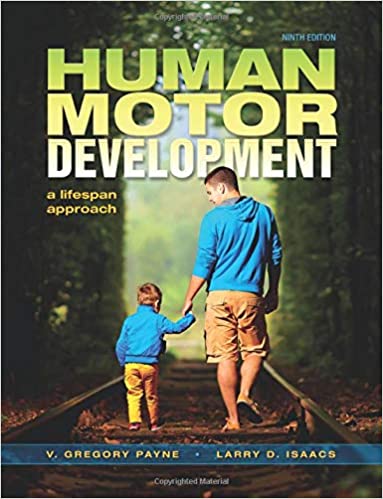 Image caption
Human Motor Development
A Lifespan Approach: (link)
Description: This book provides an overview of human development and includes the relationship between motor development and cognitive and social development. It explores factors affecting development, including effects of early stimulation and deprivation. The book addresses assessment in motor development.
Authors: Greg Payne, Larry Isaacs
Formats: web, ePub, soft and hardback (link). Supplemental resources: Student resources include PowerPoint accessibility, videos, lab activities, and sample tests. Additionally, faculty have access to instructor materials, including PowerPoint and test-bank (link).
Cost savings: The previously used textbook (Lifespan Motor Development) is also in multiple formates (PDF, ebook, or paper) with similar ancillary materials. However, this book comes at a cost of $118 from the bookstore. The newly adopted textbook (Human Motor Development) can be found from multiple retailers at a cost of roughly $40.
Accessibility and diversity statement: (link)

Course #: KINE 325
Motor Development Across a Lifespan
Description: Give description of course utilizing the course catalog at the educational institution if available.
Prerequisites: N/A
GE credit: 4 units, degree applicability
Syllabus available here: [link]
Learning outcomes:
1. Describe and recognize growth and maturation in the context of exercise science and motor behavior.
2. Describe human growth, including prenatal growth and functional development; growth in stature, weight, segment lengths, and various tissues; changes in body proportions, body composition, and physique; and how growth and maturation impact and interact with motor development, physical activity, and physical performance.
3. Identify biological maturation (i.e., somatic, skeletal, sexual, and dental maturation) in terms of methods of assessment, the adolescent growth spurt, and maturity-associated variation in size, body composition, and performance through lectures, peer-reviewed research articles, class discussions, and lab activities.
4. Calculate measures of growth and maturation, graph growth data (i.e., plotting stature, weight, and BMI data on growth charts and graphs, plotting distance and velocity curves for stature and/or weight), interpret data/graphs in order to assess growth and maturity status, and to compare growth and maturity status among individuals as part of the lab activities and assignments.
5. Explain principles of motor development and apply them to the learning and teaching of motor skills.
6. Identify the developmental sequences of motor skills.
7. Recognize the basic mechanical principles involved in the execution of a fundamental motor skill.
8. Identify the importance of self-concept development in children and implications for developmental education.
9. Recognize the factors involved in one’s own development (physical, psychological/emotional, social, cognitive, and spiritual) as a person.
Teaching and learning impacts:
Collaborate more with other faculty : No
Use wider range of teaching materials: Yes
Student learning improved : Unsure
Student retention improved : Unsure
Any unexpected results: No
This was Dr. Bodell's first quarter teaching this course, therefore it is difficult to determine whether learning and retention improved. We hypothesis that student learning and retention will be positively influenced by the greater accessibility, via reduced cost, of the course materials.
Sample assignment: Assignment Example: Link This assignment was designed to be supported by the textbook materials. Students are to compare novice and advanced athletes and the motor development disparages therein.
OER Adoption Process
The primary motivation for adopting this new textbook was to provide a more economical textbook option for students. The community of San Bernardino has a poverty rate of 18.2% (link) and primarily serves minority and first generation college going students. As such, the economic impacts placed on the student body is more drastic among CSUSB students. The Affordable Learning Solutions (link) initiative at CSUSB seeks to alleviate these financial stressors.
This textbook was supplemented with various youtube videos and peer reviewed research pertaining to motor development.
Student access: This text is available in hard, soft, and electronic editions.
Student feedback or participation: The general consensus of from the students in this course was positive. Most students opted for the ebook and those who expressed concerns due to cost were able to successfully navigate this course requirements exclusively from the ancillary materials (PowerPoints, notes, videos).

Nathaniel Bodell, Ph.D. [link] is a kinesiology professor at CSUSB. He regularly teaches Physical Activity and Aging, Motor Learning and Development, and Motor Control and Skill Learning.
Dr. Bodell's research interests include the exercise effects on lipid metabolism among older adults.
Nathaniel's teaching philosophy includes continually promoting a judgement free teaching atmosphere in which students feel safe to explore concepts, ideas, and theory which may be new and challenging.