
How to Apply Social Learning Theory in the Classroom
How to Apply Social Learning Theory in the Classroom
We will be exploring the Social Learning Theory of Albert Bandura. This learning style is all about how learners observe the behaviors, reactions, and socializations of others and use this as a model for themselves. As human beings, we act in ways due to things that we observe from others; this can be from parents/guardians, friends, or from television even. We use the people we see around us as a model in order to determine how we should act or react in certain situations. Let's look at how we can instruct learners through modeling of class routines, activities, and experiments.
The instructional design model we will be exploring is the ASSURE model. With the ASSURE model, this can be used by teachers in order to design learning environments for all students. ASSURE stands for, “Analyze learners; State standards & objectives; Select strategies, technology, media & materials; Utilize technology, media & materials; Require learner participation; Evaluate & revise”. Knowing whom your students are, how they learn, and their areas of needs are extremely important, so it only makes sense that this would be the starting point for the model. The ASSURE model can be used with the social learning theory because you can analyze your learners and their prior knowledge or their areas of need, and from there, can decide what modeling needs to be done when it comes to their learning.
With the social learning theory, it is discovered that we are always able to acquire new behaviors through the act of observing others and imitating what is observed. As humans, we often times want to do things or act in certain ways because of things we see from others. If you want to impress someone, you are going to act a certain way. Especially at a young age, we can be motivated and manipulated by outside sources to do certain things. One of the biggest examples is thinking about advertisements that are aimed at teenagers; making cigarettes appealing, certain brands deemed as “cool”, while other things were advertised as “uncool”. Based on what we see in these advertisements, we begin to model the behavior or actions of what is seen as desirable, without even knowing it.
We can use the social learning theory when we are looking at behavior modeling. As a special education teacher, behavior modeling is something that we use very frequently with our students. In order to obtain a desired behavior from an individual, the starting place is by modeling the expected behavior. By modeling this behavior a number of times, the individual is able to see what is expected. Then, they can put themselves into the situation and model this behavior as well, most often times, for some type of reward. We can train students and individuals to act in certain ways through using behavior modeling. This modeling can be done in person or even through video modeling for students to watch.
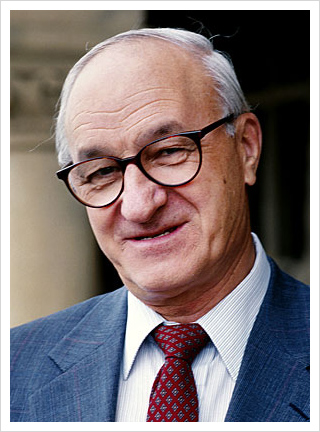 Albert Bandura is a Canadian-American psychologist who founded the social learning theory. He was born on December 4, 1925 in Canada, and is most well known for finding social learning theory, self-efficacy, and for the well-known Bobo doll experiments. Albert received his Ph.D. in clinical psychology in 1952, and began working at Stanford University in the Department of Psychology where he still works today. One of his largest contributions was the Bobo Doll experiment that Bandura completed with Dorrie and Sheila Ross. In this experiment three experimental groups were observed to see how their behavior changed when exposed to different things. One group observed aggressive behaviors towards a bobo doll, one group observed non-aggressive behaviors with the doll, while the last group observed no modules of behavior with the dolls. What they found was that those children who observed aggressive behaviors were more likely to show aggressive behaviors themselves.
Albert has written and published a number of books and studies, from Self-Efficacy, Psychological Modeling; conflicting theories, and Social Learning Theory. In Social Learning Theory Albert explores new advances that are being explored with regards to his social learning theory. This book is one that is used often for psychology students who are exploring learning theory.
In Self-Efficacy: The Exercise of Control, Albert presents over 20 years of his own research related to his studies on self-efficacy. Albert Bandura’s theory is that, “believing one can achieve what one sets out to do results in a healthier, more effective, and generally more successful life”.
One theoretical concept that can be used for today’s learners is modeling of new skills within the classroom. When students are learning a new skill or concept, often times teachers will provide many opportunities for guided learning. However, providing students with direct modeling opportunities presented in a number of ways will allow for continued growth on these new skills. This will also allow for teachers to step out of the teaching role and allow for other students to model skills for each other. The teacher can begin with directly modeling the expected behavior or skill for the class to observe. After observation, students can work with one another in practicing the skill themselves. As the teacher begins the observer, they can find which students are picking up the skill, and they can allow for those students to step into the teacher role. Students can begin modeling the skills for one another, since we know that when the model closely resembles the observer, they are more successful.
Another theoretical concept that can be used for learners would be using peer editing or peer tutoring as a learning tool. While this can work closely with modeling, this concept will allow for students to work closely with one another in growing in certain skills. Students can learn from one another, find areas of strength and weaknesses in one another’s work, and apply these skills they observe to their own work. Teachers will be able to become the observer, and they can check students’ retention of skills that were modeled by the teacher.
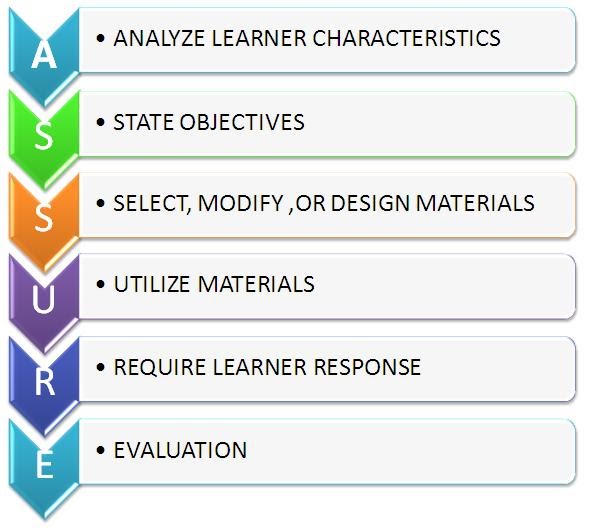 The ASSURE model really explores how lesson planning and design truly will only work when we take the time to analyze who our learners are first. This model starting with analyzing learners is something that is extremely important when looking at instructional models. After analyzing the learners, the teacher will then be able to think more critically about the question of, “based on my students needs and abilities, what skills will I need to model in depth?” This question will really allow for the teacher to build their classroom materials and activities around what will be modeled for the class.
From there, the teacher will be able to select strategies as well as materials to use within the classroom to allow for students to best learn. This is when teachers can use or find video modeling of skills, or can create different modeling opportunities to use in the classroom so that it is being represented in a number of ways. Learner participation will be when the modeling is occurring, and the students are actually participating in the skill themselves. They are no longer observing the teacher present the modeling, but they are actively participating in the skill.
When it comes to modeling, one learning activity that I will present to students will be using multimedia in order to present modeling. Using videos of others modeling a skill, whether this is an animated video or other people who are modeling the skill, I will present the activity visually for students to observe. Specifically, if this was in the Chemistry classroom, students could observe a video of an experiment. After observing the experiment, they would work on answering questions specific to the skill that was being used in the experiment. The teacher would determine the students’ preparedness based on their responses, which will then lead to the students being able to participate in the experiment, themselves.
When applying a new skill, I will also use modeling as a way to introduce the skill and allow for students to follow along. I like to work through problems on the board, and model the step-by-step process for students to follow along with. I will ask students to participate in telling me the next step needed, so that I can move onto the next step of the process. The class cannot move onto the next part of the process until the students have told me what I need to do and why.
For peer editing and peer tutoring the students can work together on modeling the skills or process for a class activity. One activity will be having half the class become “teachers” and the other half of the class stay as students. Students will be able to choose what skill they want to model, and they will present it to their partner. The goal of this activity is for the “teacher” student to have experience with modeling a skill to others, while the other student will have to be able to successfully model the behavior by the end of this activity. This activity allows for students to tutor one another and help each other out when it comes to modeling of skills and expected behaviors.
Another activity would be peer-editing stations during a writing unit. Students who have had their work edited and checked by the teacher will be able to set up stations around the classroom. Their classmates will be able to go around the room and use their peers to edit their own work. The students will be modeling the skills they used in their writing to help their classmates make changes or edit their own work.
A number of formal and informal assessments can be embedded into instruction for students to show their understanding of concepts or skills. These can be simple yes/no questioning (thumbs up, thumbs down), which can be implemented from the very start as an informal tool to find out student comfort level with material.
More formal assessments can then be used throughout units as well and at the end of units to check levels of understanding. These formal assessments will be modified to fit the needs and ability levels of learners. The assessments can be presented in a number of ways; most often times will be in multiple choice/short answer format.
As an Instructional designer I hope to accomplish a number of things: First, creating interacting and engaging learning opportunities for all learners in the classroom. Next, I want to make sure that all learners’ needs and abilities are addressed within the classroom- all students should feel valued and included in the instruction. Lastly, I want to make sure students and teachers feel supported with the material and instruction being implemented. If the teacher and the learners do not feel comfortable with the materials and instruction, then it will be difficult for learning to occur.
When thinking about my future within instructional design, I have a number of personal goals that I hope to accomplish. First, all learners’ are important- I want to be able to find ways to address all learning styles and make every student feel like a valued part of the class. Second, I want to implement engaging learning opportunities for students to explore topics of interest to them. I want education to be a two way street, where students can explore and learn things because they want to and it is of interest to them. Third, I want to step out of the all-knowing teacher role, in order to observe student learning in action. I will be able to really observe students learning and how they apply the skills they have learned in action
I am first and foremost, here for the students. Everything that I do in the field of teaching as well as instructional design revolves around the students. So, when reflecting on my instructional design, I think it is pretty obvious that I am student-centered in all choices and decisions that I make. When designing instruction, we need to be thinking about those that we will be working with. I hope to reach all learners, give every single learner a voice within their learning, and a chance to feel important within the instructional materials that are being used. I want students to feel like they are being included and reflected within the materials being used in class. Lastly, I hope to step aside as a teacher into a more passive role- this way I can become an observer of student learning and working together on their learning from one another in the classroom setting.
Bandura, A. (1997). Self-efficacy: The exercise of control. New York: W.H. Freeman.
Bandura, A. (1977). Social Learning Theory. New York: General Learning Press.
Grant, M. (2013). Comparing Instructional Design Models. Retrieved February 19, 2020, from https://www.slideshare.net/msquareg/comparing-instructional-design-models.
Kurt, S. "ASSURE: Instructional Design Model," in Educational Technology, November 23, 2015. Retrieved from https://educationaltechnology.net/assure-instructional-design-model/.
Responsive Classroom. (2012 August 2). Choosing a partner (interactive modeling) [Video file]. Retrieved from https://www.youtube.com/watch?v=qEQBVAX9684&feature=emb_title.
[Visual of Albert Bandura], (n.d.). Retrieved from https://albertbandura.com.