Applying Constructivism to 21st Century Classrooms
The learners of the 21st century have unique needs when it comes to education. Most knowledge and skills once considered necessary in traditional education settings, are no longer applicable. With the advancement of technology, there is a greater need for educators and instructional designers to provide learning experiences for learners that are founded in real-world contexts. Constructivist learning theory, when implemented correctly, can help provide learners with the important contexts, experiences, and tools so that they can be successful, both in the classroom and the real world.
Constructivist Characteristics:
- Student Centered.
- Active Learning.
- Knowledge construction by learners.
- Educators exercise flexibility with less control (facilitators).
Efforts to Maximize Learning:
- Learners develop their own projects.
- Learners are assisted by technology, not dependent on it.
- Learners are encouraged to engage in authentic, meaningful work.
- Learners learn to work and collaborate in groups.
When one compares the constructivist learning theory used in classrooms today with the needs of 21st century learners, it is easy to see why constructivism is popular.
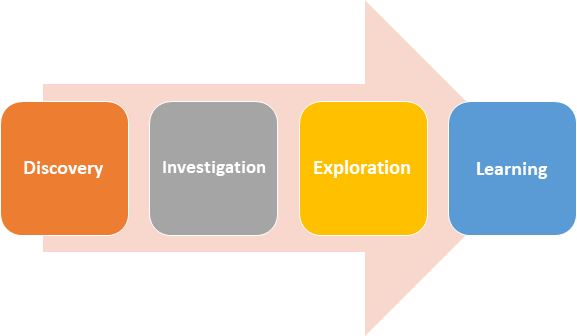
Learners are no longer required to only memorize facts and mimic behavior. Instead learners take an active role in the learning process.