
Paivio's Dual Coding, Sweller's Cognitive Load Theory and Merrill's Principles of Instruction
Paivio's Dual Coding, Sweller's Cognitive Load Theory and Merrill's Principles of Instruction
Paivio's Dual Coding with Sweller's Cognitive Load Theory in conjunction with Merril's First Principle of Instructional Design, will produce and support 21st-century learning.
Together Dual Coding and the Cognitive Load theory will supply a platform for creating different types of learning modules, which will support the instructional design using Merrill's Principles of Instruction (MPI). These theories will help align presentations and information by allowing instructional designers to create visual graphics to help in the learning process without additional cognitive load (Caviglioli, 2019). Merrill's Principles of Instruction is applied to the creation of a problem-centered module (Pappas, 2017). MPI will allow for 21st-century learners to be actively engaged in their online curriculum by involving them in the process of learning through activation, demonstration, and integration (Pappas, 2017). MPI will all be supported by the Dual Coding theory and the Cognitive load theory.
Paivio's Dual Coding Theory, says that information is easier to access and store when it is dual coded, in visual and verbal subsystems of the brain (Cullata, 2020). The Dual Coding theory identifies that two independent systems of the brain help with memory, verbal, and visual (Pappas, 2014b). According to the Dual Coding theory, these verbal and visual systems of cognition have their separate way of storing information (Culatta, 2019). Based on this theory, we can assume that when learners access two separate functions of the brain to create new memories or learning, they should be able to access and use the information more readily.
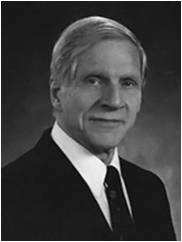 Allan Paivio is a Canadian researcher (Caviglioli, 2019). He was a Professor of psychology at the University of Western Ontario, beginning in 1963 (Katz, 2017). In 1969, he wrote his first classic paper in the Psychological Review, where he suggested: "concrete words serve as better retrieval cues than abstract words in paired associate learning" (Katz, 2017). He believed that people could learn more quickly when they are presented with words that easily generate visual images in our minds (Katz, 2017). Later in 1971, he introduced his dual coding theory in his book "Imagery and Verbal Processes" (Katz, 2017). In his book, he proposes that mental images and verbal processes are done separately in our brains, but can inter-connect (Katz, 2017).
Cognitive Load Theory (CLT) states that learning is limited by our working memory (Pappas, 2014a). CLT also follows the idea that in order for cognition to occur, learning activities must not overload the capacities of the learner (Pappas, 2014a). CLT also looks at learning in terms of the brain and memory structures (Solomon, n.d.). CLT states that in order for learning to occur, the brain must organize new information into structures called schemas (Solomon, n.d.). Once learners create a schema, they are better equipped to make connections to new information as schemas act like building blocks (Solomon, n.d.). However, one must always take into account as to not overload the learner with new information to keep the cognitive load active (Solomon, n.d.).

John Sweller is currently an Emeritus Professor in Syndey, Australia (Sweller, n.d.). Sweller is best known for developing cognitive load theory, which is one of the most highly cited educational theories today (Sweller, n.d.). Cognitive load theory uses our knowledge of psychology and cognition as an application for 21st-century instructional design (Sweller, n.d). In his most recent Article, Cognitive load theory and educational technology, he states that human cognition is subdivided into two categories (Sweller, 2020). The first is primary knowledge, which cannot be taught and is gained by individuals over time in order to survive (Sweller, 2020). Whereas secondary knowledge must be processed by the limited capacity of our working memories (Sweller, 2020). As such, the instructional design must break down complex information to allow our working memory to process and store new knowledge (Sweller, 2020). Visit him at his website!
Merrill's principles of instruction state that one can achieve effective and efficient instruction if one applies these five basic principles to the instructional design, problem-based, activation, demonstration, application, and integration (Pappas, 2017). First, learners need to be engaged in solving real-world problems, being able to apply their new-found knowledge helps keep the student motivated and engaged for the duration of the module (Peart & Schimizzi, 2020). The activation principle provides the instructional designer an opportunity to build on the learners' existing knowledge and experiences (Peart & Schimizzi, 2020). In principle three demonstration, the designer will provide multiple demonstrations of the new concept giving the learner an opportunity to deepen their understanding before the application process (Peart & Schimizzi, 2020). The demonstration phase allows the learner to passively practice. The fourth principle, application, directly align with the learning outcomes and provide learners with opportunities to apply their learning in a different situation (Peart & Schimizzi, 2020). The last principle, integration is when the student can demonstrate their learning and transfer the information into their own lives (Peart & Schimizzi, 2020). Figure 1, demonstrates a visual model of Merrill's principles of instruction.
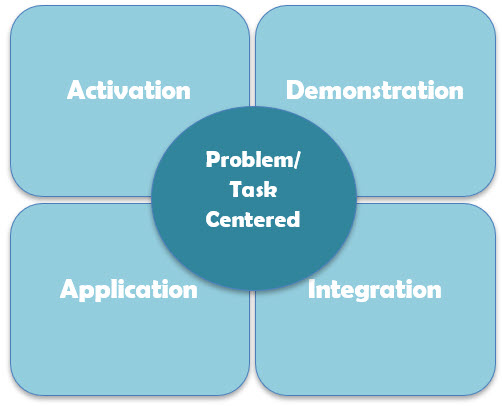 Figure 1: Merrell's Principles of Instruction