Application to 21st Century Learning and Teaching
Application to 21st Century Learning and Teaching
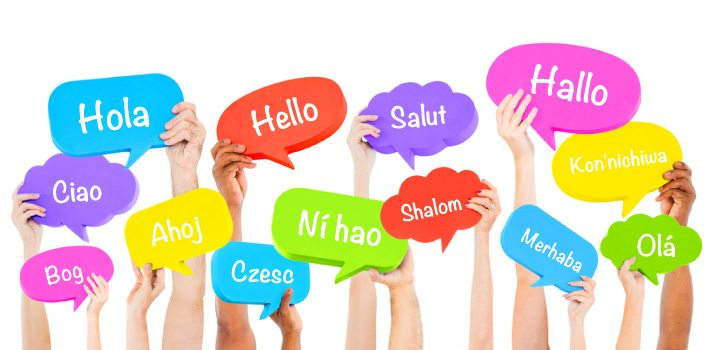
Traditional methods of teaching take a grammar-focused approach to learning a second language, but the results are often not successful. The reason that memorization of vocabulary lists and the conjugation of verbs do not lead to language acquisition is that there is no context for the language and no message to be understood. Krashen (2017) states that “The comprehension hypothesis says that we acquire language when we understand what we hear or read. Our mastery of the individual components of language ("skills") is the result of getting comprehensible input.” (p. 19) Consequently, it is far more effective to teach grammar within the context of storytelling, pleasure reading, or simple conversation, because there is an obvious meaning and function to the vocabulary and grammatical structures being presented.
Furthermore, it is important that input continually increases in its complexity while remaining comprehensible, in order to provide regular opportunities for the acquisition of new language. De la Garza (2017) points out that “for optimal learning to occur, it would be assumed that the foreign/ambiguous information must neither far exceed their current level of knowledge nor be at or below that level.” (p. 398) The i +1 must be continuous in the foreign language classroom for language learners to be successful. Not enough input and learning will stagnate. Too much or too high a level of input and learning will also cease.