Adult Learning Theory
Central Premise to Theory
The overall premise of the Adult Learning Theory is that adults learn differently than adolescents. The theory is formed around six assumptions about adult learners and Cooke (1994) describes these assumptions as:
The information is something adult learners need to know
- Adult learners have the ability to be self-directed learners
- Adult learners have the readiness to learn
- Adult learners use their experience as a launching pad
- Adult learners prefer to learn in a specific manner
- Adult learners are motivated learners
Culatta (2020) agrees with the assumption of self-direction and furthermore explains that this, along with making decisions, is fundamental to adult learning programs and must be included in the design of these programs.
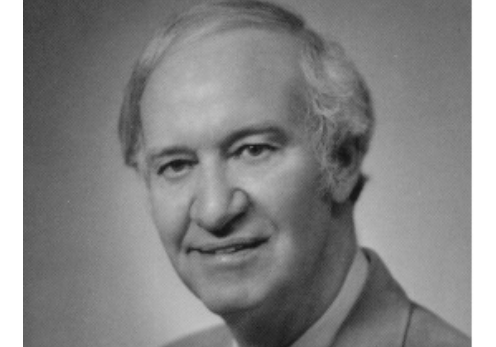
The key theorist for Adult Learning Theory, or andragogy, is Malcolm Shepherd Knowles (1913-1997). Author and editor of eleven books and nearly 200 articles, Knowles’s professional life has focused on adult education.
Thought to be his most influential book, the third edition of The Adult Learner: A Neglected Species was published in 1984 (Encyclopedia of World Biography, 2010). According to the abstract, human resource development utilizes many of the theories and uses the suggested content as a guideline for action. There have been many editions released since this date, but an earlier edition, published in 1973, prompted the review by Bernice H. Gross out of the University of Chicago. Gross (1974) describes the book as “a loosely organized overview of learning theories, their interpretation and their application.” Gross continues to claim two-thirds of the book is made of quotes so long they could be measured with a ruler. While it appears Gross is critical of the text, she does agree with the abstract in the sense that it is geared towards human resource development and achieving organizational goals.
The birth of this theory lays in the identified differences between pedagogy and andragogy. In more basic terms, the differences in how children learn and how adults learn, respectively. Using the assumptions about adult learners, Pappas (2013) cites Kearsley’s account of four principles Knowles says need to be applied to adult learning:
- Adults need to be involved in the planning and evaluation of their instruction.
- Experience (including mistakes) provides the basis for the learning activities.
- Adults are most interested in learning subjects that have immediate relevance and impact to their job or personal life.
- Adult learning is problem-centered rather than content-oriented.
Essentially, when designing the learning experiences for adults, take into account what they want to learn and possibly the manner in which they want to learn it. The activities/subjects need to go hand-in-hand with what the adult learner already knows. When delivering the content, the material needs to have an immediate relatable impact so that learners become vested in the topic and retain more knowledge along the way. One way to engage the adult learner is to pose the learning opportunity as a problem to solve rather than something new to learn.