
FISK University Faculty Showcase for OER Adoption
FISK University Faculty Showcase for OER Adoption
Introduction to Sociology: SOC 100
Instructor Open Textbook Adoption ePortfolio
Abstract: This open textbook is being utilized in a sociology course for undergraduate students by Shirley Rainey-Brown, Ph.D., at Fisk University. Introduction to Sociology adheres to the scope and sequence of a typical introductory sociology course and consists of a collection of modules that can be rearranged and modified to suit the needs of a particular professor or class. The main motivation to adopt an open textbook was to reduce costs for students. Most students access the open textbook in a PDF from the LMS.
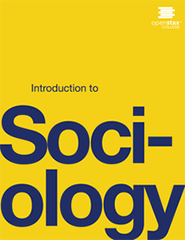 Description: Introduction to Sociology adheres to the scope and sequence of a typical introductory sociology course. In addition to comprehensive coverage of core concepts, foundational scholars, and emerging theories, we have incorporated section reviews with engaging questions, discussions that help students apply the sociological imagination, and features that draw learners into the discipline in meaningful ways. Although this text can be modified and reorganized to suit your needs, the standard version is organized so that topics are introduced conceptually, with relevant, everyday experiences.
Sociology Authors: • Heather Griffiths, Fayetteville State University • Nathan Keirns, Zane State College • Eric Strayer, Hartnell College • Susan Cody-Rydzewski, Georgia Perimeter College • Gail Scaramuzzo, Lackawanna College • Tommy Sadler, Union University • Sally Vyain, Ivy Tech Community College • Jeff Bry, Minnesota State Community and Technical College at Moorhead • Faye Jones, Mississippi Gulf Coast Community College
Formats: Web, PDF, ePub, iBook, Bookshare, and printed versions. Read more about format choices.
Supplemental Resources: OpenStax College has compiled additional resources for students and faculty such as interactive study guides and faculty-only resources such as test banks, slides, and comp versions of iBook format. Access supplementary resources.
Peer Reviews: The book has been reviewed by two CCC (CCC1, CCC2) faculty and a UC faculty of the California higher education systems.
Cost savings: I previously used Sociology In Our Times (11ed) by Diana Kendall. The cost of a hard copy is round $180.00 while the e-book is free. We teach 2sections each semester and sections during the summer term with an average of 150 students each academic school year. By using the OpenStax book, we save students on average around $27,000 to $35,000.00 per year.
Accessibility and diversity statement:Not all formats of the textbook have been evaluated yet, but the most recent version is available in a Bookshare which supports DAISY and Braille-Ready-Format (BRF). The text is adaptable for people with visual and/or auditory disabilities while the text is functional with assistive technology
License: Except where otherwise noted, Introduction to Sociology by OpenStax College is licensed under a Creative Commons Attribution 3.0 Unported License. This license lets others distribute, remix, tweak, and build upon the work, even commercially, as long as they credit the author for the original creation. This is the most accommodating of licenses offered. Recommended for maximum dissemination and use of licensed materials

SOC 100: Introduction to Sociology
Description: Soc100 is an introduction to the sociological concepts and theoretical perspectives of sociology and their application to the fundamental problems of social life. The course includes an overview of sociological explanations, methods, and findings in social structure, group dynamics, socialization, social stratification culture, social change, and global dynamics.
Prerequisites: None required GE credit: 4.0 credit hours.
Learning outcomes: Upon completion of the course the student will be able to meet the following objectives:
• explain the meanings of sociological concepts and apply them in analyzing sociological situations.
• understand, differentiate between, and utilize sociological perspectives and theoretical paradigms in verbal and written analysis.
• think critically about scientific research methods and concepts, such as distinguishing between correlation and causation, applying them in spoken and written analysis.
The majority of students who take this class include majors in sociology, social work, psychology, nursing, administrative of justice, biology and chemistry.
Some of the important aspects of the course include:
• curriculum includes contributions and perspectives of different ethnocultural groups
• content demonstrates a clear sense of ethnic and cultural identities
• text is aimed at students' meaning and linguistic understanding of content
• text is academically challenging and includes attention to development of higher-level cognitive skills
• learning tasks are meaningful.
Curricular Changes: I prefer teaching the six theories of sociology, but the three major paradigms are presented in the text. I do not use the chapters in the order presented in the book, but rather, arrange them according to sociological themes including 1) fundamentals, 2) sociological research, 3) cultural sociology, 4) social interactions and socialization, 5) groups, organizations, and institutions, 6) stratification and inequality, 7) deviance and control, and 8) politics, economy, and work.
Teaching and Learning Impacts:
Collaborate more with other faculty: Yes
Use wider range of teaching materials: Yes
Student learning improved: Yes
Student retention improved: Yes
Any unexpected results: No
OER Adoption Process
Institutional Impact: After adopting an OER our SOC faculty have engaged in regular communication about teaching strategies, curriculum design including assessments, and student learning outcomes. We compare and share the resources we find and create to accompany the open text.
Impact on My Teaching: Using an open e-text encouraged me to learn and use technology in the classroom including Apps and tools such as Nearpod, Socrative, Poll Everywhere, and SmartSeat. I also started creating instructional videos using a webcam and YouTube.
Student Impact: Based on my student learning outcomes and institutional research, student success in my Introduction to Sociology courses increased by 16% (WHCCD 2015). Students reported having access to a free textbook on multiple devices (i.e., smartphone, laptop, or tablet) encouraged reading and use the text as a tool for note taking or point of reference during class. Student retention in my Introduction to Sociology courses increased by 2% (WHCCD 2015).
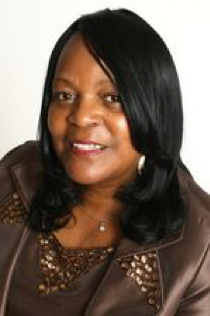
Name Dr. Shirley Rainey-Brown, Vice Provost for Online Initiatives and DDL.
I am a Sociology professor at the Fisk University and teach Introduction to Sociology..
 About the HBCU Affordable Learning Solutions (AL$) Program: Fisk University is a lead campus in designing and deploying an institutional strategy to reduce the cost of course materials , making the education at HBCUs more affordable.