The Endocrine System
The Endocrine System
Vertebrate hormones are a specific type of signaling molecule. They are delivered to all cells via the blood stream but only affect specific target cells that have receptors specific for that hormone.
Hormones are lipid soluble and pass directly through the membrane, often binding to receptors in the nucleus of the cells. The combined hormone and receptor will then affect DNA activity, usually turning on or shutting off transcription of one or more genes.
Non-steroid hormones are not soluble in the membrane. They include peptides, amino acid derivatives, and prostaglandins. They attach to receptors on the cell membrane but cannot enter the cell through the lipid based membrane. They activate a secondary messenger system that relays the message to the nucleus. This system varies from hormone to hormone but frequently involves adenosine mono phosphate (AMP) and a protein kinase enzyme. Ultimately, a product of this cascade of molecules binds to the DNA in the nucleus and alters transcription of one or more genes. A good overview of human hormones is at Human Endocrinology. Keep in mind that other animals besides humans have hormones as well--Insect Hormones.
There are three types of chemical signaling molecules
- autocrine — the cell signals itself through a chemical that it synthesizes and then responds to. The chemical also effects other cells of the same type
Autocrine signaling can occur- solely within the cytoplasm of the cell or
- by a secreted chemical interacting with receptors on the surface of the same cell type nearby
- paracrine — chemical signals that diffuse into the area and interact with receptors on nearby cells. Examples are:
- The release of cytokines that cause an inflammatory response in the area.
- The release of neurotransmitters at synapses in the nervous system.
- endocrine — the chemicals are secreted into the blood and carried by blood and tissue fluids to the cells they act upon.
Steroid hormones are lipid soluble and pass directly through the membrane, often binding to receptors in the nucleus of the cells. They are able to pass directly through the cell membrane because the interior of the membrane consists of hydrophobic lipid like the hormone itself. The combined hormone and receptor will then affect DNA activity, usually shutting off or activating transcription of one or more genes.This action is usually at the promotor region of the gene in question.
See steroid hormone receptors (Links to an external site.) page.
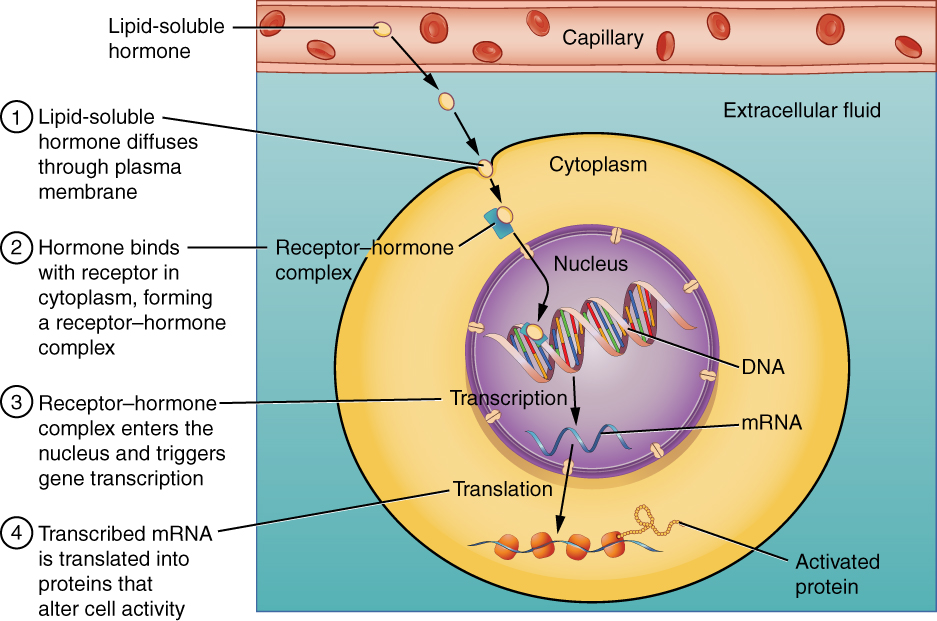 Lipid Soluble Hormone Entering Cell
These hormones are all hydrophilic (water soluble) and cannot pass through the cell membrane. They have to attach to an external receptor which may do several things. They may open or close ion channels. They may activate enzymes at the cell membrane. This system varies from hormone to hormone but frequently involves adenosine mono phosphate (AMP) and a protein kinase enzyme. Ultimately, a product of this cascade of molecules binds to the DNA in the nucleus and alters transcription of one or more genes. The most common surface receptor is a G protein; it has several subunits as seen in image.
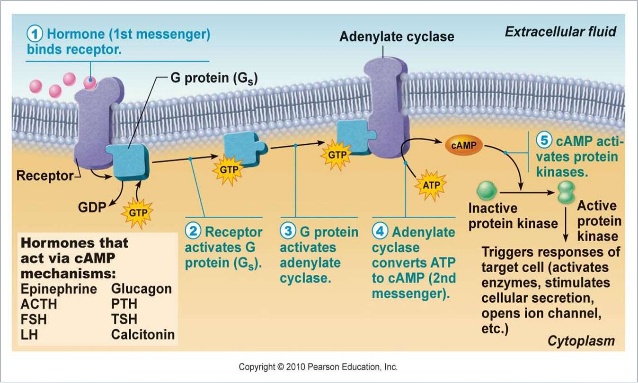 Second Messenger
The pituitary gland is the most important endocrine gland for two reasons. First, it controls a majority of hormones in the body either by releasing them directly or by regulating the gland that produces the hormone. The pituitary structurally consists of two lobes made of very different tissue types. Each lobe of the pituitary is in turn regulated by the hypothalamus, although the two lobes are regulated differently. The second important point is that since the pituitary regulates so many hormones and is in turn regulated by the hypothalamus, the nervous system and endocrine are system are tightly integrated--they are not really separate systems. For an excellent review of pituitary structure and pituitary hormones, see the pituitary gland (Links to an external site.) page.
This is a chapter with a lot of specific material. Here is one way to organize the information about the various hormones listed in the objectives. For each hormone, you should know what gland produces it, how that gland is controlled, the target cells of the hormone, and what the target cells do in response to the hormones presence/absence. In addition, be familiar with pathological conditions associated with an over abundance or a lack of the hormone. Besides the text, the web page The Hormones of the Human (Links to an external site.) will help. Here is a web site from Tulane (Links to an external site.) that will also help you keep them straight.
As you review these hormones and glands, you will see several examples of negative feedback systems and interactions of the nervous and endocrine systems.You need to be prepared to describe examples from the endocrine system—in detail. I have also added a PowerPoint presentation from my Anatomy class.
In addition, compare action of the endocrine system with the previously covered nervous system—speed, methods of control, similarities and differences.
These processes may be regulated in three ways.
a. Extracellular substances other than a hormone. Example: Blood glucose regulating insulin and glucagon.
b. Neural control. Example: sympathetic nervous system regulating epinephrine in adrenal medulla.
c. Another endocrine gland. Example: see animation above. In addition, all anterior pituitary hormones are regulated by hormones from the hypothalamus.