
Victoria Hostetter
Victoria Hostetter
After researching and exploring many different learning theories, I found the one that most resonates with me is Albert Bandura’s Social Learning Theory. “The social learning theory (Bandura, 1977) suggests that observational learning can have a powerful effect, and that the effect is enhanced when the observers believe that the person demonstrating the behavior is similar to themselves” (Deeming, P. & Johnson, L. L. (2019), p. 204). I find this theory valuable because it gives you the opportunity to connect to your learners. You get to go through the learning experience and process with them, and show the students why the content is valuable along the way. This theory resonates the most with me because I believe I am already subconsciously using it in my teaching and design life. Modeling the content for my students is something that I do everyday, therefore, they are learning through observation most of the time. When designing courses for adult learners, I have found that I kept the same pattern in mind- I always model the content first before having the learners try it out. The adult learners also relate to me as an educator so the effect of the learning may be more enhanced. This theory can very easily fit into the instruction I design because I have already been doing it without thinking about the theory behind it. I can incorporate this theory into my designs by always having a modeling phase where learners can observe me participating in the learning before trying it out themselves. I can also remember to add opportunities to connect to the learners so that they can see themselves in my shoes and see the similarities between us as educators.
Backward Design Model
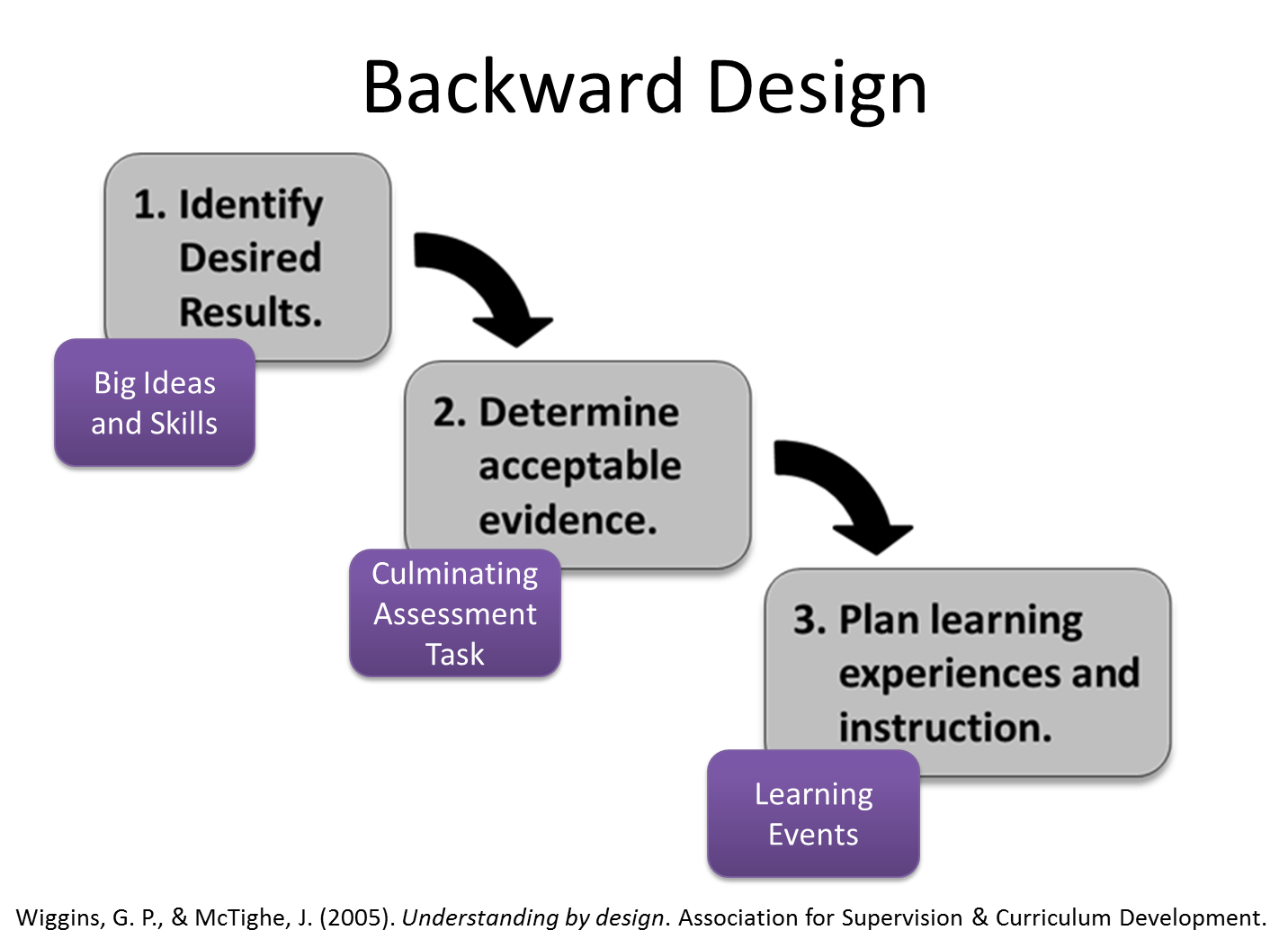
3 steps- Identify desired results, Determine acceptable evidence, and Plan learning experiences and instruction.
Lesson strategies/ instruction is at the end of the planning process
The focus is WHAT content is going to be taught
(Serhat Kurt, 2016)
The backward design model ties to the social learning theory in that learning objectives are most important. Social learning theory can easily be implemented into a backward design plan by incorporating activities that include modeling and motivation. Both the backward design model and social learning theory encourage students to show retention of content by representing their learning in an engaging way.
Instructional design has many components that help make up its final product. Just like in interior design or a movie set design, instructional design needs to start with a blueprint to map all the parts out to get an idea of the intended finished product. The planning phase is one of the most important aspects of being an instructional designer. Mercadal (2019) states “The practice of ID involves establishing the goal of the instruction and what the learner requires, and developing a suitable framework to bridge between the two” (para. 1). Having the end goal for learners in mind, will help keep you focused on where the design needs to be heading. You get the opportunity to put your creativity to the test and brainstorm and collaborate on ideas that could make your design come to life. Special attention should be paid to the design theories, principles, and methodologies, as these characteristics will help guide any design in the right direction. Instructional design is important work, and online learning wouldn’t be the same without it.
One of the main goals I have for myself as an instructional designer moving forward, is to be able to use the strategies and content I have learned through this program at ACE in my teaching career. Whether that be in the classroom where I currently am, using the instructional design methods to design modules for my young learners. Or maybe this Master’s degree will be a stepping stone in a new direction for me, where I could take my designing skills to teach other teachers in my school or district through online training about educational practices I have used and learned.
I honestly believe that all learning theories, design principles, and instructional strategies have a place in instructional design, those elements will just change with each design depending on what your focus or needs are. Each element has its strengths and weaknesses, but if you have a clear idea in your mind for your design plan, there will be at least a few theories, principles, or strategies that can help guide you through the design.
Technology is at the core of my instructional design (ID) philosophy, but not of the most importance. I am a huge believer in blended learning in the classroom and want to continue that into my design career. Therefore, not everything needs to incorporate tech, it should just be blended into the instruction in an effective way. The content of the lesson or course should always be the most important aspect in a design, then the avenue of technology use should follow. Blended learning allows the opportunity for flexibility, which is a huge part of my ID philosophy. Zimmer (2019) reiterates that blended learning encourages flexibility because “students are able to structure their education around their lives, rather than having to do the opposite” (para. 4).
Assessment is a key factor in designing online courses. In my opinion, both summative and formative assessments are as equally important to include in every design to ensure growth throughout a course and to check for understanding at the very end. Feedback and evaluation are also critical components of assessments.
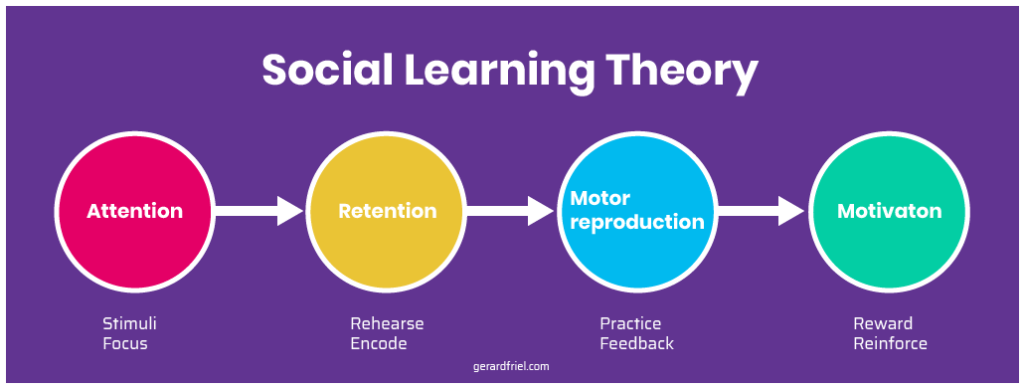 The social learning theory can easily be used in the 21st century classroom, as many teachers and designers are using it subconsciously already. Modeling is at the forefront of this theory, and in a digital classroom, observing the expected behavior is more than necessary. Laying out clear expectations for the learning by showing them an example is valuable to their success. In today's teaching world, many of the learning that is happening is on the go. The social learning theory can fit into this just in time training bubble as well. The theory starts by needing to gain the learner's attention and keep them engaged. Videos or simulations are a great way to do that. Retention can easily be designed into a variety of course types so that learners can show what they learned through a variety of authentic activities. In this theory, the next step is allow learners to rehearse or practice the new content. That fits into 21st century learning because it can allow the learners to show what they know in their own way. By giving them voice and choice, they are able to create freely. Feedback is also a key factor to remember in designing and teaching courses- it allows these 21st century learners to see what they are excelling at and what they should continue to work on. The last step of the social learning theory is motivation. Reinforcement in today's education world is of utmost importance, as students seem to be losing that love and excitement for learning. So it is our job as educators and designers to bring that spark back. We can provided engaging reinforcements and intentional rewards to motivate students to be invested in the learning process.
Modeling content and expectations for learners is key when designing using the social learning theory. By giving students an opportunity to see the material in action by someone they trust to know what they’re doing, they will be more likely to be engaged and excited to try the activities themselves. When a teacher teaches a group of teachers, it allows learners to see themselves in the instructor’s shoes and it will increase desire and belief that they can be just as successful in their own teaching.
Through my research on social learning theory, I found that there are four mediational processes to observational learning. The first is attention, which includes focusing on the characteristics of the learner and modeling the behavior. Number two is retention and how the learners will rehearse the content. The third process of observational learning is motor reproduction where the learners will get the chance to use the new content, receive feedback, and reflect on the experience. The last process is motivation, where learners can use many factors to reinforce their behavior. One last key factor that I took away from studying the social learning theory is that “Individuals are more likely to adopt a modeled behavior if it results in outcomes they value” (Innovative Learning Services LLC, (2018) para. 5).
To learn more about the Social Learning Theory, check out this video made on PowToons!
One theoretical concept gained from the social learning theory is modeling content. Since this theory is based around observational learning, one key factor that is relevant for 21st century students is to be able to observe the teacher or their peers model the expected behavior or content before trying it out on their own. This will allow the learners to see clear expectations and a successful finished product so that they can use it to guide their own product and refer back to it during the learning process. The modeling concept can be used for today’s learners not only academically, but also socially. The teacher can of course model academic content in hopes that students will be successful in observing and then repeating. But this powerful tool can also be used to encourage student behavior as well. For example, the teacher can model how to treat others or how to get another person’s attention in an appropriate way. Students see their teacher modeling behaviors everyday and can make a decision to imitate that behavior or not.
Another theoretical concept that can be used from the social learning theory is relating to learners. Bandura explains that learners will be more motivated to imitate an observed behavior if they can relate to that person and if they see a desirable outcome. By modeling the content or behavior in a way that learners can see themselves in your shoes will encourage them to believe they can accomplish the same results. The content still needs to be engaging and applicable for students to want to participate, and once they see the end result of your modeling, the engagement and excitement will ultimately decide if they want to imitate it to get a similar outcome.
To show examples of theoretical concepts and activities that could be created to match the social learning theory, I provided an example of a course I am planning to create for adult educators on the topic of using the app Class Kik to design differentiated assessments.
The first theoretical concept I am focusing on is modeling content. This can easily be turned into engaging activities for my adult learners in the online course I will be creating for teaching how to differentiate content using the app Class Kik. The first activity that will be included in the course that incorporates modeling is modeling how to use the functions of the app for the learners. This will be a brand new app to many of the course participants, so I feel as if it is important to model each tool that the app encompasses. That way the learners will be prepared and know what to expect when it is their turn to design using the app. The next modeling activity that will be included in the course is having the learners observe me design a differentiated assessment on the app. They will be able to see the tools I use and how I use the parts of the app to differentiate the learning process for different leveled learners. This will set them up for success when it is their turn to design their own differentiated assessment using the Class Kik app. By observing my teaching behaviors, the learners will be able to imitate the actions on their own.
The next theoretical concept that is included in the social learning theory is relating to learners. This concept should be incorporated in every course, especially online classes so that learners can feel connected to the learning process. The first activity that will help me relate to the learners is by having a discussion board where everyone gets the opportunity to show off one of their differentiated assessments. This will allow them (and me) to see tons of examples, ask questions, and compliment their peers before learning a new strategy. By giving the learners this space to show off their teaching ability and collaborate with me and others, they will be more comfortable in starting the new course. The next activity that will help learners relate to me is the modeling activity above where I show them how to create a differentiated assessment using this new app. I am an elementary teacher just like them, so they will be able to see examples of how this strategy was successful for my students and can imagine how they can use this with their own students too. They will then get the opportunity to try designing their own differentiated assessment and try it out their students to see the effects. Then we will come back together to discuss what went well and what we could change for next time. The feedback and reflection phase will allow them to be confident and comfortable in relating to me to see that they can be successful too.
Formative: One way that I could assess the adult learners ongoing throughout the course, is by having them complete exit tickets after each session together so that I can see what they are getting, what questions they have, and what content they may be misunderstanding.
Summative: A final assessment that learners could complete to show their learning of the new content is to create their own differentiated assessment on the app Class Kik. This would show if they understood the app's capabilities and saw the benefit that differentiation has to offer. The learners could even be expected to give their newly designed assessment to their own students to see if it was beneficial for their students. This would serve as a great reflection time to follow up on their final assessment.
Albert Bandura
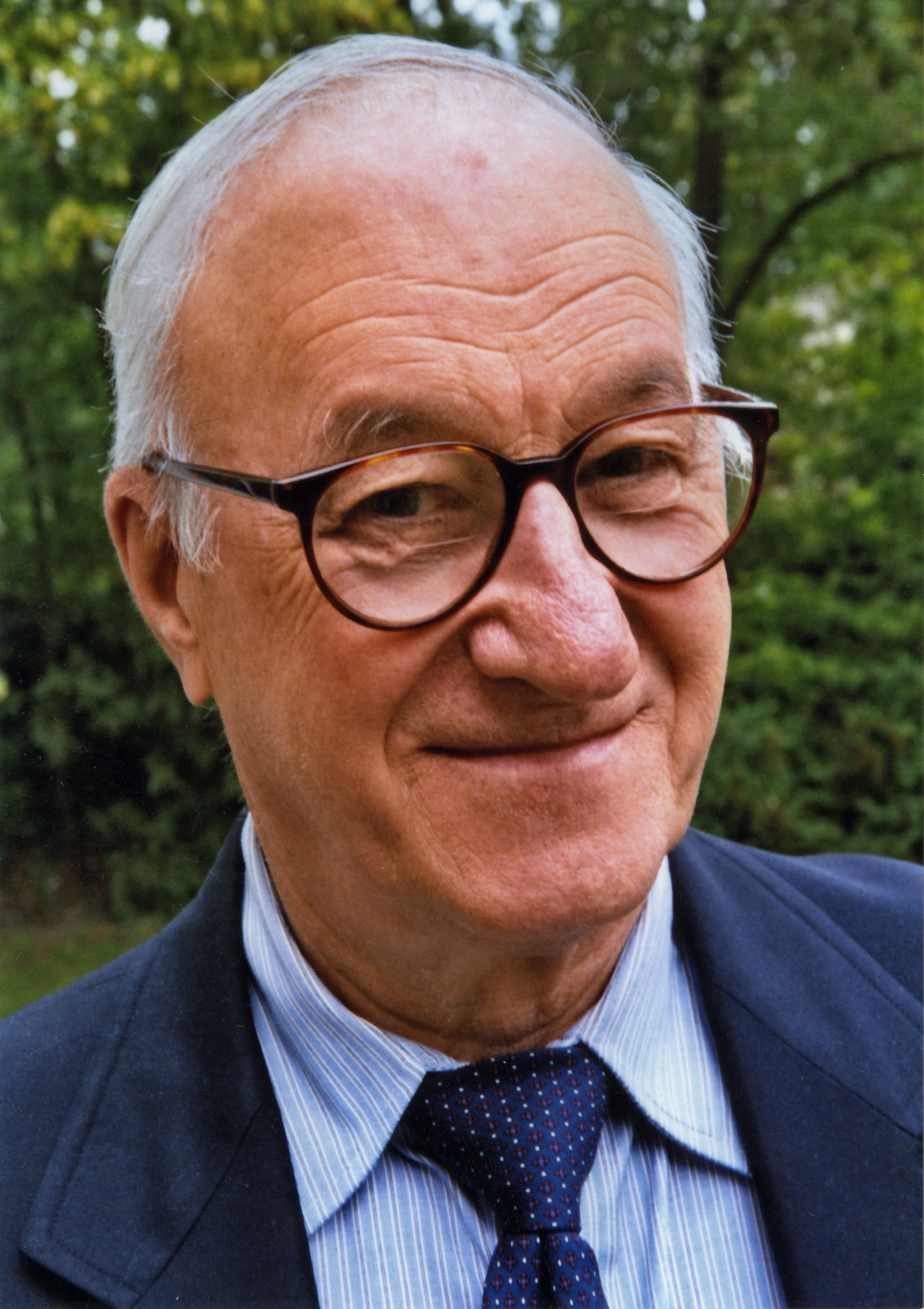
Albert Bandura was born in Mundare, Alberta, Canada on December 4, 1925. In rural Canada, he attended elementary and high school with teachers who encouraged him to follow his dreams. In 1949, Bandura earned his bachelor’s degree in psychology from The University of British Columbia. Next, Albert Bandura went on to study at the University of Iowa where he earned his master’s degree in psychology as well. A year after that, he was successful in completing his Ph.D with a focus in learning theories. Albert Bandura took his first job after graduation in a postdoctoral position at Wichita Guidance Center in Kansas. He then went on to become a professor at Stanford University in 1953. Bandura became the chair of the psych department while teaching at Stanford and was even named the David Starr Jordan Professor of Social Sciences in Psychology. Albert Bandura “was the recipient of numerous honorary degrees, president of the American Psychological Association and Western Psychological Association, and honorary president of the Canadian Psychological Association” (Piotrowski, (2019) para. 3). The Social Cognitive Theory is Bandura’s core contribution and was a huge step forward for psychological theory and practice.
One significant book that Albert Bandura wrote was “Social Learning Theory” which was published in 1977. Among many other psychological books he wrote, this work explained his views and experiments on the social learning theory that he coined. It turns out the Bandura agreed with the classical conditioning and operant conditioning learning theories, but he had a few more ideas to add. “1. Mediating processes occur between stimuli & responses. 2. Behavior is learned from the environment through the process of observational learning” (McLeod, (2016) para. 1). Bandura walked us through his Bobo doll experiment where he proved observational learning was very apparent. This experiment focused on the aggression of children and if social behaviors could be gained from observation and imitation. There were three groups of children that particpated in the study. One control group, one group that observed an adult being aggressive to the doll, and one group who observed no aggression toward the doll. The results agreed with the social learning theory foundations and proved that behavior could be learned and imitated by observing others. Mediational processes were also discussed in Bandura’s Book “Social Learning Theory.” He explained that the imitation action does not happen immediately after observing a behavior, the subject first thinks about the relationship between the behavior and its consequences before taking action. This cognitive thinking before acting is the mediational process which has four parts, as discussed above.
Instructional design has become a big part of my life, and that is only going to continue to grow once I graduate. I hope to use all the theories, practices, and strategies I have learned to help lead my learners to success. ID is important to me because it has opened my eyes to the other side of teaching and learning. Actually designing the courses online is similar to lesson planning, but encompasses so many more details and theories. I truly believe I am a stronger educator because of what instructional design has taught me, and I hope one day to consider myself a strong instructional designer too. Through my view of lifelong learning, I think I will be able to get there. I am not sure of my future path as an instructional designer, but one thing is clear- as long as I have a blueprint in mind of what my learners need to achieve, the rest can follow through the plan I design.
Innovative Learning Services LLC. (2018, November 30). Social learning theory (Albert Bandura). Retrieved from http://www.instructionaldesign.org/theories/social-learning/.
Piotrowski, N. A. (2019). Albert Bandura. salem press encyclopedia of health. Retrieved from http://search.ebscohost.com/login.aspxdirect=true&AuthType=sso&db=ers&AN=93871754&site=eds-live&scope=site
McLeod, S. A. (2016, Feb 05). Bandura - social learning theory. Simply Psychology. https://www.simplypsychology.org/bandura.html
Mercadal, T. (2019). Instructional Design. Salem Press Encyclopedia. Retrieved from http://search.ebscohost.com/login.aspxdirect=true&AuthType=sso&db=ers&AN=108690536&site=eds-live&scope=site
Zimmer, S. (2019). Blended Learning. Salem Press Encyclopedia. Retrieved from http://search.ebscohost.com/login.aspxdirect=true&AuthType=sso&db=ers&AN=108690527&site=eds-live&scope=site
van Groen, M. M., & Eggen, T. J. H. M. (2020). Educational Test Approaches: The Suitability of Computer-Based Test Types for Assessment and Evaluation in Formative and Summative Contexts. Journal of Applied Testing Technology, 21(1), 12–24. Retrieved from http://search.ebscohost.com/login.aspxdirect=true&AuthType=sso&db=eric&AN=EJ1227990&site=eds-live&scope=site
Deeming, P. & Johnson, L. L. (2009). An application of Bandura’s social learning theory: a new approach to deafblind support groups. Journal of the American Deafness & Rehabilitation Association (JADARA), 203–209. Retrieved from http://search.ebscohost.com/login.aspx?direct=true&AuthType=sso&db=eue&AN=48633615&site=eds-live&scope=site
Kurt, S. (2016, January 27). Backward Design. Retrieved from https://educationaltechnology.net/backward-design-understanding-by-design/
Lee, S. Z. (2016, Oct. 19) Social Learning Theory. Retrieved from https://www.youtube.com/watch?v=lqScOIrHx2A
Collin, B. [Learn My Test]. Bandura's Observational Learning Explained! Retrieved from https://www.youtube.com/watch?v=b6t_OTHpJJ0