
Introduction to Sociology: SOC 1
Introduction to Sociology: SOC 1
Introduction to Sociology
Common Course ID: SOCI 110
CCC Instructor Open Textbook Adoption Portrait
Abstract: This open textbook is being utilized in an introductory sociology course for undergraduate students by Eric Strayer, M.A., at Hartnell Community College in Salinas, CA. Students are mostly low-income and working part-time or full-time. The main motivation to adopt an open textbook was to provide free open source materials that are supplemented by free online articles and videos. Most student access the free open textbook online at the OpenStax College site or through the course management system.
Reviews: The book has been reviewed by two CCC (CCC1, CCC2) faculty and a UC faculty of the California higher education systems. There is also an Accessibility Evaluation.
About the Textbook
Description:
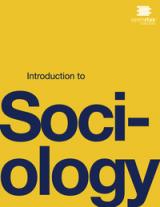
Published by OpenStax College, Introduction to Sociology was written by teams of sociology professors and writers and peer-reviewed by college instructors nationwide. This free online text meets standard scope and sequence requirements and incorporates current events, such as the Occupy Wall Street movement. The text is designed for the Introduction to Sociology course at any two to four-year school.
Authors:
- Nathan Keirns, Zane State College
- Eric Strayer, Hartnell College
- Heather Griffiths, Fayetteville State University
- Susan Cody-Rydzewski, Georgia Perimeter College
- Gail Scaramuzzo, Lackawanna College
- Sally Vyain, Ivy Tech Community College
Formats:
Web, PDF, ePub, iBook, Bookshare, and printed versions. Read more about format choices.
Supplemental Resources:
OpenStax College has compiled additional resources for students and faculty such as interactive study guides and faculty-only resources such as testbanks, slides, and comp versions of iBook format. Access supplementary resources.
Peer Reviews:
The book has been reviewed by two CCC (CCC1, CCC2) faculty and a UC faculty of the California higher education systems. There is also an Accessibility Evaluation.
Cost Savings:
Students can experience significant savings depending on previous textbook selections. Sociology textbooks typically retail for between $100 and $200. Previous textbooks we have used have included Barkan's Sociology textbook from Flat World Knowledge. The free online Introduction to Sociology from OpenStax College is also available in a print version for $29.00 plus shipping and handling.
Accessibility and Diversity:
Not all formats of the textbook have been evaluated yet, but the most recent version is available in a Bookshare which supports DAISY and Braille-Ready-Fromat (BRF).
License:
Except where otherwise noted, Sociology by OpenStax College is licensed under a Creative Commons Attribution 3.0 Unported License. This license lets others distribute, remix, tweak, and build upon the work, even commercially, as long as they credit the author for the original creation. This is the most accommodating of licenses offered. Recommended for maximum dissemination and use of licensed materials.

About the Course
SOC 1:  Introduction to Sociology
Description:
Prerequisites: None
GE credit: 3 units, CSU-DE, Area D0; IGETC, Area 4
Learning Objectives:
- Evaluate sociological research methods and data, and recognize the limitations of individual experience and of over-generalizing from single cases as well as challenging "common sense" interpretations.
- Distinguish among the principal concepts and theoretical perspectives that define the sociological perspective, and apply them in the analysis of social phenomenon.
- Explain the major sociological approaches to socialization and the development of the self as being largely the product of such "agents of socialization" as parents, teachers and the media.
- Explain the hierarchical structure of our society and the distribution and control of essential resources, and how it too is essentially a social construction.
- Apply sociological approaches in the analysis of basic dimensions of how social stratification plays out in terms of financial and cultural inheritance, race, ethnicity and gender.
- Show how both collective behavior and "structural strain" can lead to social movements as we have seen in the Arab Spring and the Occupy Wall Street, and now the emergence of "Black Lives Matter" resulting from the racial strife exposed by such events as that in Ferguson, Missouri over the police shooting of Michael Brown and the killing of Trayvon Martin in Florida.
Student Learning Outcomes:
- Students will demonstrate competence in various theoretical perspectives in sociology and use these perspectives to look beyond personal experience to analyze social issues and problems in both a micro and macro manner.
- Students will learn the definitions of those terms used by sociologists to most clearly analyze social events, social structure, and social problems.
Curricular Changes:
One major change is that I now use more online material, such as links to PDF articles, videos, and online magazines. A strong emphasis is placed on the importance of how to effectively determine the viability of information sources and as regards the popular media, what is the emphasis and, as important, what is left out. Like the tag line in the series the X-Files, “The Truth is Out There.” Now it is up to the students and us to find it.
Teaching and Learning Impact:
Collaborate more with other faculty: Not yet - this is the "adjunct dilemma"
Use wider range of teaching materials: Yes
Student learning improved: Not measured
Student retention improved: Not measured
Any unexpected results: LMS issues and learning curve problems with some technologies.
Sample Assignment and Syllabus:
Journal Article Review Assignment
Students are asked to review an article from a sociology journal describing the author's statement of the issue, methodology, and conclusion in a 3-5 page paper.
Sociology Syllabus
This syllabus is used for both classroom and online classes.
Textbook Adoption
OER Adoption Process
I believe in open source and that education should be free, as it is in many countries. This has motivated my choices. Ironically, I was hired to write several chapters of the Introduction to Sociology textbook and only found out after its publication that it was an open access textbook.
Most of my students are low-income and work full or part-time. I would like to see them put their money into a laptop or tablet and have every teacher find them free online or even inexpensive books. Our Follett bookstore has not provided any feedback about my use of an open textbook.
Student Access:
Students can access the textbook directly from the OpenStax College site or the course management system.
Student Feedback or Participation:
Some comments from my students include:
- I want to thank you for pushing through it all in order to make this class as seamless and easy as possible. Online classes are typically difficult, and lack interaction, but I have to say I interacted more in this particular class than other online classes I've taken.
- My goal with education is to one day teach community college, and I feel I've picked up great examples from you.
- I just want to thank Mr. Strayer for his patience and for always providing up to date information that made sociology something easier to understand and fun. I enjoyed your links and videos a lot.
- This course was resourceful, informative and helped me to think outside of the box at times. I learned so many interesting facts and so very much about history.
- This was my first online class and I'm happy to say that it was a success. Mr. Strayer worked very efficiently with all of us through e-mails and open forums. Thank you for the fast semester of sociology, I really appreciate it.
- This class was awesome. It made me think outside the box and about society.
- I am getting a lot more out of the class than any class that I have ever taken thanks to your interaction. I may not agree with your perspective but it made me realize I have a lot to learn about society and the less fortunate and thanks to our conversations I have direction.
Eric Strayer, M.A. I am an adjunct Sociology Instructor at Hartnell College in Salinas, CA and Monterey Peninsula College and also occasionally at online colleges. I teach Introductory Sociology and Social Problems each semester but have developed and taught other sociology courses, included in my CV.
I am the Hartnell College representative for part-time teachers at the California Teachers' Association and the Community College Association of California.