
Introduction to Public Speaking: Comm 4
Introduction to Public Speaking: Comm 4
Public Speaking: The Virtual Text
Common Course ID: COMM 110
CSU Instructor Open Textbook Adoption Portrait
Abstract: This open textbook is being utilized in an introductory public speaking course for undergraduate students by Mark Stoner, Ph.D., at California State University, Sacramento. This book was created by speech professionals who wanted to help create low-cost instructional materials. The primary motivation for adopting an OER textbook was cost since students are increasingly not buying the high-cost textbooks. Being able to organically use just the material needed for the course design rather than using more to justify the cost was another factor. Students access the text online in chapters formatted as PDF.
Reviews: The book has been reviewed by a CCC faculty member, CSU faculty member and a UC faculty member of the California higher education system. There is also an Accessibility Evaluation.
COOLforED is a service of the California State University-MERLOT program.
Partial funding provided by the State of California, the William and Flora Hewlett Foundation,
and the Bill and Melinda Gates Foundation.
Questions? Email cool4ed@cdl.edu
About the Textbook
Public Speaking: The  Virtual Text
Description:
This textbook contains 18 chapters contributed by speech professionals dedicated to providing free and low-cost instructional materials. Each chapter contains an outline, objectives, review questions and suggested activities in addition to the formatted text and images available in PDF format. Chapters also have a supplementary online page with terminology definitions and links to related materials.
Authors:
A variety of speech professionals who are dedicated to providing free and low-cost instructional materials contributed their original work. Each chapter link has information about the authors and their teaching experience. The project is growing and content is being added and regularly updated. Lisa Schreiber, the Project Director can be contacted at lisa.schreiber@millersville.edu.
Formats:
Chapters appear in PDF format and may be downloaded or printed in grayscale or in color.
Supplemental Resources:
The ancillary materials are better than most in that the authors provide a nice set of exercises to choose from at the end of chapters; they also provide links to a variety of relevant resources online that students may find useful; a fully developed, rather well-written test bank is available as well as supplemental video lectures and sample student speeches. Faculty who register on the free site have access to the ancillaries after their teaching position has been verified.
Peer Reviews:
The book has been reviewed by a CCC faculty member, a CSU faculty member and a UC faculty member of the California higher education system. There is also an Accessibility Evaluation.
Cost Savings:
Students save anywhere from $73 (Beebe & Beebe) to $115 (Zarefsky) by using the free Public Speaking Project text online. A complete chart comparing costs of textbooks is available for download below.
Accessibility and Diversity:
Our Services to Students with Disabilities office at CSU Sacramento has reviewed and approved the virtual text.
Textbook Cost Comparison Chart:
License:
Except where otherwise noted, Public Speaking: The Virtual Text, is licensed under a Creative Commons Attribution-NonCommercial-NoDerivatives 3.0 Unported License. This license is the most restrictive of the six main licenses, only allowing others to download the work and share them with others as long as they credit the author, but they cannot change them in any way or use them commercially.

About the Course
Comm 4: Introduction to Public Speaking
Description: Theory and technique of public speaking. Emphasis on organizing, supporting, and clearly stating ideas. Practice in informative and persuasive speaking. Meets the general education requirement for oral communication, Area A-1.
Prerequisite: None
GE Credit: 3 units, degree applicable
Course Objectives
- To construct practical mental models that will guide preparation of and presentation of public speeches
- To analyze audiences relative to specific speaking tasks (or rhetorical situations)
- To develop high quality, relevant content that meets audience needs for information and persuasion
- To present significant, important and memorable informative speeches
- To present important, relevant, well-supported and compelling persuasive speeches
- To demonstrate ability to adopt and enact speaking styles expected by various audiences in various contexts.
- To demonstrate the ability to make complementary presentations with peers
- To design and use essential, situation-appropriate, professional presentational visual aids
- To value an audience focus when preparing and delivering relevant and meaningful public speeches
Curricular Changes:
None was required, but the open textbook has a good chapter on panel presentations that is much better than other books that covered this topic. I wanted students to experience planning and presenting a panel so I added an assignment for that.
Teaching and Learning Impact:
More faculty collaboration: Yes
Wider range of teaching materials: Yes
Student learning improved: Not Related
Student retention improved: Not Tested
Any unexpected results: None
I am not able to make a direct connection to any single assignment or resource as having any significant effect on student learning. In Public Speaking, the main pedagogical tool for success is maximizing the number of times students speak and getting feedback and student reflection. The activity is more important than theory. Theory provides guidance for improvement, but the medium (be it electronic or paper) is minimally related to the reflective process.
Sample Assignment and Syllabus:
Group Presentation Assignment
Description of the panel presentation assignment.
Group Membership and Chapter
Assignment of students to groups and associated chapter in the textbook.
Group Presentation Rubric
Grading criteria for assessing the panel presentation by each group.
Syllabus
Syllabus for ComS 4.
Textbook Adoption
OER Adoption Process
Most of our students are first-generation college students and work 25 hours or more per week. The cost of the textbook is important to them.
I make use of textbooks as the basic source of content and use class time for activities that apply the content and practice skills. Therefore, I felt it was imperative that students had no excuse for not reading the course text.
Further, I appreciated the fact that I didn’t feel compelled to use every chapter to justify the high cost of a typical textbook. While I did end up using all the chapters, uses came organically from the course design, not a sense of compulsion. I value OERs for the freedom of choice, usability, adaptability, accessibility and convenience they provide.
Student Access:
Students access the textbook directly from the publisher’s web site or it is directly linked from the course wiki which substitutes for a course management system. The bookstore has no interest in the book; students can download chapters and either read on their laptop, tablet, phone or print it.
Student Feedback or Participation:
The book I chose matched the quality of any of those on the market. The book is well-written being grounded in relevant and good quality literature and presented in an adult, but approachable voice and tone. The students seemed to like it; they took it seriously and treated it as authoritative. I realize that students’ ascription of authority may often be a relatively low bar, but it is important, I think, that the students treat the textbook as a “serious” treatment of the content. Some are too “light” or too “playful” to influence students to actually reference them.
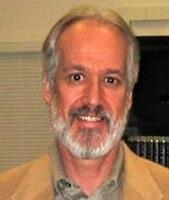
I am a Communications professor at California State University, Sacramento where I have taught since 1989. I teach ComS 4 Public Speaking, ComS 100B Critical Analysis of Messages, ComS 168 Approach to Rhetorical Criticism and many other communication courses listed here.
For me, teaching is grounded in the creation, maintenance, and development of relationships. This statement springs from a basic disciplinary assumption that our knowledge is socially constructed. I understand my job to be an assistant to, or facilitator of learners, who are developing skills in creating knowledge from the mass of information with which they are faced both in the context of the classroom and in everyday life. You can read more about my teaching philosophy here.
Dr. Stoner was recognized as an Outstanding Faculty of the California State University, 2014.