
Precalculus: Math 170
Precalculus: Math 170
Precalculus: An Investigation of Functions
Common Course ID: MATH 155
CSU Instructor Open Textbook Adoption Portrait
Abstract: This open textbook is being utilized in a precalculus course for community college students primarily majoring in science or engineering by Roy Shahbazian, M.S., at Santa Ana College. This book attempts to find a balance between a modern approach to precalculus focusing on applications, problem-solving, and concepts and a traditional approach, emphasizing basic skills for calculus. A desire for more control over content, pricing, and updates motivated the adoption of the open textbook. Students generally prefer to learn the materials using videos available at the myopenmath.com website rather than read the textbook.
About the Textbook
Precalculus: An 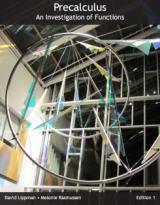 Investigation of Functions
This book attempts to find a balance between a modern approach to precalculus, focusing on applications, problem-solving, and concepts, and a traditional approach, emphasizing the basic skills needed for calculus.
The first portion of the book is an investigation of functions, exploring the graphical behavior of, interpretation of, and solutions to problems involving linear, polynomial, rational, exponential, and logarithmic functions. The second portion of the book introduces trigonometry through an integrated circle/triangle approach. Both portions place an emphasis on motivating concepts and modeling and interpretation.
Three chapters are used from the Stitz-Zeager open textbook: systems of equations, conic sections, and sequences and series to supplement the text.
Authors:
- David Lippman, Pierce Community College
- Melonie Rasmussen, Pierce Community College
Formats:
The entire book or individual chapters are in PDF and DOC format. Print on demand (POD) copies available from Lulu.com, CreateSpace.com, and Amazon.
Supplemental Resources:
Three chapters are used from the Stitz-Zeager open textbook: systems of equations, conic sections, and sequences and series to supplement the text.
Additional resources include the MyOpenMath online homework system provided free by Lumen Learning and the Courseware package. The starter course for this textbook includes online homework assignments, videos, worksheets, slides with sample exercises, lecture notes, and sample assessments.
MyOpenMath is similar to WebAssign and MyMathLab with a course management system, grade book, file posting, and discussion forums.
Cost Savings:
The previously used textbook was Precalculus, 6th edition by Stewart, Redlin, & Watson, available new at over $200. The open textbook is free online in PDF and DOC format and paperback versions are available for $18. The online homework system is free for instructors and students.
Accessibility and Diversity:
The Distance Education Captioning and Transcription (DECT) grant from the California Community College Chancellor's office funded captioning of the videos which are available to the public. The textbook has not been analyzed.
License:
Except where otherwise noted, Precalculus: An Investigation of Functions is licensed under a Creative Commons Attribution Share Alike 3.0 Unported License. This license lets others remix, tweak, and build upon the work, even commercially, as long as they credit the original author(s) and license their new creations under the identical terms.
About the Course
Math 170: Precalculus
Description:
Advanced algebraic topics. Study of rational, trigonometric, exponential and logarithmic functions, and analytic geometry. Preparation for Mathematics 180 (Calculus).
Credit: 4 units
Prerequisites: MATH 160 (Trignometry) with a minimum grade of C or equivalent skills as measured by the Math Level 4 Exam and a course equivalent to Mathematics 160.
Student Learning Outcomes:
By the end of the semester, students will be able to
- analyze algebraic, logarithmic, exponential, and trigonometric functions by algebraic and graphical methods.
- solve linear, quadratic, rational, and absolute value equations and inequalities.
- develop an understanding of asymptotes as an intuitive limit.
- solve systems (linear and non-linear) using graphing, substitution and elimination.
- evaluate limits by various techniques.
Curricular Changes:
No curricular changes were necessary but since I hadn't taught this course recently, I wrote new lecture notes. Currently, the textbook author has provided lecture notes as well as slides with sample exercises. During the second semester of using the textbook, I utilized the online homework system and the videos that are correlated to the textbook.
Teaching and Learning Impact:
- More faculty collaboration: Yes, with faculty using the OER text at my college and other colleges.
- Wider range of materials: Yes, videos, online homework, etc.
- Student learning improved: Comparable scores on final exams as students using traditional textbook
- Student retention improved: Not measured
- Any unexpected results: No
The authors' style emphasizes learning concepts rather than procedures. Students find this challenging, but they learn more useful thought processes.
Sample Assignment with Video and Syllabus
This exercise and video on rational functions shows how students get help while completing their homework online using MyOpenMath.
Rational function Exercise
Writing an equation for a rational function with vertical asymptotes and x and y axis intercepts.
Rational Function Video
Students can watch this video to learn the concepts and how to apply rational functions in an equation. Special thanks to James Souza, math instructor at Phoenix Community College for producing these videos.
Syllabus
Syllabus for Math 170
Textbook Adoption
OER Adoption Process
Published materials offered very little control of the content, pricing and updates, so open textbooks appealed to me on that level. Also, the traditional textbook costs over $200 new.
A colleague was using the online homework system, MyOpenMath, for an Intermediate Algebra course. After using that, I reviewed other course materials available on MyOpenMath and have used them for various courses including Precalculus.
Getting departmental permission to use a textbook different from the department norm was challenging. Gradually, more faculty have started to use it. We are now in the process of forming a committee to consider a more formal recommendation for other faculty members who teach the course.
Student Access:
Students can download the free, open textbook in PDF or DOC format directly or purchase a printed paper-bound copy at the opentextbookstore.com site for $18.00. Students generally prefer to learn the materials using videos available at the myopenmath.com website rather than read the textbook.
Student Feedback:
"The videos were the best thing! They were extremely helpful!"
"I really liked being able to go back + rewatch the video. In a live setting, I was never very good about having the teacher re-explain something I didn't understand."
"Also getting 5 trys[sic] in the homework and finding out the answer if you happen to miss the question."
Roy Shahbazian, M.S.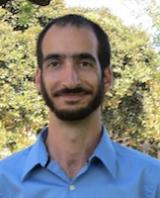
I teach all levels of College Algebra as well as Precalculus, Math for Liberal Arts Majors, and Calculus at Santa Ana College. This year, I'm teaching a new course in Algebra incorporating concepts similar to Math Literacy and Quantway curricula.
I have coordinated the Math Center and chaired committees on Technology and OER at Santa Ana College. I most enjoy challenging students to think critically and use concepts they already know to learn something new.