
Introduction to Sociology: SOC 101
Introduction to Sociology: SOC 101
Introduction to Sociology
Common Course ID: SOCI 110
CCC Instructor Open Textbook Adoption Portrait
Abstract: This open textbook is being utilized in an introductory sociology course taught by Anne Marenco, Ph.D., at College of the Canyons. The students are mostly non-majors who come in with very little knowledge of sociology. The open textbook contains twenty-one chapters of basic sociology concepts and theory with learning outcomes and case studies. The main motivation to adopt an open textbook was reducing the cost so students could afford them. Most students access chapters of the open textbook in PDF format from the course management system.
Reviews: The book has been reviewed by two CCC faculty (CCC1, CCC2) and one UC faculty member from within the California higher education system. There is also an Accessibility Evaluation.
About the Textbook
Description:
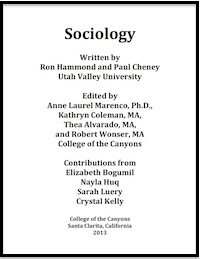
The book contains twenty-one chapters, each featuring learning outcomes, activities, and case studies. There are footnotes with links at the end of each chapter.
Authors and Editors:
- Ron Hammond, Utah Valley University
- Phil Cheney, Utah Valley University
- Anne Marenco, College of the Canyons (editor)
- Kathryn Coleman, College of the Canyons (editor)
- Thea Alvarado, College of the Canyons (editor)
- Robert Wonserr, College of the Canyons (editor)
Formats: Available in PDF from the College of the Canyons OER repository.
Supplemental Resources:
A test bank of over 5,394 questions (1,261 Multiple Choice, 2,250 True/False, 1090 Fill in the Blank, 793 Matching) covering each chapter of this text is available to faculty. These are formatted to easily load into course management systems.
Peer Reviews:
The book has been reviewed by two CCC faculty (CCC1, CCC2) and one UC faculty member from within the California higher education system. There is also an Accessibility Evaluation.. Additionally, this text is peer-reviewed and edited every other year by instructors at College of the Canyons and graduate sociology students.
Cost Savings:
Traditional publisher textbooks for Introduction to Sociology are in the $100 range. Eighty sections of Introduction to Sociology with up to 35 students are taught each year. Four out of the 30 faculty in the department use this open textbook. This is a potential annual savings for students of $40,000.
Accessibility and Diversity Statement from Publisher:
The textbook will be evaluated by the College of the Canyon's Disability Services office in the fall.
License:
Except where otherwise noted, Sociology by OpenStax College is licensed under a Creative Commons Attribution 3.0 Unported License. This license lets others distribute, remix, tweak, and build upon the work, even commercially, as long as they credit the author for the original creation. This is the most accommodating of licenses offered. Recommended for maximum dissemination and use of licensed materials.
About the Course
SOCI 101 Introduction to Sociology
Description:
Examines small group interactions and cultural patterns of American and other societies using the conceptual, theoretical, and methodological principles and applications to explain how values, roles, norms, social interaction, and social inequality, as well as other concepts that influence individuals, groups, and society.
Prerequisite: none but English 101 readiness recommended
GE Credit: 3 units, UC/CSU transferable
Learning Objectives: Students will be able to:
- Define sociological terms and concepts.
- Compare and contrast the three major theoretical perspectives used in the discipline to understand human behavior.
- Distinguish the strengths and weaknesses of the theoretical and methodological perspectives used in the discipline.
- Examine the concept of social norms and determine why they exist in every culture worldwide, and how they function as social control.
- Analyze human social interaction based on verbal and non-verbal communication, as determined by culturally shared meanings.
- Contrast cross-cultural examples of human behavior, especially cultural differences regarding customs, traditions, and values.
- Examine the subfields of sociology and discuss their relationship to understanding both personal and structural changes to human behavior.
Curricular Changes:
None but the textbook.
Teaching and Learning Impact:
More faculty collaboration: Yes, revise textbook together
Wider range of teaching materials: Yes
Student learning improved: Not measured
Student retention improved: Not measured
Any unexpected results: None
Every other year, our faculty and graduate students from California State University Northridge revise the open textbook updating statistics, website links, and other information as needed. The last revision was in summer 2013.
Sample Assignment and Syllabus:
Sample Assignments can be found on syllabus.
Sociology 101 Syllabus
The syllabus contains 3 different research paper assignments that students may choose from using theoretical concepts discussed in the textbook.
Textbook Adoption
OER Adoption Process
My main concern has been the cost of textbooks and students who cannot afford them. We found and adopted this textbook about 5 years ago which initially involved signicant editing. We enhanced the didactic voice and changed the case studies to be more general than in the original text. Having an open license that allows derivations is important because we revise the textbook every other year.
I love three major things about the textbook: it is short and sweet, free, and its reading level is not above the students. Students are expected to read and take a 10 point quiz before coming to class and then we can discuss the rest.
Adopting the open textbook has not created any challenges other than finding the time to revise the book every two years.
Student Access:
Students access textbook chapters in PDF format that are uploaded in the college's course management system.
Student Feedback or Participation:
I don’t have quotes or videos, but student love the free book and are very appreciative of it.
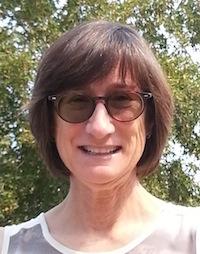
I am a professor and chair for the Sociology department at College of the Canyons. I am also the Coordinator for the Social Science AA degree and the Skills for Healthy Aging Resources+Programs (SHARP) certificate. I teach research methods, statistics, critical thinking, sociology of the family, introduction to sociology, and social psychology.
My professional interests include the sociology of the family, research and statistics, social psychology, marital relationships over the life course, and College of the Canyons.