
Home
College Physics
Common Course ID: PHYS 100S
CSU Instructor Open Textbook Adoption Portrait
Abstract: This open textbook is being utilized in a physics course for undergraduate, non-scientist students by Zvonko Hlousek, Ph.D at California State University Long Beach. The open textbook provides everyday examples of basic physics concepts, and the instructor supplements it with external materials. The main motivation to adopt an open textbook was to save the students money. Most students access the open textbook as an online PDF.
The book has been reviewed by a faculty member from the CCC and one from the CSU of the California higher education systems. There is also an Accessibility Evaluation.
COOLforED is a service of the California State University-MERLOT program.
Partial funding provided by the State of California, the William and Flora Hewlett Foundation,
and the Bill and Melinda Gates Foundation.
Questions? Email cool4ed@cdl.edu
About the Textbook
Description:
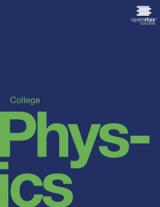
This introductory, algebra-based, two-semester college physics book is grounded with real-world examples, illustrations, and explanations to help students grasp key, fundamental physics concepts. College Physics' fully editable and customizable title includes learning objectives, concept questions, links to labs and simulations, and ample practice opportunities to solve traditional physics application problems.
Authors:
- Paul Peter Urone, California State University Sacramento
- Roger Hinrichs, State University of New York, Oswego College
- Kim Dirks, University of Auckland, New Zealand
- Manjula Sharma, University of Sydney, Australia
Formats:
Can be read online, or as PDF, ePub, and Bookshare. One can also purchase a printed versions for $48.50.
Supplemental Resources:
Online homework tools and interactive study guides for students and faculty are provided. Faculty-only resources such as solutions and slides are also available.
Peer Reviews:
The book has been reviewed by a faculty member from the CCC and one from the CSU of the California higher education systems. There is also an Accessibility Evaluation.
Cost Savings:
Students can experience significant savings depending on previous textbook selections. A traditional publisher physics textbook, fully bound, is $250, a loose-leaf book is $150, and the e-book is $120 or more. OpenStax College Physics is free to students online.
Accessibility and Diversity Statement from Publisher:
Not all formats of the textbook have been evaluated, but the most recent version of this open textbook is available in Bookshare format which supports Daisy and Braille-Ready-Format (BRF).
License:
Except where otherwise noted, College Physics by OpenStax College is licensed under a Creative Commons Attribution 3.0 Unported License. This license lets others distribute, remix, tweak, and build upon the work, even commercially, as long as they credit the author for the original creation. This is the most accommodating of licenses offered. Recommended for maximum dissemination and use of licensed materials.

About the Course
Physics 10 0 A, B: General Physics
Description:
This is a two-semester course in introductory physics for non-majors. The first semester considers properties of matter, mechanics, wave motion, and heat. The second semester considers electricity, light, and atomic and nuclear physics.
Prerequisite: MATH 109, MATH 113, MATH 119A, or MATH 122
GE Credit: 4 units, degree applicable
Student Learning Outcomes:
- Demonstrate critical thinking within the framework of certain physical phenomena
- Understand mechanics topics: force, energy conservation, heat, heat transfer and general understanding of the properties of materials.
- Apply the concepts of mechanics to explain observable phenomena
Curricular Changes:
OER has provided content for the redesign of our physics courses that has been going on at the same time as the OER adoption.
Teaching and Learning Impact:
Collaborate more with other faculty: Yes, in course redesign
Wider range of teaching materials: Yes
Student learning improved: Not significantly
Student retention improved: Unknown
Any unexpected results: None
Students may get engaged earlier with OER than traditional publisher textbooks, but we don't have any studies regarding that. Their interest in the topic is more important than the free book. Getting students' buy-in to this new style of learning for physics is the biggest challenge.
Textbook Adoption
OER Adoption Process
Some instructors may find the online homework systems that are available with OpenStaxCollege very helpful. It is about $25 per student and with a zero cost textbook can be very affordable and effective.
Student Access: Students can download the textbook from OpenStaxCollege or can get a PDF from the physics curriculum redesign site at CSULB. The bookstore does not provide any services for print copies of the text. Some of my students have used the iPad and iPhone version which has some interesting features and it is available from iTunes store for $5.
Student Feedback or Participation:
Students like the fact that the books are inexpensive compared to traditional textbooks. Also, they don't have to carry them around since they are electronic. Students print what they need when they want it. There are some who like printed copies, but they have options so there are no complaints. There is hardly anything negative since these resources are good quality.
 Ph.D
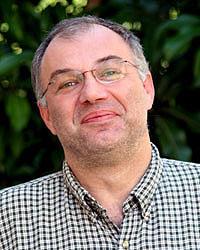
Ph.DI have been a Physics professor at California State University (CSU) Long Beach since 1990. I teach primarily Physics 100 A and 100 B, the general physics sequence for non-majors.
My research interests include Quantum and Classical Gravity, Elementary Particle Physics, Quantum Physics, and Online Education. I have been involved in the course redesign of physics at CSU Long Beach. It involves new ways of teaching and evaluating learning that does not involve memorization and recitation of facts.