
Principles of Microeconomics ECON1B
Principles of Microeconomics ECON1B
Principles of Microeconomics
Common Course ID: ECON 201
CCC Instructor Open Textbook Adoption Portrait
Abstract: This open textbook is being utilized in an online and traditional introductory microeconomics course for college students by Brian Evans, MA at Foothill Community College. A broad range of students enroll in this course to fulfill their general education requirements. This book covers the scope for a one-semester economics course and includes many current examples. The cost of course materials for students was the main motivation for adopting an open textbook. Most students access the free open textbook online at the OpenStax College site or they can purchase a print copy through the Foothill College bookstore.
Reviews: The book has been reviewed by a CCC faculty member and two CSU faculty members (CSU1, CSU2) from within the California higher education system.
About the Textbook
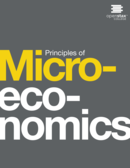
Description:
This textbook covers the scope and sequence for a one-semester economics course. The text also includes many current examples, including the Keystone Pipeline, Occupy Wall Street, and debates over the minimum wage.
The pedagogical choices, chapter arrangements, and learning objective fulfillment were developed and vetted with feedback from educators dedicated to the project. The outcome is a balanced approach to economics and to the theory and application of economic concepts. Current events are treated in a politically-balanced way as well.
Authors:
- Timothy Taylor, Macalester College
- Steven A. Greenlaw, University of Mary Washington
Formats:
The book is available online and as a PDF. It can also be purchased as a print copy for $33.50.
Supplemental Resources:
OpenStax College has compiled additional resources for students and faculty such as an online homework system, interactive study guides, and faculty-only resources such as test banks, slides, and complementary versions of iBook format.
Peer Reviews:
The book has been reviewed by a CCC faculty member and two CSU faculty members (CSU1, CSU2) from within the California higher education system.
Cost Savings:
Students can experience significant savings depending on previous textbook selections. Previously, Colander's Microeconomics edition 7 or 8 was used which can be found new on Amazon for $137 and used online in the $5 to $40 range. The free online Principles of Microeconomics from OpenStax College is also available in a print version for $33.50 plus shipping and handling or can be purchased at the college bookstore.
Accessibility and Diversity:
Not all formats of the textbook have been evaluated yet, but the most recent version is available in a Bookshare format, which supports DAISY and Braille-Ready-Fromat (BRF).
License:
Principles of Microeconomics is licensed under a Creative Commons Attribution 3.0 Unported License. This license lets others distribute, remix, tweak, and build upon the work, even commercially, as long as they credit the author for the original creation. This is the most accommodating of licenses offered. Recommended for maximum dissemination and use of licensed materials.

About the Course
ECON 1B:  Principles of Microeconomics
Description:
Micro-analysis of economic life. Allocation of resources. Consumer behavior. Pricing and output decisions. Distribution of wealth and income. Nature and characteristics of business enterprises. International trade. Comparative economic systems. ECON 1A and ECON 1B may be taken in either order
Advisory: Eligibility for ENGL 1A or ESLL 26
GE Credits: 5 units in Social & Behavioral Sciences, CSU/UC transferable.
Student Learning Outcomes:
- Employ the supply and demand model to predict market responses to shocks.
- Illustrate and explain unintended consequences resulting from government interference in well-functioning markets.
- Analyze different market structures from both a short-run and long-run perspective.
- Effectively employ marginal cost-benefit analysis to arrive at an efficient outcome.
Teaching and Learning Impact:
Collaborate more with other faculty: Not yet
Wider range of teaching materials: Yes
Student learning improved:Anecdotally yes
Student retention improved:Not measured
Any unexpected results: None
Any resource that lowers barriers to access for students is good. I use my own online homework sets and tests but am continually looking for new, free resources. This quarter I found some excellent YouTube videos that I have incorporated.
I assign homework to students as a learning tool that will prepare them for exams. The homework questions are challenging and I encourage students to work together on these to gain an understanding of the underlying concepts that they will need to succeed in the class.
Sample Assignment and Syllabus:
Econ 1B Assignment
Analyze a newspaper article related to government intervention in a specific industry
Econ 1B Syllabus
Fall 2014 Syllabus for Principles of Microeconomics
Econ 1B Online Syllabus
Fall 2014 Syllabus for online section of Principles of Microeconomics.
Textbook Adoption
OER Adoption Process
Reducing costs for students is my main motivation for adopting an open textbook. I have used open textbooks before but switched back to using older editions of Colander's Microeconomics and providing a library set for checkout until OpenStax College released their text last spring. I supplement the textbook with my own materials on Income and Equality including the GINI coefficient. I have also reported typos, discovered by me or my students, to OpenStax College.
Student Access:
Students can access the textbook from the OpenStax College website in multiple formats or purchase a printed version from the Foothill College bookstore. Adopting a free online textbook allows all students to have access the first day of class so there are no more excuses based on waiting for a textbook to arrive.
Our college bookstore is now ordering the combined Principles of Economics textbook rather than the Principles of Microeconomics and Principles of Macroeconomics books separately so students can purchase one textbook for both courses. A minority of students, estimated to be between 10 and 20 percent, actually purchase a printed copy.
Student Feedback or Participation:
Students are very positive about the cheap price and have found and reported typos in the textbook.

I am an Economics instructor at Foothill College in Northern California where I have taught since 2002. I teach Microeconomics, Macroeconomics, and Global Economics both online and face-2-face.
I am also the faculty advisor for the Fund the Future student club which provides a forum for individuals interested in micro-finance and economic development. Our members interact, engage, network and raise funds to improve the ability of poor families to seek and seize economic opportunities and build micro businesses. We work with the following non-profit foundations: Kiva.org and TheSchoolFund.org.