Physics of California
Physics of California
College Physics
Common Course ID: PHYS 100S
UC Instructor Open Textbook Adoption Portrait
Abstract: This open textbook is being utilized in a physics course for undergraduate, non-scientist students by Marusa Bradac, Ph.D., at the University of California, Davis. The open textbook provides everyday examples of basic physics concepts, which the instructor supplements with external materials. The main motivation to adopt an open textbook was to save the students money. Most students access the open textbook as an online PDF.
Review: The book has been reviewed by a faculty member from the CCC and one from the CSU of the California higher education systems. There is also an Accessibility Evaluation.
COOLforED is a service of the California State University-MERLOT program.
Partial funding provided by the State of California, the William and Flora Hewlett Foundation,
and the Bill and Melinda Gates Foundation.
Questions? Email cool4ed@cdl.edu
About the Textbook
 Physics
 Description:
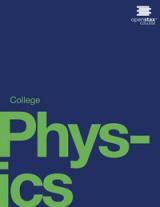
This introductory, algebra-based, two-semester college physics book is grounded with real-world examples, illustrations, and explanations to help students grasp key, fundamental physics concepts. College Physics, fully editable and customizable, includes learning objectives, concept questions, links to labs and simulations, and ample practice opportunities to solve traditional physics application problems.
Authors:
- Paul Peter Urone, California State University Sacramento
- Roger Hinrichs, State University of New York, Oswego College
- Kim Dirks, University of Auckland, New Zealand
- Manjula Sharma, University of Sydney, Australia
Formats:
Can be read online, or as PDF, ePub, and Bookshare. One can also purchase a printed versions for $48.50.
Supplemental Resources:
Online homework tools and interactive study guides for students and faculty are provided. Faculty-only resources such as solutions and slides are also available.
Peer Reviews:
The book has been reviewed by a faculty member from the CCC and one from the CSU of the California higher education systems. There is also an Accessibility Evaluation.
Cost Savings:
Students can experience significant savings depending on previous textbook selections. They can save $90.00 by using the free online College Physics from OpenStax College instead of the traditional publisher textbook by Louis Bloomfield, How Things Work: The Physics of Everyday Life that was previously used.
Accessibility and Diversity Statement from Publisher:
Not all formats of the textbook have been evaluated, but the most recent version of this open textbook is available in Bookshare format which supports Daisy and Braille-Ready-Format (BRF).
License:
Except where otherwise noted, College Physics by OpenStax College is licensed under a Creative Commons Attribution 3.0 Unported License. This license lets others distribute, remix, tweak, and build upon the work, even commercially, as long as they credit the author for the original creation. This is the most accommodating of licenses offered. Recommended for maximum dissemination and use of licensed materials.
About the Course
Physics 10C: Physics of  California
Description:
Topics in Physics for Nonscientists. Emphasis varies: survey of basic principles or a deeper exploration of some particular branch. Past topics included black holes, space-time, and relativity; physics of music; history and philosophy; energy and the environment; and natural phenomena.
Prerequisites: High school algebra.
GE Credit: 3 units, degree applicable
Learning Topics:
- Skiing: Why can we actually ski, what allows us to turn, what makes our skis go fast? What are avalanches, how do they form?
- Surfing: Why is surfing in California better in winter than it is in the summer? And why do waves push us forward making surfing such a fun experience in the first place.
- Scuba Diving: Why can we scuba dive and why to they always tell us not to hold our breath?
- Snowflakes: Why are snowflakes always six-sided in nature (and eight-sided only on holiday cards)?
Curricular Changes:
None
Teaching and Learning Impact:
More faculty collaboration: Not yet
Wider range of teaching materials: Yes
Student learning improved: Not significantly
Student retention improved: Not significantly
Any unexpected results: None
I am not working with other faculty using the open textbook, but I mention the possibility to anyone.
Sample Assignment:
I assign students multiple choice questions through the UC Davis Smartsite course management system.
Syllabus
This is the syllabus used for this class.
Textbook Adoption
OER Adoption Process
Saving students money was the main motivation for adopting the open textbook. Also, there was no specialized textbook for teaching Physics of California and this textbook had a lot of everyday examples. The open textbook was incomplete for my course but all textbooks are, so I supplemented it with external materials.
Student Access:
Most use the online PDF available at OpenStax College.
Student Feedback or Participation:
68 students were surveyed on their perceptions of the OpenStax College Physics compared to the traditional publisher textbook in fall of 2013. Full survey attached below.
- 82% of students prefer to use the OpenStax College textbook
- 41% of students reported neither textbook was better, 30% that the OpenStax College textbook was slightly better, and 13% that it was much better.
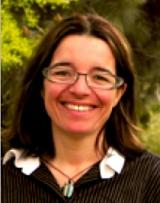
Maruša Bradač is a Physics professor at the University of California, Davis. I teach Physics 10C: Physics of California, Physics 154: Methods in Astrophysics, and Physics 10G.
Previously, I was a Hubble Fellow at University of California, Santa Barbara and a Postdoctoral Research associate at Kavli Institute for Particle Astrophysics and Cosmology (KIPAC) at Stanford University.