
Physics I (205, 210, 220 and 2210)
Physics I (205, 210, 220 and 2210)
Light and Matter
Common Course ID: PHYS 205 and PHYS 210
CSU Instructor Open Textbook Adoption Portrait
Abstract: This open textbook is being utilized in a physics course for undergraduate students by Dan Fernandez, Ph.D., at Cal State Monterey Bay. The open textbook is intended for a one-year introductory course of the type typically taken by biology majors, or for AP Physics 1 and 2. The main motivation to adopt an open textbook was to find a way to reduce the costs students had to pay to obtain the materials they needed for my classes. Most students access the open textbook online or in PDF format.
About the Textbook
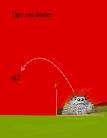
Description:
This is an introductory text intended for a one-year introductory course of the type typically taken by biology majors, or for AP Physics 1 and 2. Algebra and trig are used, and there are optional calculus-based sections. The textbook jumps right into center of mass and continues from there; then provides a natural transition to defining position and time (displacement and time intervals). Optional calculus sections are included for the interested and motivated students.
Authors:
- Benjamin Crowell - Fullerton College
Formats:
The book is available for free online and as a PDF or in individual portions as PDFs. It can also be purchased as a paperback from Lulu. com for $10.49.
Supplemental resources:
The author provides an Answer Checker for problems in the textbook.
Cost savings:
I previously used College Physics, A Strategic Approach, 2nd ed. which retails for $237. Since I teach about 150 students each year, this is potential annual savings for students of up to $35,550.
Accessibility and diversity statement:
Several of the chapters are available on Bookshare:
License:
Light and Matter is licensed with a Creative Commons Attribution-ShareAlike 3.0 Unported license. This means You are free to copy and redistribute the material in any medium or format and remix, transform, and build upon the material for any purpose, even commercially. If you remix, transform, or build upon the material, you must distribute your contributions under the same license as the original. You must give appropriate credit, provide a link to the license, and indicate if changes were made. You may do so in any reasonable manner, but not in any way that suggests the licensor endorses you or your use.

About the Course
This book is used in two differ ent classes, Physics 220 and Physics 221.
PHYS 220: Physics 1
Description:
Emphasizes motion, mechanics, energy, and fluids using active and experiential learning.
Prerequisites: CHEM 110 and MATH 150
GE credit: 4.0 units
Learning outcomes:
- Use assorted physics equipment within the room to make a variety of measurements. Process these measurements and analyze the results you get from them.
- Become familiar enough with the Vernier Logger Pro computer-based data acquisition system to collect measurements from the available sensors in order to support or refute a hypothesis associated with the various phenomena that we will be examining in this class.
- Work in a group setting on an assigned task, even if you do not know who else is going to be in your group, or if groups change.
- Put together, present, and write up a demonstration of a physics phenomenon, possibly one associated with environmental sustainability. The presentation will need to be at a suitable level for the intended audience.
PHYS 221: Physics II
Description:
Covers topics in electricity, magnetism, and optics. Emphasizes active and experiential learning and practical applications.
Prerequisites: MATH 151 and PHYS 220
GE credit: 4.0 units
Learning outcomes:
- Describe at a conceptual level the phenomena listed in the calendar below, associated with concepts from resonance, waves, optics, electromagnetics, and circuits.
- State the effects of each of these phenomena.
- Describe the relationships between and among the various phenomena.
- State the relevance of these phenomena in terms of application, both natural (biological, chemical, physical) and human designed.
- Apply mathematical knowledge and background (through second-semester calculus) to calculate associated effects of these phenomena in different circumstances.
- Apply mathematical knowledge and background (through second-semester calculus) to elicit deeper comprehension of these phenomena.
- Solve numerical problems that result in quantitative solutions to circumstances that involve the stated phenomena.
- Obtain solutions in equation form to some circumstances that involve these phenomena.
Curricular changes:
A positive outcome of committing to the use of this textbook and of abandoning even earlier use of both WebAssign and Mastering Physics is that I created my own homework sets that I implemented within Ilearn, which provide immediate feedback to the students and which allows them to rework problems until they get them correct. This removed my reliance on a textbook at all (and a huge reason I had used textbooks was because of the homework problems and associated technologies that supported them). I also began implementing instructional videos of my own creation, for which I provide links.
Teaching and learning impacts:
Collaborate more with other faculty: No
Use wider range of teaching materials: Yes
Student learning improved: Unsure
Student retention improved: Unsure
Any unexpected results: Yes
Collaborate more with other faculty - No, because I always did, and I continue to collaborate whether with a free textbook or not.
Use wider range of teaching materials - Yes. I use my own videos, for instance, and am more likely to find something online to discuss or show that is relevant.
Student learning improved - Unsure. It certainly didn't get worse as a result, but it's difficult to know if it got a lot better or any better as a result solely of changing to this format.
Student retention improved - Unsure. That happens sometimes no matter what.
Any unexpected results - Yes. It forced me to create my own assignments and implement my own question bank for reasons I describe in the attached document.
Sample assignment and syllabus:
Sample Assignment
This is a sample homework set for this class.
Syllabus 1
This is the syllabus for PHYS 220
Syllabus 2
This is the syllabus I used for PHYS 221
Textbook Adoption
OER Adoption Process
After having taught physics for over 15 years and using a variety of different textbooks as well as online learning systems, in Fall 2012 I wanted to find a way to reduce the costs students had to pay to obtain the materials they needed for my classes. Turning to MERLOT, I found a set of physics resources by Dr. Ben Crowell that was free. The text that seemed most applicable to the level of students that I taught is entitled Light and Matter.
This book appealed to me for a number of reasons.
- The earlier chapters emphasize issues of estimation and scaling, which are topics that are found lacking in many of our students based on faculty discussions and as evidenced on assessments of quantitative reasoning that the Environmental Science Technology and Policy program has been implementing across all students over the past three years. I find that the author has an excellent conceptual approach to these topics and his book contains an abundance of relevant and useful examples from the biological sciences.
- The content in most chapters begins with a conceptual and algebra-based approach with an additional section at the end that has calculus-based calculations and examples. This is an ideal arrangement because my class falls somewhere in between a pure algebra-based class and a calculus-intensive class intended for engineering or physics majors.
- The order of many of the topics matches the order that I like to teach, but which is not mirrored in most text books that are on the market. For instance, I like to wait to introduce vectors until after I have worked with the students on kinematics and then force and motion. This book has established that order. I also like how this book addresses the concept of energy and its conservation prior to momentum and its conservations, which is the order which I prefer to teach these topics. Similarly, in the second-semester portion, optics appears after electromagnetics and he gets into very practical circuits without spending inordinate time on charges.
- The author has come up with some excellent analogies and explanations for many of the concepts that are, at times, both engaging and unique in their approach.
- The book is free!
- The book contains homework problems and an online system that students can use to check the answers to some of the problems.
Student access:
Students can access the book online, PDF, or as a printed book. Most of my students used the online version.
Student feedback or participation:
Some of the aspects of the textbook that the students appreciated, in summary, were that it was free, that it provided interesting, useful, and relevant background discussion on many topics within physics in a readily intelligible manner, and that it tends to provide excellent historical context on many topics. Several of them commented that they liked the figures used and some of the acronyms the author employed to describe assorted concepts.
Some of the universal criticisms of the book were that the homework problems tended to be very challenging and very wordy, making it difficult for my students, in general, to know what they needed to do in order to solve them. Indeed, the only semester when I used the problems given in the textbook, I had the lowest instructor evaluations that I ever had, partly as a result of the challenges students had with the homework problems.
The students also note that there tend to be very few worked examples of many of the concepts described, and they would have liked more of those. While they appreciated Spotter, it did not provide them with feedback as to what they were doing wrong, which made it less effective for them. Spotter is a system created by the textbook author to allow students to check some of the problems they do through his text. Given the problems I had with the practice problems from his text, Spotter was not that useful for my class.
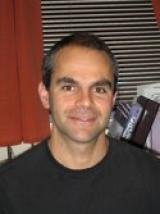
I am a physics professor at the California State University Monterrey Bay. I also teach a course on infrastructure, one on systems thinking and sustainability and a capstone class for Environmental Studies students. These 3 classes are primarily targeted to Environmental Studies students. I also coordinate the Sustainable City Year Program here at CSUMB and these 3 classes are also a part of that.
Generally, I use some form of lecture accompanied by demonstrations and discussion. I also work to encourage students to participate in class activities, to observe, and to discuss what they see. I think that active participation, project-based learning, and enthusiasm on the part of the student and instructor is very important for optimal engagement and learning both inside and outside of class. I also recognize that different students have different learning styles and I do my best to accommodate different needs.
I am very interested in the issue of sustainability (environmental, social and economic) and how its significance pervades our every activity, whether we know it and appreciate it, or not. This enters into many of my personal choices and research directions, including interests in energy, transportation, lifestyle, waste and recycling, water use, and city/urban planning. I am fascinated how basic tenets I teach (and continue to learn!) in physics and systems thinking play critical roles in many of the infrastructural systems we depend on and in nature in general.
I am active in the California Higher Education Sustainability Conference each year, both in planning and presenting at it. I also research fog water collection and have numerous experimental setups deployed around the state. I will be working with collaborators on fog-related projects in Chile next Spring and presented at the International Conference on Fog and Dew in July 2016. I also have an interest in and will be teaching a bi-yearly seminar on complex systems in Boston.