
Freshman Composition I
Freshman Composition I
Three OER Textbooks
CSU Instructor Open Textbook Adoption Portrait
Abstract: These open textbooks are being utilized in a Freshman Composition course for undergraduate students by Professor Dean Ramser, M.A., at CSU Dominguez Hills. The open textbook provides writing strategies, including grammar exercises. The main motivation to adopt an open textbook was to provide affordable learning solutions for urban undergraduates. Most students access the open textbook online via Blackboard and/or in PDF. Reviews: Two of these textbooks have been peer-reviewed by faculty withing the California higher education system. Rhetoric and Composition has been reviewed by a CCC faculty, CSU faculty, and UC faculty. There is also an Accessibility Evaluation. Writing for Success has been reviewed by a CCC faculty, CSU faculty, and UC faculty. There is also an Accessibility Evaluation.
About the Textbooks
I used three different OER textbooks for this class.
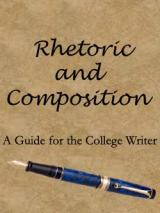 Composition
Description:
This book is written as a practical guide for students struggling to improve their writing to meet the standards expected of them by their professors, instructors, employers and co-workers. We have avoided complicated "textbook language" and jargon in favor of plain, easily- understood language. Instead of complex theories of composition or linguistics, we have simply passed on what has worked well for us in our own experiences as college writers and instructors. This book is largely written by real college writers who know what it takes to earn an A on their writing projects.
Authors:
- Various authors
Formats:
The book is available online a downloadable PDF, or as a printable document.
Peer reviews:
Rhetoric and Composition has been reviewed by a CCC faculty, CSU faculty, and UC faculty. There is also an Accessibility Evaluation.
Description:
Writing for Success is a text that provides instruction in steps, builds writing, reading, and critical thinking, and combines comprehensive grammar review with an introduction to paragraph writing and composition.
Beginning with the sentence and its essential elements, this book addresses each concept with clear, concise and effective examples that are immediately reinforced with exercises and opportunities to demonstrate, and reinforce, learning.
Each chapter allows your students to demonstrate mastery of the principles of quality writing. With its incremental approach, it can address a range of writing levels and abilities, helping each student in your course prepare for their next writing or university course.
Constant reinforcement is provided through examples and exercises, and the text involves students in the learning process through reading, problem-solving, practicing, listening, and experiencing the writing process.
Author:
- Scott McLean - Arizona Western College
Formats:
This book is available online, as a PDF and as a Word document.
Supplemental resources:
This book does not have any supplemental resources.
Peer Reviews:
Writing for Success has been reviewed by a CCC faculty, CSU faculty, and UC faculty. There is also an Accessibility Evaluation.
Writing Spaces: Readings on Writing, Volume 1
Description:
Writing Spaces: Readings on Writing, Volume 1, is a collection of Creative Commons licensed essays for use in the first year writing classroom, all written by writing teachers for students. Topics in Volume 1 of the series include academic writing, how to interpret writing assignments, motives for writing, rhetorical analysis, revision, invention, writing centers, argumentation, narrative, reflective writing, Wikipedia, patchwriting, collaboration, and genres.
Edited by
- Charles Lowe
- Pavel Zemliansky
Formats:
This book is available as a PDF or can be purchased as a paperback book for $23.
Peer reviews:
This book has not yet been reviewed by faculty within the California higher education system.
Cost Savings:
The books I used previously for this class is A World of Ideas: Essential Readings for College Writers by Lee A. Jacobus as well as A Writer's Reference by Diana Hacker and Nancy Sommers. The first book retails for about $57 while the second retails for $68 at Amazon, for a total of $125. I teach around 400 students each year which results in an annual potential savings for students of $50,000.
Licenses:
Rhetoric and Composition is available under the Creative Commons Attribution-ShareAlike License.

License:
For Writing for Success, except where otherwise noted, content on this site is licensed under a Creative Commons Attribution 3.0 Unported License.

Writing Spaces' chapter essays are made available under Creative Commons licenses. Consult the specific CC license located at the bottom of the first page of the chapter to understand the rights the license provides.
About the Course
ENG 108: Freshman  Composition I: Stretch 1
Description:
Basic Writing Skills emphasizing exposition and textual analysis. First part of two-term sequence.
Prerequisites: ENG 088 or EPT 141-146, inclusive.
GE credit: 3 units
This is the first-year composition class, "Freshman Composition" or "Composition I." This is a required course for all college students.
Learning outcomes:
By the end of the first part of this two-semester course (ENG 108), the successful student will:
- Plan and order paragraphs to form a coherent composition
- Follow the standards of writing mechanics by using appropriate marks of punctuation to convey meaning;
- Follow the standards of English usage of verb forms, pronouns and referents, subject and verb agreement, and correct spelling;
- Compose complete sentences that adequately convey a complete idea;
- Employ a variety of sentences in which the structure matches the writer’s purpose;
- Organize and order sentences into effective and coherent paragraphs.
Curricular changes:
I added more content online instead of printing the material.
Teaching and learning impacts:
Collaborate more with other faculty: Yes
Use wider range of teaching materials: Yes
Student learning improved: Yes
Student retention improved: Yes
Any unexpected results: No
I collaborate with librarians and other faculty members more because I had never used online textbooks.
I added articles that I found with Academic Search Premier, a higher level of complexity than most FYS read.
It seemed that students in a cohort model, like the Stretch English 108/09 class, do better than non-cohort models. That includes learning and retention.
Sample assignment and syllabus:
Sample Assignment 1
This is an assignment to keep a Student Learning Internship Community Engagement (SLICE) journal of observations.
Sample Assignment 2
This is the spring semester final essay prompt.
Syllabus
This is the syllabus I used for the Fall 2015 class.
Textbook Adoption
OER Adoption Process
There were several motivations for adopting the open textbooks. The main two motivations were to save students money and to increase flexibility in the way to teach microeconomics principles to incoming freshmen.
I selected these open source textbooks because another professor used them.
Supplemental materials include PowerPoint presentation prepared by the instructor, Newspaper articles used to apply microeconomics principles and lectures, and Peer-Reviewed Journal applied articles that respond to current writing pedagogy
Student access:
The pdfs and/or web links are available thru CSUDH's Blackboard.
Student feedback or participation:
Students enjoyed not paying for a textbook they think they will not use again. Most students in my small class of eleven responded favorably to using online and "Free? Yeah!" textbooks. I have eleven students in the second half of this Stretch Composition class. The stretch program, while new at CSUDH, has been tested and proved reliable in studies. I found that students were at ease looking online, although some pdf texts were cumbersome due to the length of the file.
 GED2EDD says it all: I began college at age 43 with a GED, earned my AA in 2005, my BA in 2007, MA in 2011, and now my EdD in 2017.