
Biology 102: Human Biology
Biology 102: Human Biology
Biology
Common Course ID: BIOL 110B
CSU Instructor Open Textbook Adoption Portrait
Abstract: This open textbook is being utilized in a human biology course for undergraduate students by Jane Monroe, M.A., at Humboldt State University. The open textbook is easily adaptable and is regularly updated. The main motivation to adopt an open textbook was to provide students with a free, peer-reviewed text. Most students access the open textbook online through the course's Moodle site.
Reviews: The book has been reviewed by a CCC faculty member, a CSU faculty member and a UC faculty member from within the California higher education system. There is also an Accessibility Evaluation.
About the Textbook
Biology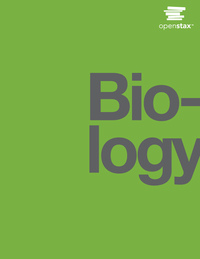
Description:
OpenStax provides an easily customizable and continuously updated textbook that can be used to introduce undergraduate non-biology and biology majors to the field of biology in general, or human biology in particular. Chapters can be selected from the book as desired. Biology includes sections on the cell, genetics, evolution, zoology, botany, ecology, and biodiversity. Everyday applications of the concepts help students find meaning in the topics. The text is fully integrated with the Sapling Learning online homework system, which uses a variety of problem types and interactives to lead students through both simple and complex biological topics.
Senior Contributors:
- Yael Avissar, Rhode Island College, Cell Biology
- Jung Choi, Georgia Institute of Technology, Genetics
- Jean DeSaix, University of North Carolina at Chapel Hill, Evolution
- Vladimir Jurukovski, Suffolk County Community College, Animal Physiology
- Robert Wise, University of Wisconsin, Oshkosh, Plant Biology
- Connie Rye, East Mississippi Community College, General Content Lead
Formats:
This book is provided free online or as an ebook and in print for $41.60.
Supplemental resources:
I used Sapling Learning online homework system http://www2.saplinglearning.com/. "Created and supported by educators, Sapling Learning instructional online homework drives student success with one-on-one educator support and time-saving tools. Sapling Learning Biology takes online homework to the next level with a variety of engaging problem types and modules that are relevant and interesting for students. The variety includes clickable area, drop down, graphing, labeling, molecular drawing, multiple choice, multiple selection, numeric entry, ranking and sorting to teach both simple and complex biological topics. Sapling Learning Biology also features interactives. These open-ended exercises can be manipulated by instructors and students to teach topics that students struggle most with."
There are also a number of resources for faculty only.
Peer Reviews:
The book has been reviewed by a CCC faculty member, a CSU faculty member and a UC faculty member from within the California higher education system. There is also an Accessibility Evaluation.
Cost savings:
OpenStax Biology is free if downloaded as a PDF or in web view. Print copies are $52. Traditional human biology or general biology textbooks that were previously used for lower-division biology courses cost approximately $120 (Biology Now) to $225 (Biology: A Guide to the Natural World) for print versions. I teach up to 600 students each year, so using this textbook could result in potential annual cost savings for students of $72,000 to $135,000.
Accessibility statement:
Not all formats of the textbook have been evaluated yet, but the most recent version is available in a Bookshare format, which supports DAISY and Braille-Ready-Format (BRF).
License:
Biology by OpenStax College is licensed under a Creative Commons License 4.0 International. This means you are free to copy and redistribute the material in any medium or format and remix, transform and build upon the material for any purpose, even commercially. You must give appropriate credit, provide a link to the license, and indicate if changes were made.
About the Course
Biology 102: Human Biology
Description:
The human animal as a biological entity: structure, function, health and disease, evolution and behavior. Not intended for science majors.
Prerequisites: None
GE credit: 3 units, GE Lower Division Area B
Learning outcomes:
- Be able to investigate the causes of observable phenomena using the scientific method.
- Explain biological diversity using evolutionary principles.
- Describe major concepts that apply to human biology, such as cell structure and function, genetics, homeostasis, and evolution.
- Articulate how knowledge from the life sciences can be applied to personal, social, and ethical issues in contemporary society.
While many students are freshmen, the course draws undergraduates from all levels. Students come from all majors except science, natural resources, and kinesiology. Nearly all students take it as an Area B GE; it does not apply towards any specific major.
Curricular changes:
None made as a result of the open textbook adoption.
Teaching and learning impacts:
Collaborate more with other faculty: Yes
Use wider range of materials: Yes
Student learning improved: Yes
Student retention improved: Unsure
Any unexpected results: No
In trying to improve my courses, I began asking other lecturers what they were doing, which led me to OpenStax and Sapling Learning. I then passed on what I learned to the lecturer who is now teaching Biology 102. We all continue to make refinements and discuss options with each other as we develop or improve our courses.
Sapling Learning includes not only online homework assignments but online interactives and mini-labs that the students find very helpful, so I have made an effort to use these more often. My Sapling contact & I choose from sets of questions & interactives to put together each homework assignment, & the students do them online.
Student exam scores have gone up since adopting Biology and Sapling Learning, likely because the students are now doing more homework & spending more time with the material.
Sample Syllabus:
Syllabus
This is the syllabus I used for Fall 2015.
Textbook Adoption
OER Adoption Process
The two main motivations for adopting OpenStax's Biology were to lower costs for the students and to have a customizable text. I wanted to adopt Sapling Learning's online homework, but I didn't feel comfortable asking the students to purchase both Sapling access ($38/semester) and a pricey textbook. Because Biology is free, the students are still saving money, and I can assign quality weekly homework assignments (the course always has 140 to 150 students per semester, making grading of detailed, quality assignments a challenge).
I also wanted to test the OpenStax/Sapling Learning combination against a traditional paid textbook and its accompanying online homework system. To that end, during Fall 2015 I used OpenStax/Sapling Learning in Biology 102 (144 students; Human Biology) and a traditional text with attached online homework in Biology 104 (120 students; General Biology). The two courses are similar in several ways: both are intended for "non-science" majors, both attract freshmen and other undergraduates looking to fulfill their GE requirements, each has well over one hundred students per semester, and they cover some similar topics. Since I was teaching both courses in the same semester, the overall teaching style was identical, as were the exam formats and active learning strategies.
The Biology 102 students seemed happy overall with the OpenStax textbook, and I received no complaints about having to pay for the homework system (probably because it was so much cheaper than purchasing a textbook). Most students accessed the text from the course's Moodle site, where I had put PDFs of the chapters I wanted them to read.
In Biology 104, the students liked the textbook (for which they had to pay $120), but they were very unhappy with the homework system (which was provided by the publisher, at no extra cost to the students once they purchased the text). Unfortunately, the homework system was glitchy, had very basic questions, and was difficult to register for. I was also concerned that some students might choose not to purchase the textbook and would therefore not be able to do the homework.
Student access:
Biology can be accessed and read online, downloaded as a pdf, or purchased in print form.
Student feedback or participation:
The OpenStax/Sapling Learning combination was easily more successful, more popular with the students, and a better value than the traditional text and its homework system. I will continue to use it.
Biology 104 now uses OpenStax and Sapling Learning. Because Biology is customizable, it was not difficult to adapt it to a different course. Two out of 246 students this semester complained about having to "purchase their homework," but most seem to feel it is preferable to buying an expensive textbook.
I honestly get very few comments from the students about the OpenStax textbook, other than that they are happy that it's free.
I am a biology lecturer at Humboldt State University. I teach General Biology, as well as other courses and labs in biology & zoology.
I teach biology to non-biology majors. My main goal is to help them gain useful, practical skills and knowledge that will help them in their lives as individuals and as engaged citizens of a complex world. I also hope to instill in them a wonder for and curiosity about life on our planet.
To accomplish these goals, I use a mixture of traditional lecture and active learning strategies, including both individual and group work. Because students have a variety of learning styles, I try to use a balance of approaches, including lectures, readings, homework assignments, journaling, online interactives, short videos, and presentations.
One of the most important aspects of my courses is the amount of time the students spend working with the scientific method, both individually and in groups, which not only helps them understand “how science is done” but also allows them to practice problem-solving and critical thinking skills that they can use in their chosen career field. I hope that my students gain a solid understanding of biology that they can use to assess new information, make logic-based decisions on biology-related issues that affect them, and continue to develop their own appreciation for the biological connections between all living things.