General College Physics 1
General College Physics 1
College Physics
Common Course ID: PHYS 105
CCC Instructor Open Textbook Adoption Portrait
Abstract: This open textbook is being utilized in an Algebra/Trigonometry-Based Physics course for undergraduate students by Leah Sharp, Ph.D. at the College of Marin. The open textbook provides everyday examples of basic physics concepts. The main motivation to adopt an open textbook was to reduce the cost of higher education for students. Most students access the open textbook using the web.
Reviews: The book has been reviewed by a faculty member from the CCC and one from the CSU of the California higher education systems. There is also an Accessibility Evaluation.
About the Textbook
 Physics
Description:
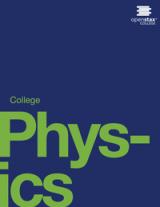
This introductory, algebra-based, two-semester college physics book is grounded with real-world examples, illustrations, and explanations to help students grasp key, fundamental physics concepts. College Physics can be can be downloaded or accessed online; it is a fully editable and customizable title including learning objectives, concept questions, links to labs and simulations, and ample practice opportunities to solve traditional physics application problems.
Senior Contributing Authors:
- Dr. Paul Peter Urone - California State University Sacramento
- Dr. Roger Hinrichs - State University of New York, College at Oswego
Contributing Authors:
- Dr. Kim Dirks - University of Auckland, New Zealand
- Dr. Manjula Sharma - University of Sydney, Australia
Formats:
The book is available for free online, PDF, and Bookshare. One can also order an ebook from iTunes or a printed copy for $43.52.
Supplemental resources:
OpenStax College has compiled additional resources for both faculty and students, from online homework tools and interactive study guides, to faculty-only resources that coincide with Physics. These include: Getting Started Guide for Students, Concept Trailers (TM), Student Solution Manual, Veritas Tutors and How to Succeed in Physics Guide, Expert TA, WebAssign, Sapling Learning, CourseWeaver, Lrnr, Top Hat, Odigia, Dynamic Books Curriculum Solutions.
Peer reviews:
The book has been reviewed by a faculty member from the CCC and one from the CSU segment of the California higher education systems. There is also an Accessibility Evaluation.
Cost savings:
Students may save up to $250 in textbook fees. I teach about 25 students per year, so this is potential annual savings for students of $6,250.
Accessibility and diversity statement:
Not all formats of the textbook have been evaluated, but the most recent version of this open textbook is available in Bookshare format which supports Daisy and Braille-Ready-Format (BRF).
License:
Except where otherwise noted, College Physics by OpenStax College is licensed under a Creative Commons Attribution 3.0 Unported License. This license lets others distribute, remix, tweak, and build upon the work, even commercially, as long as they credit the author for the original creation. This is the most accommodating of licenses offered and is recommended for maximum dissemination and use of licensed materials.
About the Course
PHYS 108A: General Physics I
Description: This course introduces topics in physics including motion, forces, energy, oscillation, waves, fluids, heat, and thermodynamics. The course emphasizes problem-solving based in algebra and trigonometry, as well as laboratory investigations and experimental techniques.
Prerequisites: Plane Trigonometry or sufficient score on the Math Assessment Test. Advisory: Calculus I with Applications
GE credit: 4.0 Units
Student learning outcomes:
- Communicate and utilize the physical laws of kinematics and thermodynamics via problem-solving.
- Apply the physical laws of kinematics and thermodynamics to word problems in order to obtain clear solutions by mathematical analysis.
- Conduct an experiment, collect and analyze data, including such tools as graphs, regressions, and statistical analysis, and interpret results within the framework of the physical laws of kinematics and thermodynamics.
- Write a lab report explaining, both qualitatively and quantitatively, the scientific results of an experiment and the certainty of those results.
- Use modern scientific practices relevant to the field of physics: including the formulation of a scientific theory based on and consistent with quantified observations.
- Demonstrate critical thinking skills.
Most students who take this course are pursuing transfer to UCs or CSUs for degrees in biological fields, e.g. pre-med, kinesiology, or other health-science fields, as well as architecture.
Curricular changes:
Major changes to the curriculum include:
- Reducing time spent on kinematics from three weeks to two weeks.
- Increasing time spent on fluids (static and dynamic) from one week to 1.5 week.
- Heat transfer mechanisms was expanded to a full lecture, instead of a partial lecture.
Minor changes to the curriculum include reordering the topics to follow the flow of the OpenStax College Physics textbook. Lab exercises were unchanged, only reordered. The new topic order can be seen in the syllabus attached below.
These changes reflect suggestions outlined in a recent study regarding improving physics curriculum for students majoring in the biological sciences ("Introductory physics in biological context: An approach to improve introductory physics for life science students." Crouch, Catherine H. and Heller, Kenneth, American Journal of Physics, 82, 378-386 (2014).
Faculty workload increased upon adoption of the new textbook in order to (re-)create and reorganize lectures (about an hour per week), homework assignments (about an hour per assignment) and quizzes (about an hour per quiz). I would estimate that an additional 2-4 hours per week were needed to implement these changes. However, this workload would significantly decrease in subsequent semesters, as this newly generated or adapted material is reusable.
Teaching and learning impacts:
Collaborate more with other faculty: No
Use wider range of teaching materials: No
Student learning improved: Unsure
Student retention improved: Unsure
Any unexpected results: No
Sample assignment and syllabus:
Sample assignment
This is one of the assignments I used for the class.
Assignment assessment rubric
This is the rubric I used to assess the assignment.
Syllabus
This is the syllabus I used for the Fall 2015 class.
Textbook Adoption
OER Adoption Process
The main motivation for adopting the open textbook was to save students money. A new textbook previously used in this course costs about $250-$300, while this book is free electronically or about $50 for a hard-cover copy.
Additional benefits that I utilized include supplemental resources made available to the instructor to ease the transition of course content material. These resources include copies of textbook images as PowerPoint slides and an Instructor Solutions Manual.
To summarize my adoption process,
- Previous lectures were modified and reorganized to incorporate material that better aligned with the OpenStax College Physics textbook.
- WebAssign was used to assign weekly problem sets. WebAssign has a large collection of pre-designed problems from which the instructor could choose that are aligned with material in this textbook.
- Reading quizzes were recreated in WebAssign. In the future, I will create quizzes using my college's LMS to avoid needing to make this change, if I do not reuse WebAssign.
- Labs were unchanged, only reordered.
Student access:
Students can access the textbook in the following formats: Print, Low- and High-Resolution PDF, Web View, and Bookshare.
An informal poll was taken with very low participation (10 students). Of these, 50% primarily accessed the book online; 30% downloaded a PDF; and 20% purchased a physical textbook.
Student feedback or participation:
Anecdotally, one student, whose first language is not English, found that this textbook did not explain the concepts or have as useful diagrams as the traditional textbook used in previous years.
Leah Sharp, Ph.D.
I am a physics instructor at College of Marin. I currently teach algebra/trigonometry-based physics and conceptual physics.
Good teaching requires empowering the student, of any skill level, to become actively engaged in and to take ownership of his or her learning. Even if the student is not as passionate about the subject material as an educator might want, the successful student prepares for lecture before coming to class by reading the relevant material, works on problem sets with peers, and reviews homework assignments and solutions after they are submitted. The successful instructor then, can encourage the students to follow this methodology by giving (online) reading quizzes before lecture, encouraging in-class group discussions so that students can meet one another and form study groups, and by making homework solutions available.