
Adv Generalist Social Work Practice for Wellness and Sustainability
Adv Generalist Social Work Practice for Wellness and Sustainability
The Wisdom of Sustainability: Buddhist Economics for the 21st Century
CSU Instructor Textbook Reduction Portrait
Abstract: This textbook is being utilized in a wellness and sustainability course for graduate students by Cesar Abarca, Ph.D., at Humboldt State University. The textbook emphasizes small-scale, indigenous, sustainable alternatives to globalization, and offers hope and alternatives for restructuring our economies based on Buddhist principles and personal development. The main motivation to adopt the textbook was to reduce costs for students. Most students purchase the textbook from the bookstore at a nominal cost.
About the Textbook
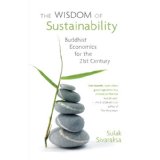
The Wisdom of Sustainability: Buddhist Economics for the 21st Century
Description: The Wisdom of Sustainability continues E. F. Schumacher s groundbreaking work on Buddhist economics in Small Is Beautiful: Economics as if People Mattered. Emphasizing small-scale, indigenous, sustainable alternatives to globalization, Sulak offers hope and alternatives for restructuring our economies based on Buddhist principles and personal development.
Authors:
- Sulak Sivaraksa - Sathirakoses-Nagapradeepa Foundation
Formats: The book is available as a paperback.
Supplemental resources: The book has no supplemental material. However, I added several other resources that I found on MERLOT:
- Ethics and Sustainability - This OER lesson includes a video and discussion questions for the week.
- Fair Trade Coffee: The Mainstream Debate - This is an OER case study
Cost savings: I previously used four textbooks for this course, which cost about $100. I switched to this textbook which costs about $12, a savings of $88 per student. Both of the supplemental resources are free. Since I teach between 75 and 100 students in this class annually, this is potential savings between $6,600 to $8,800.
License: The textbook, The Wisdom of Sustainability, must be purchased, and carries the normal U.S. copyright.
Ethics and Sustainability is licensed under a Creative Commons Attribution-Share Alike 3.0 United States License.
Fair Trade Coffee: The Mainstream Debate is licensed under a Creative Commons AttributionNoncommercial-No Derivative Works 3.0 Unported License. This means you are free to copy and redistribute the material in any medium or format. If you remix, transform, or build upon the material, you may not distribute the modified material. You must provide appropriate credit and it cannot be used for commercial purposes.

About the Course
SW 649:  Advanced Generalist Social Work Practice for Wellness and Sustainability
Description:
Wellness, prevention, and health promotion in terms of sustainability as a global construct will be considered and its application in culturally appropriate and relevant practice and service.
This course is a required course for 2nd year MSW students and part of the courses required for the fall semester. Wellness and sustainability includes an in-depth analysis of wellness, prevention, and health promotion locally and abroad. This includes analysis of our social work practice to minimize the impact of stress, secondary trauma, and chronic fatigue. We examine these concepts contrasting global and local contexts and their application in culturally appropriate practice (e.g. Tribal communities, low-income, immigrant groups, and other oppressed groups), decolonizing social work. Finally, we assess the relevance of wellness and sustainability to maintain a healthy professional life. The course uses a community-centered, and oppressed people's approach to wellness, well-being, and holistic health.
Prerequisites: Complete first year foundation coursework.
GE credit: 3.0 units
Learning outcomes: By completing this course, students will be able:
- To assess and provide recommendations regarding program and services regarding wellbeing, sustainability, oppression, inequality, justice and disparities.
- To use community-centered perspectives to analyze structural inequalities, racism, addictions, pervasive poverty, and health inequalities that impact oppressed communities.
- To critique ethical principles within complex practice environments.
- To apply critical thinking to inform and communicate professional judgments
- To evaluate, integrate, and apply multiple sources of knowledge
Curricular changes: The changes to the course were to include more peer-reviewed articles, add couple of chapters from various books in electronic form, and adding the two cases studies not complemented in the original course plan.
Teaching and learning impacts: Collaborate more with others: Yes
Use wider range of materials: Yes
Student learning improved: Yes
Student retention improved: Unsure
Any unexpected results: No
Collaborate more with other faculty: I shared ideas with other faculty as part of the HSU Sustainable Learning Group. Use wider range of teaching materials: Two case studies were based on sustainability. Student learning improved: Students were able to learn the application and issues with sustainability.
Sample assignment and syllabus: Sample Assignment
This is the first assignment I used in Fall 2015. Second Assignment
This is a second assignment used for Fall 2015. Syllabus for Fall 2015.
Textbook Adoption
OER Adoption Process
The Humboldt State University Sustainable Learning program is a campus strategy for implementing the CSU Affordable Learning Solutions initiative. I was selected to participate in the Fall 2015 faculty cohort and I proposed two Master of Social Work graduate courses for this program. It included the participation of 55 graduate students, 28 on campus and 27 online. This course had two required textbooks in the past and both textbooks were eliminated and substituted by alternative reading assignments and two online lessons which were selected from the MERLOT website for the course at no cost to students.
Student access:
Students need to purchase the textbook at a small charge. The student access the two online lessons from the web. The case study can be downloaded as a PDF. The lessons can be accessed from the Moodle course site.
Student feedback or participation:
Students were very enthusiastic to hear that I replaced expensive textbooks with an affordable textbook and two free online readings. They were also supportive of the idea of having course materials in electronic format that could be downloaded to electronic devices, rather than in paper form.
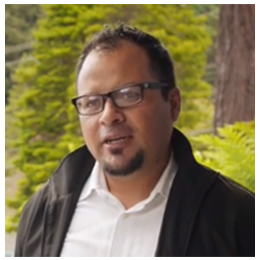
I am a social work professor at Humboldt State University. I teach undergraduate and graduate courses on social policy, research, wellness and sustainability, community practice, and social work with tribal and rural communities at Humboldt State University.
I am a community organizer, scholar-activist, and urban farmer. I earned my interdisciplinary doctoral degree in Sociology and Social Welfare from Boston University, and my BSW and MSW degrees from San Francisco State University. I have experience teaching in institutions of higher education in California (Humboldt, Long Beach), New Mexico (NM State and Highland University) and Massachusetts (Boston University). I have experience teaching on campus and online and in asynchronous and synchronous courses. I have a long social work practice in multicultural, multilingual, and multiethnic communities in California, Massachusetts, and New Mexico. I am bilingual and bicultural.