PSYC 002: Introductory Psychology
PSYC 002: Introductory Psychology
Psychology
Common Course ID: PSY 110
UC Instructor Open Textbook Adoption Portrait
Abstract: This open textbook is being utilized in a psychology course for undergraduate students by Rachel Wu, Ph.D., at the University of California Riverside. The open textbook provides an important opportunity for students to learn the core concepts of psychology and understand how those concepts apply to their lives. The main motivation to adopt an open textbook was to save students money. Most students access the open textbook online from the publisher's site.
Reviews: The book has been reviewed by a CCC faculty member and a CSU faculty member from within the three segments of the California higher education systems. There is also an Accessibility Evaluation.
About the Textbook
Description:
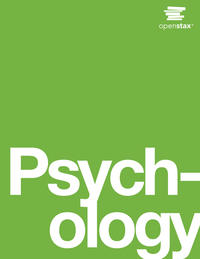
Psychology is designed to meet the scope and sequence for the single-semester introduction to psychology course. For many students, this may be their only college-level psychology course. As such, this textbook provides an important opportunity for students to learn the core concepts of psychology and understand how those concepts apply to their lives. The authors strive to make psychology, as a discipline, interesting and accessible to students.
A comprehensive coverage of core concepts is grounded in both classic studies and current and emerging research, including coverage of the DSM-5 in discussions of psychological disorders. The text incorporates discussions that reflect the diversity within the discipline, as well as the diversity of cultures and communities across the globe.
Senior Contributing Author
Contributing Authors
Formats:
This book is available for free online and as a PDF. It can also be purchased on iTunes for $4.99 and as a printed copy for $38.50 from Amazon.
Supplemental resources:
OpenStax provides student resources that include a Getting Stared Guide and a Correlation to APA Guidelines. Instructors are provided with a variety of resources including a Getting Started Guide, Sample Syllabus Language, Instructor Answer Guide, Test Bank, PowerPoint Slides and ACCES: Low-cost Custom Digital and Print.
Peer reviews:
The book has been reviewed by a CCC faculty member and a CSU faculty member from within the three segments of the California higher education systems. There is also an Accessibility Evaluation.
Cost savings:
We previously used Myers and DeWall's Psychology, which retails for $205 on Amazon. Since I teach about 570 students per year, this results in potential student savings of $116,850.
License:
This book is licensed under a Creative Commons Attribution 4.0 International License. This means you are free to copy and redistribute the material in any medium or format and remix, transform, and build upon the material for any purpose, even commercially. The licensor cannot revoke these freedoms as long as you follow the license terms. You must give appropriate credit, provide a link to the license, and indicate if changes were made. You may do so in any reasonable manner, but not in any way that suggests the licensor endorses you or your use.
About the Course
PSYC 002:  Introductory Psychology
Description:
Emphasizes topics in developmental psychology, tests and measurements, social psychology, personality, and abnormal behavior.
Prerequisites: None
GE credit: 4 hours - Lecture, 3 hours; discussion, 1 hour
This course is taken by a variety of majors, with very little to some knowledge of psychology.
Learning outcomes:
- Demonstrate familiarity with major concepts, theoretical perspectives, and empirical findings in developmental and social psychology.
- Understand basic research methods in psychology.
- Respect and use critical thinking, skeptical inquiry, and, when possible, use the scientific approach to solve problems related to behavior and mental processes.
- Understand and apply psychological principles to personal and social issues.
- Weigh evidence, tolerate ambiguity, and understand that behavior is based on multiple factors.
Curricular changes:
There were none.
Teaching and learning impacts:
Collaborate more with other faculty: No
Use wider range of teaching materials: No
Student learning improved: No
Student retention improved: No
Any unexpected results: No
I found that this textbook was just as good as using the higher priced textbooks on the market.
Textbook Adoption
OER Adoption Process
I decided to use this book as it was recommended by another professor. The adoption has been seamless.
Student access:
Most students access the textbook directly online from OpenStax.
Student feedback or participation:
Most students responded to the following question:
What did you like about the open textbook used in this class?
- I didn't have to pay for it. It was still informative and a good resource so I think it was a good choice
- Affordability, and the context was very clear. I also liked how there were video URLs that you could access with the chapter content.
- I liked its accessibility and that I had the option of downloading it a pdf. I also liked that despite being free, the quality of the information was still very good.
- It was straight-forward, easy to access and no matter if I had my phone, tablet, laptop, etc. I always had access and it wasn't a big bulky book I carried around.
- I liked that the author included many examples.
- The content was very clear and understandable. And it saved me a lot of money.
- It is FREE! We need to utilize free textbooks!
- I liked how it provided lots of examples for readers to understand the concepts.
- I liked how convenient it was to access the book. I could use it on multiple devices.
- Very convenient. Did not have to carry heavy textbook around.
- I liked that I didn't need to purchase a textbook that I may or may not have used in the future. This saved me a lot of money.
- It was very organized. Also it had good review questions.
- I thought it was very accessible and inexpensive. It really helps out a lot of students to have a digital textbook. It was also much more convenient to find certain informaiton in the textbook by typing in key words.
And What did you dislike about the open textbook used in this class?
- Nothing. (Many responses)
- Took a while to scroll through the book to get to the chapter I needed to read.
- Reading on a screen isn't my favorite. But for those with the same complaint, we could print the necessary chapters to read at a much lower cost than actually buying any print textbook.
- I cannot study from a screen, computer screen or phone screen.
- I prefer to read a printed version.
- I do not dislike anything.
- The fact that the physical copy isn't free.
- There was no dislike because it was easily accessible and free.
- I was not able to annotate.
- Reading on a computer is more of a hassle than reading a print version.
- I do prefer reading from paper, but other than that, it was great.
- I do not like reading long chapters from a computer screen
- My eyes get tired faster than if I was reading a normal book
- I had no disikes about the open book
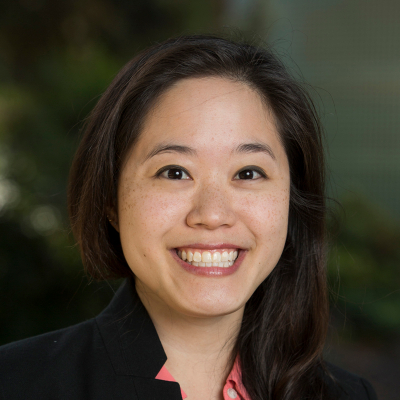 I am a psychology professor at the University of California Riverside. I teach Lifespan Psychology and Research Methods in Developmental Psychology.
I am the Director of the CALLA Lab at UC Riverside, which is dedicated to conducting research on how we learn from infancy to older adulthood. Our goal is to better understand cognitive development and cognitive aging and to use cognitive development strategies to help people maximize their potential for learning new skills at any age. We use neural (EEG) and behavioral (eye-tracking, accuracy/reaction time) responses to investigate how infants and adults differ in their approaches to finding and learning about relevant information. Our research program has two components: 1) measuring adults’ use of previously acquired knowledge and tracking the development of this ability from infancy, and 2) applying infant and child learning strategies to mitigate cognitive decline during aging. Using infant learning to inform adult learning and vice versa has the greatest promise to lead to discoveries about optimal learning strategies that can be applied throughout the lifespan.