
Principles of Biology
Principles of Biology
Biology
Common Course ID: BIOL 135 S
CSU Instructor Open Textbook Adoption Portrait
Abstract: This open textbook is being utilized in a biology course for undergraduate science major students by Roxann Schroeder, Ph.D., at Humboldt State University. The open textbook provides the same structure and content as a traditional hard copy textbook, but includes links to websites and interactive material that supplement the readings. The main motivation to adopt an open textbook was cost - previous polls of my students showed that a significant number never bought the textbook due to the cost of the traditional hardcover text. Most students access the open textbook online or as a hard copy from the bookstore.
Reviews: The book has been reviewed by faculty from CCC, CSU, and UC within the California higher education systems. There is also an Accessibility Evaluation.
About the Textbook
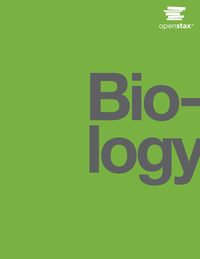
Description:
Biology is grounded in an evolutionary basis and includes exciting features that highlight careers in the biological sciences and everyday applications of the concepts at hand. To meet the needs of today’s instructors and students, some topics have been condensed and combined; for example, phylogenetic trees are presented in the various ways they are currently being developed by scholars, so instructors can adapt their teaching to the approach that works best in their classroom. The book also includes an innovative art program that incorporates critical thinking and clicker questions to help students understand–and apply–key concepts. Biology by OpenStax is an introductory biology book for science majors (there is another book, Concepts of Biology, for non-science major classes).
Authors:
- Yael Avissar - Rhode Island College
- Jung Choi - Georgia Institute of Technology
- Jean DeSaix - University of North Carolina at Chapel Hill
- Vladimir Jurukovski - Suffolk County Community College
- Robert Wise - University of Wisconsin, Oshkosh
- Connie Rye - East Mississippi Community College
Formats:
This book is available for free on the web, in PDF, and at a slight cost in iPad versions, which can also be printed. Print versions (softcover) are available from the campus bookstore.
Supplemental resources:
Biology comes with many supplemental resources for students, including a Getting Started Guide for Students, WileyPLUS Learning Space, Sapling Learning online homework, SimBio simulated laboratories, and Memory Science (interactive online questions and answers) for students. Additional resources for instructors are a Getting Started Guide for Faculty, Biology PowerPoint Slides, Sample Syllabus Language, iBook Textbook Comp, Top Hat, Lumen Learning and Biology Supplemental Test Items.
Peer reviews:
The book has been reviewed by faculty from CCC, CSU, and UC within the California higher education systems. There is also an Accessibility Evaluation.
Cost savings:
Students could save $200 for the free, downloaded version of the textbook compared to the traditional textbook packaged with a CD with interactive materials. Since I teach up to 300 students per year, this could be an annual potential savings for students of $60,000.
Accessibility and diversity statement:
Not all formats of the textbook have been evaluated but the most recent version of this open textbook is available in a Bookshare format which supports DAISY and Braille-Ready-Format (BRF).
License:
Except where otherwise noted, Biology by OpenStax College is licensed under a Creative Commons Attribution 3.0 Unported License. This license lets others distribute, remix, tweak, and build upon the work, even commercially, as long as they credit the author for the original creation. This is the most accommodating of licenses offered. Recommended for maximum dissemination and use of licensed materials.
About the Course
BIOL 105: Principles of Biology
Description: Fundamental processes of life. Structure and function of cells, genetics, evolution, and ecology.
Prerequisites: Grade of C- or better in [CHEM 107] OR [CHEM 109 or equivalent. AND enrollment in CHEM 110]
GE credit: 4.0 units
Learning outcomes:
Students completing BIOL 105 will:
- have a stronger foundation for success in upper division courses;
- are more capable of functioning efficiently in an academic setting
- are more excited about and interested in nature, biology and the universe.
There will be opportunities for improving your writing and strengthening your quantitative and analytical reasoning skills.
Students taking this class are science majors who have completed at least one semester of chemistry.
Curricular changes:
So far I have not made any curricular changes as a result of the open textbook adoption.
Teaching and learning impacts:
Collaborate more with other faculty: No
Use wider range of teaching materials: Yes
Student learning improved: Unsure
Student retention improved: Unsure
Any unexpected results: No
I have used some new videos associated with the textbook. Student learning seems to have increased, but I have also added a Sapling Learning Homework package to the class, which could also be contributing to increased student success in the class.
Sample assignment and syllabus:
Cell Communication Activity
Students were shown a video in the text (URL: https://www.dnalc.org/resources/3d/cellsignals.html) then asked to answer these questions.
Syllabus
Sample Syllabus for BIOL 105
Textbook Adoption
OER Adoption Process
The major reason I adopted this textbook was for the cost savings. The textbook we had been using was good, but if students bought it new it was almost $200. When I asked my students, I found that many did not buy the book (they either borrowed it, tried to get access to the copy on reserve at the library, or did without). Even the students who purchased the book almost always planned to sell it back to the bookstore "because they needed the money." It was clear to me that the book we were using was not effective because it was not being used.
After looking at several options (and trying a different book that I liked but that did not work for my students), I decided on the OpenStax Biology for several reasons. This book covers the material for the introductory biology course, and could also be used as the text, or as a supplemental text, for other courses (botany, zoology, anatomy, physiology). There are interesting discussions of how science is done, and careers in science. Additionally, there are some (but not an overwhelming number) links to other websites with related information and videos related to the topic.
In addition to the OpenStax Biology book, I have started to use the Sapling Learning online homework system. The students in my class are already familiar with Sapling because the required chemistry classes at our institution use Sapling. In addition, the Tech TAs that help instructors set up the course make the implementation of Sapling very easy, and only requires a few hours before the start of the semester to get information to the Tech TA, then no more than an hour a week to set deadlines for homework assignments and to assess how students do on the assignments.
Student access:
Students can access the book online (PDF, EPUB, iBook formats) and can print out their book, or they can purchase a hard copy of the book for about $50 (far less than $200!).
Student feedback or participation:
In general, I have not had any complaints about the textbook. Most students seemed to have no problems accessing it, and the few who did not want to read online had no problems with purchasing a hard copy of the textbook from the bookstore. Unlike the previous online book I tried, the level of the book seemed well suited to my students.
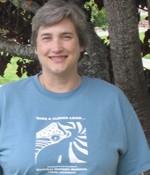
I am a Biology professor at the Humboldt State University. I teach BIOL 105 (Principles of Biology) and EMP 435 (Grant Proposal Writing).
I believe that "teaching is lighting a fire, not filling a bucket." In the Grant Writing class, students write a full grant proposal over the course of the semester, identify appropriate potential funders, and participate in several peer reviews. In the Intro Biology class, I have been attempting to find a good balance between traditional teaching (lab exercises and lectures) and more interactive activities (independently designed lab experiments, in-class activities that require students to work together during some lecture periods).
I regularly attend the Student Success Institutes and participate in Learning Circles with other faculty on our campus. In addition, in 2012, I attended a workshop titled "Rethinking teaching introductory biology" which was also very useful for learning about ways to get students interacting with biology.