
Psychology of Gender
Psychology of Gender
Boundless Psychology
CSU Instructor Open Textbook Adoption Portrait
Abstract: This open textbook is being utilized in a psychology course for upper division students by Alexandrea Park, Ph.D., at California State University Los Angeles. The open textbook provides the reader with learning materials and topical content. The main motivation to adopt an open textbook was the Chancellor's goal to reduce student textbook costs. Most students access the open textbook from the link in Moodle, the course management system.
About the Textbook
 Description: The Boundless Psychology textbook is a college-level, introductory textbook that covers the intriguing subject of Psychology. Boundless works with subject matter experts to select the best open educational resources available on the web, review the content for quality, and create introductory, college-level textbooks designed to meet the study needs of university students. The Boundless Psychology textbook covers introductory psychology topics such as: learning and memory, cognition, emotions, and social psychology. In this course, we only used Chapter 14, Gender and Sexuality.
Authors: Boundless
Formats: The book is available online. Students in the course access it from either the link in Moodle or the link on the syllabus.
Supplemental resources: The book has interactive features including Search, SmartNotes, Notes, Quizzes and Flashcards.
Cost savings: I normally use Brannon's Gender: Psychological Perspectives in this class. The cost on Amazon is $106. I teach approximately 44 students per year, resulting in a total annual savings for students of $4,664.
Accessibility and diversity statement:
The publisher has not provided accessibility or diversity statements.
License:
Except where noted, content and user contributions on this site are licensed by Creative Common under CC BY-SA 4.0 with attribution required. This means you can copy and redistribute the material in any medium or format, remix, transform, and build upon the material for any purpose, even commercially, as long as you give appropriate credit, provide a link to the license, and indicate if changes were made.

About the Course
PSY 419: Psychology of Gender
Description: Psychological research and theory about gender, emphasis on socialization, stereotyping, expectations and effects on individuals; differences and similarities between women and men; intersections of gender, race, socioeconomic status, and sexuality.
Prerequisites: GE critical thinking requirement, introductory social science course, research methods course.
Learning outcomes: Upon successful completion of this course, the student will:
- Identify and discuss the vocabulary and terminology in the gender from a psychological perspective;
- Discuss the key ecological and theoretical perspectives of the psychology of gender and the trans-theoretical model of the psychology of gender, as well as principles in self-reflection and apply them to a student’s own behavior.
- Demonstrate verbal and written communication skills about the behaviors and attitudes related to biological sex.
- Demonstrate clear and effective American Psychological Association writing style (see course writing rubric of this syllabus) to think critically about directions for future research on the psychology of gender, including research evaluations of gender differences and equality.
- Critically review the developing research on sex, gender, and gender-related behaviors from biology, psychology, sociology, biochemistry, neurology, and anthropology.
Curricular changes: More online access to free readings were allowed for more online discussion peer postings in a peer forum. Students also had a midterm and a final with access to reading materials.
Teaching and learning impacts: Collaborate more w/ other faculty: No
Use wider range of teaching materials: Yes
Student learning improved: Yes
Student retention improved: No
Any unexpected results: No
Obviously, using two different OER textbooks resulted in a wider range of teaching materials.
Student learning did improve, as usually the average student grade for the class is B-, but it was a slightly higher B range this time.
Sample assignment and syllabus: Syllabus This is the syllabus I used for the Summer 2015 course.
Assignment This is an assignment for a Reaction Paper.
Textbook Adoption
OER Adoption Process
The main motivation for adopting the open textbook was saving students money. The secondary reason was the ability to customize the book for students' needs.
Selected pages from the following book, also an OER, were used to supplement the textbook:
Principles of Social Psychology (pp. 114, 131-132, 146-147, 186-188, 199 (Research Focus)-201, 318-320, 372-379, 391-403, 470, 532-540, 700-702).
Student access:
Students access the open textbook online from a link in Moodle or a link in the syllabus. The supplemental book can be accessed online, or downloaded by PDF or Word.
Student feedback or participation:
Feedback from students regarding usage of the open textbook include:
- "I loved the free textbook."
- "Free is great."
- "Instant quizzes"
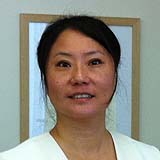 I am a psychology professor at the California State University, Los Angeles. I teach Psychology of Gender, Psychology of Prejudice and Discrimination, Human Violence and Individual Changes.
My Teaching Philosophy: Engaged student learning experiences are pivotally important to applying textbook materials into real life situations for skills development into career strengths.
Research interests related to discipline or teaching: Engaged student learning through instant online communications and clinical applications.