
Mediterranean Identites from the Margins
Mediterranean Identites from the Margins
Selected Resources in Humanities 340
CSU Instructor Open Textbook Adoption Portrait
Abstract: This open textbook is being utilized in a Humanities course for undergraduate students by J. David Jerez-Gómez, Ph.D., at California State University, San Bernardino. The open textbook provides students an invitation to explore and analyze, through literature, music and art, the interactions and exchanges between peoples of "the lands of the Middle Sea" -- North Africa, West Asia, the Middle East, and Southern Europe with the study of texts of different genres and traditions that embody Mediterranean syncretism, forming a common cultural ground. The main motivation to adopt an open textbook was to provide access to a selection of canonical and marginal texts using digital instructional materials that are free online at no cost to students, and that are accessible through MERLOT, and other online sources. Most students access the open sources and textbook in online format.
About Resources
Selected 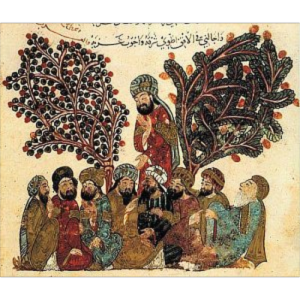 Resources
No individual textbook was selected for this course. Instead, MERLOT was used to find free online resources that could be used in the class. A course reader was provided with the reading selections available online.
- The Maqámát - Badi al-Zaman Al-Hamadhani
- The Decameron - Giovanni Boccaccio
- Lazarillo de Tormés - Anonymous
- Exemplary Novels - Miguel de Cervantes Saavedra
- Don Quixote - Miguel de Cervantes Saavedra
In addition, students are required to purchase an affordable print book, for which there are not online editions available ($18.75): Contreras, Alonso de. The Adventures of Captain Alonso De Contreras. Paragon House, 1989.
Description:
Using these online resources, we analyze literature that depicts the diversity of races, languages, religions, and social characters that collide to develop a dialectic of survival and accommodation or acculturation. We study how texts of different genres and traditions embody Mediterranean syncretism, forming a common cultural ground. In concert with textual analysis is an exploration of music as an expression of identities which are very rich and heterogeneous in the Mediterranean--from the Middle Eastern influence that reaches Spain, and the Sephardic tradition, to the 19th century-ballads of British sailors.
Formats:
Most of these books are available on the web, as an ePub, and some on a Kindle. (See each one for a link to the format). Students could also print these copies on their own.
Cost savings:
These texts, along with reading selections and other complementary materials are available in Blackboard in digital format, and in a reader. If the printed editions of these texts or the reader were to be used, it would cost at least $50 per student. With an estimated enrollment of 40 students per year, the potential annual savings for students would be $2,000.
Accessibility and diversity statement:
None of the resources used have been accessibility tested. Since most of them are older works, they can probably be considered to not be accessible.
The books can be considered diverse, as we recognize the literary currents of the Renaissance, with its attention to the whole human being and its anthropocentric view of life, the Romantic Period with its embracing of Enlightenment ideals and fascination with the exotic, and the Victorian Era with its enthusiasm for travel, exploring the past, and the collecting of artifacts. Organized according to the idea of a literary and cultural journey through the Mediterranean, the seminar will explore the identities of women, travelers, pirates, witches, renegades, soldiers, spies, occultists, adventurers, and collectors.
License:
There is no Creative Commons license for these books. Rather, they are in the public domain in the United States. This is because they were originally printed in the US and:
- Their copyright has expired normally (they were published in or prior to 1922), or
- They were published between 1923 and 1964 (inclusive) and the copyright was not renewed, or
- They were published by the US Government.
In addition, books printed outside the US in or before 1922 are in the public domain in the US.
Books and other content become public domain in different ways in different countries. So if you reside outside the US, you will have to use different criteria to determine if a text is in the public domain.
About the Course
Humanities 340 - Mediterranean Identities from the Margins
Description: Investigation of different ways in which people find the meaning, or meanings, in texts or events. Alternative theoretical approaches applied to specific literary, artistic, legal, religious and historical examples.
Prerequisites: Enrollment restricted to students with Academic Level equal to or greater than Junior.
GE credit: 4.0 Units
Learning outcomes:
Upon completion of the course students will be able to:
- Investigate different ways in which people find the meaning, or meanings, in texts or events.
- Familiarize themselves with alternative theoretical approaches applied to specific literary, artistic, legal, religious and historical examples.
- Identify elements that define the Mediterranean as a point of convergence between Europe, Africa, and Asia.
- Appreciate the differences and similarities between Mediterranean cultures resulting from the exchange of ideas, goods and travel of peoples, as well as from warfare.
- Analyze literature and culture from a comparative perspective.
- Approach critically texts in the original (when possible) and in translation to examine how they illustrate through language and structure key themes discussed in class.
Curricular changes:
So far no curricular changes were made to the course as a result of the open textbook adoption.
Teaching and learning impacts:
Collaborate more with other faculty: Yes
Use wider range of teaching materials: Yes
Student learning improved: Yes
Student retention improved: Yes
Any unexpected results: Yes
Since this course was team-taught, it was a great opportunity to collaborate and learn from the peer faculty who also taught the class. Her insightful comments and perspective contributed tremendously to class discussions and presented students with a model of dialogue and respectful interaction between peers. Many students commented on this with appreciation in the feedback they provided.
As the text selections in the syllabus demonstrate, due also to the team-teaching approach of the class, we were able to use a wider range of teaching materials and strategies, varying from online sources and external links that illustrated the material, to traditional handouts and lecture notes.
Overall students learnt and developed their reading skills, and text analysis in this course, as many of them commented in their feedback. Final grades show that there was a progression in reading comprehension and understanding of the material covered in the course that was reflected in their analysis. They appreciated the broad knowledge acquired on topics of identity, gender, race, and history in the humanities, as well as the opportunity to discover the literature selected for the class, which they realized they would not have known about otherwise.
Only 3 students left the class, two of those for scheduling conflicts with other classes. For an experimental course designed around a vast reading list, in which the majority of students came from disciplines other than the Humanities, and were not familiarized with literary courses, we understand that this was a successful result and improvement in student retention.
Despite the described challenges, students who were not familiarized with reading literature, text analysis, or studying historical contexts, did very well in the class and demonstrated that they understood the material. The topics discussed provided students a better notion of Mediterranean geography and culture, and an understanding of the tolerance and coexistence that permeates such a diverse and rich identity confirmed by many peoples of different races and faiths. Above all, the most valuable unexpected result was the appreciation that students demonstrated for the literary heritage that belongs to all readers, regardless of language and origin, and how the humanities through this appreciation can inspire them and play a vital role in their lives. Please, see the sample of student comments provided.
Sample assignment and syllabus:
Assignment
This is a sample assignment for the Fall 2015 clas.
Syllabus
This is the syllabus I used for the Fall 2015 class.
Resource Adoption
OER Adoption Process
Since many of the students are first-generation college students from working class families, and the nature of the course requires access to a variety of texts, canonical and marginal, they are often either too expensive or very difficult to find. We determined that the OER textbooks option was the most appropriate for this innovative course. We found some of the texts available through MERLOT, and added other materials online as the reading materials in order to create an online reader.
Student access:
We found that most students come prepared to class, either reading the selections provided online or in the printed form. Preference for one or the other varies according to each student and their way of learning. In general, students liked having the texts online for easy access, which allow them to read anywhere. This complements the printed reader they brought to class to facilitate class discussions and assignments. We hope that in the future we can create an online textbook that will include the reading selections and the materials we have created for this course.
Student feedback or participation:
Comments from students:
- I REALLY liked how both Dr. Jerez-Gomez and Dr. Ramirez put forth so much effort and passion in the class that it made lecture fun and interesting.
- I liked that it was taught my 2 instructors and this felt like we got more attention as students to ask questions and learn better.
- I was glad the summary lecture notes were posted almost every day to clarify what the key points and themes were, these summaries are what helped me do better on my quizzes.
- Thank you very much for the memories. I will not forget what Dr. Jerez- Gomez said about Queen Tera living in us now because we read her story and now she will live on in our souls. This was touching because I did not realize how reading novels and stories can really change how we perceive the world around us. Great class.
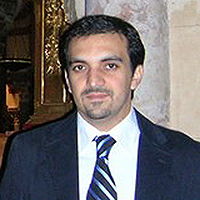 I am an associate professor of Spanish at the California State University, San Bernardino. I teach courses on Medieval, Renaissance, and Early Modern Spanish Literature, covering poetry, drama, and prose of these periods such as Cervantes' Don Quixote, Fernando de Rojas' La Celestina, and Juan Ruiz's Libro de buen amor. I also teach Spanish composition, and Spanish Peninsular culture and civilization.
My priority in teaching is to make canonical literature accessible to our students, emphasizing the context and purpose for which these texts were created to show how relevant they are still today. My research interest covers the social contexts, public transmission and performance of canonical Early Modern literature and poetry. I have published various articles dealing with this socio-historical approach. Other research interests that I incorporate in my teaching are the literature and culture of Spanish Golden Age minority groups such as the Sephardic and Morisco communities, and women writers of Early Modern Spain. Recent work dealing with popular culture, that was incorporated into this Humanities curse, covers the Italian and Sicilian puppetry tradition (l’opera dei pupi siciliani) in connection with an episode of Cervantes’ Don Quixote, and the performance of Carolingian ballads in Spain and the Mediterranean.