
Economic Way of Thinking
Economic Way of Thinking
Principles of Economics 2e
CSU Instructor Open Textbook Adoption Portrait
Abstract: This open textbook is being utilized in an economics course for high school students who seek college credit by Abbas P. Grammy, Ph.D., at California State University Bakersfield. The open textbook provides a large number of brief chapters covering both economic theory and applications. The application section covers many social issues such as poverty, inequality, discrimination, immigration, globalization, unemployment, and inflation. The main motivation to adopt an open textbook was to save money for students. Most students access the open textbook online.
About the Textbook
Description:
Principles of Economics covers the scope and sequence for a two-semester principles of economics course. The text also includes many current examples, including; discussions on the great recession, the controversy among economists over the Affordable Care Act (Obamacare), the recent government shutdown, and the appointment of the United States’ first female Federal Reserve chair, Janet Yellen.
The pedagogical choices, chapter arrangements, and learning objective fulfillment were developed and vetted with feedback from educators dedicated to the project. The outcome is a balanced approach to micro and macro economics, to both Keynesian and classical views, and to the theory and application of economics concepts. Current events are treated in a politically-balanced way, as well.
Principles of Economics PDF and web view versions have been updated to include current FRED (Federal Reserve Economic) data.
Senior Contributing Author
- Timothy Taylor, Macalester College
Senior Content Expert
- Steven A. Greenlaw, University of Mary Washington
Formats:
The text is available for free online, or as PDF, and Kindle. A print version can be ordered for a cost of $33.50 and a premium, interactive ebook for $4.99.
Supplemental resources:
A Getting Started Guide for Students is available as well as faculty-only resources including a solutions manual, PowerPoint slides, and a test bank.
Cost savings:
I previously used Issues in Economics Today, by Robert C. Guell, which currently retails on Amazon for approximately $152. This course, offered only during the summer semester, has a large enrollment, of about 140 students, so the potential savings is over $21,000.
Accessibility and diversity statement:
Not all formats of the textbook have been evaluated yet, but the most recent version is available in a Bookshare format which supports DAISY and Braille-Ready-Format (BRF).
License:
Principles of Economics is licensed under a Creative Commons License 4.0 International license. This license lets others distribute, remix, tweak, and build upon the work, even commercially, as long as they credit the author for the original creation. This is the most accommodating of licenses offered and is recommended for maximum dissemination and use of licensed materials.

About the Course
ECON 100: The Economic Way of  Thinking
Description:
Introduction to economic analysis. Topics covered include microeconomic theory and application and macroeconomic theory and policy. Also, an in-depth study of into selected topics and current events.
Prerequisites: None. Incoming high school seniors with a cumulative GPA of 3.0 or better
GE credit: 5.0 units
Learning outcomes:
The course objectives are:
- to learn economic concepts and theories
- to be able to apply the economic concepts to social issues,
- to be able to collect and analyze economic data, and
- to learn the essentials of leadership within the economic environment.
In addition, I expect the students to learn:
- communication skills (priorities: writing and oral presentation)
- quantitative skills (priorities: calculating, modeling, and interpreting)
- a working knowledge of economic concepts and theories (priorities: microeconomics, macroeconomics, international, and econometrics)
- the application of the major in authentic contexts (priorities: external economic environments, organizational decision support, and public policy analysis)
Economics 100 is taken by high school students who seek college credit. Many of these students come from low-income families and cannot afford to pay for an expensive textbook. This textbook offers an excellent presentation of introduction to economics and is free of charge to students.
Curricular changes:
Midterm and final exams switched from multiple-choice questions to problem sets and short-essay questions to better accommodate achievement of student learning outcomes.
Teaching and learning impacts:
Collaborate more with other faculty: Yes
Use wider range of teaching materials: Yes
Student learning improved: Yes
Student retention improved: Yes
Any unexpected results: No
Collaboration: I invited a colleague to present economic application of social issues to complement my instruction of economic theory.
Wider range of teaching materials: In addition to using the PowerPoint slides, I brought questions and problems from the test bank to practice in the class. I also showed short films on economic applications from reason.com and had students answer questions.
Student learning improved: Student average scores in midterm and final examinations improved several points as exams switched from multiple-choice questions to problem sets and short-essay questions.
Student retention improved: Of 140 students registered for the class, 138 completed the course for grades. This was a considerable improvement over previous offerings of the course.
Sample assignment and syllabus:
Sample Assignment
Students are required to make an informative and colorful one-page laminated newsletter.
Syllabus
The enclosed syllabus is a plan for the course offering, providing all necessary information students would need. Additional information will be provided in the classroom.
Textbook Adoption
OER Adoption Process
Because most of my students come from low-income families, I wanted to help save them money on the textbook. My department chair recommended the textbook to me. The faculty at my institution are adopting a policy of using e-textbooks in introductory and principles of economics courses.
The textbook comes with an excellent test bank. I brought a selection of chapter questions to the class to have students practice and learn what to expect in examinations.
I used reason.com for economic applications of social issues and economagic.com for economic data collection and analysis for the Newsletter assignment.
Student access:
Most of the students access the web version of the textbook. Some students who used the digital version indicated they would have preferred to have a print copy. They needed to better visualize and analyze graphs and formulas.
Student feedback or participation:
In a survey I conducted upon completion of the course, an overwhelming majority of students liked the content and presentation of chapters they were assigned to read and learn.
Specific results include:
- I downloaded or printed the E-textbook: 100% Yes
- I read the assigned chapters of the book: 100% Yes
- The chapters are well written and easy to read: 92% Yes
- The graphs are easy to figure out: 81% Yes
- I am able to comprehend the assigned readings: 91% Yes
- I find Key Concepts and Summary as helpful learning tools: 96% Yes
- I answer Review Questions to learn and prepare for exams: 94% Yes
- I find Critical Thinking Questions are helpful learning tools: 82% Yes
- I learn from real life examples given in each chapter: 96% Yes
- I recommend using this E-textbook in the future: 95% Yes
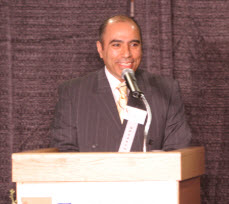
I am an economics professor at the California State University Bakersfield. I teach Essentials of Macroeconomics, International Economic Development, Introduction to Econometrics, Managerial Economics, graduate Managerial Economics.
My teaching philosophy emphasizes student active involvement in classroom learning. My research interests are Economic Growth and Development, Econometrics and Macroeconomics.