Economics 200: Intro to MicroEconomics
Economics 200: Intro to MicroEconomics
Principles of Microeconomics 2e
Common Course ID: ECON 201
CSU Instructor Open Textbook Adoption Portrait
Abstract: This open textbook is being utilized in an economics course for undergraduate students by Daniel MacDonald, Ph.D., at CSU San Bernardino. Each chapter of the open textbook begins with an issue that is then addressed at the end of the chapter using the tools acquired in that chapter. The main motivation to adopt an open textbook was to show how a high-quality educational experience (drawing on real-world applications and critical thinking skills) can be obtained using open educational materials. Most student access the open textbook in PDF format.
Reviews: The book has been reviewed by two faculty from the CSU (CSU1 and CSU2) and one from CCC within the California higher education systems.
About the Textbook
Principles of 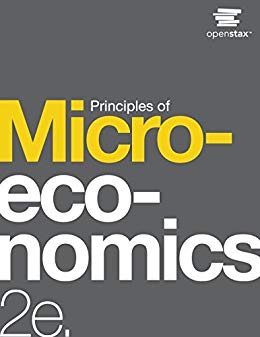 Microeconomics 2e
Description:
This textbook covers the scope and sequence for a one-semester economics course. The text also includes many current examples, including the Keystone Pipeline, Occupy Wall Street, and debates over the minimum wage.
The pedagogical choices, chapter arrangements, and learning objective fulfillment were developed and vetted with feedback from educators dedicated to the project. The outcome is a balanced approach to economics and to the theory and application of economic concepts. Current events are treated in a politically-balanced way as well.
Authors:
- Timothy Taylor, Macalester College
- Steven A. Greenlaw, University of Mary Washington
Formats:
The textbook can be accessed online, by PDF, and Kindle. A print copy can be ordered for $33.50.
Supplemental resources:
OpenStax College has compiled additional resources for faculty and for students.
Peer reviews:
California higher education faculty have reviewed this open textbook. Click the links to view the CCC and two (CSU1, CSU2) peer reviews.
Cost savings:
Cost savings are tremendous. Considering that a parsed-down ebook version of proprietary textbooks can cost upwards of $100, and considering that I teach around 60 students per quarter, I save my students roughly $6,000 per class, per quarter. I teach 4 lower-division microeconomics and macroeconomics classes per year, all of the same size, meaning that the annual savings to students from my adoption of the open educational resources are around $24,000.
Accessibility and diversity statement:
Access is improved greatly by the different media through which the students can obtain the book. The PDF versions have the added ability of magnifying the text to help with students who have eyesight disabilities. However, I believe that an important step forward will be to create a version of the textbook that can be accessed by the blind. While I plan to follow up with on-campus departments to see if this is a feasible project, I have been told that since it is a PDF, the students in need of assistance should be able to use screen reader programs.
I strive to make the classroom open to students from diverse backgrounds. I discuss poverty and welfare policy in detail, something many standard economics courses do not do. Throughout the course, I make sure to identify students who are struggling with the material and encourage them to email me to discuss their progress either over email or in office hours.
License:
Principles of Microeconomics is licensed under a Creative Commons Attribution 3.0 Unported License. This license lets others distribute, remix, tweak, and build upon the work, even commercially, as long as they credit the author for the original creation. This is the most accommodating of licenses offered. Recommended for maximum dissemination and use of licensed materials.
About the Course
Econ 200: Introduction to Microeconomics
Description: Introduction to the economic principles which govern production, exchange, the pricing of goods, services and resources and the distribution of incomes in competitive and noncompetitive markets.
GE credit: 4 GE credits
Learning outcomes:
- Employ the supply and demand model to predict market responses to shocks.
- Illustrate and explain unintended consequences resulting from government interference in well-functioning markets.
- Analyze different market structures from both a short-run and long-run perspective.
- Effectively employ marginal cost-benefit analysis to arrive at an efficient outcome.
Econ 200 is a 4-credit general education course at CSUSB that is taken by a wide variety of students across the college system. It is required for all business school students to pass with a C or higher.
This is an introductory course, so no prior experience with economics is expected. Students should be familiar with at least basic algebra and graphical analysis. The course is rather theoretical, i.e., conceptually driven rather than empirical.
For the abovementioned reasons, students have traditionally had difficulty in this course. I sometimes hear from my students that they are taking the course for a second or even third time. This does not necessarily have anything to do with the professor, but with the difficulty of the material itself.
Curricular changes:
I redesigned course material from the ground-up: all new lecture slides based on the OpenStax book, problem sets and examples also based on the OpenStax book. I also decided to augment my course with topics based on material that I wanted to emphasize. While the quality of the figures and graphs in the book needed some work, I was able to supplement the textbook's presentation with my own material.
Getting students to think about and discuss the implications of open textbooks is one of the "hidden gems" of this approach: how does copyright work, are there alternative options (Creative Commons licensing), and how do they work? Should knowledge be free? How did people learn how to do things in the past? There are many important lessons contained directly in their own experience in the class!
Teaching and learning impacts:
Collaborate more with other faculty No
Use wider range of teaching materials: Yes
Student learning improved : Yes
Student retention improved : Unsure
Any unexpected results: Yes
A few students did express problems reading the book, which is definitely a major concern for me. The book is admittedly a little dry and suffers from disjointed writing - this is partly because of the "open" nature of the book (many authors contributing content) but also because of the editing process. It is also rather verbose, although many other (but not all) economics textbooks suffer from this problem. For these students, I really encouraged them to view it as a reference and not to dismiss the material entirely.
I would really emphasize using the material provided by the book where possible: use the "Bring it Home" features in each chapter to generate classroom discussion or just to motivate a lecture. Use the examples in the text as well.
Use Adobe Acrobat or another PDF software to make a PDF that only includes the chapters that you plan to use in your course.
Because of the "open" nature of the book, some of the material just doesn't fit with the rest of the book, or some topics just aren't covered sufficiently. Be prepared to draw on your own lecture notes at times.
Sample assignment and Syllabus:
Sample Assignment This is a sample assignment for the Microeconomics class
Syllabus This is the syllabus for Spring 2015
Textbook Adoption
OER Adoption Process
Economics textbooks are some of the most expensive - for example, a new edition of the leading microeconomics textbook by N. Gregory Mankiw costs over $200. Even when adopting lesser-known books and pre-packaging them to exclude content that the professor does not plan to cover, costs for the student can still approach $100. I wanted to show how a high-quality educational experience (drawing on real-world applications and critical thinking skills) can be obtained using open educational materials.
Like most instructors, I don't stick to the book completely. I have my own interests and things that I want to share with my students that may not be covered in a standard textbook. Unfortunately, too often professors or students feel bad when material from the book is not covered. Professors may feel bad because they are assigning these expensive textbooks and then not using all the material in them. Students may feel bad for similar reasons, and these reasons may be bound up in questions like "why is (he or she) teaching this when it's not in the book? Will it be on the exam?". With OpenStax, I can be clearer about the material I will and will not use from the book, because it's all free. There are no restrictions on what I "should" or "shouldn't" teach during the course. This increased freedom is a really substantial relief and it allows me to cover topics like health care in more detail without having to worry about students getting upset with me for not covering the last couple chapters of a text that they paid hundreds of dollars for.
Using the open textbook enabled me to be more flexible when designing my course. It also allowed me to bring in topical examples without needing to spend a lot of time searching outside of the textbook. By using a textbook that both I and my students were happier using, I could focus more directly on the actual content.
There is no doubt that the new textbook has raised student interest in the material and provided them with a more reliable reference point. Instead of buying earlier editions of proprietary textbooks that might be outdated or have inadequate contemporary examples, students get a high-quality learning resource.
Finally, the textbook improved the quality of my lectures and allowed me to bring in additional topics for discussion that I would not have otherwise integrated. The books did this by giving me more real-world examples and offering me the opportunity to use more material that I found interesting and useful.
Student access:
I had a couple of students who were having difficulty accessing the web-view version of the book. They emailed me and after figuring out the source of their problem, they all switched to the PDF version instead. This prompted me to make an additional comment about textbook access later in the course.
I recommend using Adobe Acrobat or another PDF software to make a PDF that only includes the chapters that you plan to use in your course.
Student feedback or participation:
While I did not make any specific efforts to collect feedback from my students about the textbook adoption, it is clear to me that students responded warmly to my assigned readings, once they read through the syllabus. And several students specifically told me that they liked the PDF format of the book - I suspect that most of them did not even print and just referred to the electronic copy when they needed it for problem sets or for studying - kind of like a website that they could just go to when they needed information.
In my course evaluations, two of the major "key phrases" that kept emerging in the written comments were "real world applications" and "uses lots of examples", which I can directly attribute to the OpenStax books.
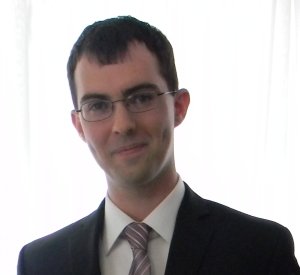
I am an economics professor at the California State University San Bernardino. I teach Econ 200: Principles of Microeconomics Econ 202: Principles of Macroeconomics Econ 335: Tools of Economic Analysis Econ 421: Economic History of the U.S. Econ 460: Labor Economics.
I am a labor economist and economic historian working mainly in 19th century U.S. economic history. I am an interdisciplinary academic, drawing on research in legal history, sociology, and psychology in my work. My current projects include analyzing the connections between urbanization and industrialization in the mid-19th century U.S., understanding labor supply through the use of a case study of a textile mill in the antebellum U.S., and analyzing the price pass-through effects of the minimum wage at the city, state, and federal levels.
My approach to teaching has always been grounded in real-world examples and critical analysis - I believe that these are the best ways to empower students and raise their confidence about applying economics to everyday issues in society. At the same time, I am committed to an "open" model of education. I believe that high-quality education can be provided at low or no cost - but it is the responsibility of the teacher to make it happen. In upper-level classes, I am also a big proponent of classroom discussions and "flipped classroom" models where the students use class time to engage with material they've learned and apply it to real-world issues.