
Introduction to Creative Writing: Fiction
Introduction to Creative Writing: Fiction
Fiction Writer’s Workshop
CSU/ Instructor Open Textbook Adoption Portrait
Abstract: This open textbook is being utilized in an English course for undergraduate students by Jason Magabo Perez, Ph.D., at California State University San Bernardino. The open textbook provides useful insight and instruction on the basic elements of fiction writing. The main motivation to adopt an open textbook was to save students money. Most students access the open textbook as a PDF from Blackboard, the Course Management System.
About the Textbook
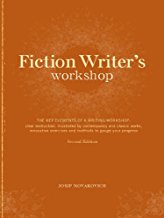 Writer's Workshop
Description:
The great paradox of the writing life is that to be a good writer, you must be both interested in the world around you and comfortable working in solitude for hours on end. Fiction Writer's Workshop is designed to help you foster a strong sense of independence of being and thinking on your own, of becoming self-evaluative without being self-critical in order to accomplish what others seek in classroom groups.
In this comprehensive guide, award-winning writer and teacher Josip Novakovich explores every aspect of the art of fiction and provides all the tools and techniques you'll need to develop day-to-day discipline as well as a personal writing style, such as:
- More than 100 writing exercises, including dozens that are new to this edition, that challenge you to experiment with diverse writing styles
- Specific statements of purpose for each exercise, to help guide you and instruct you at every step of the creative process
- Self-critique questions to help you assess your work and identify strengths and weaknesses before moving on to the next lesson
- The full text of eight acclaimed short stories, with analysis and exercises, to provide models for your own writing and help reinforce the lessons you've learned.
The practical, insightful methods offered in this workshop will clarify your voice, broaden your perspective, and strengthen your fiction. This book exemplifies thought-provoking instruction, a charismatic teacher and illuminating examples from classic and contemporary literary masters.
Author:
- Josip Novakovich - Concordia University
Supplemental Resources:
Supplemental materials include contemporary short stories from web magazines such as The New Yorker, Narrative, and N+1.
Cost savings:
I previously used Gotham Writer’s Workshop: Writing Fiction ($12.98) and The Art of the Story ($35.91). The total cost for students was $48.89. Since I teach this class to about 70 students each year, the cost savings for students is $3,422.30.
Accessibility and Diversity:
While the book doesn’t explicitly attend to diverse backgrounds, the book is useful in assuming and helping develop further basic skills competencies for all students. It would be great to locate a book that speaks more pointedly to our student demographic at CSUSB.
License:
Published 1998 by Story Press (first published 1995).
About the Course
ENG 318:  Introduction to Creative Writing: Fiction
Description:
Workshop in writing fiction, discussion of student writing and exemplary works by established authors.
This course introduces students to the study and practice of writing short fiction. Considering the craft of creative writing within a scholarly context, students will explore some basic elements of fiction writing such as: Character; Setting; Point of View; Description; Plot; Dialogue; and Voice. Through individual and collaborative reading and writing exercises, and through peer critique and small and large group workshop discussions, students will ultimately compose their own meaningful and effective works of short fiction.
Students who take this course are normally majors in English, Business Administration, Communication Studies, History, Theater Arts
Prerequisites:
Satisfaction of the GE written communication (A1) requirement or consent of instructor
GE credit: 4 units
Learning outcomes:
- Students will understand that writing is a process of social and intertextual engagement that requires writers to negotiate the possibilities and demands of participation within a given context.
- As writers, students will recognize and apply (and sometimes revise, critique, and resist) the elements of various genres and rhetorical and stylistic conventions in realizing their purposes.
- Students will understand that the social, political, economic, and cultural value of different English literary, linguistic, and rhetorical conventions result from uneven power relations within a diverse society.
- Students will engage in meaningful collaborations and critical dialogues with peers and faculty from a range of communities and perspectives in order to analyze and produce various types of texts that examine (and sometimes revise, critique, and resist) the complex uses of and differences within the English language.
Teaching and learning impacts:
Collaborate more with other faculties: No
Use wider range of materials: Yes
Student learning improved: Unsure
Student retention improved: No
Any unexpected results: No
I seek out a broader range of additional readings that better reflect student interests.
Sample assignment and syllabus:
Assignment
This is an assignment I use for the class.
Rubric
This is the grading rubric I use for papers in the class.
This is the syllabus I used for Winter 2018.
Textbook Adoption
OER Adoption Process
While this book is not the ideal text, I decided to use it because it assumes and develops further basic skills competencies in creative writing for all students. Also, the book was/is available electronically at our campus library. I discovered this particular text by browsing our campus library digital collections.
I learned that my bibliography of accompanying readings was limited to mostly contemporary works. It was difficult to find open-access materials to older works of literature.
Student access:
Students access the textbook via our campus library. All other materials are made available via Blackboard. These include contemporary short stories from web magazines such as The New Yorker, Narrative, and N+1.
Student feedback or participation:
Although I have no survey results, in general, students were very appreciative of the wide range of contemporary works that were available online.
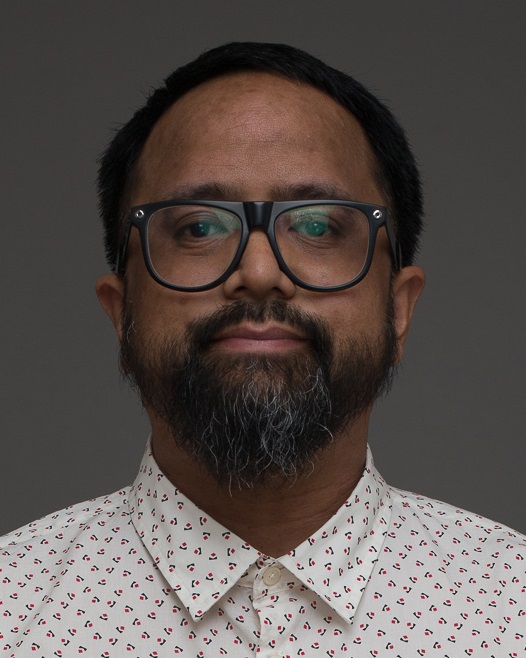
I am an English professor at the California State University San Bernardino. I teach :
- ENG 318: Intro to Creative Writing: Fiction
- ENG 418: Intermediate Creative Writing: Fiction
- ENG 508: Advanced Creative Writing: Fiction
- ENG 513: Advanced Creative Writing in Specialized Genres
- ENG 170: Studies in Literature
For the past nine years or so, I have been fortunate to teach across and through the disciplines. I have been afforded the opportunity to work with students in both critical and creative contexts. I have been humbled by the opportunity to work with students of varying abilities, preparedness, and objectives. During any given term, I teach courses in English, Literature, Writing, Ethnic Studies, Visual Studies, Communication, Sociology, and Theatre Arts and Performance; topics of my courses range from Asian/American Cultural Politics to Performance Studies to Fiction Writing to Poetry to Hip Hop Culture to African/American and Filipino/American Literature to Critical Pedagogy. On top of such an expanse of topics, I teach in the context of the community college, the public and private university, and the art school. I am, for lack of a better title, an artist-scholar. And, I teach as an artist-scholar.
My work in the classroom is informed by the students who inhabit my classroom, the students who are absent and kept, for many reasons social, political, and economic, from my classroom. My work in the classroom is informed by the teachings of Paulo Freire, Augusto Boal, Thich Nhat Hanh, and bell hooks. I have designed and taught praxis-based, service-learning creative writing courses in Ethnic Studies, Theatre, and English that sample methods from June Jordan's Poetry for the People, Augusto Boal's Theatre of the Oppressed, and Youth Speaks. These courses prepare students to write and reflect on their own creative work and to eventually empower and teach creative writing to local youth. It is through these types of praxis-based, service-learning courses that I hope to offer students the collaborative, interdisciplinary space to grow as writers, critical thinkers, and responsible members of their communities.
Because I facilitate various types of courses for dramatically different student populations I am challenged to experiment with form and style, with environment and activity. I try my best to follow a problem-posing educational model; however, I often encounter students resistant to 'new' ways of learning. Thus, while I consistently invite students to teach and lead discussions, I also rely on traditional methods of lecture and seminar. I attempt to nourish the entire learner, which means every segment of the term and even every segment of the daily class period requires a different teaching strategy. Irrespective of content, I engage students in creative writing exercises, Theatre of the Oppressed games, fishbowl discussions, panel discussions, debates, and journal-writing. I introduce my students to what the Buddhist philosopher and activist Thich Nhat Hanh calls 'deep listening.' If learning can be a mindful, fully conscious act, physically and intellectually, then it can be transformative. It is my intention to invite students to labor for a critical, accessible, anti-racist, anti-sexist, anti-classist, anti-heterosexist, people-first, community-sensitive, educational experience, and hopefully, to later urge them to rethink such a labor in terms of the larger society.
Admittedly, this physical and intellectual labor is exhausting. So, after my students and I do all of our in-class learning and then take trips to museums to interrogate the institution’s role in the production of knowledge, after we hop on the trolley to downtown San Diego to gather the concerns of the community, after we document those concerns through poems and essays, after we pay homage and a visit to Chicano Park in order to understand and develop theoretical frameworks for arts activism, after we sign up for library cards at the public library, after we serve as writing mentors to local high school and elementary school students, we just might collapse, we might stop reading, stop responding to questions, stop teaching each other, and stop learning altogether. But I trust we will and can never stop.
Although my classes are very demanding, I am mindful of and patient with my students. I value first and foremost the personal narrative as the foundation for critical thinking and critical thinking as the foundation for critical social transformation. I encourage every student to practice voice, to restore and to rehearse a unique sense of human agency. And so, while not every student I have encountered has responded positively nor enthusiastically to what I have 'taught' them, most students do appreciate me for being genuine, for being honest, for keeping it real. I am always well aware of my subject position as a teacher. And I am always well aware of the limitations, but most importantly, the inherent possibilities, of standardized learning objectives. I aim to teach my students to meet and exceed such objectives. Each class, I reveal my insecurities and fears through and through and I expect nothing less from my students. Through our shared vulnerabilities, our impassioned intellectual exchange, and our accountability to each other's learning, it is my hope that we might all come to know and understand and believe that our every collective endeavor can be for healing, imagining, and transforming our social realities.
My research interests include Fiction Writing, Creative Writing Studies, Critical Ethnic Studies, Performance Studies.