
General Chemistry 2e: Atomic Structure and Chemical Bonding
General Chemistry 2e: Atomic Structure and Chemical Bonding
Chemistry 2e
CSU Instructor Open Textbook Adoption Portrait
Abstract: This open textbook is being utilized in a chemistry course for undergraduate students by Larry Mink, Ph.D., at California State University, San Bernardino. The open source textbook Openstax College Chemistry is at the appropriate level for a science major course in general chemistry. The main motivation to adopt an open textbook was because the online version is free for students. Most students access the open textbook directly online.
About the Textbook
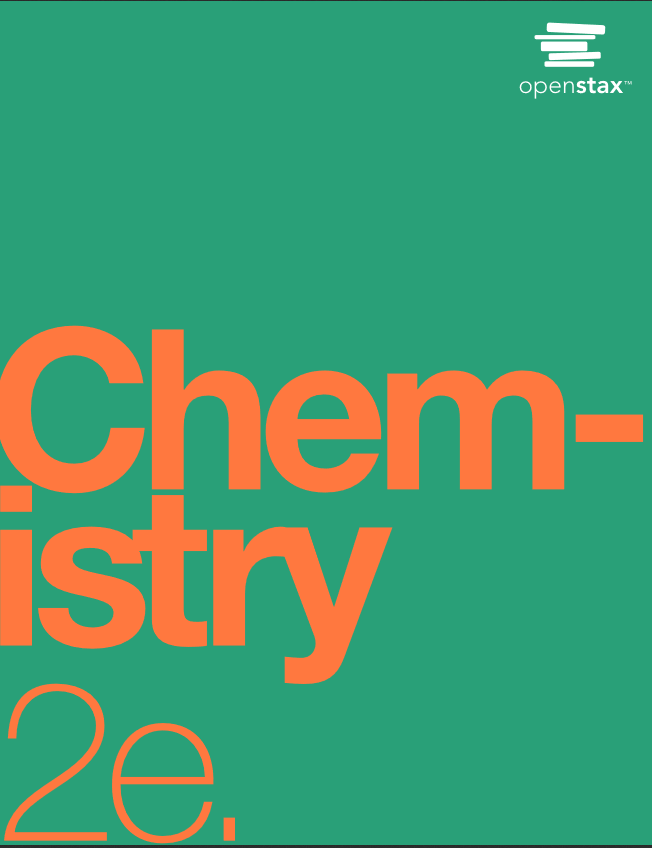
Description:
Chemistry is designed to meet the scope and sequence requirements of the two-semester general chemistry course. The textbook provides an important opportunity for students to learn the core concepts of chemistry and understand how those concepts apply to their lives and the world around them. The book also includes a number of innovative features, including interactive exercises and real-world applications, designed to enhance student learning.
The open source textbook Openstax college chemistry is at the appropriate level for a science major course in general chemistry:
- It has very good figures.
- It has good problems at the end of each chapter.
- It is visually pleasing to look at.
- In general, it is a well formatted general chemistry textbook.
Authors:
- Paul Flowers - University of North Carolina at Pembroke
- Klaus Theopold - University of Delaware
- Richard Langley - Stephen F. Austin State University
- William R. Robinson - PhD
Formats:
The book can be read directly online or downloaded as a PDF or on Kindle. It can also be purchased as a print copy ($55).
Supplemental resources:
I also use related the Adaptive Learning online homework sets from Smart Sparrow.
Student resources are also available on the Openstax site, including a Getting Started Guide and a Solution Manual.
The following resources are also available on the Openstax site for faculty: PowerPoint slides, Enhanced Lecture Slides, Instructor Solutions Manual, Supplemental Test Items, a Sample Syllabus and other links.
Cost savings:
The book I previously used for this course is Chemistry: The Science in Context by Thomas R. Gilbert and Rein V. Kirss (Fourth Edition), which retails from Norton for $170. Since I teach this course to 560 students on an annual basis, the total potential savings for students is $95,200.
Accessibility and diversity statement:
According to the OpenStax website, "Our goal is to ensure that all OpenStax websites and the web view versions of our learning materials follow accessible web design best practices, so that they will meet the W3C-WAI Web Content Accessibility Guidelines (WCAG) 2.0 at Level AA and Section 508 of the Rehabilitation Act. The WCAG 2.0 guidelines explain ways to make web content more accessible for people with disabilities and more user-friendly for everyone."
License:
Chemistry by OpenStax is licensed under Creative Commons Attribution License v4.0. This means you can copy and redistribute the material in any medium or format and remix, transform, and build upon the material for any purpose, even commercially. You must give appropriate credit, provide a link to the license, and indicate if changes were made. You may do so in any reasonable manner, but not in any way that suggests the licensor endorses you or your use.

About the Course
This book is used in a sequenced class over two semesters.
CHEM 215: General Chemistry I: Atomic Structure and Chemical Bonding
Description: Stoichiometry, atomic and molecular structure, chemical bonding, states of matter and solutions. Designed primarily for the student majoring in the biological or physical sciences.
Prerequisites: Completion of, or concurrent enrollment in MATH 110, MATH 111B, MATH 112C, MATH 120, MATH 192, MATH 211, or MATH 212
GE credit: 6 units
Learning outcomes:
The following are general outcomes:
- Students will understand the general principles of chemistry.
- They will be able to compare and contrast physical properties and chemical reactivity from molecular structure.
- They will be able to perform standard stoichiometric, and solution calculations.
- Students will demonstrate knowledge of the common reactions of elements and compounds, including oxidation-reduction, neutralization, and precipitation reactions.
CHEM 216: General Chemistry II: Principles of Chemical Reactions.
Description:
Chemical kinetics and equilibrium, thermodynamics, redox reactions and electrochemistry, and topics in inorganic, organic, biological and environmental chemistry.
Prerequisites: CHEM 215 with a grade of C or better
Learning outcomes: The following are general outcomes:
- Students will explain the general principles of chemistry.
- They will discuss the basic principles associated with Thermodynamics, Chemical Kinetics, Chemical Equilibrium, Acid-Base Reactions, Buffer Solutions, Titrations, and Electrochemistry.
- They will be able to perform standard stoichiometric, and solution calculations pertaining to the topics listed.
Curricular changes: The following changes were made to the course when using this book:
- Introduced POGIL learning environment into our discussion sections
- Used S.I. instructors in our lectures
- Adopted Sapling Learning online homework system
- Developing Adaptive Learning study modules using Smart Sparrow platform.
Teaching and learning impacts:
Collaborate more with other faculty: Yes
Use wider range of materials: Yes
Student learning improved: Yes
Student retention improved: Unsure
Any unexpected results: Yes
I am collaborating weekly with another faculty member in the development of Adaptive Learning Modules.
Use POGIL material, online homework system, and now adaptive learning modules.
Grades of “D” “F” or Withdrawal have decreased from 30% to 20%.
Students prefer electronic textbook rather than printed versions.
Sample assignments and syllabi:
Assignment This is one of the weekly assignments that were given in the course.
Syllabus 2 This is the syllabus I used for CHM 216 for Spring 2017
Syllabus 1 This is the syllabus I used for CHM 215 in Fall 2017.
Textbook Adoption
OER Adoption Process
During the CSU CRT summer institute 2015, I was selected to review some of the chemistry textbooks. I selected this one because it is good and the electronic version is free to the students. In the case of the online homework set one problem was being sure all students were able to access it, due to it being flash based.
Student access: Students are able to access the textbook using any electronic device they have.
Student feedback or participation: The following are comments some students have made (many sics):
- We were assigned the openstax chemistry book but it is not necessary to understand the lecture.
- It had really good information and explained the info. well.
- Your lecture is very direct making it easy to understand the course and referenced the textbook from openstax slightly. Best lecture.
- Great book. Love the fact it was free.
- I find the practice problems at the end helpful for the mid-terms. Gives extra practice with the calculations.
- It was always available when we needed it. It was awesome that it was free since we did have to pay for the online H.W. program.
- The book sometimes helps. But I prefer the professors prospective for clear understanding.
- Great textbook and it was free. Doesn’t get any better then that.
- Electronic is better then the hard copy because it is free and same material.
- A whole lot cheaper!
- Very helpful.
- Its nice having a free book for once. Very thing is so expensive and it’s a nice change to not have to buy a book for a ridiculous amount of money.
- Love openstaxs! Especially because it is free…. But also because it is easy to read unlike other books.
- Access the textbook readily available, extremely helpful financially.
- Very nice to save money.
- Thank you for not making us buy a textbook.
- The notes and homework are great help. The book makes things confusing.
- I prefer having a hard copy of the materials used and studied in class.
- Its o.k relying on online materials but I prefer hard copies.
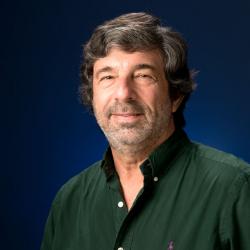
I am a chemistry professor at the California State University, San Bernardino. I have taught the general chemistry sequence for chemistry majors (215-216), the general education chemistry course for non-science majors (100), and the general education course in the Science and Technology area for non-science majors (105), as well as upper division inorganic chemistry (475), and labs in organic chemistry and liberal studies chemistry.
I have revised and created chemistry coursework, laboratory manuals, and experiments to provide students with the most up-to-date, accurate, and accessible information. I have taught a variety of chemistry courses that span a range of learner levels and degree requirements, including large lectures, small seminars, and laboratory courses.
My present research involves the synthesis and study of platinum and palladium porphryn systems as potential catalysts and as solar energy traps. Nuclear Magnetic Resonance spectroscopy has been the central investigative technique in my research.