
Marine Survival: DL 105
Marine Survival: DL 105
Selected Open Educational Resources
CSU Instructor Open Textbook Adoption Portrait
Abstract: These open teaching materials are being utilized in a Marine Survival course for undergraduate students by Captain Britt T. Elliott, B.S., at California Maritime Academy. The open teaching materials provide students with up to date PowerPoints and videos and computer-based training, (CBT). The main motivation to adopt these materials is that the majority of US Marine Transportation textbooks are completely out of date. I could not justify to my students or myself to buy various titles to cover the subject matter. Most students access the open materials in CBT or Moodle.
About the OERs
Resources Used:
- I have created my own lectures and PowerPoints, have posted them on Moodle and am sharing them with my peers.
- If you would like copies of the PowerPoints, please contact the author and they will be provided with Dropbox.
- I have also uploaded my own videos on YouTube as well as scouring their videos which I have linked to Moodle. You can view those videos here.
Supplemental resources:
- Computer Based Training, (CBT), is a common way to provide standardized training to a ship’s crews. The CBT System I used is NVOD. NVOD was only available in class, so a quick viewing was then followed by classroom discussion.
Cost Savings:
Previously I assigned two books: Water Survival Manual ($20) and Deck Officers Study Guide #7 ($42). This year I had 180 students for a potential cost savings of $11,160.
About the Course
DL105: Marine Survival
Description:
This course prepares the student for the U.S. Coast Guard Lifeboatman’s Endorsement. Students must pass this class with a C- or higher to qualify to take the Coast Guard Lifeboatman’s exam. This class conforms to the STCW Requirements for personal survival training as well as components of the social responsibility requirement. Students will be instructed in the preparation, embarkation, and launching of survival craft and will become familiar with the correct use of all survival equipment, as well as the proper actions to take to preserve the lives of those in their charge.
Prerequisite(s): Must pass PE 101 or PE 102
Co-requisite(s): DL 105L
GE credit: 1 unit
Learning outcomes:
Students will be able to understand international standards relating to the following:
- Describe types of emergency situations
- Describe lifesaving appliances
- Describe types and use of survival craft
- List locations of personal lifesaving appliances
- State the value of training and drills
- Describe the use of personal protective clothing
- Need to be ready for any emergency
- Response to abandon ship signal
- Actions to be taken when requested to abandoned ship
- Actions to be taken when survival craft is in the water
- Actions to be taken when a person is in the water
- Actions to be taken when aboard a survival craft
- List main dangers to survivors
Curricular changes:
Topics are determined by the US Coast Guard as mandated by the International Maritime Organization. I was able to use more videos, either of my own or searching on the internet.
Teaching and learning impacts:
Collaborate more with other faculty: Yes
Use wider range of teaching materials: Yes
Student learning improved: Unsure
Student retention improved: Unsure
Any unexpected results: Not yet
I definitely collaborated more with other faculties as I sought subject matter experts. I asked simulator faculty for help in generating videos and clips that I could play in class. PPTs, videos, and lectures seemed to hold the students' attention.
Sample syllabus:
Syllabus
This is the syllabus I used for the Spring 2018 course.
OER Adoption
OER Adoption Process
Many of the books covering my topics are expensive and obsolete. I cannot justify having students spend money on books when only certain chapters have any value.
I could not find any open source books that cover this topic; therefore, I redesigned the course to make use of campus LMS, (Moodle). The content includes my own writings, PowerPoints, videos, and a link to my YouTube channel.
We lost our support person so it’s a little more difficult to develop content. I still cannot share the entire course contents outside of the campus. I have used Google Docs to share content with instructors outside the university.
Student access:
Currently, the campus is using Moodle. Topics, content, grades, and calendar are all posted and updated regularly. Students are not required to print anything.
Student feedback or participation:
This is the first semester of offering this course. In other courses, the students liked the organization and flow of using multiple open resources.
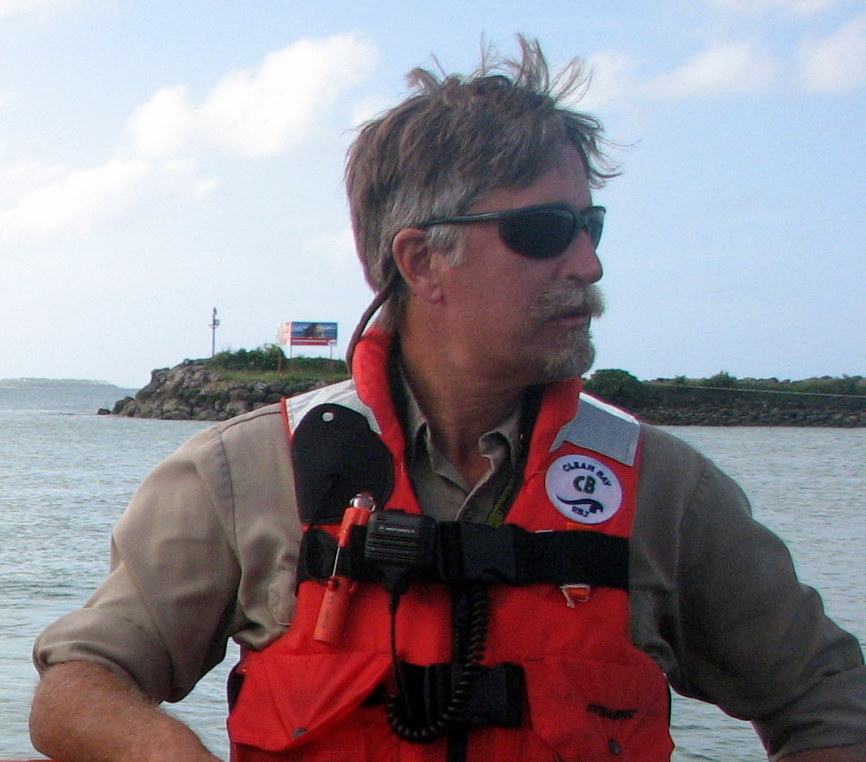
I am a Marine Vocational Instructor at the California Maritime Academy.
I teach:
- Marine Survival and lab
- Seamanship
- Tug and Barge
- Bridge Simulation.
I am a licensed captain and have worked in the industry that our program prepares students for. I want to give the students the technical skills, the hands-on skills as well as the personal skills to ready them for a dynamic industry.