Psychology 422: Advanced Seminar in Clinical
Psychology 422: Advanced Seminar in Clinical
Various Resources
CSU Instructor Open Textbook Adoption Portrait
Abstract: These journal articles are being utilized in a Clinical Psychology course for undergraduate psychology majors by Stacy Forcino, Ph.D., at California State University, San Bernardino. The articles provide an overview of major topic areas in clinical psychology The main motivation to use these resources was to save students money. Most students access the journal articles through the LMS, Blackboard.
COOLforED is a service of the California State University-MERLOT program.
Partial funding provided by the State of California, the William and Flora Hewlett Foundation,
and the Bill and Melinda Gates Foundation.
Questions? Email cool4ed@cdl.edu
About Resources
Various Resources
Description:
I used journal articles that were available through our library’s subscriptions, as well as several chapters of a book that was available via Proquest. The book is by Thomas G. Plante, Contemporary Clinical Psychology.
The journal articles provide an overview of major topic areas in clinical psychology (e.g., ethics, assessment, treatment, cultural diversity, outcomes/termination); some are literature reviews and some are empirical studies. A list of them is accessible by the link at the bottom of this box.
Authors:
- Various Authors
Formats:
The articles were posted in Blackboard.
Supplemental resources:
None
Cost savings:
I previously used Clinical Psychology, 8th edition by Timothy J. Trull and Mitch Prinstein. This book retails for $266.57 on Amazon. Since I teach about 28 students each year, this is a potential saving for students of $7,463.96.
This is a list of the journal articles and other resources I used for the class.
License:
The book has a normal U.S. copyright while there are various licenses in the article.
About the Course
PSYC 422: Advanced Seminar in Psychology: Clinical
Description:
Contemporary topics in clinical psychology, such as integrative treatment approaches, outcome research, psychopathology, adaptation and coping, health promotion, cultural factors in diagnosis and treatment, and common factors in effective treatment such as the working alliance and other relationship factors. Students will develop an advanced project.
Psychology majors must take an experimental or clinical seminar course to earn a B.A. in Psychology and this course fulfills that requirement. Most students are juniors or seniors who are majoring in Psychology. They have typically taken a number of psychology courses already and must have already taken Introduction to Experimental Methods, Introduction to Psychotherapy, and Abnormal Psychology.
Prerequisites: PSYC 311, PSYC 386, and PSYC 390
Credits: 4 units
Learning outcomes:
At the end of the course students should have a basic understanding of how a clinical psychologist approaches a clinical case. This includes being able to
- Outline the basics of case conceptualization,
- Hypothesize about the etiology of psychological problems and probable diagnoses,
- Consider a case from a particular theoretical orientation,
- Understand cultural diversity factors that may impact assessment and treatment,
- Understand how basic ethical and legal considerations in clinical cases,
- Find and apply empirical evidence to make decisions about assessment, treatment, and outcomes measurement.
Curricular changes:
With using journal articles, the course content was more focused on empirical research.
Teaching and learning impacts:
Collaborate more with other faculty: Unsure
Use wider range of materials: Yes
Student learning improved: Yes
Student retention improved: Yes
Any unexpected results: Unsure
I found additional resources online
Students were engaged with the materials
Students were engaged with the materials for more active learning
Sample syllabus and assignment:
Syllabus
This is the syllabus I used for Winter 2019.
Assignment
This is a case presentation assignment for the class.
OER Adoption
OER Adoption Process
My main motivation for using these resources was to save students money. I searched PsychInfo for articles pertaining to the topic that we had full-text access to. I also asked colleagues for ideas. Some articles I had used for other classes or knew about through my own professional development/reading.
Student access:
Students access the articles on Blackboard and can download them as PDFs.
Student feedback or participation:
Students were grateful for the reduced costs.
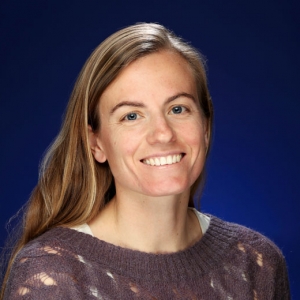
I am a Psychology professor at California State University, San Bernardino. I teach clinical psychology-related courses for our undergraduate program and our masters in clinical/counseling psychology program. Specifically:
- PSYC 101: Introduction to Psychology
- PSYC 422: Advanced Seminar in Psychology
- PSYC 386: Introduction to Psychotherapy
- PSYC 350: Development of Exceptional Children
- PSYC 391: Child Psychopathology
- PSYC 422: Advanced Seminar in Psychology: Clinical
- PSYC 673: Marriage and Family Therapy Skills III
- PSYC 687: Marriage and Family Therapy Practicum
- PSYC 697: Advanced Practicum in Counseling Psychology
My teaching philosophy is best summarized by four goals:
- facilitate student engagement in course content,
- emphasize the fundamentals of learning and professional success,
- increase students’ critical thinking and scientific literacy, and
- foster a supportive environment.
I am interested in the treatment of psychological disorders of childhood (e.g., Oppositional Defiant Disorder, Attention-Deficit/Hyperactivity Disorder, Sleep Disorders, Enuresis/Encopresis), as well as effective solutions to more common problems of childhood (e.g., sibling conflict, noncompliance, bedtime problems, and difficulty with toilet training). Many of the therapeutic interventions I use rely on parents implementing specific behavioral interventions in the home. Therefore, I am also interested in how to best train parents and factors that affect treatment adherence and efficacy.