
Measurement and Statistics in Kinesiology Home
Measurement and Statistics in Kinesiology Home
Introductory Statistics
CSU Instructor Open Textbook Adoption Portrait
Abstract: This open textbook is being utilized in a Kinesiology course for undergraduate students by Hosung So, Ph.D. at California State University, San Bernardino. The open textbook follows the scope and sequence requirements of a one-semester introduction to statistics course. The main motivation to adopt an open textbook was to save students money. Most students access the open textbook at the OpenStax site. Reviews: The book has been reviewed by a CSU faculty, a CCC faculty and one UC faculty member from within the California higher education system.
About the Textbook
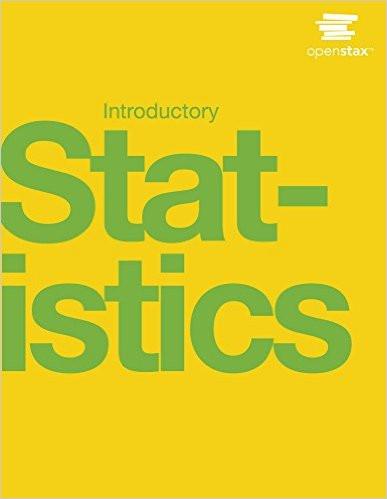
Description:
This introductory one-semester textbook is geared towards students who are not majoring in math and science and focuses on the applications of statistical knowledge rather than the theory behind it. The foundation of this textbook is Collaborative Statistics, by Barbara Illowsky and Susan Dean, which has been widely adopted. This new version has enhancements in artwork, terminology, and practical applications to enhance the relevance and accessibility for students. The text also includes collaborative exercises, integration with TI-83, 83, 84 calculators, technology integration problems, and statistics labs.
“Introductory Statistics follows the scope and sequence requirements of a one-semester introduction to statistics course. The text includes knowledge of intermediate algebra and focuses on statistics application over theory. Introductory Statistics includes innovative practical applications that make the text relevant and accessible, as well as collaborative exercises, technology integration problems, and statistics labs.
Authors:
- Susan Dean, De Anza College, California
- Barbara Illowsky, De Anza College, California
Formats: Students can find and use this textbook from Openstax website and download the textbook in a PDF format that provides easy access. It is also available as an iBook, Kindle, and BookShare. If students prefer an actual printed book, it can be ordered for $56.25.
Supplemental resources: OpenStax has a "Getting Started Guide" for students and various resources for instructors including a Getting Started Guide, PowerPoint slides, and a Solutions Manual.
Peer reviews: The book has been reviewed by a CSU faculty, a CCC faculty and one UC faculty member from within the California higher education system. There is also an Accessibility Evaluation review.
Cost savings: I previously used Measurement and Evaluation in Human Performance, by Morrow, J.R., Jackson, A.W., Disch, J.G., & Mood, D.P, which retails for $86.42 on Amazon. Since I teach this course to about 140 students annually, this is a potential yearly saving for students of $12,098.80.
Accessibility and diversity statement: In this book, different technologies and document formats offer varying levels of accessibility and ease of access for all students. All materials provide different formats, such as HTML, Office Documents, and PDF for students to be able to access. First, HTML and its related technologies, like XHTML and CSS, offer the most flexibility in terms of support on different devices and platforms and support for a student with disabilities. Second, PDF files are popular because they give the instructor exact control over the look and feel of a document, regardless of the platform on which the end user is viewing the content. In addition, there are numerous PDF creation tools that integrate with almost any application. Third, Office documents vary in terms of how much accessibility support they provide. Documents such as Microsoft Office documents can be made quite accessible. There are techniques to provide semantic structure to the pages, like headings, and to also add in extra accessibility information, like alternative textual descriptions, when needed.
This textbook has many examples with different academic disciplines, ethnic and gender data, and diverse cultural examples and data.
About the Course
KINE 370: Measurement and Statistics in Kinesiology
Description: Selection, application, and interpretation of evaluative measures used in pedagogical and in exercise science settings. Includes both descriptive and inferential statistics. Specific attention will be given to parametric techniques.
This is a required course for all Kinesiology majors, including sport pedagogy, exercise sciences, and allied health profession concentrations.
Prerequisites: Prerequisites: completion of the general education requirement in mathematics
Credit: 4 units
Learning outcomes: The students will be able to:
- Measure the main components of physical fitness and human performance in the field (data collection)
- Evaluate the main components involved in physical education, physical fitness, and human performance in the field (data analysis and evaluation).
- Manipulate, edit, and generally manage data generated in a field setting, including, but not limited to, measuring systems, reliability, validity, and components of physical fitness (data interpretation and evaluation).
- Understand reasons to choose specific assessment methods, how to use these tools, and how to share the results of these assessments (measurement and assessment), including descriptive and inferential statistics.
Curricular changes:
A Class Note has been created for this class that includes important concepts and theories in statistics. This Class Note is posted in course blackboard both in PDF and Word document.
Teaching and learning impacts:
Collaborate more with others: Unsure
Use wider range of materials: Yes
Student learning improved: Yes
Student retention improved: Yes
Any unexpected results: No
Students can use a free textbook in pdf format and class notes that highlight important statistical concepts. This textbook has lots of examples and practice items for students to solve problems using statistical concepts.
Test scores compared to the previous two years have been improved and student engagement in class is increased. I'm sure the textbook has helped students in preparation and study for the lectures and tests.
Class attendance has been increased and the course drop has zero. I started with 34 students and still have 33 active students! I usually have 3-4 students who dropped in the middle of the quarter. Unfortunately, I have one student who doesn't attend the class due to his severe knee surgery.
Sample syllabus and assignment:
Syllabus This is the syllabus I used for Spring 2019.
Assignment This is an assignment I've given for a literature review.
Class Notes These are the Class Notes I prepared for the first 5 weeks.
License:
Except where otherwise noted, Introductory Statistics by OpenStax College is licensed under a Creative Commons Attribution 3.0 Unported License. This license lets others distribute, remix, tweak, and build upon the work, even commercially, as long as they credit the author for the original creation. This is the most accommodating of licenses offered. Recommended for maximum dissemination and use of licensed materials.
Textbook Adoption
OER Adoption Process
The reason I chose this textbook is to save students’ money with free access and download. I found it by searching the MERLOT website.
This Openstax textbook provides limited powerpoint slides for the lecture. The site provides chapter powerpoint slides for Chapters 1-8 under "Powerpoint slides" menu button. Chapters 9, 10, 11, 12, and 13 are not included. However, recent updates show Chapters 9 and 12 included under "OER Commons Hub Resources". The ppts for the most important topics covered in this class are unavailable (3 chapters: Chi-Square, t-test, and ANOVAs). The contents of chapter ppt slides simply include figures and tables included in the textbook. For this reason, I don't use the ppt slides in class.
In addition, this textbook covers descriptive, correlation and regression, and some inferential statistics which might be appropriate for an undergraduate course. However, it might not be enough for a graduate course.
Faculty OER and adopting the Openstax textbook has been effective in student learning as well as teaching the course. 100% of students in the class have the textbook (both PDF and HTML) which can be open and studied anywhere and anytime using a computer, laptop, tablet, and/or mobile phone.
Student access: Students can find and use this textbook from Openstax website and download the textbook in PDF format.
Student feedback or participation: I decided to tape some student comments. The following are short videos:
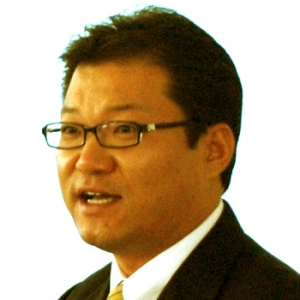
Kinesiology professor at Calif State Univ, San Bernardino. I teach:
- KINE261B Professional Preparation for Badminton
- KINE261M Professional Preparation for Martial Arts
- KINE333 Applied Behavior Management
- KINE352 Movement for Children
- KINE370 Measurement and Statistics in Kinesiology
- KINE472 Program Design in Physical Education
- KINE473 Instructional Strategies for Physical Education
Sport Pedagogy program is designed to educate future physical education teachers who will be teaching physical activities for children in school. Students in school must be encouraged to invent their own solutions to problems through creative thinking and discovery. It is the responsibility of an educator to challenge students and encourage their exploration of knowledge while providing the tools for them to become confident learners. The purpose of physical education is to provide health-related and skill-related fitness concepts and skills in order to create an environment that promotes the development of life-long learners. Physical Education Teacher Education (PETE) students will be provided with the necessary tools to make good decisions regarding all components of their teaching and lessons. The physical education program content will focus on skill development which will address the California Common Core Curriculum Content Standards. Students will then implement learned stability, locomotor, non-locomotor and manipulative skills while participating in modified individual, dual, and team sports games. Multiple teaching strategies will be incorporated into the program in order to address students’ diverse learning styles. Students will be formally and informally assessed in the cognitive, psychomotor and affective domains using skill tests, rubrics, checklists and written evaluations. A productive, motivational and informative learning environment will be created for students by implementing a curriculum that is developmentally appropriate, skill-related, progressive, challenging and enjoyable.
My research has focused on
- (a) physical activity and self-esteem,
- (2) psycho-social aspects of physical activity, and
- (3) physical education teacher education (K-12).