
Administrative Communication: MGMT 350
Administrative Communication: MGMT 350
Stand Up, Speak Out: The Practice and Ethics of Public Speaking
CSU Instructor Open Textbook Adoption Portrait
Abstract: This open textbook is being utilized in a Management course for undergraduate business students by Maggie Boyraz, Ph.D. at the California State University San Bernardino. The open textbook first focuses on helping students become more seasoned and polished public speakers, and second is its emphasis on ethics in communication. The main motivation to adopt an open textbook was to save students money. Most students access the open textbook online or as a PDF.
Reviews: The book has been reviewed by faculty from within the three segments (CCC, CSU, and UC) of the California higher education systems.
About the Textbook
 Stand up, Speak out: The Practice and Ethics of Public Speaking
Description:
Stand up, Speak out: The Practice and Ethics of Public Speaking features two key themes. First, it focuses on helping students become more seasoned and polished public speakers, and second is its emphasis on ethics in communication. It is this practical approach and integrated ethical coverage that sets Stand up, Speak out: The Practice and Ethics of Public Speaking apart from the other texts in this market.
This is a free textbook that seems to be an edition that did not go through final editing (it has typographical errors, for example).
Author:
Formats:
This textbook is available to read online as well as in multiple formats, including ePub, PDF MOBI, Pressbooks XML, and OpenDocument.
Peer reviews:
The book has been reviewed by faculty from within the three segments (CCC, CSU, and UC) of the California higher education systems.
Cost savings:
I previously used Speak Up: An Illustrated Guide to Public Speaking, by Douglas M. Fraleigh, which retails on Amazon for $145.22. Since I teach this class to about 120 students annually, this is a potential saving for students of $17,426.40.
Accessibility and diversity statement:
The book has two Accessibility Evaluations from faculty: Report 1 and Report 2.
The textbook is created for an undergraduate student audience from different backgrounds but does not specifically address the cultural, ethnic, and gender backgrounds.
License:
This text was adapted under a Creative Commons Attribution-NonCommercial-ShareAlike 3.0 License without attribution as requested by the work’s original creator or licensee. This means You are free to copy and redistribute the material in any medium or format and remix, transform, and build upon the material. If you remix, transform, or build upon the material, you must distribute your contributions under the same license as the original. You may not use the material for commercial purposes.

About the Course
MGMT 350: Administrative Communications
Description:
Introduction to communication theory. Concepts, analysis, and methods of improvement for interpersonal communication, communication within organizations and communication between organizations and their external environments.
All students must have the prerequisite completed. They are usually Juniors or Seniors majoring in Business Administration but with different concentrations (Management, Finance, Accounting, etc.). Students are very diverse ethnically, majority Hispanic. Most students’ writing and speaking skills need a lot of improvement.
Prerequisites: MGMT 306: Expository Writing for Administration
GE credit: 4 units
Learning outcomes:
- To develop an understanding of foundational theories of communication.
- To explore how to effectively communicate business-related topics in an interesting manner so coworkers will be engaged and listen attentively.
- To explore how to write and present with audience and purpose in mind.
- To learn how to effectively and ethically communicate in writing for business purposes; how to write to a specific audience using the appropriate tone, correct grammar and mechanics the art of persuasion and communicating purposeful items in the workplace including, but not limited to: Learn to prepare informative and persuasive business presentations using visuals and multi-media and utilizing Monroe Sequence or Problem-Cause-Solution techniques
- Bad news messages
- Framing resumes for a particular position
- Learn to constructively critique others in a professional manner both verbally and in writing
- Learn techniques for communicating in small groups that will contribute to their professional success.
Curricular changes:
I have had to create quiz questions and slides based on the new textbook because these resources are not available (there are limited quiz questions in the book only) from the open source textbook. I use technology to record students’ speeches and to provide feedback (free to students, the College of Business pays for the license). GoReact is now integrated into Blackboard, so it is easy to use.
Teaching and learning impacts:
Collaborate more with other faculty: No
Use wider range of materials: No
Student learning improved: Unsure
Student retention improved: Unsure
Any unexpected results: Unsure
Sample syllabus and assignment:
Syllabus
This is the syllabus I used for Spring 2019.
Assignment
This is a sample assignment for a speech.
Grading Rubric
This is the critique sheet I use for each of the speeches.
Textbook Adoption
OER Adoption Process
The main reason for adopting the textbook is to save students money. I wanted to make sure that more students have access to at least some of the information that was available in the version of the textbook implemented before.
I found this textbook by browsing OER sites and evaluating different sources. Challenges were that there were typographical errors in the free textbook and there is a lack of instructor support materials.
Supplemental resources:
- Public Speaking Foundations - This is a Lynda course, which is available for free from CSUSB. I play the first part in class and ask students to watch the rest.
- Good Presentation VS Bad Presentation
- Monroe's Motivated Sequence
Student access:
Students can download their preferred version here:
Student feedback or participation:
In an informal, brief survey, some students expressed gratitude that they can access a free textbook. Specific comments include:
- The Speak Out book is great and I am amazed that it is free. It is easy to navigate and read.
- The book has introduced new concepts to me that I believe I lacked on. I have actually used notes from this book to do another presentation in another class.
- I prefer this book because it is free and I like that I am able to download it and customize it to myself by highlighting
- The fact that it is free is the best part and it’s also a good read. The chapters never seem too long and I like the separation within the chapters too
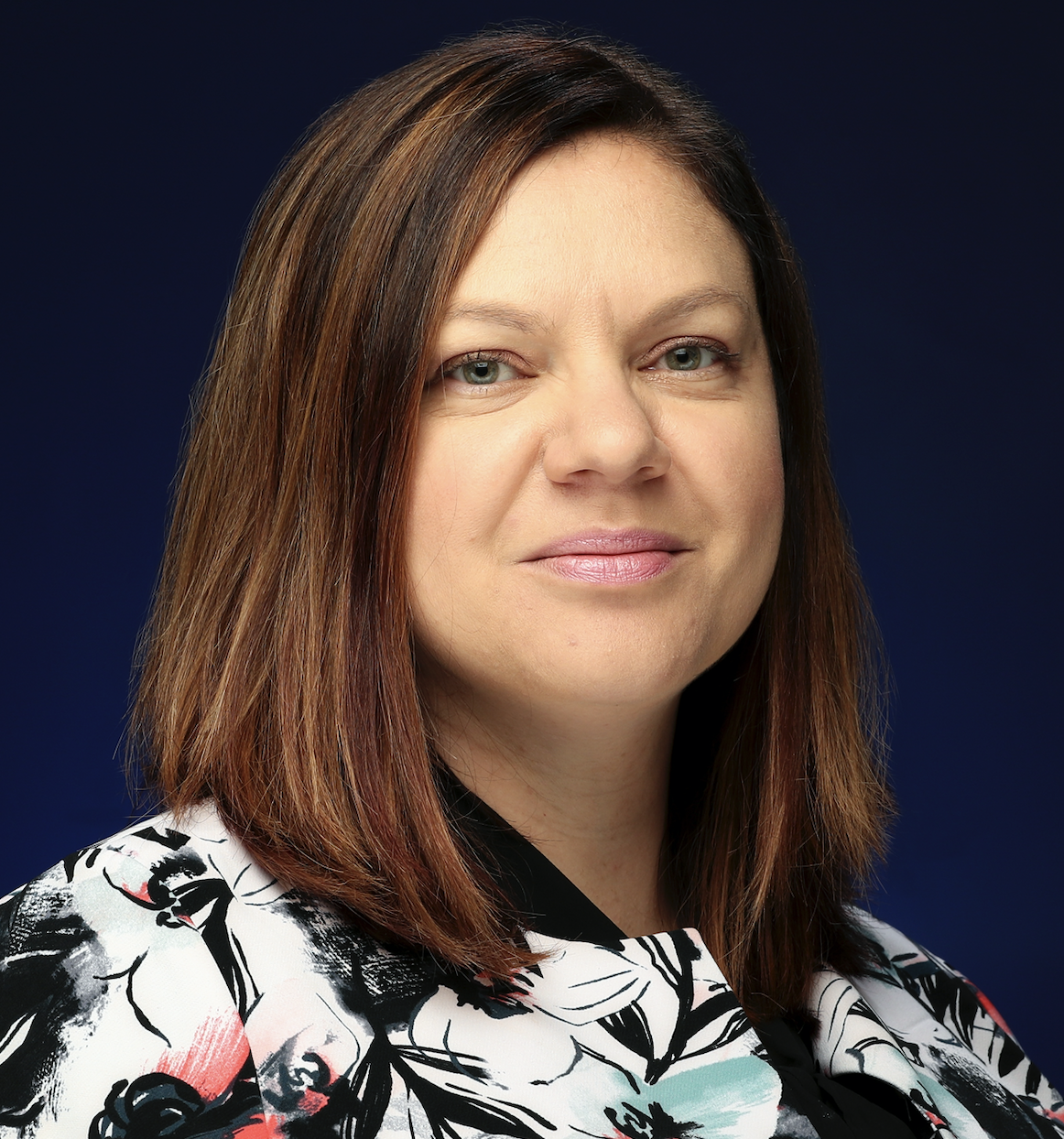
I am a Management professor at the California State University San Bernardino.
I teach:
- MGMT 350 - Administrative Communication
- MGMT 459 - Work Group Management
- ADMN 602: Advanced Management Communication
My teaching philosophy is centered on building a two-way relationship between the professor and students based on dialogue and trust. My teaching philosophy can be summarized in two statements:
- building critical thinking skills is best learned through relevance to everyday life;
- best learning is achieved interactively.
Building critical thinking skills is best learned through relevance to everyday life. To me, helping students learn involves building their analytical and critical thinking skills. This involves much more than simply telling them information and testing them on it. I believe that students learn best by doing and have opportunities to see the connections between theory and practice. Practicing the ideas and engaging the students in the classroom is very important to me. In order to achieve this, I aim to stimulate interesting discussions in the classroom by incorporating experiential activities that allow students to engage with the theoretical concepts in order to elicit their insights. Usually, a mix of lecture and discussions as well as experiential activities seems to keep students engaged.
Best learning is achieved interactively. Creating a good learning atmosphere is important. It involves showing respect for individual students, engaging in verbal and nonverbal immediacy behaviors, learning the students' names and using them, approaching the course and each session in a positive manner. It also involves allowing the students to make choices, identifying what they do well first and what they could improve second, and doing my best to model good communication practices. Being fair is also important and includes making the learning goals and evaluation criteria clear and holding all students to those criteria. I understand that people learn better when they are involved in what they are learning, so I use interactive exercises and experiential learning methods when I can, and try to use a variety of methods of instruction (including clips from movies, NPR audio pieces or articles found in my Twitter feed) and relevant examples in each class. I find the variety works well in keeping students involved and attentive, and that students seem to get more out of their class experience when they can express themselves during the classes.
The following methods represent what I like to use in classroom teaching that match my teaching philosophy: interactive learning; group work and discussions; experiential, active learning, writing assignments and classroom discussions.
Although I utilize some quantitative assessments (e.g. quizzes and tests), students are also assessed using verbal and written assignments for which rubrics are used. I also utilize technology (videos, podcasts, Kahoot for formative assessments, Blackboard and GoReact) in the classroom in creative ways to accommodate different learning styles (i.e. visual, auditory). My teaching experience along with industry experience provide not only teaching examples but also credibility for teaching students to become better professionals.
My research interests lie in the impact of culture on processes and outcomes of global teams, as well as personal and organizational social media use. I have conducted research on interdisciplinary student and organizational teams in IT sector, preparation of students to work in team collaborations and on socialization into a geographically distributed organization.