
Educational Psychology
Educational Psychology
Educational Psychology
CSU Instructor Open Textbook Adoption Portrait
Abstract: This open textbook is being utilized in an Educational Psychology course for credential students by Kurt Kowalski, Ph.D. at California State University San Bernardino. The open textbook is a comprehensive educational psychology textbook that covers the general topics included in most texts and is relevant to teacher education. The main motivation to adopt an open textbook was to save students money. Most students access the open textbook from the Open Textbook Library.
About the Textbook
Description: 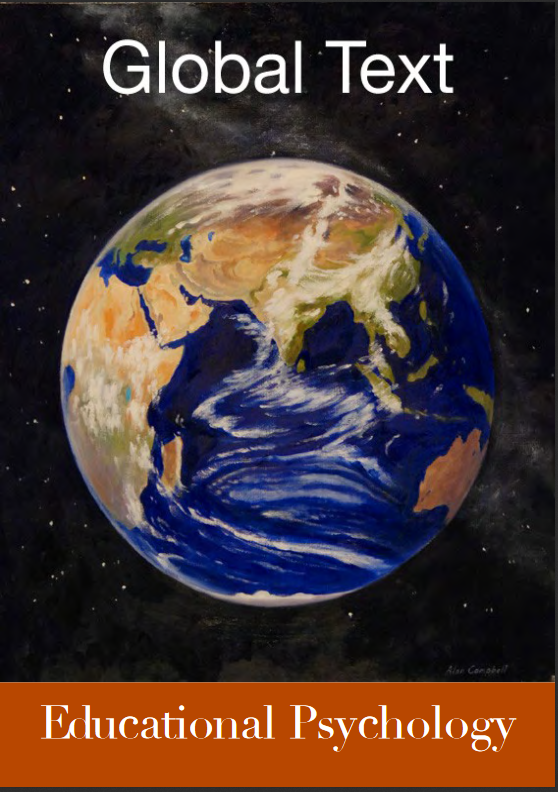
Chapters in the text can be assigned either from beginning to end, as with a conventional printed book, or they can be selected in some other sequence to meet the needs of particular students or classes. In general, the first half of the book focuses on broader questions and principles taken from psychology per se, and the second half focuses on somewhat more practical issues of teaching. But the division between “theory” and “practice” is only approximate; all parts of the book draw on research, theory, and practical wisdom wherever appropriate. Chapter 2 is about learning theory, and Chapter 3 is about development; but as we point out, these topics overlap with each other as well as with the concerns of daily teaching. Chapter 4 is about several forms of student diversity (what might be called individual differences in another context), and Chapter 5 is about one form of diversity that has become prominent in schools recently—students with disabilities. Chapter 6 is about motivation, a topic that is heavily studied by psychological researchers, but that also poses perennial challenges to classroom teachers.
Following these somewhat more basic psychological chapters, we turn to several lasting challenges of classroom life—challenges that seem to be an intrinsic part of the job. Chapter 7 offers ideas about classroom management; Chapter 8, ideas about communicating with students; Chapter 9, about ways to assist students' complex forms of thinking; and Chapter 10, about planning instruction systematically. The book closes with two chapters about the assessment of learning: Chapter 11 focuses on teachers' own efforts to assess students, and Chapter 12 focuses on standardized measures of assessment.
We have organized material and features in ways that we hope will allow for a variety of students, instructors, and institutions to use the book. For instructors and courses that seek a strong focus on research and the research process, for example, we have included an extra “chapter” on research methods—Appendix C, “The Reflective Practitioner”—that discusses the nature of research and the research process. We have also included a set of research-related case studies in Appendix B, “Deciding for yourself about the research”, that describe a number of particular educational research programs or topics in detail. They invite students to reflect on the quality and implications of the research.
It is a comprehensive educational psychology textbook that covers the general topics included in most texts and relevant to teacher education (e.g., introduction to teaching, principles of learning and teaching, motivation, classroom management, instructional planning, assessment, etc.). It is an electronic text and under the Creative Commons copyright so with Adobe Premiere you can remix, add to, or delete text, to suit your purpose (i.e., it is flexible).
Authors:
- Kelvin Seifert - University of Manitoba
- Rosemary Sutton - Cleveland State University
Formats: Students access the textbook from the Open Textbook Library as a PDF.
Supplemental resources:
- CAST (Universal Design for Learning)
- CASEL (Collaborative for Academic, Social, and Emotional Learning)
- GGSC (Greater Good Science Center, University of California Berkeley)
- edutopia (Lucas Educational Foundation)
- Teaching Tolerance (Educational project of the Southern Poverty Law Center)
Cost savings: I previously used Educational Psychology: Reflection for Action. 3rd edition, by O'Donnell, Reeve, and Smith, which retails for $196.95 from the publisher. Since I teach approximately 100 students each year, this is a potential saving for students of $19,695.00.
Accessibility statement: This is a PDF that can be read in a text-to-speech e-reader. TTSReader is a text-to-speech package that can be downloaded for free.
Diversity statement: There is a chapter on student diversity and meeting diverse students’ needs. Culture and diversity are also interwoven throughout the text and there are sections on Multicultural and Anti-Bias Education.
About the Course
EELB 317: Educational Psychology for a Diverse Society
 Description:
Overview of psychological principles applied to education using a variety of educational perspectives from psychology to explore educational practices, student development, and characteristics, learning processes, teaching strategies and assessment in the multicultural classroom. Requires a minimum ten-hour field component in an approved setting.
Prerequisites: Admission to the Multiple Subject Credential Program
GE credit: 4 units
Learning outcomes:
- Understand and analyze educational theories and research, especially concepts, principles, theories and research related to human learning, and reflect on their relationships to a) pedagogical strategies and b) students accomplishments, attitudes, and conduct.
- Evaluate instructional alternatives, articulate pedagogical reasons for instructional decisions, and reflect on teaching practices
- Examine principles of educational equity and diversity and their implementation in curriculum content and school practices for all students including English Language Learners
- Develop the basic knowledge, skills, and strategies for teaching special populations including students with disabilities, students on behavior plans, and gifted and talented students in the general education classroom including legal responsibilities.
- Develop a professional perspective on teaching that includes an ethical commitment to teach every student effectively and to develop as a professional educator
Curricular changes:
Since the text is free and flexible, I do not assign the full text and have augmented it with a number of outside readings. These readings include traditional journal articles; however, I have also assigned and use a number of websites as “readings.” These sites are often hosted by professional organizations. An added benefit of using these sites is that students start to engage with these organizations (e.g., sign up for their email newsletters) and this supports their socialization into the profession and being an engaged educator.
Teaching and learning impacts:
Collaborate more with other faculty:No
Use wider range of teaching materials:Yes
Student learning improved: Yes
Student retention improved: No
Any unexpected results: No
As noted above I augment text with other materials. Part of this is because the text is a little dated and didn’t have everything I would have liked, but mostly it is because I feel an increased freedom to pick and choose what I have students read from the text since it is free. It has changed my mindset: I don’t feel obligated to use the full text and I have gotten used to exploring other resources.
I think the exposure to a broader range of materials and resources, including professional organizations, have improved learning.
Sample syllabus and assignment:
Syllabus
This is the syllabus I used for Winter 2019.
Assignment
This is the Assignment for the Class Climate Survey.
Resource
This is the resource students use to complete the Class Climate Survey.
License: The book, Educational Psychology, is licensed under a Creative Commons Attribution 4.0 International (CC BY 4.0) license. You are free to Share (copy and redistribute the material in any medium or format) and Adapt (remix, transform, and build upon the material) for any purpose, even commercially. You must give appropriate credit, provide a link to the license, and indicate if changes were made. You may do so in any reasonable manner, but not in any way that suggests the licensor endorses you or your use.
Textbook Adoption
OER Adoption Process
The primary reason I adopted an OER textbook was to save students money; however, I also had a strong desire to customize material more to suit my needs. Using this text gave me more flexibility.
In order to find the textbook, I searched the internet and reviewed the available resources.
The biggest challenge was the lack of ancillary resources; there aren’t any. I had to develop all my own materials which is more time consuming, especially since there is no test bank. I worry a little about the lack of these resources since occasionally adjuncts teach the class and not having ancillary resources will make it more difficult for them.
There was also a point when the website hosting the book was down and some students were just reading it online so this led to a little panic. Now I am clear that students need to download the text and I have a copy of it on the University’s Learning Management System, Blackboard.
Student Access:
Students access the text from the Open Textbook Library. However, I have them download the PDF and save it so they can use Adobe features like highlight and notes and save changes, I also want to be sure they have a copy should something unexpected happen to the website.
Student feedback or participation:
Student response has been overwhelmingly positive. They are very happy that they do not have to buy an expensive textbook (finances are clearly an issue for the students I teach) and they like the outside resources (including videos). They find the websites I assign engaging and informative, and exploring the sites (e.g., signing up for email newsletters) has connected them to the profession in a way that reading a text can’t.
Students have commented on course evaluations:
- love that you didn’t make use buy a book!
- I like that he provided outside resources (very informational!) and free online text.
- The professor used his own materials in the class, which is indicative to me of his dedication to teaching.
I am an Educational 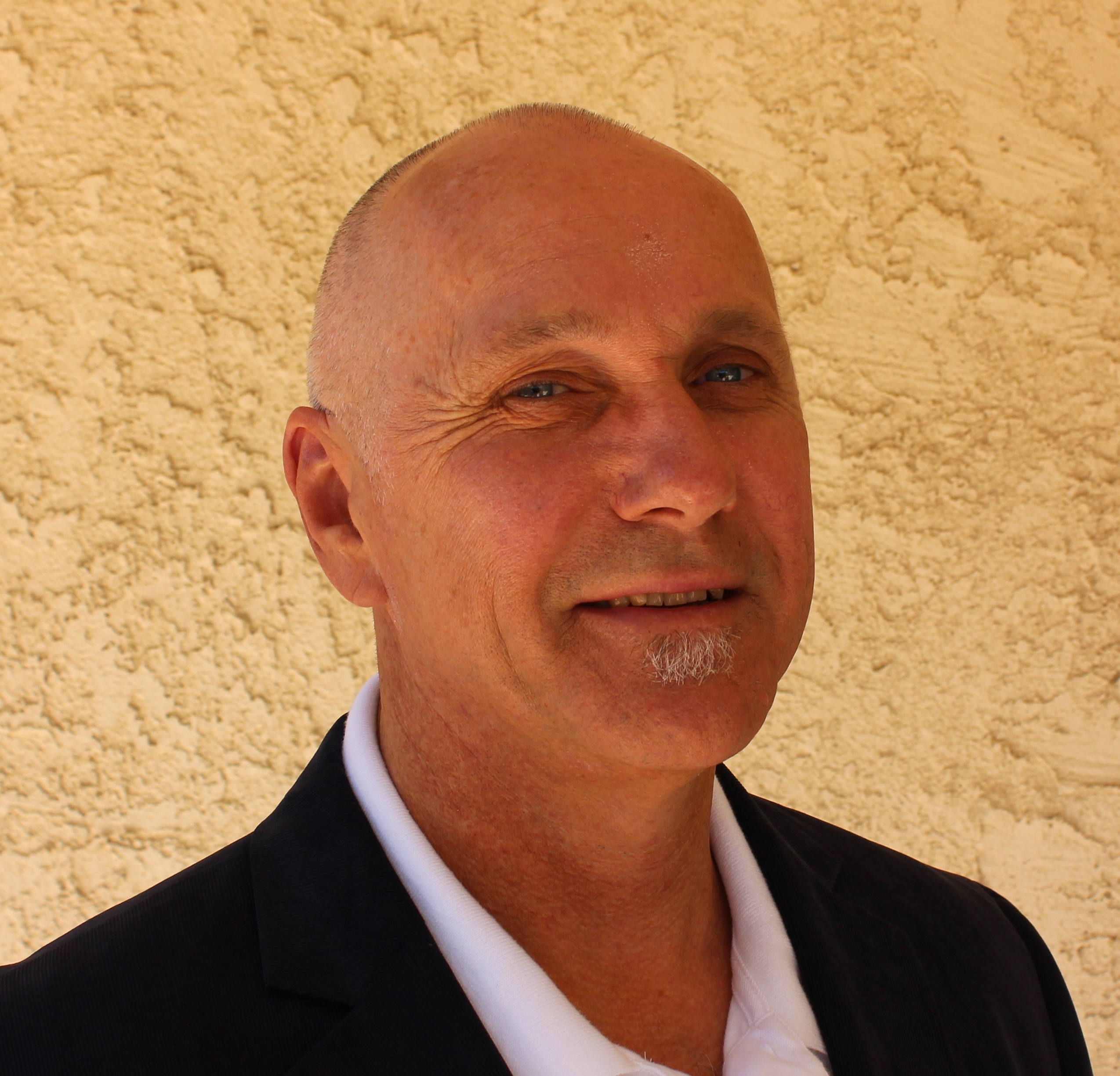 Psychology professor at the California State University San Bernardino. I teach Educational Psychology and Child Development to in-service and pre-service teachers.
I actively seek out opportunities to gain intimate first-hand experience with multiple levels of educational practice. This experience ranges from working with student teachers, seasoned classroom veterans, administrators and policymakers. Gaining this important experience has enriched my teaching and given me a broader and nuanced view of the educational landscape that my pre-service students will function in. It has also provided me with abundant real-world examples to discuss and reflect on in my courses and has helped me make useful and authentic linkages between research, theory, and practice, a central focus of my teaching.
I have conducted research in educational assessment, children’s cognitive and social-emotional functioning, and mindfulness-based interventions for stress management and wellness. My current research interests are in the areas of Social Emotional Learning (SEL) and mindfulness-based interventions in psychology and education.