
letting kids construct their knowledge through inquiry based instruction
letting kids construct their knowledge through inquiry based instruction
INTRO
Getting your students excited about the subject matter is critical to motivating your students to learn. Utilizing the Keller’s ARCS (Attention Relevance Confidence and Satisfaction) design is a good learning model to employ to motivate and captivate your students. This approach teaches kids how to think, how to ask questions while giving them room to feed their curiosity. Putting this inquiry and learning into action is where constructivism comes into play, literally. By facilitating great collaboration through the pooling of resources, students can construct new knowledge. Lastly, fostering creativity needs to be front and center in both theory and model. “Creativity is putting your imagination to work, and it's produced the most extraordinary results in human culture.” - Sir Ken Robinson. This will serve 21st century learners the best.
Construtivism
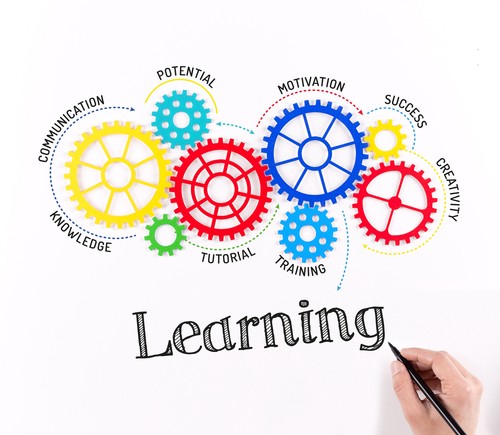
Learn by Doing:
A major theme in the theoretical framework of Bruner is that learning is an active process in which learners construct new ideas or concepts based upon their current/past knowledge. The learner selects and transforms information, constructs hypotheses, and makes decisions, relying on a cognitive structure to do so. Cognitive structure (i.e., schema, mental models) provides meaning and organization to experiences and allows the individual to “go beyond the information given”.
[Retrieved from Constructivist Theory]
Principles of Constructivism:
- Readiness-
Instruction must be concerned with the experiences and contexts that make the student willing and able to learn - Spiral Oranization-
Instruction must be structured so that it can be easily grasped by the student (spiral organization). - Inquiry Focused Instruction-
Instruction should be designed to facilitate extrapolation and or fill in the gaps (going beyond the information given).
[Retrieved from Constructivist Theory]
Constructivism Applied to VISUAL ARTS:
Art-based research indicates the compatibility of Cosntructivsim and visual art education as a co-construction of knowledge through the creative process.
Characteristics of constructivist teaching
in the Art Room:
1) a primary goal orientation of the classroom is to facilitate collaboration between students
2) teachers pay close attention to students’ perspectives, logic, and feelings to help guide their learning
3) the teacher and students are learning and teaching by utilizing online respurces;
4) social interaction permeates the classroom; group critiques are encouraged to drive constructive feedback
5) the curriculum and the physical contents of the classroom reflect students’ interests and are infused with their cultures;
7) students’ physical, emotional, and psychological needs are considered along with their intellectual needs;
8) assessment is based on each individual’s progression and not exclusively on competitive norms.
Teacher's Role
In constructivist teaching, the role of the teacher is significantly altered in comparison to traditional teaching. The teacher is no longer an authority with knowledge, relaying information to pupils. In constructivist teaching, the teacher organises pupils’ learning activities, pupils’ learning experiences, and the learning environment. The teacher is the (co-)constructor of the pupil’s knowledge. Knowledge, thus constructed, is notmanaged from the outside — by having the teacher teach and relay his/her knowledge — but teaching is only an attempt to encourage the pupil to learn.
How the ARCS Model Compliments Constructivism
"The teacher’s teaching is not sufficient to initiate the pupil’s learning process, because learning is an internal, introspective, and reflective process taking place within the pupil." It takes initation and motivation from the student to pursue thier own curiosity.
The DISCOVERY 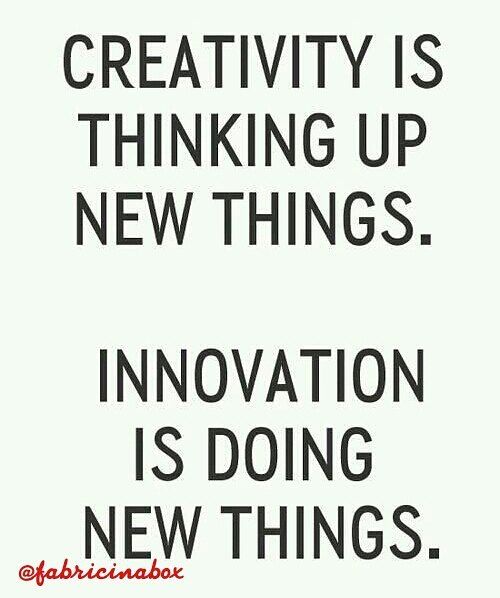
- Theodore Levitt
Learning Environment
In terms of the learning environment, it should be mentioned that it puts an emphasis on the learning processes that are connected with real-life problems. Both the process and the result of learning are important. Constructivist teaching is pupil-oriented, so emphasis is placed on self-regulated learning, self-efficiency, and contextual learning.
Keller's ARCS
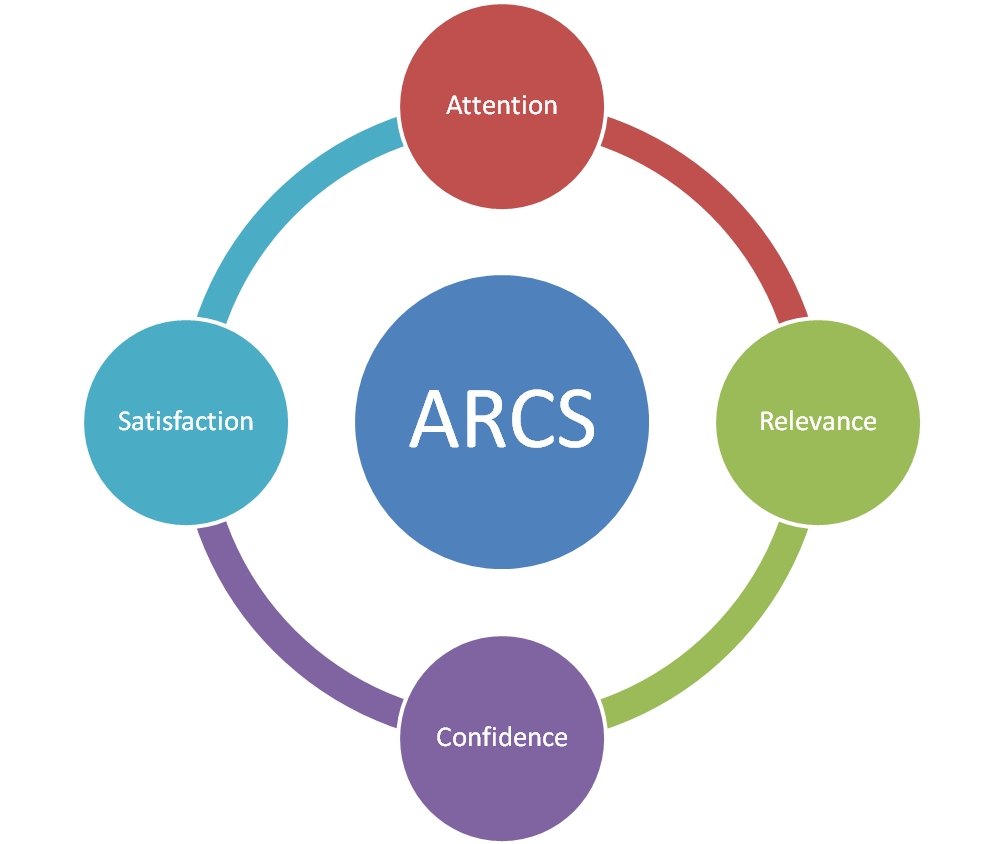
Attention Relevance Confidence Satisfaction
Motivation
ARCS (Attention, Relevance, Confidence, Satisfaction). ARCS measures a student’s motivation to measure success, which is “based on their satisfaction and engagement throughout their learning process.” (Simsek, 2014) I feel ARCS compliments Constructivism and vise versa. ARCS focuses on motivating the learner. After which point, constructivist feeds off of this engagement by giving purpose and intention through practical learning application, helping to drive a students’ motivation and capacity to learn about their areas of interest. Constructionism allows for assignments to be framed in an inquiry based fashion, allowing students to apply their knowledge to their learning or career context. “Learning should happen in context and be structured around related themes or primary concepts.” (Yoders, 2014). Along a student’s learning path, constructivism allows for feedback and self-reflection in order to affirm and verify a students ability to apply this new knowledge. This allows for the student to become a self regulated learner and strengthen their motivation. Teacher become more the facilitator, guiding their students to construct their own knowledge, in a bottoms up approach, with unlimited possibilities and personalization.
Keller ARCS model is based on motivation. The goal is to create a “learning environment that are designed to stimulate and sustain a student’s motivation to learn.” (Little, 2015). This model will allow for creative problem solving after building a foundation in background knowledge through elearning. This will lead my students to more inquiry based learning. This will also provide me the opportunity to “address course interaction, course individualization/personalization, student’s needs and styles of learning,” and my own approach to teaching using varied instructional resources. (Levine, 2016)
ARCS Model of Motivational Design
Attention Relevance Confidence Satisfaction
1. Attention
- Keller attention can be gained in two ways:
(1) Perceptual arousal – uses surprise or uncertainly to gain interest. Uses novel, surprising, incongruous, and uncertain events; or
(2) Inquiry arousal – stimulates curiosity by posing challenging questions or problems to be solved. - Methods for grabbing the learners’ attention include the use of:
- Active participation -Adopt strategies such as games, roleplay or other hands-on methods to get learners involved with the material or subject matter.
- Variability – To better reinforce materials and account for individual differences in learning styles, use a variety of methods in presenting material (e.g. use of videos, short lectures, mini-discussion groups).
- Humor -Maintain interest by use a small amount of humor (but not too much to be distracting)
- Incongruity and Conflict – A devil’s advocate approach in which statements are posed that go against a learner’s past experiences.
- Specific examples – Use a visual stimuli, story, or biography.
- Inquiry - Pose questions or problems for the learners to solve. e.g. brainstroming activities
2. Relevance
- Establish relevance in order to increase a learner’s motivation. To do this, use concrete language and examples with which the learners are familiar. Six major strategies described by Keller include:
- Experience – Tell the learners how the new learning will use their existing skills. We best learn by building upon our preset knowledge or skills.
- Present Worth – What will the subject matter do for me today?
- Future Usefulness – What will the subject matter do for me tomorrow?
- Needs Matching – Take advantage of the dynamics of achievement, risk taking, power, and affiliation.
- Modeling – First of all, “be what you want them to do!” Other strategies include guest speakers, videos, and having the learners who finish their work first to serve as tutors.
- Choice – Allow the learners to use different methods to pursue their work or allowing s choice in how they organize it.
3. Confidence
- Help students understand their likelihood for success. If they feel they cannot meet the objectives or that the cost (time or effort) is too high, their motivation will decrease.
- Provide objectives and prerequisites – Help students estimate the probability of success by presenting performance requirements and evaluation criteria. Ensure the learners are aware of performance requirements and evaluative criteria.
- Allow for success that is meaningful.
- Grow the Learners – Allow for small steps of growth during the learning process.
- Feedback – Provide feedback and support internal attributions for success.
- Learner Control – Learners should feel some degree of control over their learning and assessment. They should believe that their success is a direct result of the amount of effort they have put forth.
4. Satisfaction
- Learning must be rewarding or satisfying in some way, whether it is from a sense of achievement, praise from a higher-up, or mere entertainment.
- Make the learner feel as though the skill is useful or beneficial by providing opportunities to use newly acquired knowledge in a real setting.
- Provide feedback and reinforcement. When learners appreciate the results, they will be motivated to learn. Satisfaction is based upon motivation, which can be intrinsic or extrinsic.
- Do not patronize the learner by over-rewarding easy tasks.
[Retrieved from Learning Theories]
Fostering Creativity
“If you can lite the spark of curiosity in a child, they will learn without any further assistance.” - Sir Ken Robinson
“If you can like the spark of curiosity in a child, they will learn without any further assistance.” (Robinson, 2009) For this reason, I choose to focus on motivation when designing the instructional design platform. Wearing the hat of facilitator within the instructional design framework is the best role an educator can take to prepare minds for the 21st century.

Learning Benefits
Blending the ARCS model with constructivist learning and teaching as a creative process, it benefits the multiple modalities of individual or collaborative learning, such as:
1) project-based learning;
2) experience-based learning;
3) problem-based learning;
4) learning by doing;
5) inquiry-based learning;
6) play-based learning.
Technology
What is available online to the 21st century learners is unprecedented in the history of organized educational systems. Not to utilize the web would be a great negligence on the instructors part. For this reason, an instructor must take the role of the facilitator and set his or her students on a path to knowledge. “A logical step is to explore what knowledge and thinking skills should and can be learned in these complex, inquiry-based digital environments” (Evans, 2011) Another aspect of technology to utilize is the social learning to provide intellectual stimulus. 
One note of caution is to prepare our students for this learning environment by providing training and education in Digital Literacy. This is a critical skill for the 21st century learner.
Art teachers need to be mindful of judgeing and assigning a grade to creativity.
When NASA did a study to assess children’s creativity, they found that 98 percent of 5-year-olds were creative geniuses, while only 2 percent of adults were,. As it turns out, the biggest drop in creativity occurred between the ages of 5 and 12.
What that means is that children are born with the habits of thinking creatively and as they grow they learn to believe creative thinking isn’t valued. (Sole, 2018)
Unfortunately, standardized testing and most evaluation tools do not measure creativity or value it as a crieria.
To help award creativity, assessment should focus on giving feedback in order to help the student grow. Constructive feedback in a peer situation or group presentations offer a great platfrom for this type of collaborative review sessions to take place in the artroom.
REFERENCES
 Jerome Bruner
  John Keller
Text:
Levine, J. (2016). Technology:Is it Driving Instructional Design and Delivery?
Yoders, S. (2014). Constructivism theory and use from 21st century perspective. Journal of Applied Learning Technology, 4(3), 12-20.
Simsek, A. (2014). Interview with John M.Keller on Motivational Design of Instruction. Contemporary Educational Technology, 5(1), 90-95. Retrieved from https://files.eric.ed.gov/fulltext/EJ1105558.pdf
Little, B. (2015). ADDIE and ARCS in Instructional Design. Retrieved from https://www.mindtools.com/blog/corporate/addie-and-arcs/
Constructivist Theory (Jerome Bruner)https://www.instructionaldesign.org/theories/constructivist/
Topolovčan, T (2015) Art-Based Research of Constructivist Teaching Faculty of Teacher Education, University of Zagreb. Croatian Journal of Education, Vol.18; No.4/2016, pages: 1141-1172. Retrieved from https://files.eric.ed.gov/fulltext/ED578016.pdf
Sole, S. (2018) Dublin teacher Jason Blair, Columbus Museum of Art team up to foster creativity. This Week news. Retrieved from: https://www.thisweeknews.com/news/20180911/dublin-teacher-jason-blair-columbus-museum-of-art-team-up-to-foster-creativity
https://www.learning-theories.com/kellers-arcs-model-of-motivational-design.html
Video:
https://youtu.be/7z70BFlGbCA
Images:
Header:
https://www.wooclap.com/en/blog/active-learning/blended-learning-blog-n10-objectivist-vs-constructivist-approach-to-learning-and-instruction/
https://fitnessbythesea.com/101-summer-activities-for-kids/
https://visual.ly/community/infographic/other/arcs-model-instructional-design
Quote: http://www.ewonwhynes.com/setting-goals-will-get-anywhere/
https://www.azquotes.com/quote/531776
content builder CREATED BY Erin Delventhal